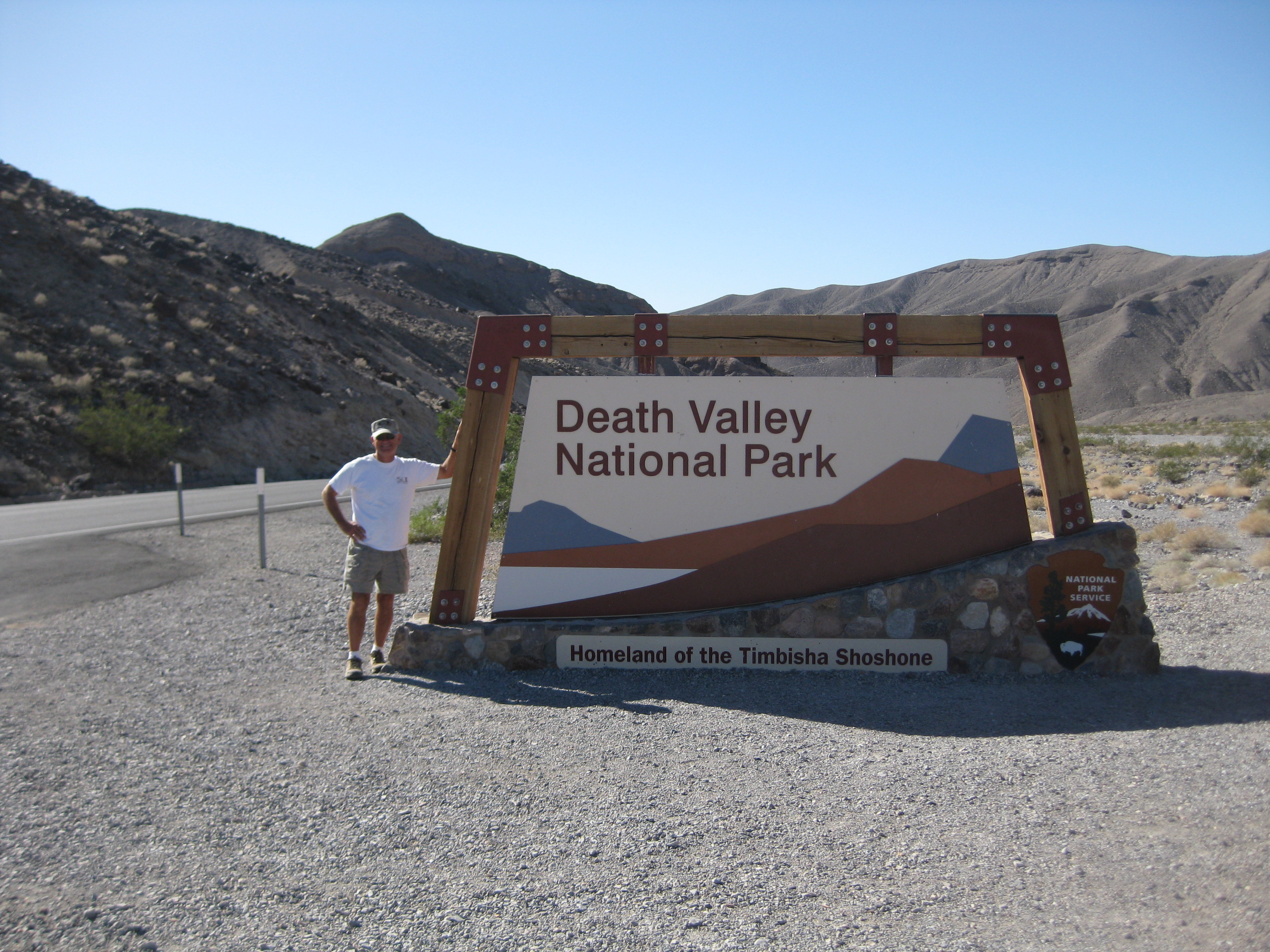
Death Valley, CA – October 2012

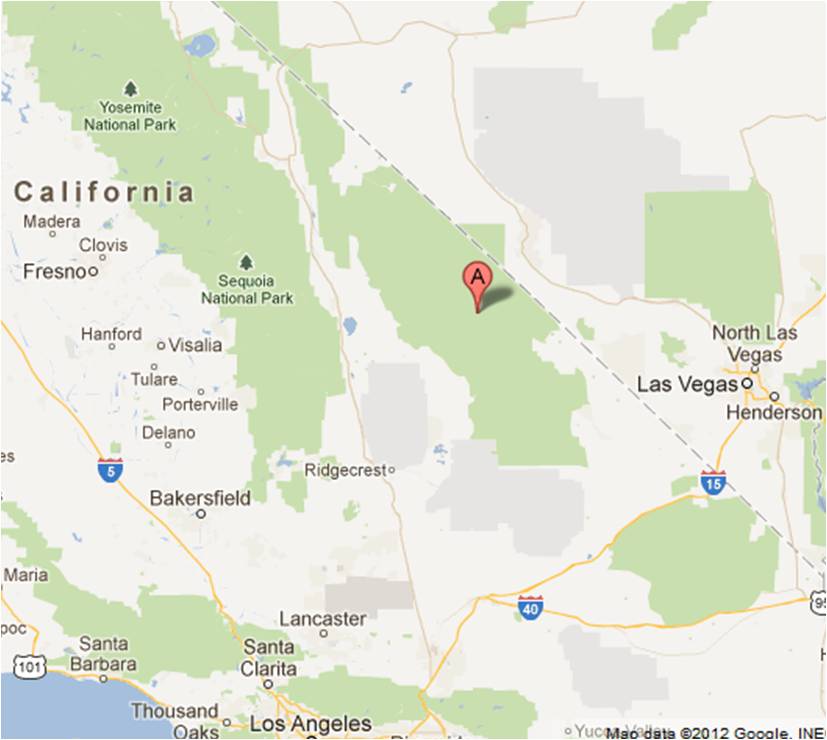
Our initial plans for this year did not include traveling this far west; however, as we continually re-evaluated it was apparent that we had the time and opportunity go farther west.  This is the beauty of being fulltime RVers, you can change your plans on the fly.  Neither one of us had ever been to Death Valley or the mountains of California, so that’s where we headed.

Rather than dry camp at the National Park campground in Death Valley, we chose to stay at the Longstreet Inn Casino & RV Park just outside the National Park with full hookups.  A bonus of this decision is that Bob (the family political junky) got to watch the Presidential Debate on TV.

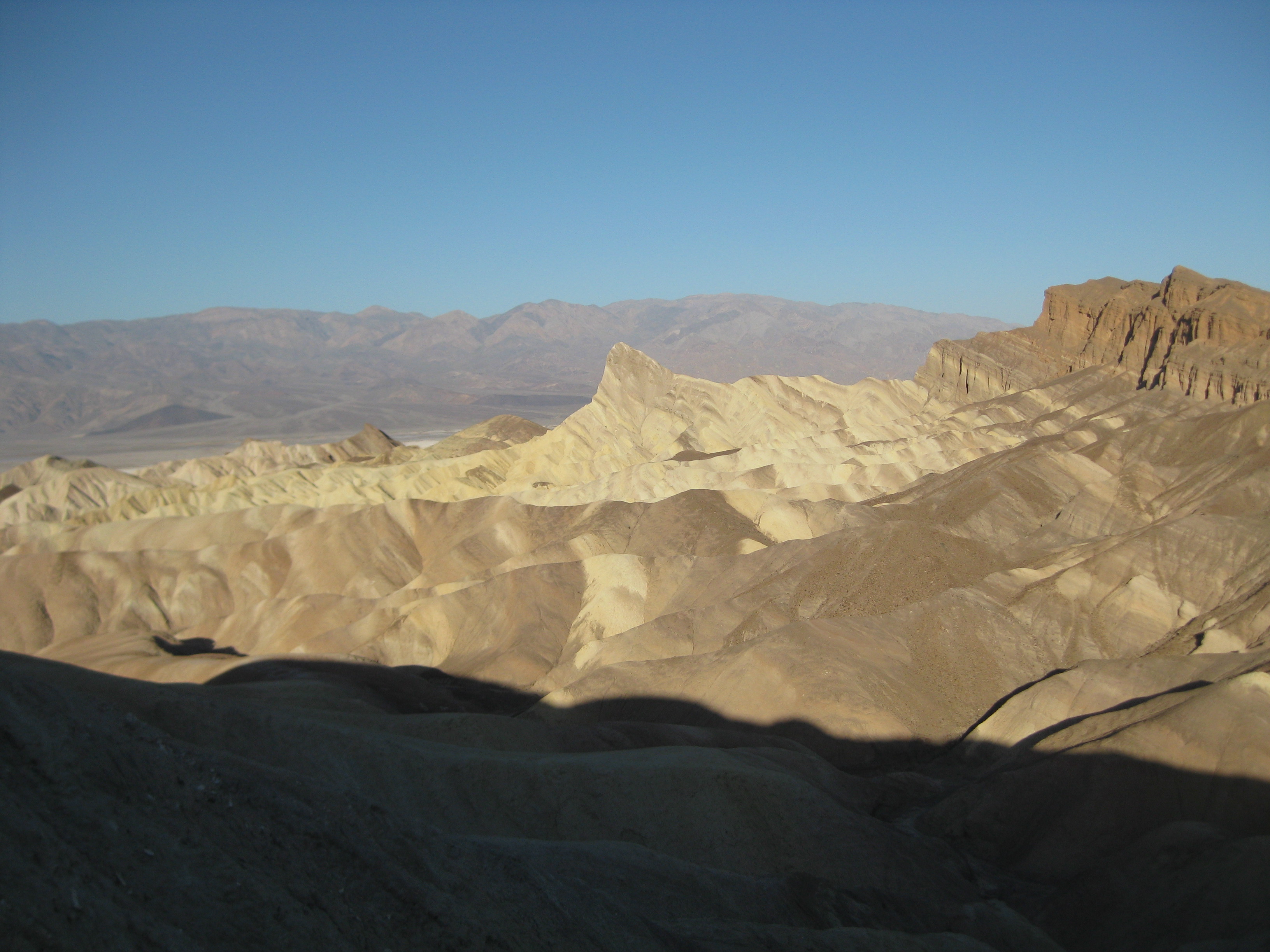
We got an early start because we planned on doing some hiking and wanted to avoid the heat of the day.  Bob had done some research to identify possible hiking locations.  As we drove into Death Valley we spotted one of the sites at Zabriskie Point, and were able to get on the trail by 8:15.  We hiked the Golden Canyon/Gower Gulch loop.  This part of Death Valley is a mix of the Badlands and the Grand Canyon.  We hiked down into the canyon which was nice because it kept us in the shade.  The temperatures were fairly cool at the beginning and the shade certainly helped; however, by the time we were done the temperature was over 1000.  Going back via Gower Gulch had us hiking up a dry river bed.  There was no real defined trail nor any trail markers like we had in Golden Canyon.  It reminded Bob of fitness runs in Ranger School – you didn’t know where the end was so you just had to keep going.  The hiking was rough in that the river bottom was all loose rock and we had to do some occasional rock climbing to get to the next level of the Gulch.  We were fortunate that the walls of the gulch provided more shade than we expected on this part of the hike.   Finally we were able to see Zabriskie Point and our spirits lifted knowing the end was in sight.

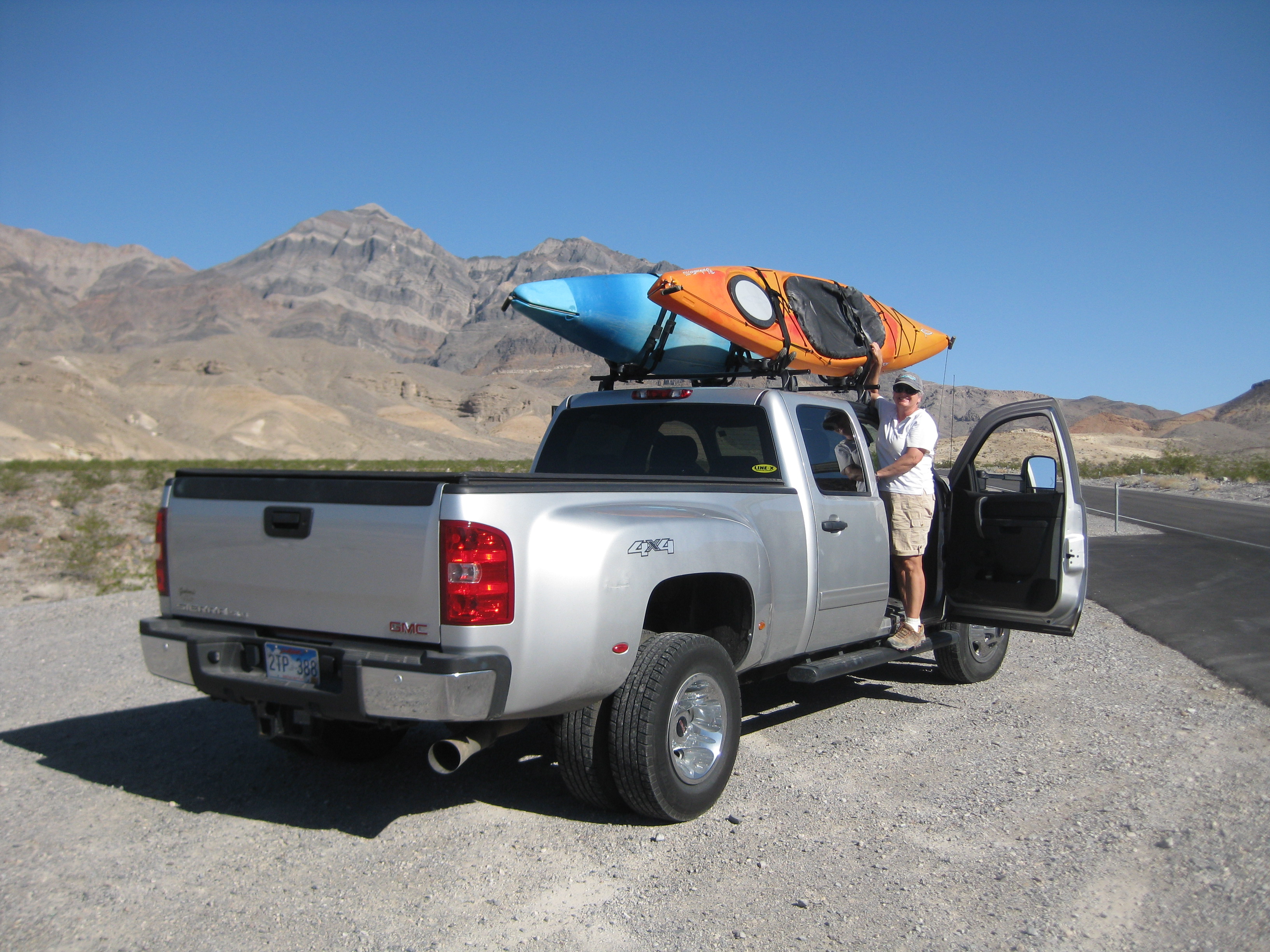
From there we went to the Visitor Center where we learned more about the history and environment of Death Valley.  One interesting site at Death Valley is the “Racetrack” where boulders the size of a compact car move across the desert on their own and no one knows how it happens, even though the tracks they make are very clear.  We got some strange looks as we drove through the park as we still had our kayaks on the truck.  We’re sure some people thought we we crazy, bringing kayaks to Death Valley!

After lunch we visited the Borax Museum and learned the Twenty Mule Team wagons were not just something we saw on “Death Valley Days” on TV.  If you don’t understand what we are talking about, ask your parents.  Yes, the show was that old!

It was great to see Death Valley and learn about the challenges the settlers of the Old West had to deal with, but one day was enough for us.  We pulled out the next morning for the OH! Ridge Campground in the Inyo National Forest near Yosemite National Park.

Posted in California, Fulltime RV, Michigan Traveler, National Parks | Tagged , , , , , , , | Leave a comment

Las Vegas – October 2012

Why did we want to go to Las Vegas?  The answer is simple, Bob needed to be close to a major airport in order to fly to Pittsburgh for business.  Las Vegas was a reasonable drive from the Grand Canyon and we could stay at the military RV park at Nellis Air Force Base.  Desert Eagle RV Park at Nellis AFB is a great facility!  The sites are easy to get into and the staff has their act together to the extent that Bob thinks they should be the example for others to model.

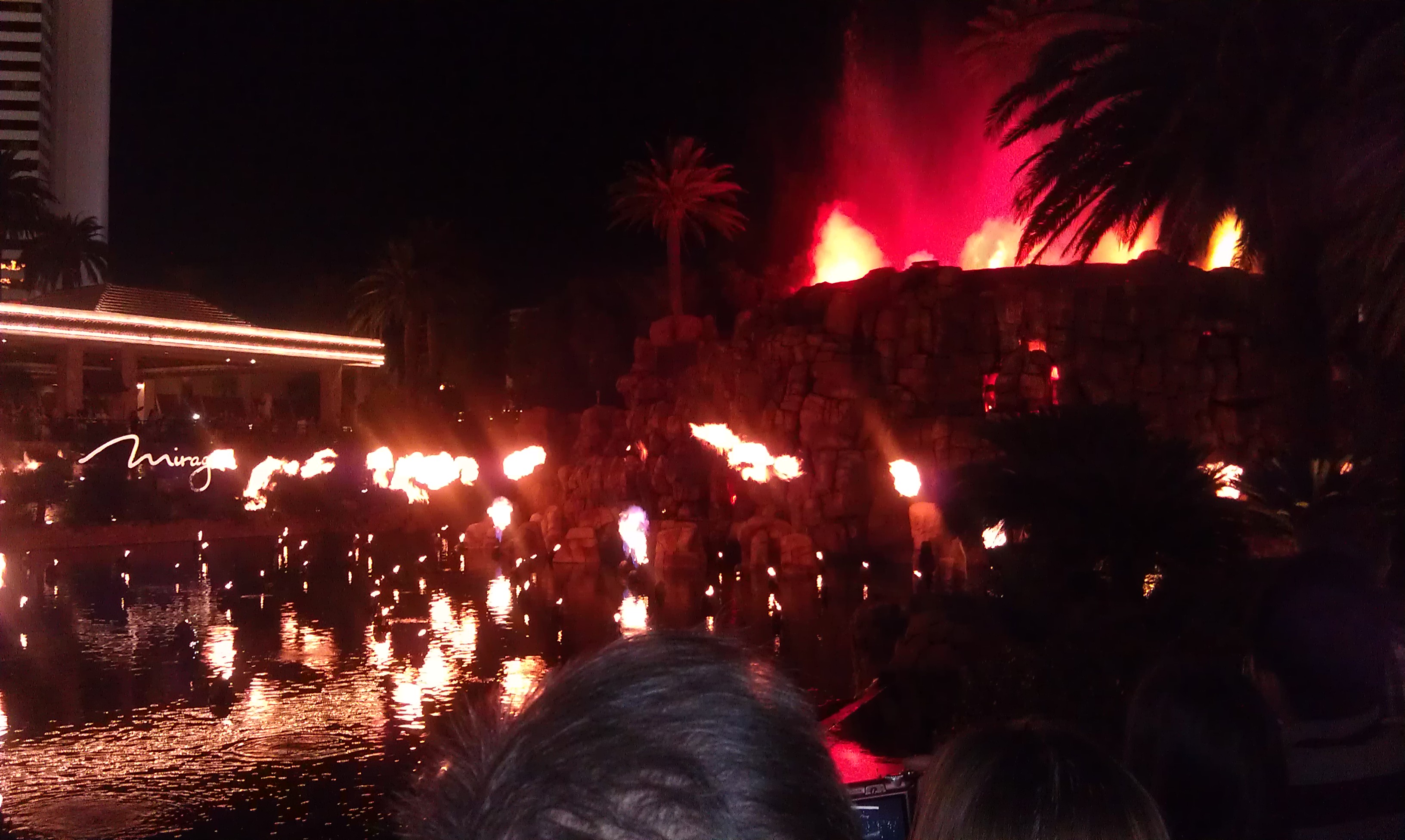
You can’t go to Las Vegas without spending some time on “The Strip.”  We parked at the Bellagio to visit the Conservatory and watched the famous Bellagio fountains.  What a water show!  We wandered up and down the strip to see the river gondolas at the Venetian, a variety of casinos where we played the penny slot machines (we are not big risk takers), and checked out the Hershey’s M&M store.  It’s amazing how many different M&M products are on display, and even more amazing what people are willing to pay for a bag of M&Ms that they packaged themselves.  We also watched the Volcano at the Mirage.  It seems nothing in Vegas is small.

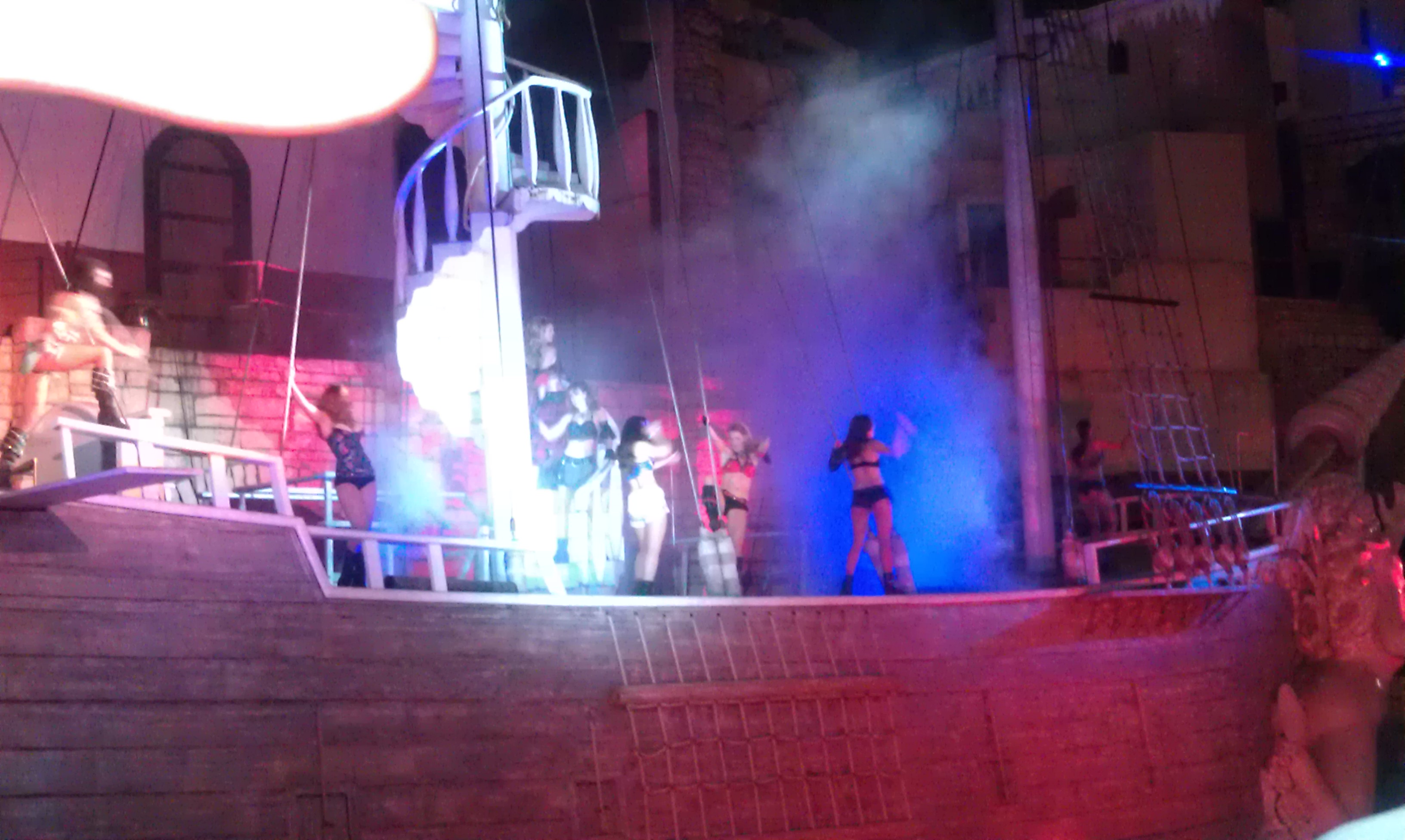
We had dinner at one of the buffets and you could tell that inflation has hit Las Vegas buffets.  They are no longer a cheap meal, prices on the strip ranged from $22 to $40 per person.  Bob said he could remember going to a buffet for $4.50 ten years ago.  After dinner we stood outside the Treasure Island Casino to watch the “Sirens of TI” show.

As we were leaving the Excalibur Casino we were offered a chance to see a show for free and get vouchers for gaming or dining (our choice) if we attended a timeshare presentation.  Not having any special plans we decided, “Why not?”  Friday, we spent four hours listening to the presentation and then saying “No thanks” to three different people.  That night we had second row seats for “Menopause the Musical.”  The show was absolutely hilarious!  We both enjoyed every minute of it.  At one point one of the actresses was singing “I’m having a hot flash, a tropical hot flash,” and came into the audience to sing directly to Bob.  She told the audience it looked like Bob was having a hot flash he was so red in the face.  By the end of the show Bob was laughing so hard there were tears in his eyes.

One day we were riding our bikes around the base and saw Air Force One parked on the ramp.  That was when the President was in Las Vegas for debate preparations.  We were able to take pictures from a couple hundred yards from the plane.  You just never know what opportunities you might run into.

Bob was gone Monday afternoon through Thursday night.  We went back to the Strip on Friday to see the Shark Reef at Mandalay Bay (another gift from our timeshare presentation).  This is a neat exhibit and displays more than just sharks.  We quizzed each other on the fish we recognized from our trips to Bonaire.  One of the nice parts of the exhibit is the tube you can walk through and see fish swimming all around you.

That same night we visited Fremont Street.  Obviously there are a lot of casinos, but the cool thing about Fremont Street is that there is a “neon roof” with continuous light shows over Fremont Street and street shows for passersby to watch.  There is even a zip line ride that runs almost the length of a block.

On our last Sunday we went kayaking on Lake Mead.  We talked to the tour director at the Base Outdoor Recreation office and he gave us a good recommendation for kayaking spots.  We were able to see Hoover Dam from the reservoir and paddle around some small islands.  We stopped at one of the islands to have lunch.  The water was so clear, Bob regretted that he didn’t bring his snorkeling gear along.  After kayaking, we drove over to Hoover Dam and spent some time walking across the dam.  To say Hoover Dam is an impressive site is an understatement, it is huge!

Tuesday, Oct 16th, we were on our way to the Death Valley area.

Posted in Fulltime RV, Michigan Traveler, Military RV Parks, Nevada | Tagged , , , , , , , , , , , , , , , , , | Leave a comment

Grand Canyon – September 2012

On our way to the Grand Canyon we crossed over the Glen Canyon Dam.  It is from this location that many of the rafting trips into the Grand Canyon begin.  It was our first impression of how big and expansive everything would be from this point forward.

Our first view of the Grand Canyon was from the Desert View overlook just inside the East Entrance Station on the South Rim.  We’ve seen a lot of gorgeous scenery out here in the West but we were impressed!  It was huge and beautiful!  We climbed the watchtower for a view from a higher perch and it got even better.  What an amazing place!  The watchtower itself had walls decorated with traditional Indian drawings.  It was built by the National Park service as a visitor’s center but also as a way of honoring the heritage of the local Indian tribes.

We continued on through the central part of Grand Canyon National Park and made our way to our campground in the Kaibab National Forest, just south of the town of Tusayan.  The National Forest has no place to fill (or dump) water (or waste) tanks so we had to fill the fresh water tank while still in the Grand Canyon N.P.  The campground was very nice and we enjoyed the site even though we didn’t spend much time there.

On our first full day in the Park, we hiked three to four miles of the south rim and took the park buses to numerous overlook points.  We were again impressed with the bus system which made getting around so easy and cut down on the motor traffic in the park.  The National Park system really seems to have mastered this service.

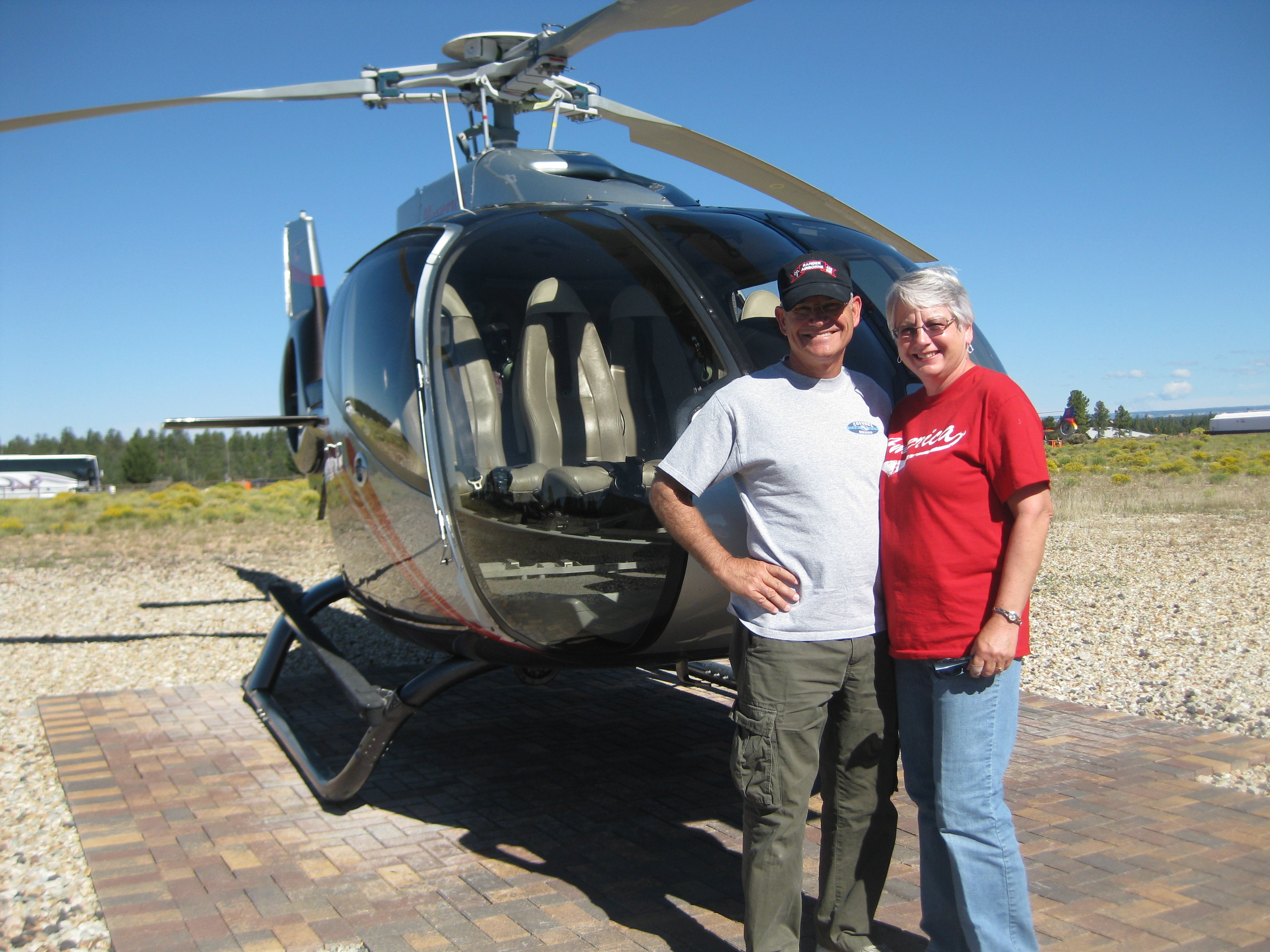
The next day started early with a spectacular helicopter flight over the Grand Canyon.  It was Pat’s first helicopter ride and she certainly enjoyed it.  The tour was with Maverick Helicopters and they did an excellent job.  Our pilot was a great guide and gladly answered all of our questions.  We have dozens of great pictures and even a couple of video clips!

We took the bus to the more eastern end of the central park area in the afternoon for more views from the rim.  We also saw many of the donkeys that are used for tours into the canyon.  The next day when we hiked into the canyon ourselves, we would see many of them returning from an early trip with supplies to the ranch at the bottom of the canyon.  We also joined the geology walk with a park ranger to learn more about the formation of the Grand Canyon and why such a formation exits only here.  We stayed late in the park to watch the sunset from Mohave Point

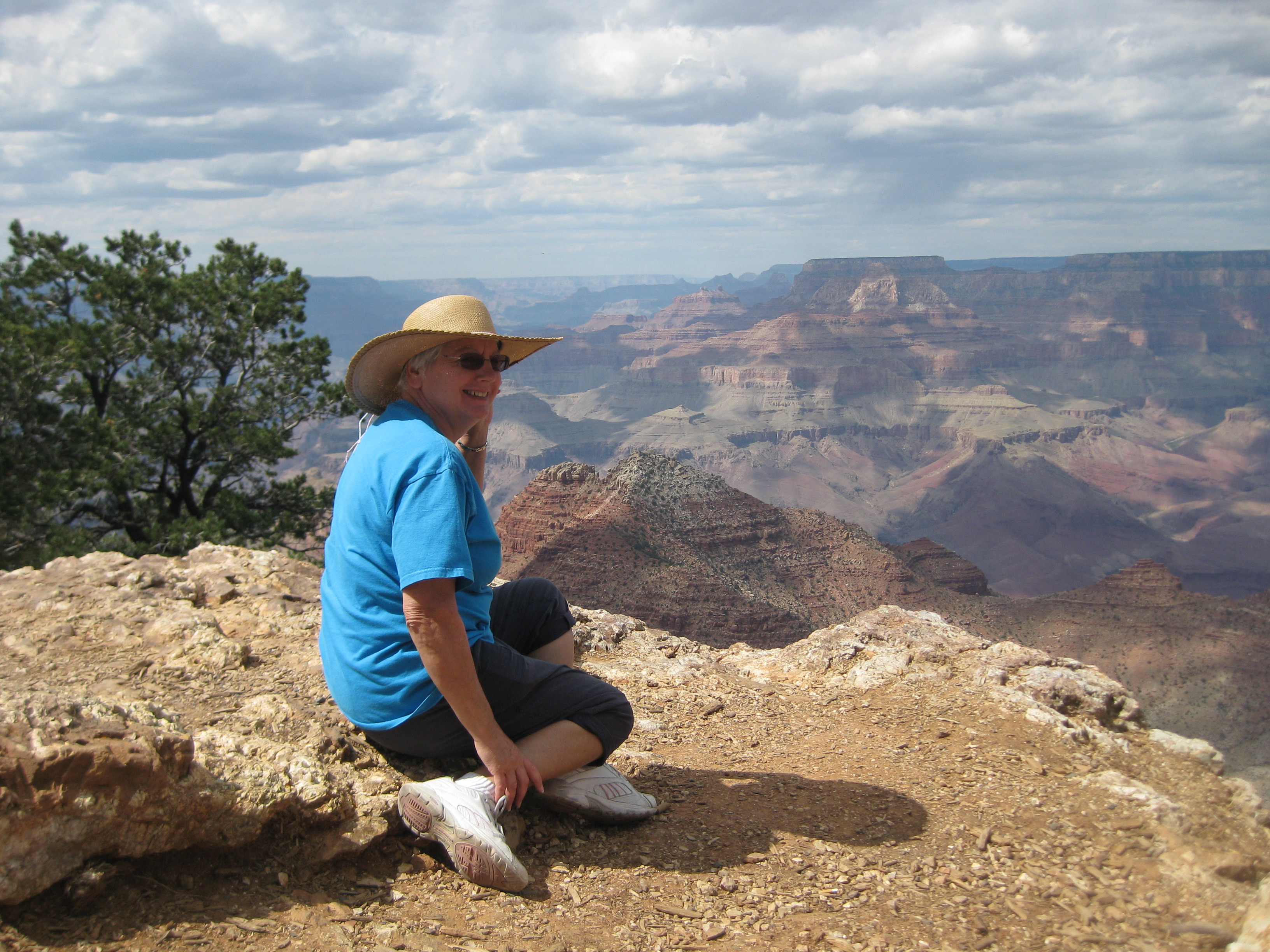
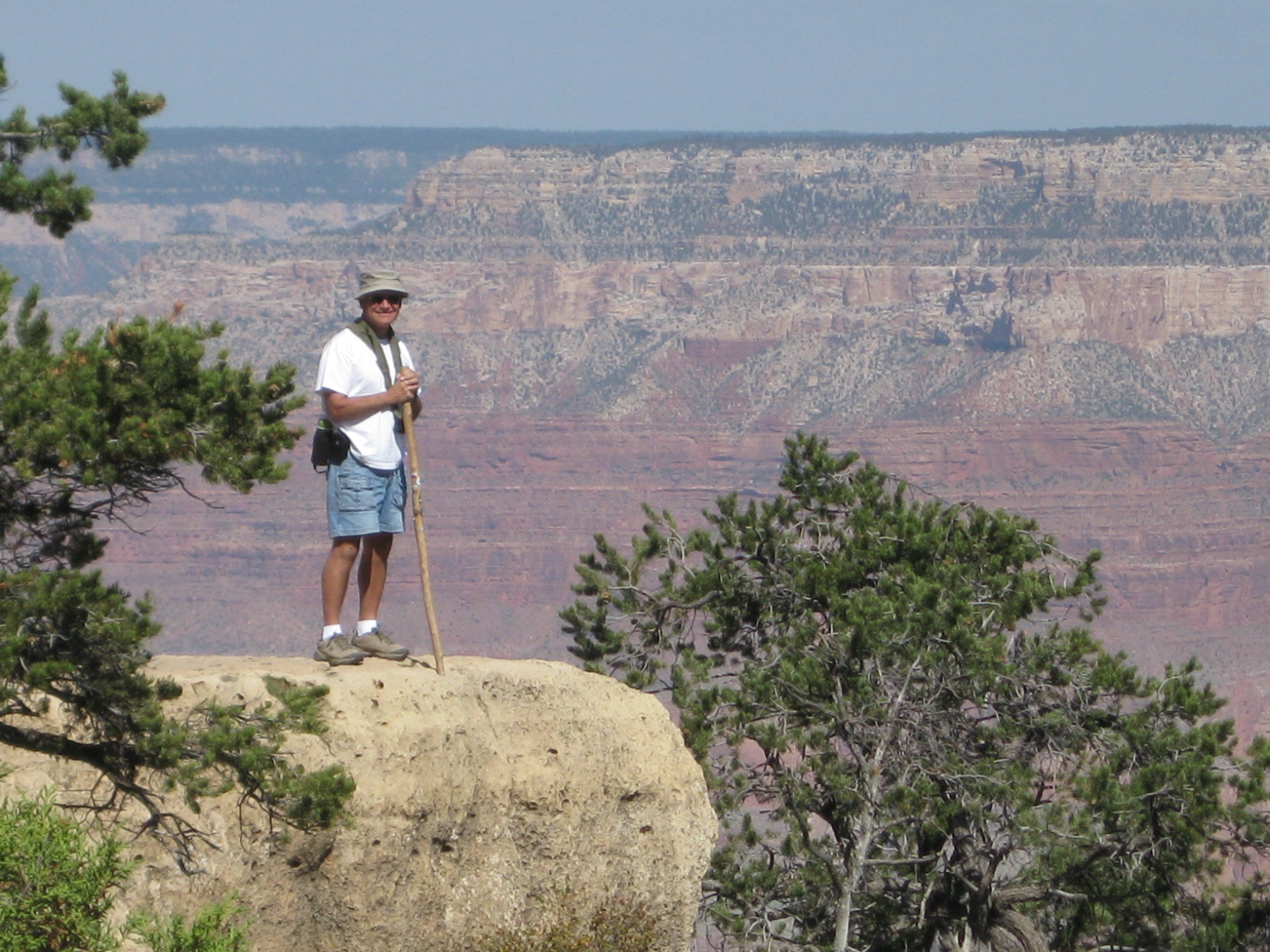
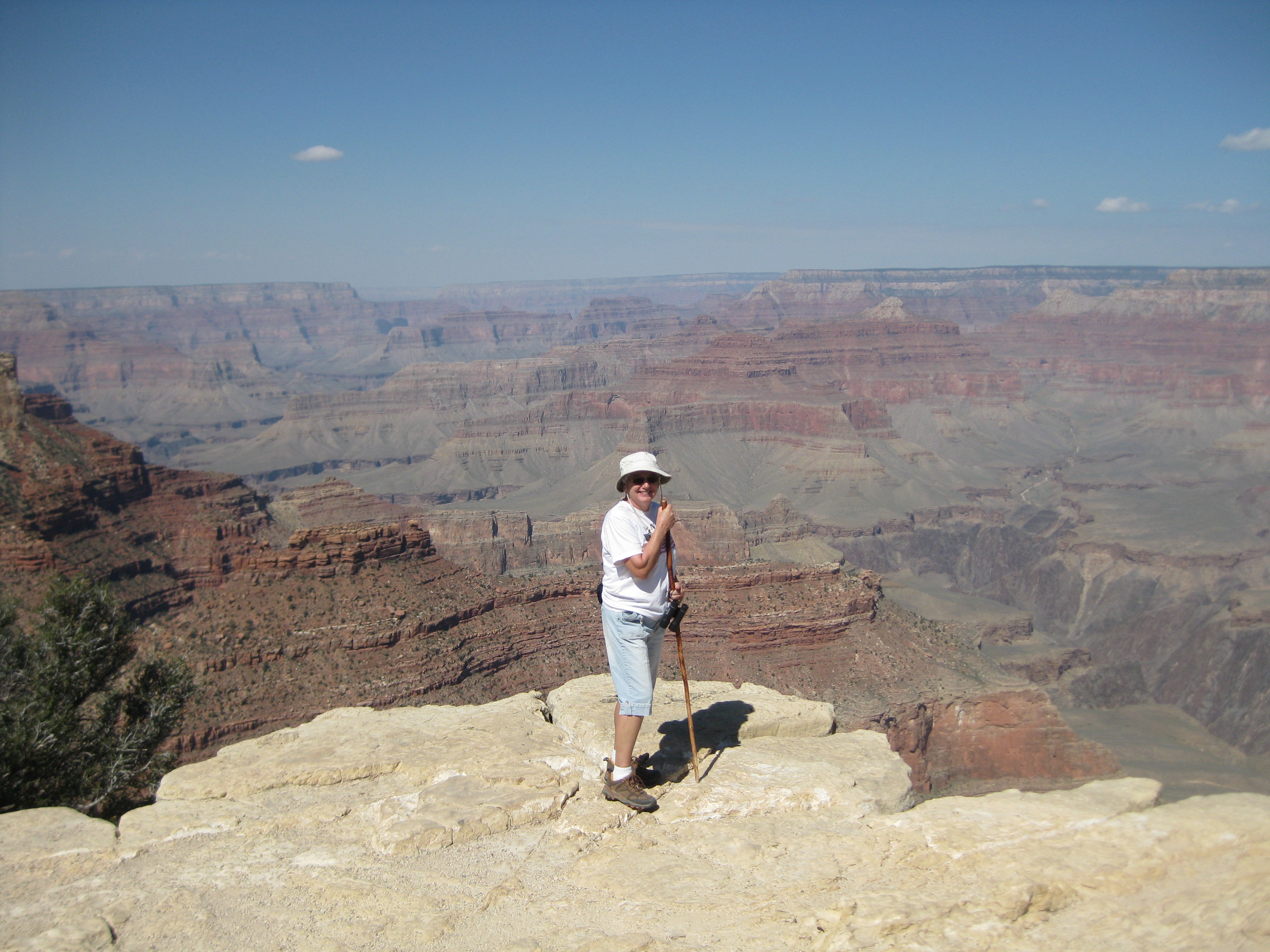
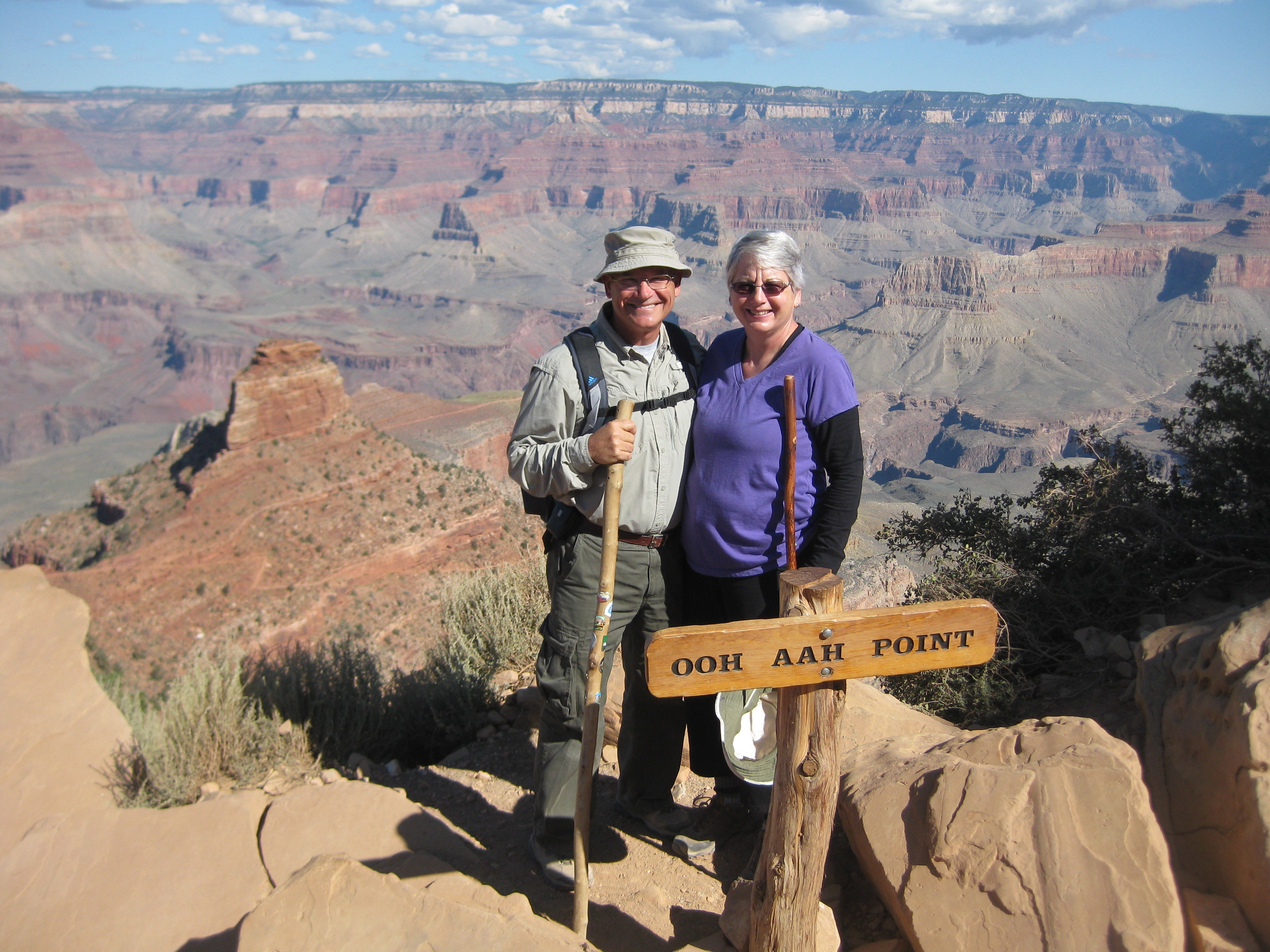
Our last day here started with a hike on the South Kaibab Trail down into the canyon.  Bob had been looking forward to this ever since our arrival (Pat, not so much).  The hike itself was only 3 miles round trip—a pretty short distance considering we do more than that most days as our morning exercise.  The big difference—a 1,140 feet change in elevation.  We started at 7,260 feet and the turn around point was at 6,120 ft.  The first mile and a half was easy and pleasant.  We passed “Ooh Aah” point which lived up to its’ name.  The return trip was everything we expected—difficult and hot, but it was satisfying know we did it!  The views along the route were impressive.  It was very different looking up at canyon walls where previously we had looked down.  If we had to choose one word to describe the Grand Canyon, it would be immense!

After we climbed back to the South Rim, we called it a day after a little souvenir shopping, then back to the trailer to pack up for an early start to Las Vegas tomorrow.

This slideshow requires JavaScript.

Posted in Arizona, Fulltime RV, Michigan Traveler, National Parks | Tagged , , , , , , , , , | 2 Comments

Bryce Canyon/Zion National Park – September 2012

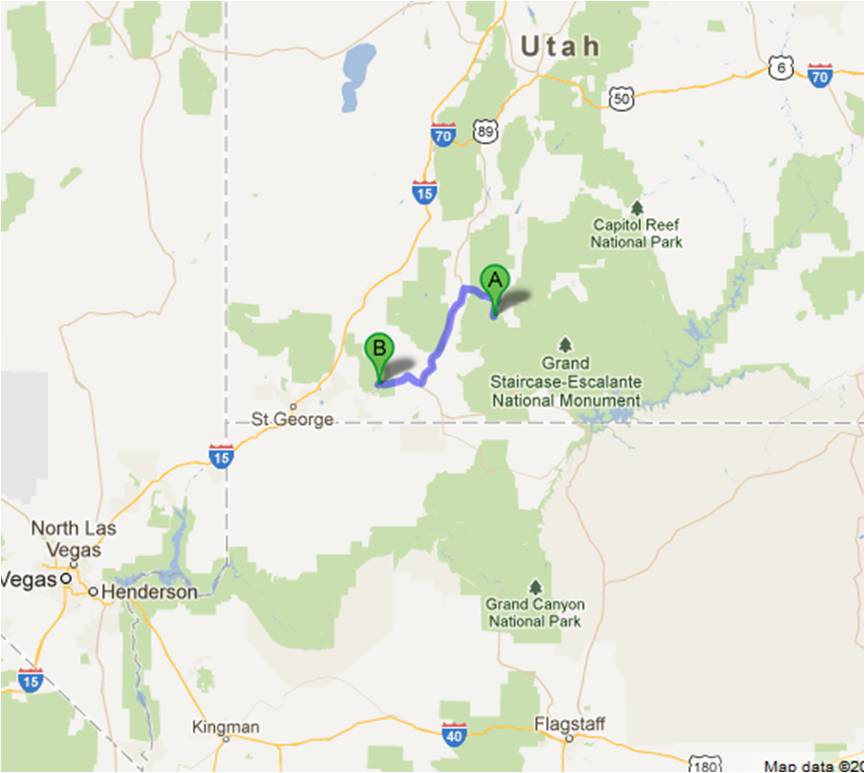
We arrived at Red Canyon campground in the Dixie National Forest in southern Utah relatively early in the day because they don’t take reservations.  Not having a guaranteed camping spot where we’re headed makes Pat very uncomfortable—hence our 7:00 a.m. start.  We were all set up in our site by 2:00 which gave us the chance to bike to the nearby visitor center and get recommendations for the following days, and then relax.  The view from the front yard was amazing!

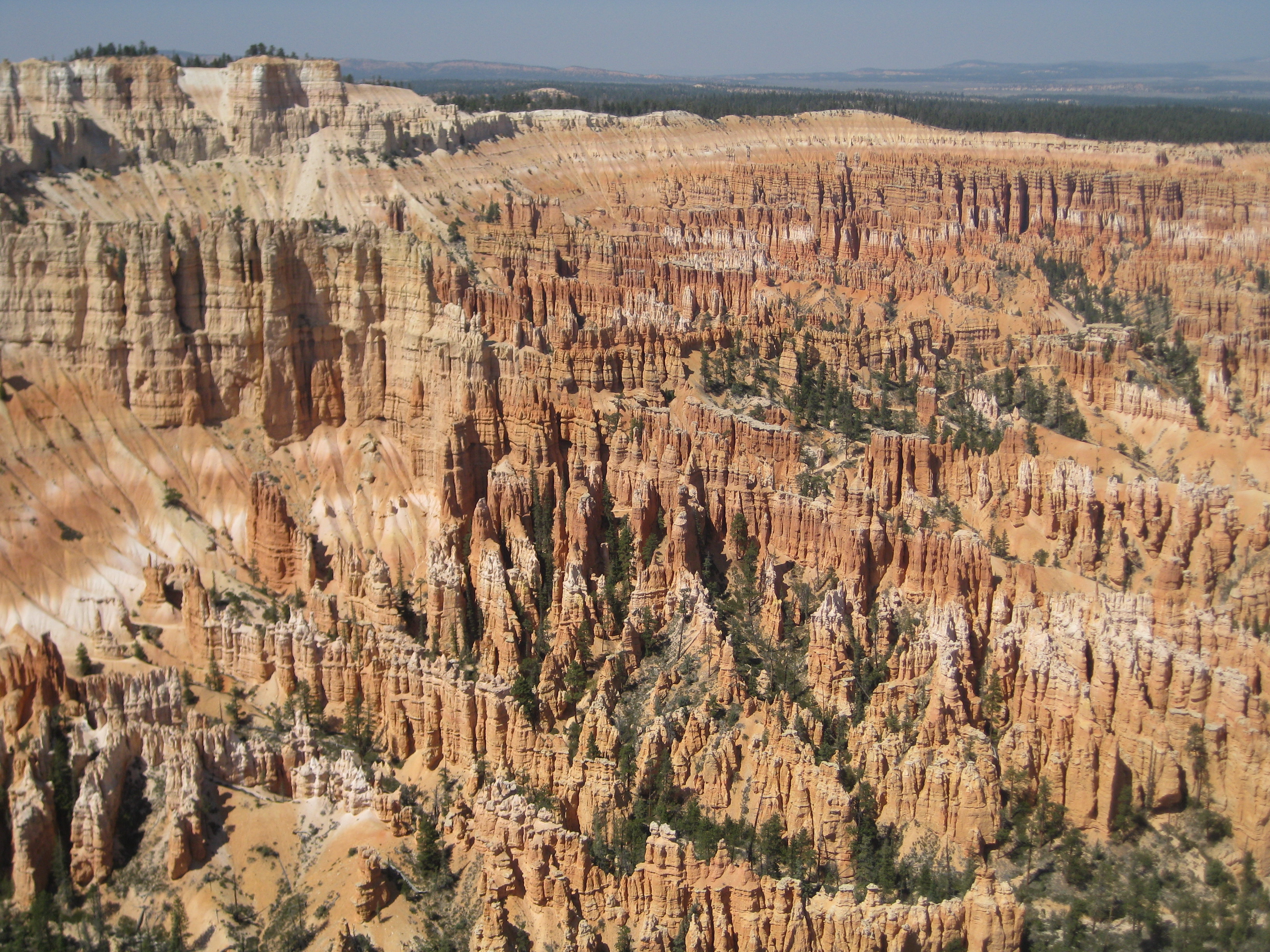
Amazing was the key word for the week!  Everywhere we looked we saw views that were beautiful and totally unique to our “Michigan” minds.  The day after arrival, we headed for Bryce Canyon National Park, about 13 miles from our campground.  We boarded a free shuttle bus for the Rainbow Point Tour. This guided tour took us to the far southern end of the canyon (well, as far as you can go by car or bus)—about 18 miles from the park entrance and then we stopped at many of the overlooks on our return trip.  The bus driver/guide was entertaining and knowledgeable, making us very glad for this recommendation from the ranger at the visitor center.  One of the most picturesque views in Bryce Canyon is the “Amphitheater” seen from Inspiration Point.

Technically, Bryce is not a canyon because canyons are primarily carved by flowing water.  Most of the sculpting at Bryce Canyon was, and continues to be, done by the freezing and thawing of water.  Approximately 200 days a year, ice and snow melt and refreeze at night.  When the water becomes ice, it expands causing cracks and eventually the rocks are chiseled into the existing shapes.  The process was began 55 million years ago and continues today!  The shapes are called hoodoos.  The hoodoos sometime look like familiar shapes, one of them actually looked like a poodle!  Arches are also created when holes are enlarged but the top has not yet eroded away.

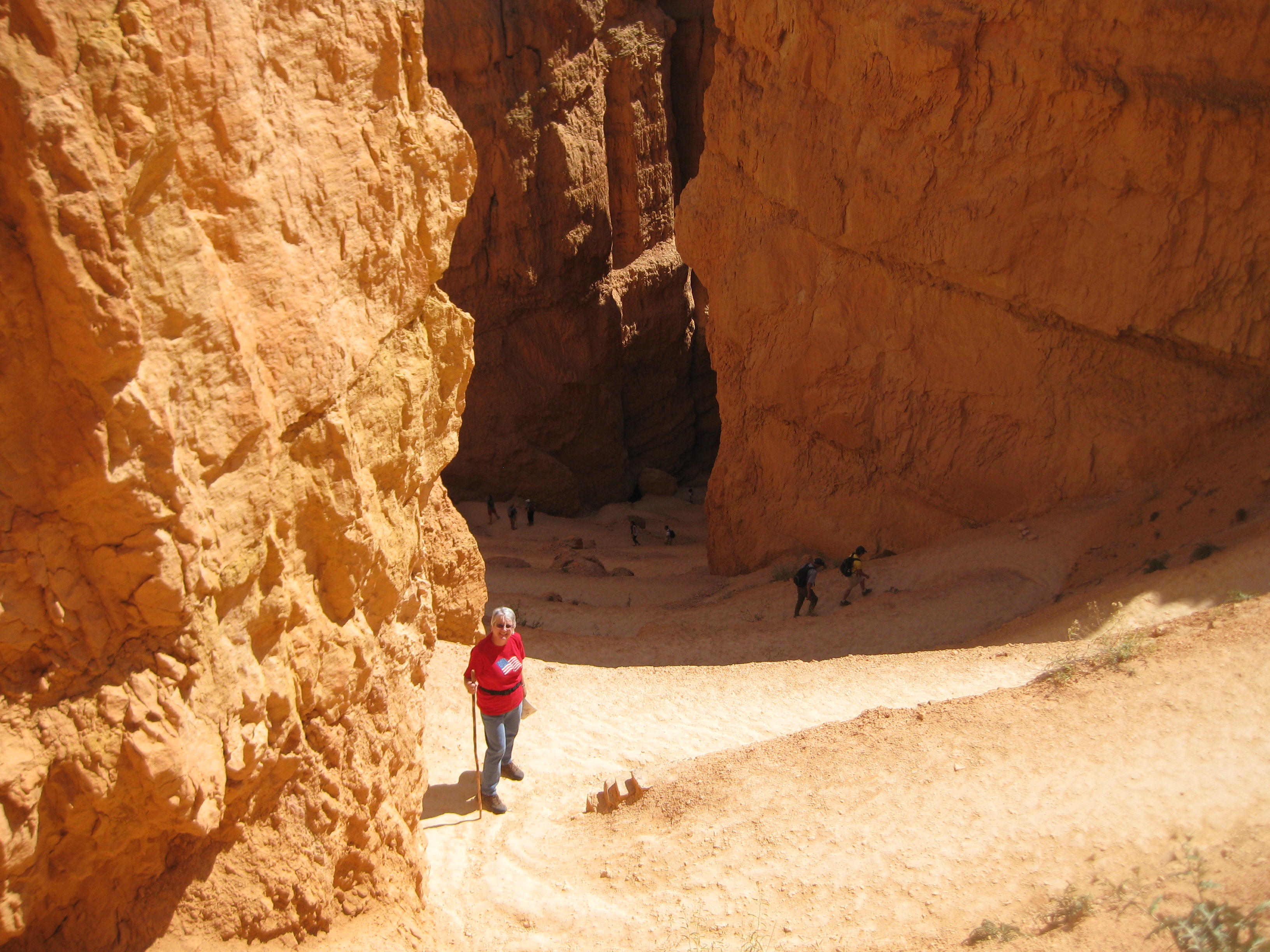
In the afternoon we hiked the Rim Trail for 1.5 miles.  As the name implies, this trail follows the rim of the canyon.  Every turn in the trail produced another amazing view.  Good thing we had a good charge on the camera!  Following that, we hiked the Queens Garden/Navajo Loop trail down into the canyon.  Our morning guide had recommended this hike, and said that we should start it at the southern end (called Sunset Point) and end at Sunrise Point.  We were really grateful for this advice by the time the hike finished.  Our beginning was very steep with many, many steps going down into the canyon!  The climb back up to Sunrise Point was long but much more gradual.  Pat really wouldn’t have wanted to go up all of those steps at the end of the hike!

We ended the day watching the sunset from Sunrise Point.  The sun was actually setting over the mountains to the west of the canyon and we were on the west side of the canyon so we weren’t seeing the sun set in the canyon but the shadows in the canyon were very interesting.  It was a fitting end to an “amazing” day.

The next day we headed for Zion Canyon in Zion National Park.  This area is equally beautiful but different than Bryce.  The massive rock walls surround the spectacular gorge of the Virgin River.  We entered the park via the East entrance which involved passing through a 3 mile man-made tunnel.  It also involved descending from an elevation of about 7000 ft. to about 4000 ft. with lots of switchbacks.  Bob wasn’t allowed to view the scenery as he drove!

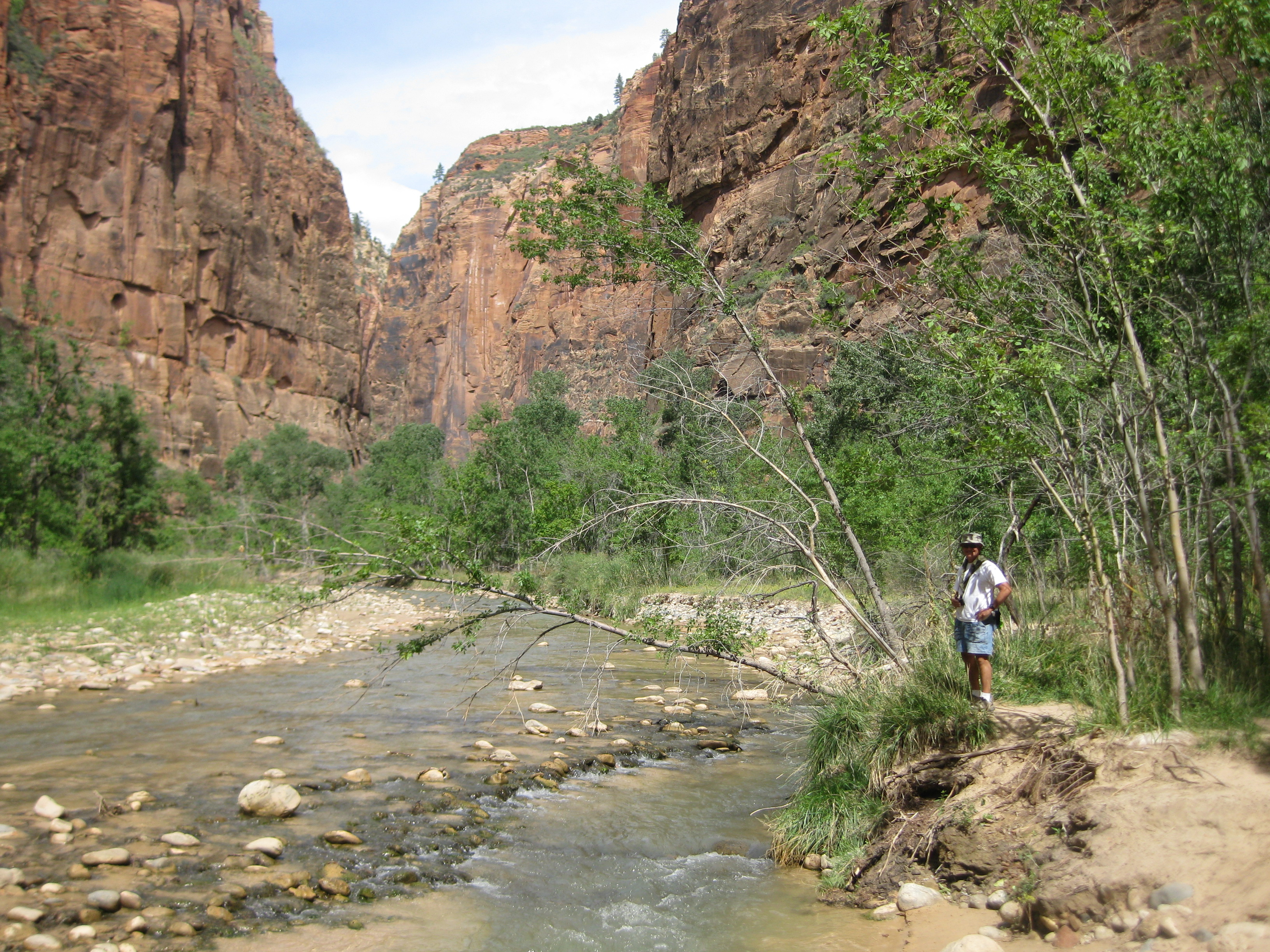
One of the big differences between this park and Bryce is that we were seeing this canyon from the bottom instead of the top.  Looking up at the walls that were up to 2,000 ft. high was overwhelming!  Our camera was again in constant use.  Like Bryce, the park had a bus system so we could ride the bus from one landmark to the next.  In fact, much of the park was accessible only on the bus (or via bicycle)—no cars allowed.

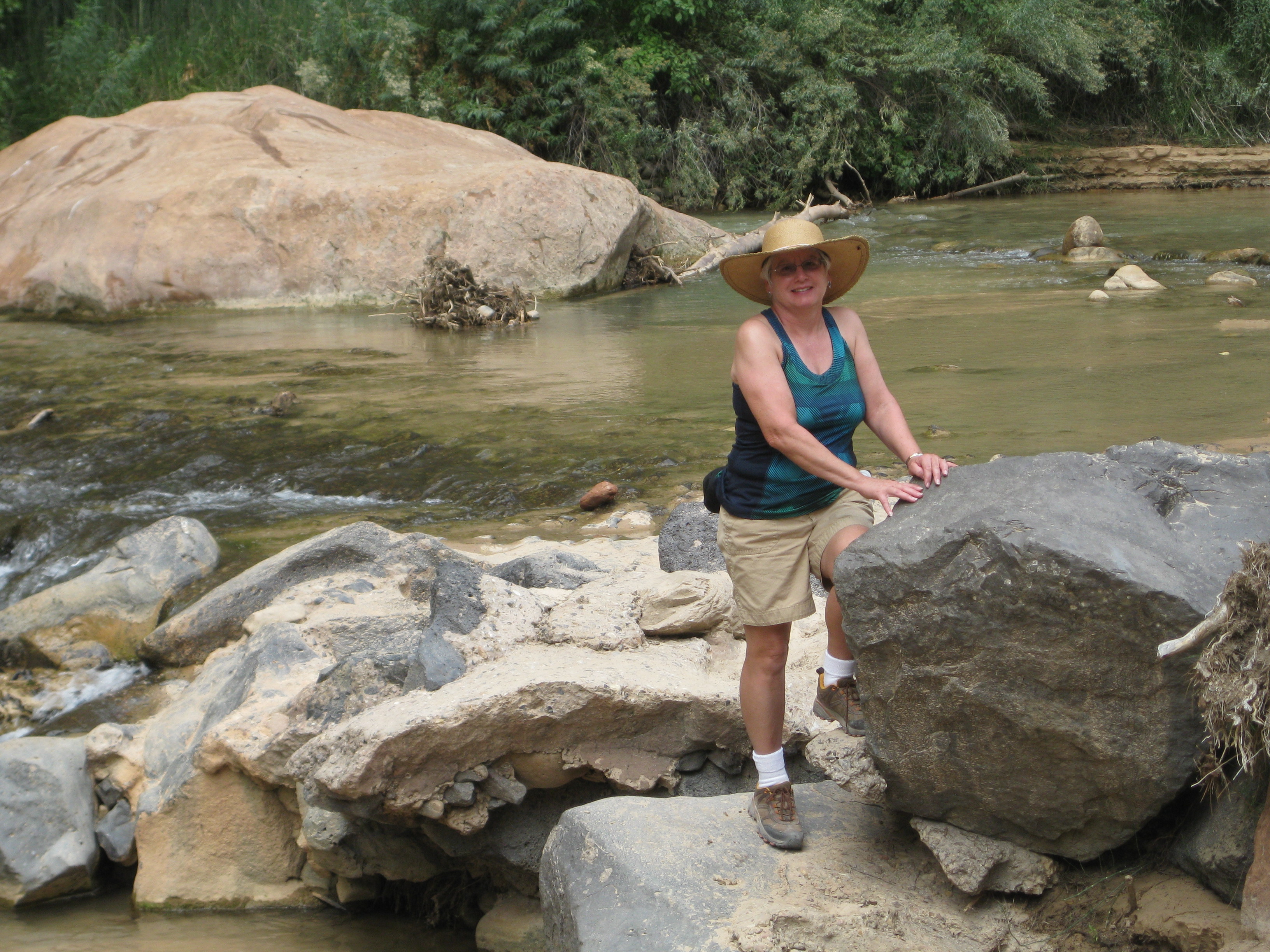
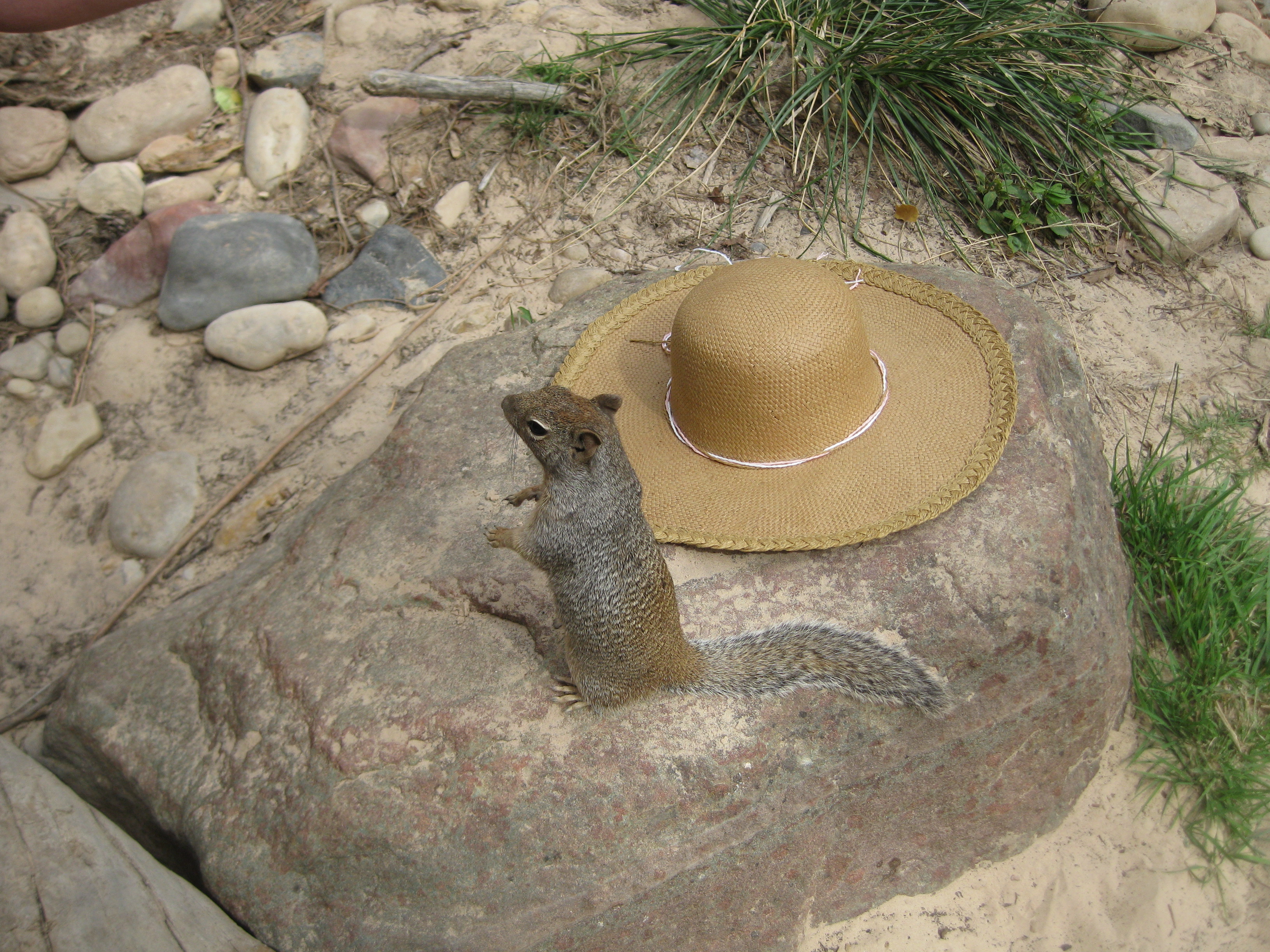
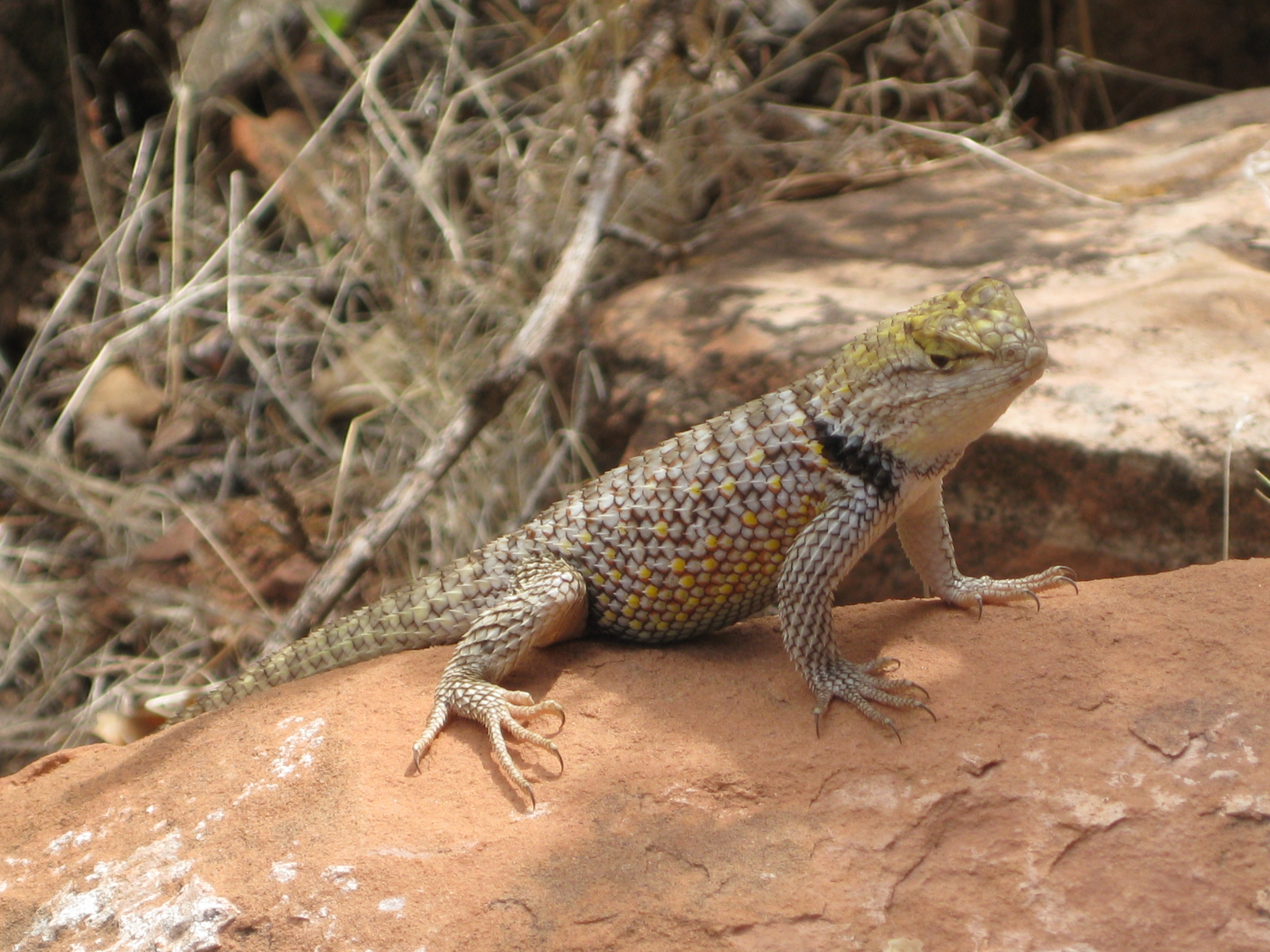
We had our lunch at the beginning of “the narrows”.  This is near where the river enters the canyon and you can walk along the river trail with the canyon walls just a few feet away.  As you can see, we had a visitor join us for lunch.  Unfortunately for him there are strict rules prohibiting the feeding of animals.  The soaring walls, natural springs, and hanging gardens create an unforgettable experience.  We hiked along this trail for about a mile and then hiked the Kayenta trail to the Emerald Pools which was a three mile loop.  As barren as the canyon sometimes seems, there is wildlife everywhere if you look for it.

After stopping at the visitor center and the Zion Human History Museum we were ready to leave.  We had to be out of the park no later that 7:00 because of our big truck.  The tunnel we had passed through coming into the park (and via which we would leave) was too narrow for two-way traffic when any of the vehicles were as wide as a dual rear wheel (doolly) truck.  This meant that they had to stop traffic from the opposite direction in order for us to pass through and this would only be done up until 7:00 each evening. We weren’t taking any chances that we’d miss that deadline!

Our last day at Red Canyon was a day to relax.  Bob did some hiking on the trails around the campground and Pat rode her bike on the bike trail and then we packed up and prepared to hit the road early again the next morning.  Next stop—the Grand Canyon for more amazing scenery!

Posted in Fulltime RV, Michigan Traveler, National Parks, Utah | Tagged , , , , , , , | 5 Comments

Salt Lake City – September 2012

Once again we needed to be close to an airport so I could fly to Pittsburgh for work.  The RV Park at Hill Air Force Base was the perfect solution.  The RV Park is across the road from the fitness center, a couple of blocks away from the Base Exchange, Commissary, Post Office, and Chapel.  It was not like a typical campground, being in the middle of these facilities, but it was certainly convenient.

When we initially made the plan to go to Salt Lake City it was intended to be a place to rest and take it easy.  However, we were impressed with how much there was to do here.

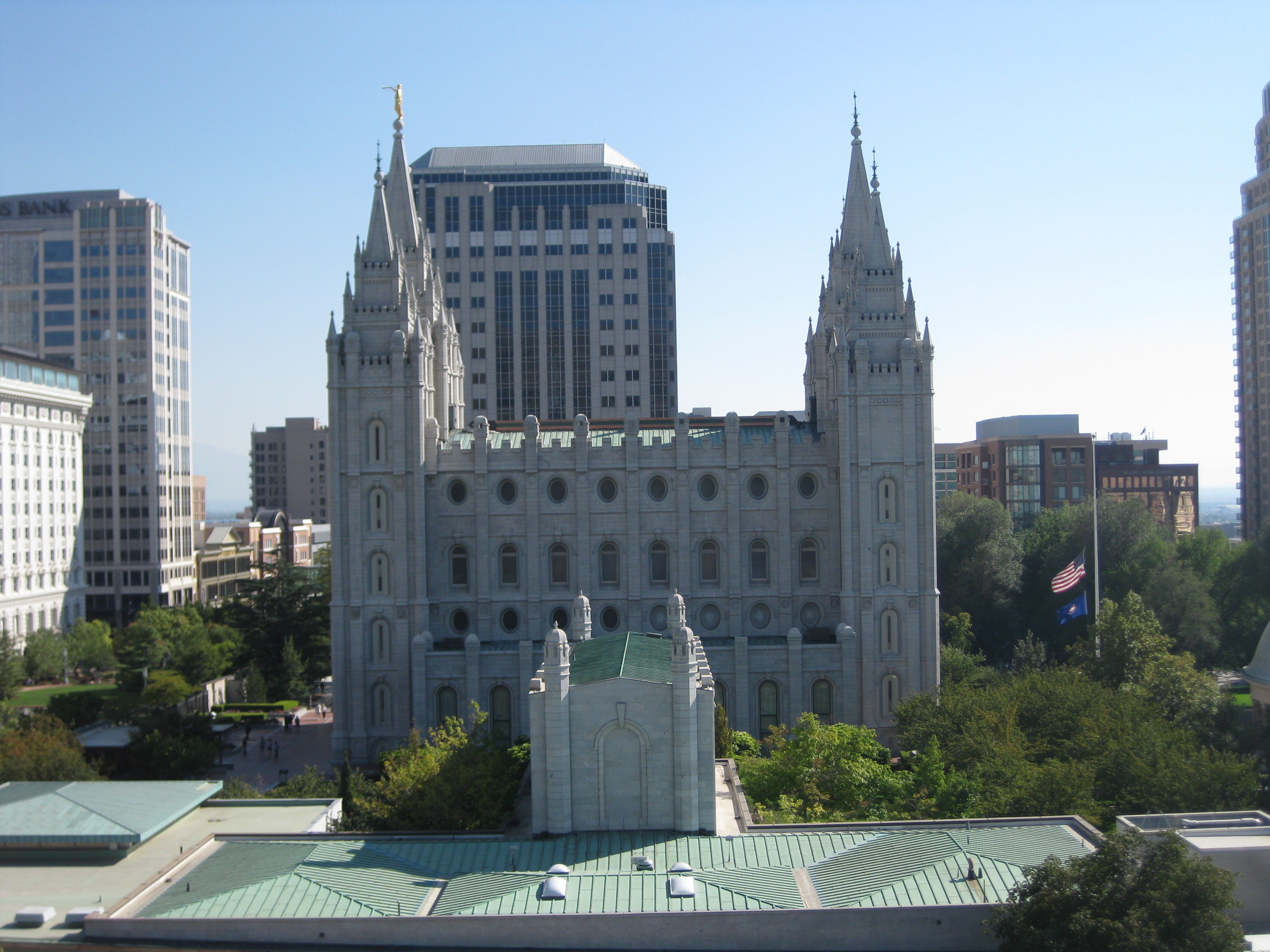
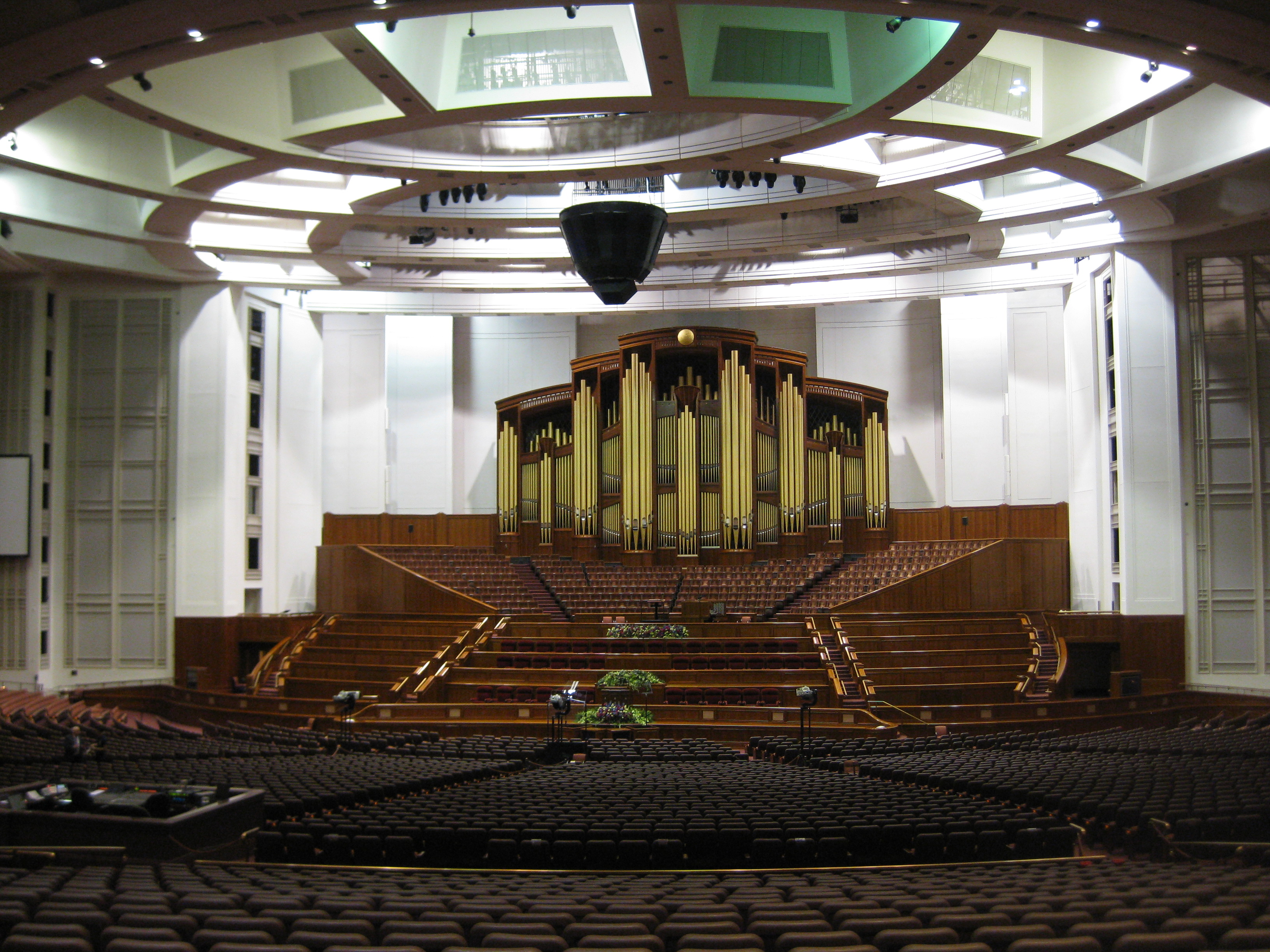
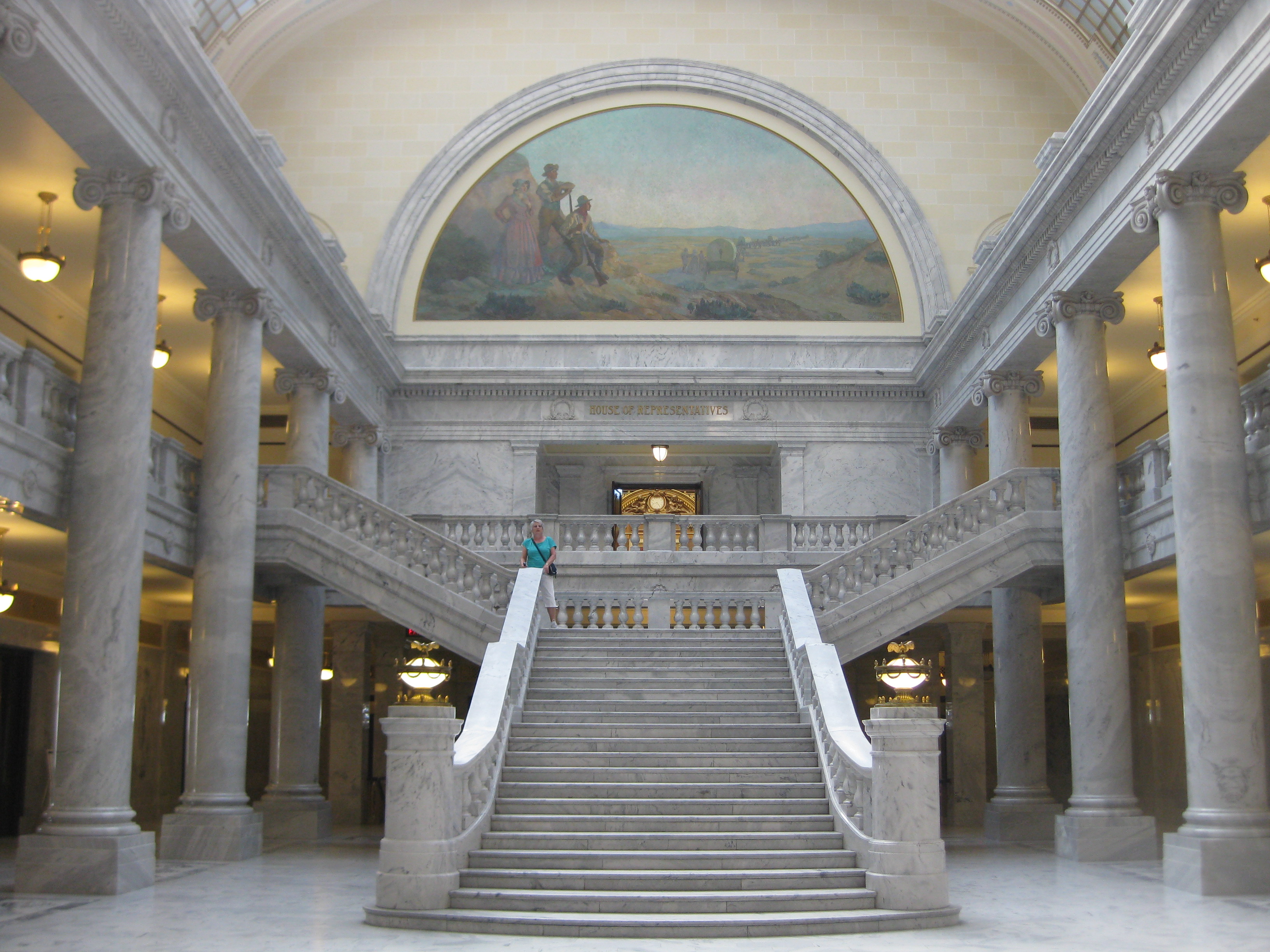
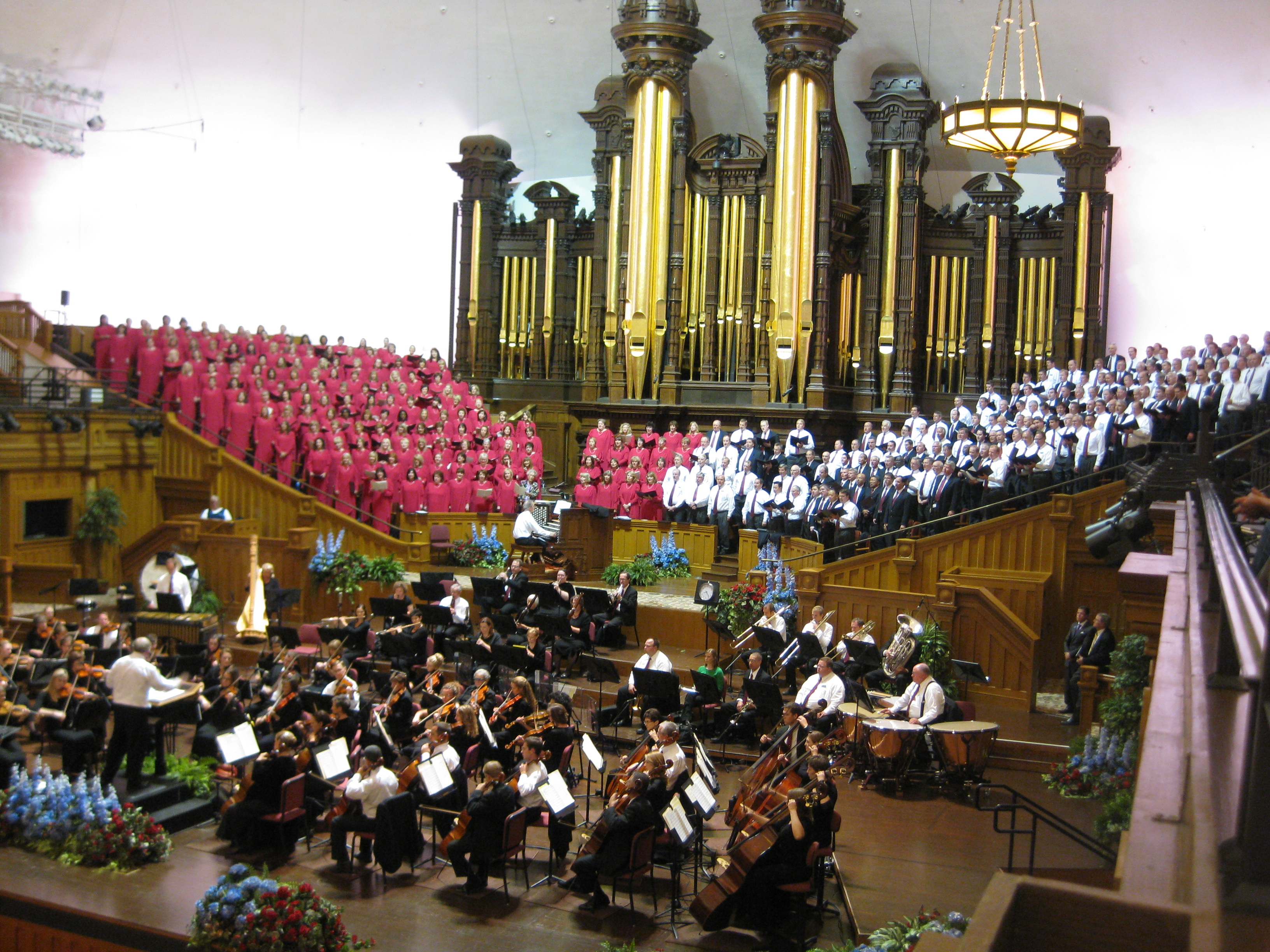
I have always associated Salt Lake City with the Mormon Church, officially known as the Church of Jesus Christ of the Latter Day Saints.  We chose to drive in to see the Temple on Thursday because that’s the night the Tabernacle Choir practices and their practices are open to the public.  Temple Square is a great place to visit if you want to increase your understanding of the Mormon religion.  In the two visitor centers there are volunteer guides available to answer questions and displays and movies describing Mormon history.  We took a tour of the Temple Conference Center.  What a huge venue!  It can seat 21,200 people with no obstructed views of the main stage.  Some of the ceremonies for the 2002 Winter Olympics were held in the center.  It is an amazing place.   After our tour we walked up the hill to visit the State Capital Building.  The building is another impressive site, I love marble buildings.  As we toured the House and Senate Chambers it was easy to see Utah has a smaller population than Michigan; the chambers were much smaller than we were used to seeing.

After dinner we returned to the Temple to watch the Tabernacle Choir.  The tabernacle was full and the choir was magnificent.  It was obvious the this was not your typical church choir!  I can’t think of a much better way to spend a Thursday night.

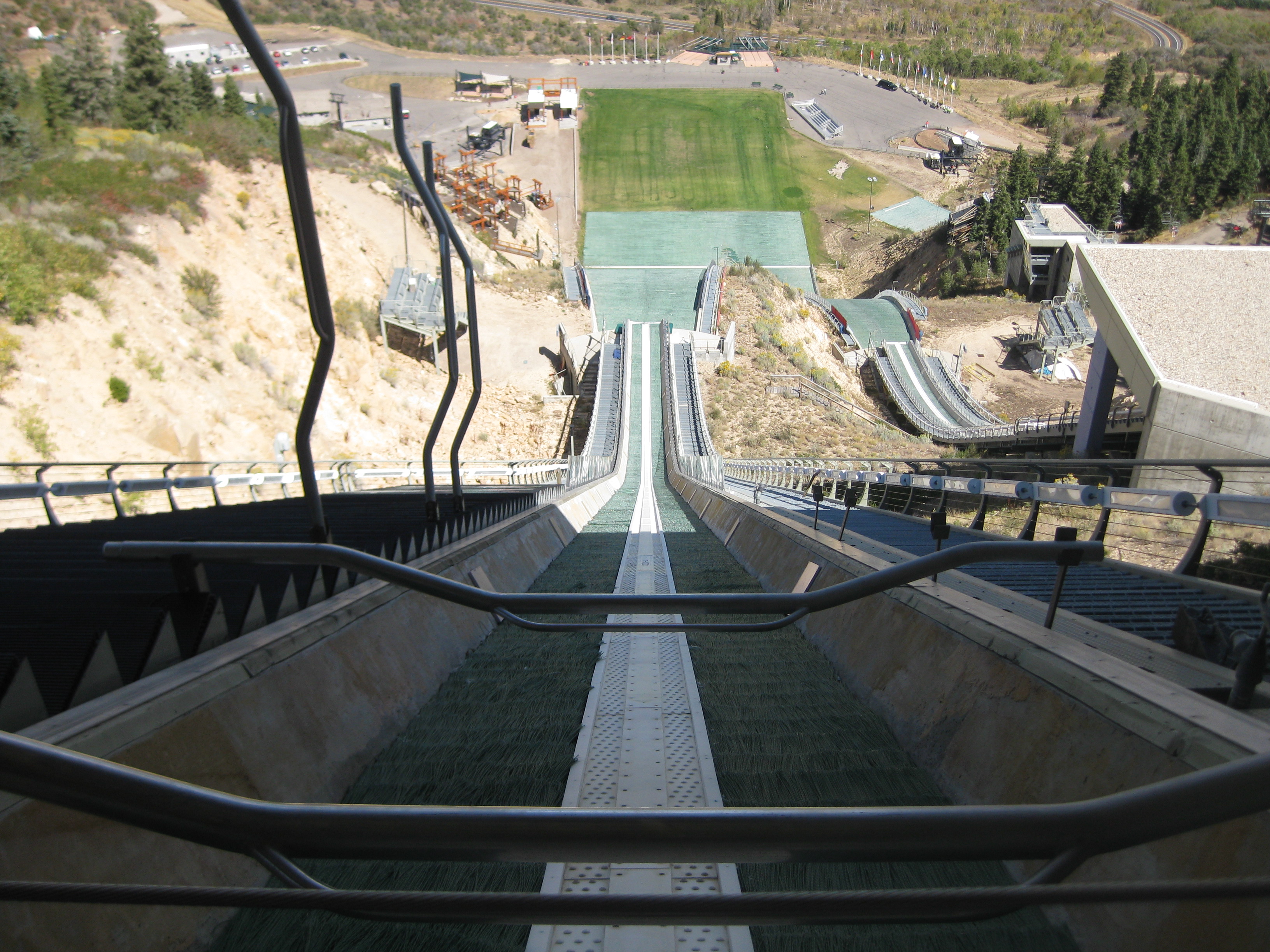
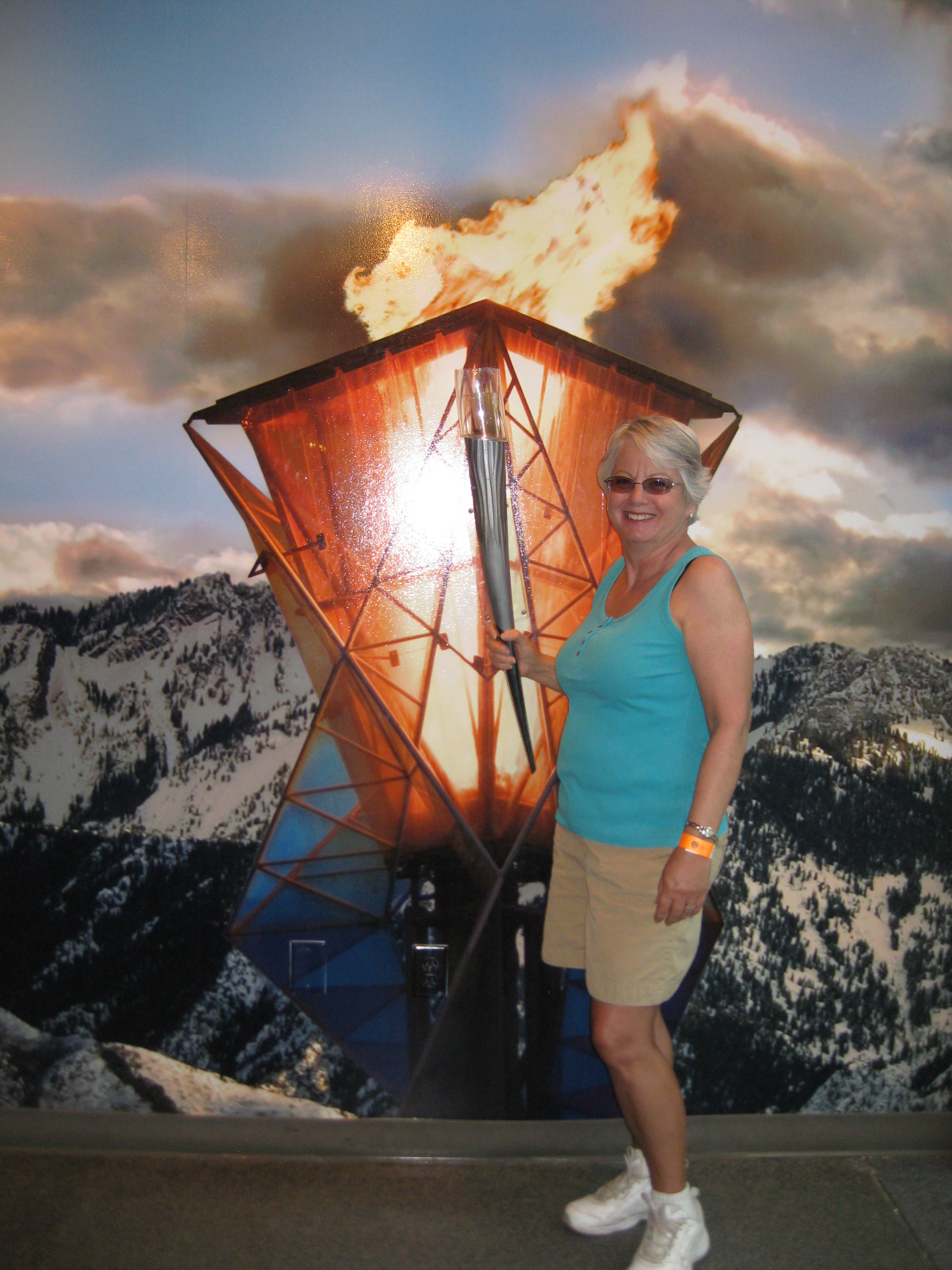
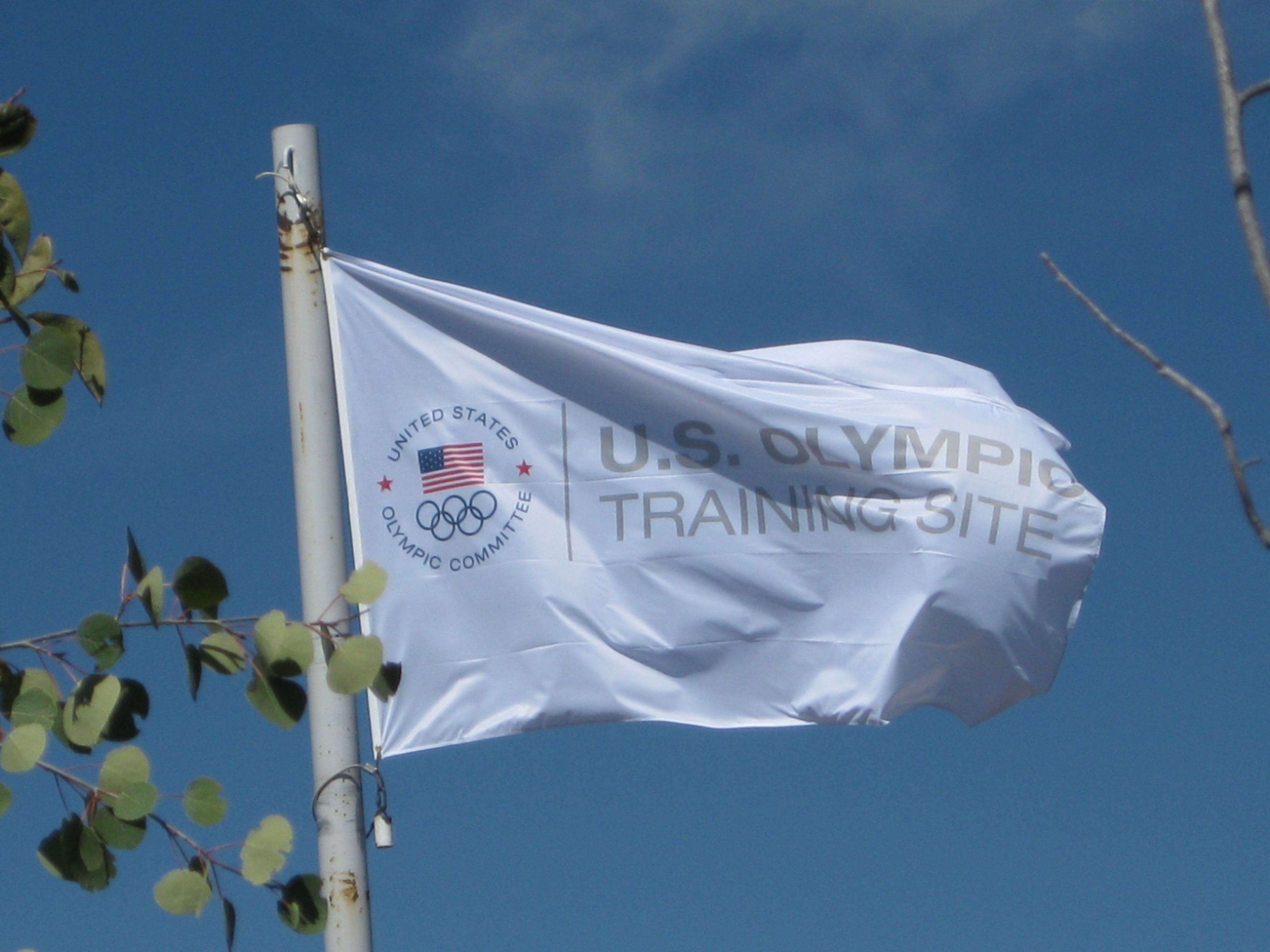
On Saturday, we drove up to Park City to visit some of the 2002 Olympic venues.  We got a better appreciation of the challenge of ski jumping when we were able to actually stand in the upper starting house for the ski jump after looking at it from the landing field.  The courage these athletes have to hurdle themselves down the slope and sail into space is awesome.  Our tour also took us to the top of the bobsled and luge runs.  What an opportunity to get “up close and personal” with Olympic history.  We took a bobsled ride down the mountain to see if we had Olympic potential.  There is also a small museum devoted to the development of skiing in the Park City area and the 2002 Olympic Games.  An interesting feature in the Olympic part of the museum was the individual stories of the athletes as well as the staff and volunteers of the games.  The best part of the trip was watching future Olympic athletes practicing ski acrobatics.  We watched them on practice ski jumps that ended with them landing in a pool of water.  Some of the future athletes were as young as 8 and 9 years old.  The practice was so entertaining that I could have watched it for hours!

We attended the Utah State Fair and had a great time wandering through the booths, sampling the food, visiting the animal stalls and displays, and watching acrobatic acts.  We have attended more state fairs since we have been on the road than we ever did back in Michigan!

Even though I had visited Salt Lake City when I was in the National Guard, I had never been to the Great Salt Lake.  The best place to enjoy the lake is from Antelope Island State Park.  Antelope Island is known for its scenic beauty, especially in the northwest quadrant of the island at Buffalo Point and White Rock Bay, where mountains and hills overlook the Great Salt Lake and other islands that are visible in the lake.  Antelope Island was used as a ranch for cattle and sheep from the earliest days of the arrival of the Mormon pioneers into the Salt Lake Valley. The Mormons controlled the ranch on the island from 1848 until approximately 1870.  The island was purchased in 1870 by John Dooly, Sr, and he established the Island Improvement Company which managed the island and ranches from 1884 until 1981.  The Fielding Garr Ranch is now a museum, operated by the State of Utah.  At the ranch you can see how sheep were raised and the living conditions the family had in the late 1800’s.  Antelope Island State Park was established in 1981 as part of the Utah State Parks System.

Pat & I hiked to the top of one of the mountain peaks and were rewarded by a spectacular view of the entire north end of the island.  While it was one of the shorter trails, it was a challenging climb.

In order to experience the Great Salt Lake, we launched our kayaks from the marina.  The Great Salt Lake is extremely salty, with salt levels reaching as much as 25% of the lake, by volume, so it does not support fish, but does support large numbers of brine shrimp which provide food for visiting waterfowl.  The water level fluctuates quite a bit and the level was very low during our visit.  When I went to swim in the lake we had to walk about a 1/4 mile from the beach to get to the water’s edge.  Then the water was so shallow I had to walk several hundred yards further to get into water deep enough to float.  We both thought the Great Salt Lake would not be a great place to “go to the beach.”

In between our sightseeing we “hung out” at the base, did some cleaning on the trailer and made plans for the future.  Hill AFB has a very nice museum with nice indoor displays and airplanes ranging from a Vietnam era C-130 to a B-52 Stratofortress and B-1Lancer.  I rode my bike to see it and had a great visit; however, the return ride was almost all uphill and there were moments when I wasn’t sure I would make it back to the trailer!

On September 20th, we headed south for the Dixie National Forest and Red Canyon Campground.

Posted in Fulltime RV, Michigan Traveler, Military RV Parks, Utah | Tagged , , , , , , , , , , , , | Leave a comment

Yellowstone National Park – August 2012

We had our shortest drive between stops when we moved from Grand Teton National Park to Yellowstone National Park.  We took our time packing up, went out breakfast before we left, and still arrived in time for lunch!

We checked in at Grant Village and went over to the Visitor Center and Backcountry Office to get detailed information on hiking trails and local Ranger-led programs so we could make our plans.

We started by attending a Ranger campfire program about the history of bison in Yellowstone and the people that were instrumental in saving and increasing the bison herd.  It was at this program that we discovered that for the first five years of the park’s history Yellowstone was operated and patrolled by the U.S. Army.  President Grant created the first National Park at Yellowstone in 1871, but Congress did not appropriate any funding for the park.  Finally, the Secretary of the Interior requested help from the War Department, who responded by stationing Cavalry troops in Yellowstone.

Mammoth Hot Springs is the village closest to the North Entrance.  On our way there we stopped to see Gibbon Falls and the Mammoth Hot Springs Terraces.  The travertine formations of the terraces remind one of layer cakes and lace-edged pools.  The largest facility at Mammoth Hot Springs is Fort Yellowstone.  This was the headquarters for the Army when they ran the park from 1886 until 1916, and is now the National Park Service headquarters.  The old barracks, officer quarters, and stables are still in place and a self-guided walking tour is available.  Bob thought this would have been to be a great place to be stationed, especially if you were an outdoorsman – getting paid to enjoy the outdoors.  Of course the park had to be patrolled in winter as well as summer and with an annual snowfall of 750 inches, it was a challenge to do this on skis and horseback.

An attraction that the National Park Service doesn’t advertise is the Boiling River.  Between the North Entrance and Mammoth Hot Springs Village the Boiling River flows into the Gardiner River.  At the point where they merge you can soak in nature’s hot tub.  This was high on Pat’s list of places to see.  The high temperature thermal water mixes with the normal river water to cool it and create a hot tub effect that won’t burn your skin.  It is a “must experience” part of a Yellowstone visit.  On our way back to Grant Village we took time to check out the Petrified Tree and Mount Washburn.  There is so much to see, you could stay in Yellowstone for a month and not see it all.

Most of the campgrounds in Yellowstone do not offer electrical hookups and generators may not be run after 8:00.  Consequently we had to be back to our campsite by around 7:00 to run the generator enough to charge the battery so it would last through the night.  With sites like Mammoth that are as much as an hour to an hour and a half drive away, we had to schedule our activities carefully.

The next day we biked over to the West Thumb Geyser Basin for a Ranger-led hike to an overlook of Yellowstone Lake and the West Thumb Geyser Basin.  The West Thumb Geyser Basin consists of three distinct groups. The Potts Hot Spring Basin and the Lake Shore Group are not accessible to the public. The Lower Group is the southernmost section.  It is the only group that is open to the public and has an extensive boardwalk system.  The thermal areas of Yellowstone are awesome.  The color of the water is dramatic.  The temperature of the water determines which bacteria can survive in the pool and the bacteria determines the color of the water.

Bison and elk, as well as smaller animals are all over the park.  In fact, we had a mother elk and her fawn wander through the campsite right across the road from ours.  We thought it was comical to see the fawn standing right next to a metal food storage box that is meant to keep food away from animals!

In the north end of the park, the Yellowstone River cuts through the limestone cliffs to create the “Grand Canyon of Yellowstone.”  Next to Old Faithful, this is, in our opinion, the best part of Yellowstone.  We did a lot of hiking in the Canyon Village area.  We hiked along the South Rim to Artist Point, where we listened to a Ranger talk about ospreys and were able to see an osprey nest through her high-powered telescope.  With this scope we were able to see the nest as though we were right next to it!  From there we hiked along the rim on the Clear Lake/Ribbon Lake Loop.  From the rim we turned south into the forest and thermal areas back from the canyon.  The contrast from the canyon to forest to thermal area and then into meadow within a three mile stretch was striking.

In the early days of the park, local entrepreneurs like “Uncle” Tom Richardson, were the primary guides for the park.  For five years commencing in 1898, Uncle Tom led visitors on tours which included crossing the river upstream from the present day Chittenden Bridge, and then following his rough trail to the base of the Lower Falls. The tour was concluded with a picnic and a return trip across the river.  Today the Park Service has replaced Uncle Tom’s Trail with stairs that will allow you to descend about 2/3 of the way to the bottom, giving you a great view of the Lower Falls and the constant rainbow created by the spray of the falls.  When the sun is in the right position to shine on the side of the canyon, the colors of the rock strata are highlighted, creating spectacular views.

We returned through the Hayden Valley.  This valley has more visible wildlife than many other areas of the park.  You can see herds of elk, and bison roaming through the valley, often wandering across the road.  Needless to say the bison always get the right of way.  You and your car will always lose the argument.

The Mud Volcano Area is very acidic, in contrast with most other hot springs and geysers which are highly alkaline. It is turbulent pools of hot muddy water and the strong smell of hydrogen sulfide gas.  Sulphur creates this smell and also gives these mud pots their yellow hues.  There are several geysers and springs in this area.  One of them, Devil’s Caldron, creates a wave underground that flows through a channel creating a booming sound that sounds like canon fire.

Our longest hike was in the Biscuit Basin.  We hiked to Mystic Falls on the Little Firehole River and then up to the overlook that allows you to see all the way to Old Faithful.

This hike gives you a good appreciation of the effects from the 1988 fire that destroyed much of the park.  Many people thought the park was totally destroyed and would have to be replanted to recover.  However, the Lodge Pole Pine need fire to release the seeds in their pine cones.  As a result to forest regenerated itself.  You can now see the regrowth of the forest by comparing the trunks of the burned out forest to the shorter, younger trees that replaced them.

You can’t go to Yellowstone without seeing Old Faithful.  There are bigger geysers in the park and there are geysers that erupt more frequently; but Old Faithful is the most regular geyser in the park.

Many people sit and watch Old Faithful erupt and then take off for someplace else, but the geyser basin around Old Faithful has over 30 other geysers and other thermal features.  Some of these geysers are regular enough that you can call a phone number and find out the next window of time in which an eruption should occur.

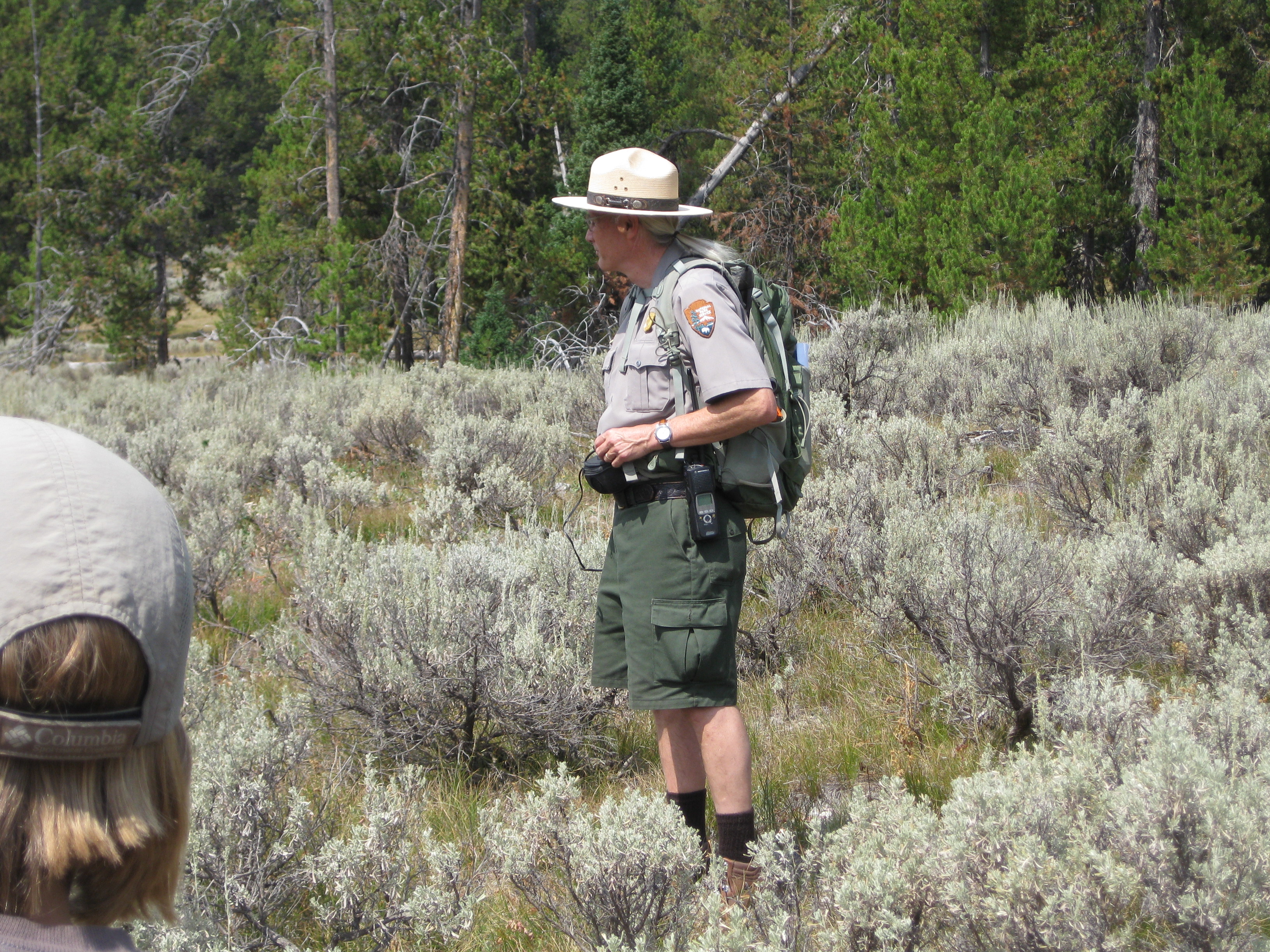
The evening campfire programs were always interesting, covering topics like the geology of Yellowstone, grizzly bears, and people who were instrumental in making Yellowstone the park it is today.  For kids (and adults who are interested) the Junior Ranger program adds a learning aspect to the fun.

We camped in Grant Village for five nights and then crossed the Continental Divide to move to Grizzly RV Park, in the town of West Yellowstone, right outside the West Entrance.  This was a nice change of pace to go from no hookups for anything to full hookups of 50 amp electric, water and sewer.  Bob was really happy to get TV coverage just in time for the Republican Convention!

From West Yellowstone we went to Norris Village and visited the Museum of the National Park Ranger which is housed in a restored Patrol Cabin.  These Patrol Cabins were established while the Army was patrolling the park and used as a way station for Cavalry patrols.  Today they are still used by Park Service Ranger patrols during the winter months.  Norris Geyser Basin is the hottest geyser basin in Yellowstone, and offers the widest range of thermal features of any one place in the park.  It has mud pots, hot springs, geysers, and paint pots.

Midway Geyser Basin is the most colorful of all of the thermal features.  The most spectacular view is where the Excelsior Geyser discharges more than 4,000 gallons a minute into the Firehole River.

We spent eight very busy days in the park and could have stayed longer.  However, after all of the site-seeing  we have been doing since July, we were ready for some relaxing time.  On August 30th, we headed south to Hill Air Force Base, near Salt Lake City, UT.

Posted in Fulltime RV, Michigan Traveler, National Parks, Wyoming | Tagged , , , , , , , , , , , , , | Leave a comment

Grand Teton National Park – August 2012

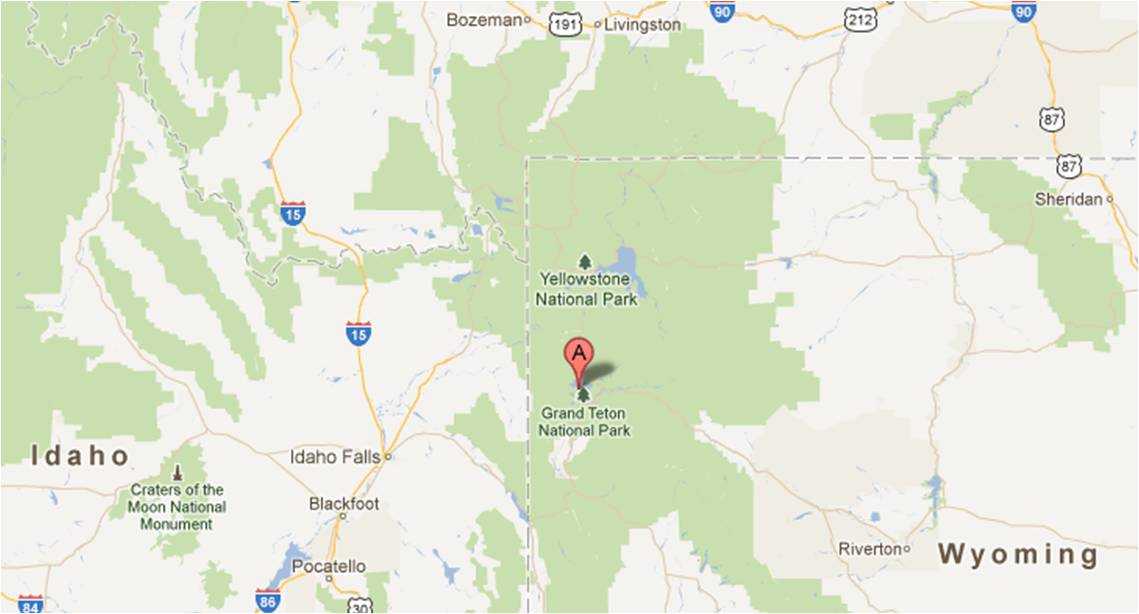
We had originally planned to visit the Grand Tetons after visiting Yellowstone National Park; however, after studying the best route from the Black Hills to Yellowstone we determined that entering Yellowstone from the south instead of the east would allow us to drive over fewer and less steep mountain passes.  With this change in our route, it made more sense to visit the Grand Tetons first.  You can’t help but know you have entered a unique part of the country when you drive into the Grand Teton National ParkTo say the mountain range is impressive is an understatement.

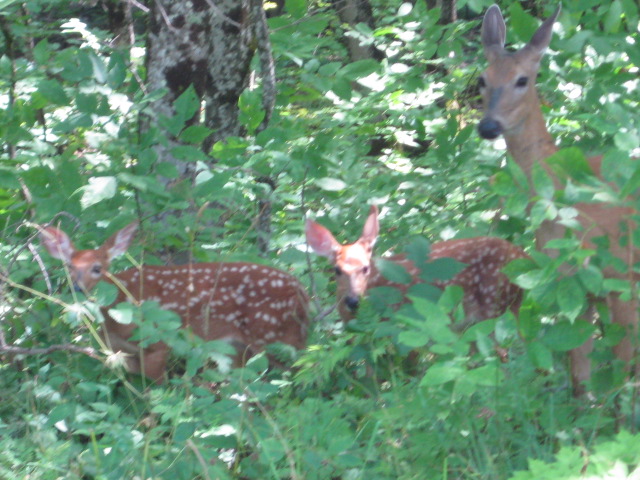
We stayed at the Colter Bay Campground which had no hookups for water or electricity.  This has become a familiar situation for us, but we weren’t prepared for no drinking water being available.  They had had a water line break, so we had to drive 7 miles to get drinking water from another campground.  We knew there would be a lot of wildlife around, but it became very real when the volunteer that checked us in reminded us to keep all food inside and mentioned that a black bear had been seen in the campground.  We didn’t see any bears in the campground, but did watch some deer in one of the picnic areas.

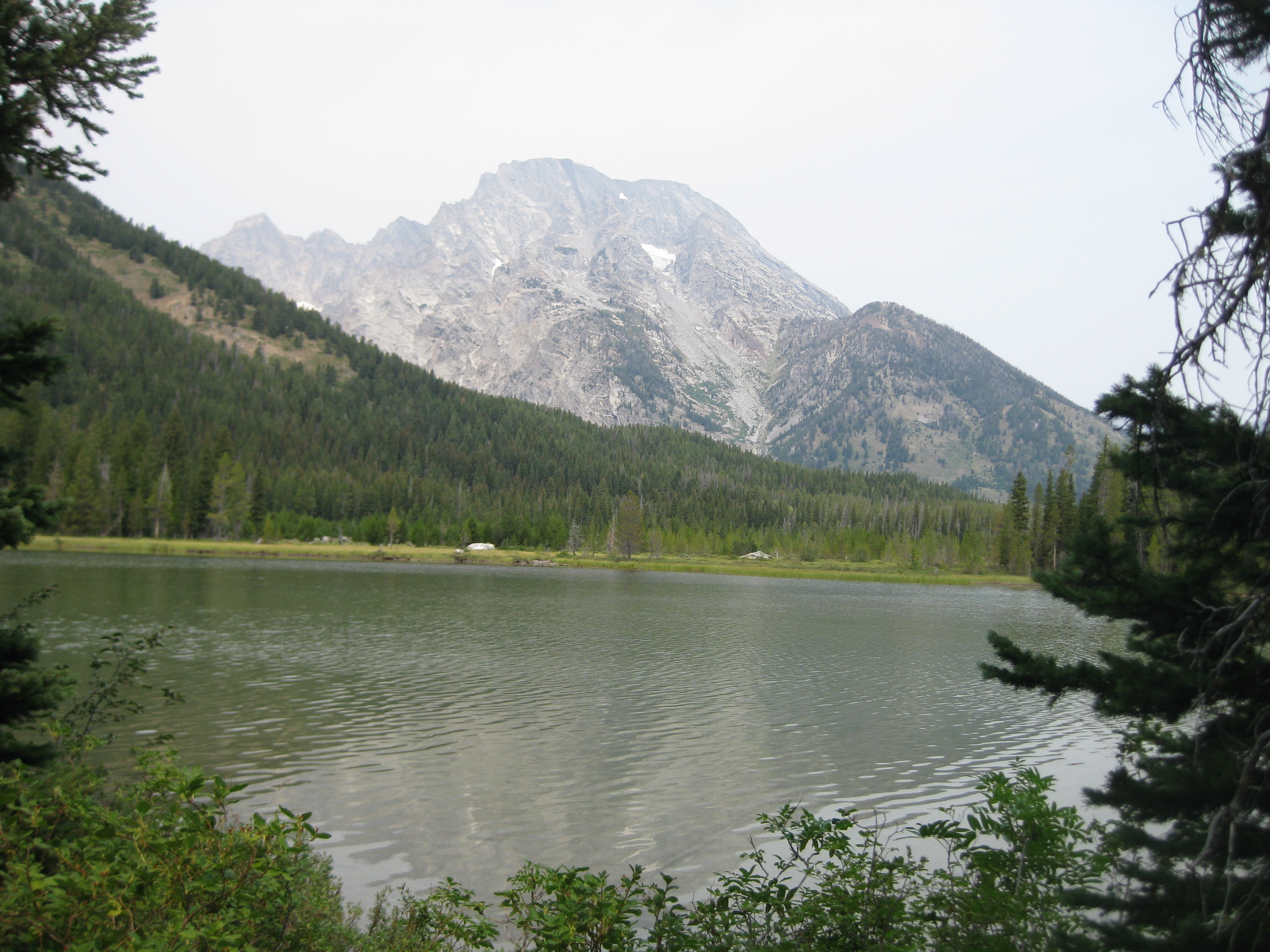
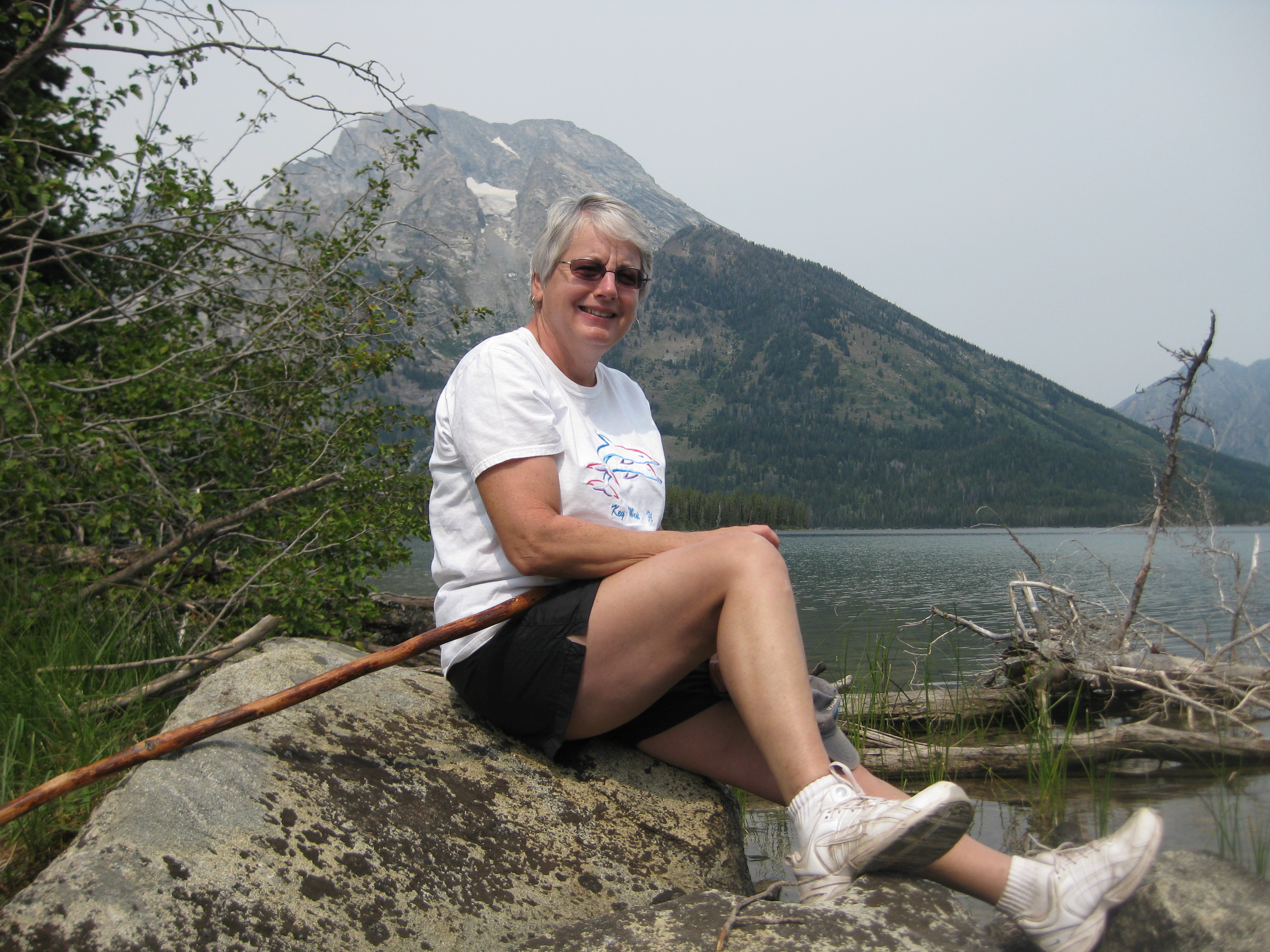
We checked in at the visitor center to see what was available.  We had not done much planning for activities and played it by ear.  The visitor center had trail guides for some day hikes in the area.  We hiked about five miles along the shore of Leigh and String Lakes and part of the way up the mountain side.  The view of the Teton Mountain range was amazing.  On another day we hiked two miles around a peninsula near the visitor center.  As we hiked we noticed a sort of haze over the mountain range.  We later discovered it was smoke from the forest fires in California and Idaho.

One evening we attended a campfire program about Sacajawea, the Shoshone Indian who helped the Lewis and Clark Expedition.  The speaker was the author of several books about the west, Kenneth Thomasma.  He was an excellent speaker and story teller.  It was a marvelous experience to listen to him describe how Sacajawea grew up, traveled with Lewis and Clark, and how much help she provided to the expedition.

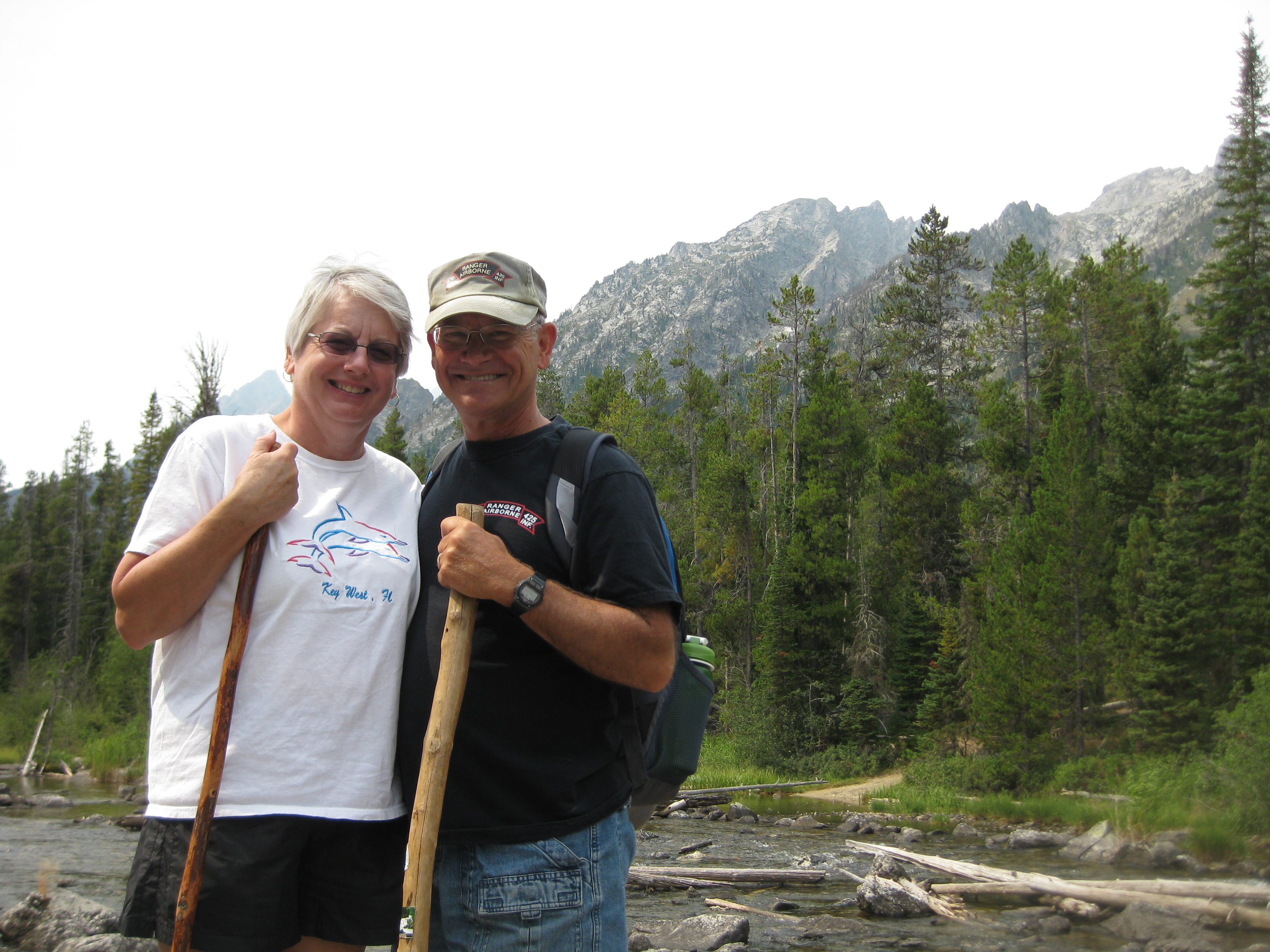
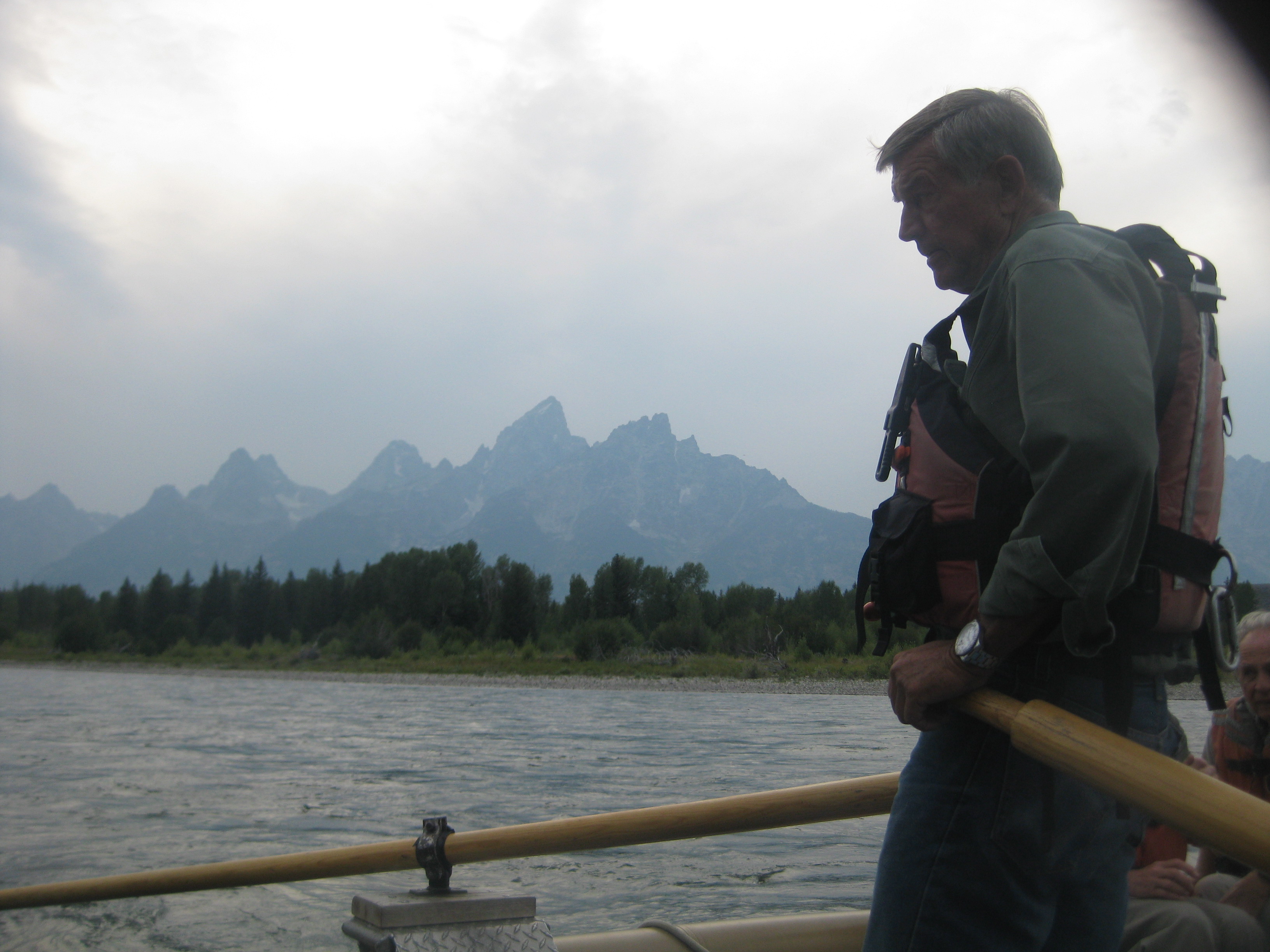
Our last full day in the park was a busy one.  We had a picnic on the beach with a grand view of the mountain range.  That afternoon we went on a “rock and roll” nature hike where the Ranger used clips of rock and roll music to describe the flora, wildlife, and geology of the park.  It was a very unique way to learn about nature!  Then, after a quick dinner in the truck we went on a rafting trip down the Snake River.  Our guide was outstanding!  He has written a book about the development of the Grand Teton area and was a wealth of information.  We saw a lot of wildlife – elk, beaver, bald eagles to name a few.  The Snake River is one of the fastest rivers in the west, but you could hardly tell it.  The Snake has such a constant depth and smooth bottom that doesn’t cause the rapids you see on other rivers.  Our guide did more steering than paddling as he navigated our raft downstream.
The next morning we packed up, went out to breakfast at one of the park’s restaurants and made the relatively short drive north to Yellowstone National Park.

Posted in Fulltime RV, Michigan Traveler, National Parks, Wyoming | Tagged , , , , , , , , , | Leave a comment

South Dakota, The Badlands and the Black Hills – August 2012

It was June of 2011 that we became official residents of South Dakota and now we finally returned to our new home state.  The drive from Matt and Adams’ house to Custer State Park in the Black Hills was too far for a one day drive, so we had planned to stop enroute.  At first we had discussed staying at an RV park near Chamberlain, SD, but as we refined our plans we decided to stay overnight in Badlands National ParkIt was going to be a quick visit but we made the most of it.  The campsites are essentially wide spots in the road and we would not call them “big rig friendly” as the spots are not very long.  When you have a combined length of 55 feet for truck and trailer, that is a big factor.

We stopped at the visitors center (always a good source of local information) and asked where we should go to see the most wildlife.  The visitor center had lots of information about the park, its history and topography.  There are also several Ranger-led activities available.  The volunteer told us if we were driving to go along the Sagecreek Rim Road, and if we were on foot to hike a short stretch of the Castle Trail.  As there was still daylight, we drove to the Sagecreek Rim Road where we saw bighorn sheep, prairie dogs, and pronghorn antelope.  The views were awesome!  As we drove back to the campground, the setting sun lit up the cliff faces, highlighting the color of the different layers of rock.

The next morning we hiked a portion of  the Castle Trail.  Hiking in the Badlands is an entirely different experience than anywhere else we have been.  It has a stark beauty, rather than lust forest.  In many places the rocks rose above us in amazing beauty, and the views of the valley areas were beyond description.  It was like walking on the surface of the moon, the landscape was so barren.  On much of the trail the surface was so hard we didn’t even leave footprints.

From the Badlands it was a fairly short drive to Custer State Park in the Black Hills.  You have to be careful in your planning how you want to enter Custer State Park.  If you travel south on US-16A from Rapid City you will have to pass through three one-lane tunnels of which the tallest has a clearance of only 12′ 9″ and there is no bypass for one of them.  Because of this we traveled via SD-36.  There are also one-lane tunnels on SD-87 within the park that were a tight fit for our truck without the trailer.  Good route planning is essential.

Custer State Park is a nice place to camp and there are many things to do in the area.  Obviously Mount Rushmore is high on the list of places to see.  The park also offers many Ranger-led programs.

We had visited Mount Rushmore about five years ago and Bob wanted to visit it again.  He thinks that anyone visiting the Memorial should take the Ranger-led tour of the Memorial This leads you along a trail that gives you the best view of each of the Presidents.  The Ranger gives you some history in the creation of that part of the Memorial and why the sculptor choose that President.  You can also see the sculptor’s, Gutzon Borglum, studio.  The museum has displays about each of the Presidents and the process of constructing the Memorial.

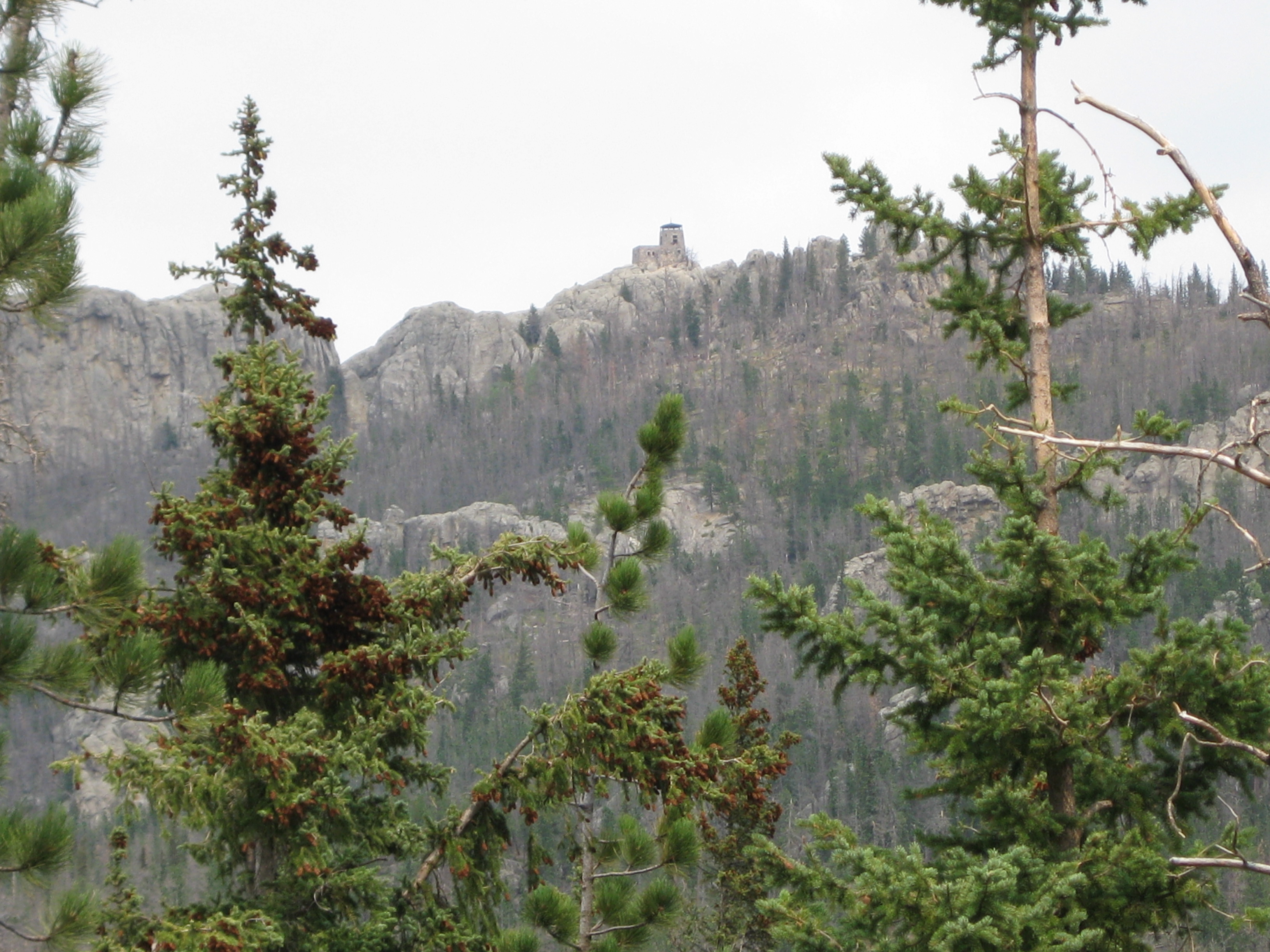
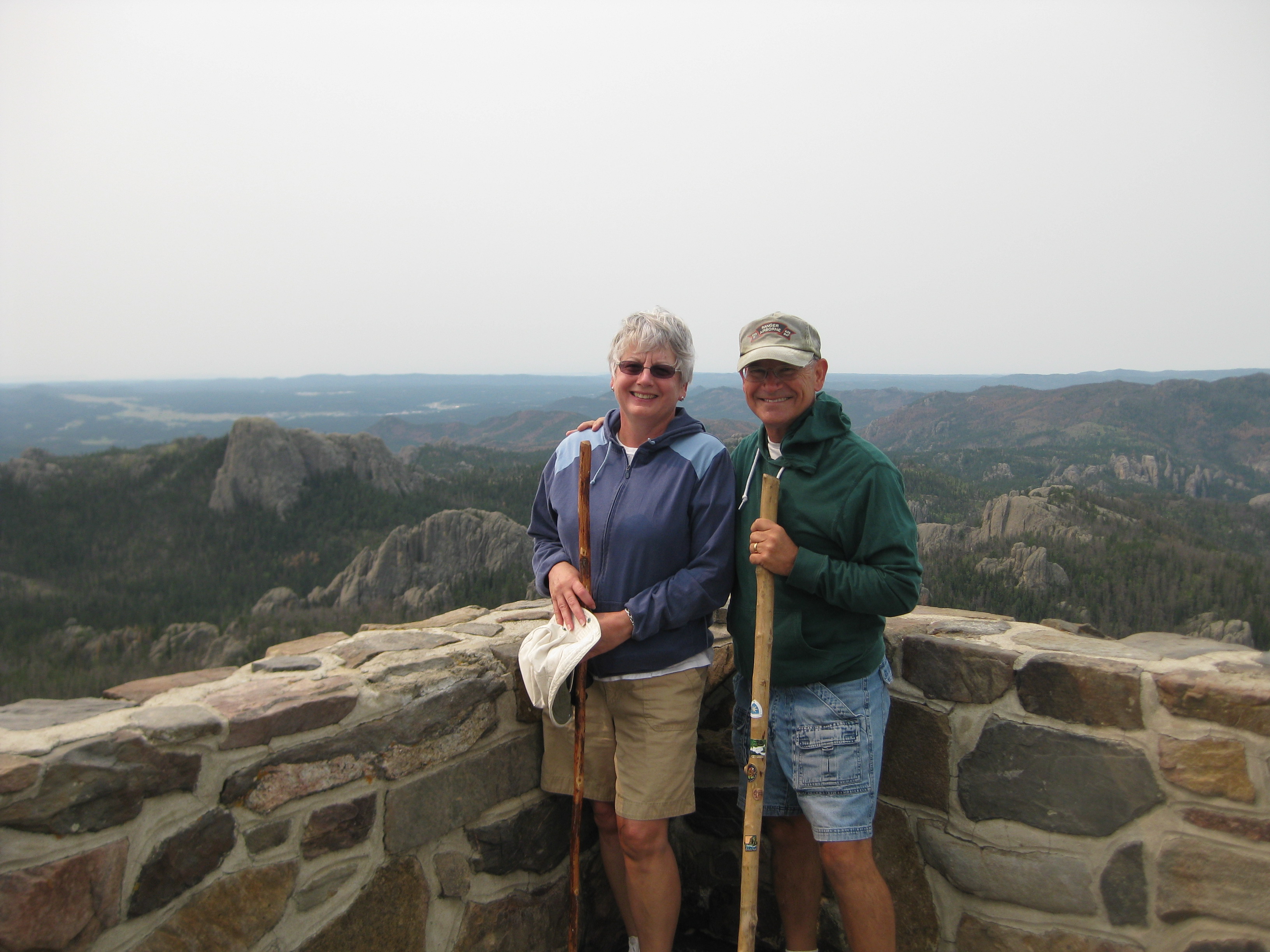
Pat selected what was one of the best hikes we have been on – Harney PeakThis is the highest mountain east of the Rockies at 7,242 feet.  The path is well defined and offers some spectacular views along the trail; however, nothing rivals the view from the peak.  There is an old stone fire tower that was built by the Civilian Conservation Corps (CCC).  The tower was abandoned as a fire tower years ago, but is a wonderful destiny for a hike.  The tower is even more impressive when you understand that every brick, bag of cement and sand, and piece of steel was brought up on someone’s back!

We also visited the Crazy Horse Memorial.  This is a tremendous undertaking that we wonder if it will ever be completed.  The original sculptor, Korczak Ziolkowski, has died and now his wife and most of his ten children are continuing the work.  The face of Crazy Horse is the largest part that is completed and it is four times larger than any of the faces on Mount Rushmore.  The visitor center has many displays by local Indian tribes as well as descriptions of the construction.

One evening we took a tour led by a park naturalist to view the wildlife in the park.  Custer State Park is proud of its bison herd.  The park has worked hard to develop the herd and manages it to insure that the size of the herd does not exceed the park’s ability to sustain it.  There is an annual bison round-up and auction of bison to reduce the herd.  Our naturalist mentioned that ranchers often buy Custer Park bison to improve the quality of their herd.

The day before we left, we drove to Box Elder to “visit our mailbox” and pick up our mail.  America’s Mailbox is our mail forwarding service and is located in Box Elder, just east of Rapid City.

On August 17th, we headed west for the Grand Teton National Park.

This slideshow requires JavaScript.

Posted in Americas Mailbox, Fulltime RV, Michigan Traveler, National Parks, South Dakota | Tagged , , , , , | 1 Comment

Minneapolis, MN – August 2012

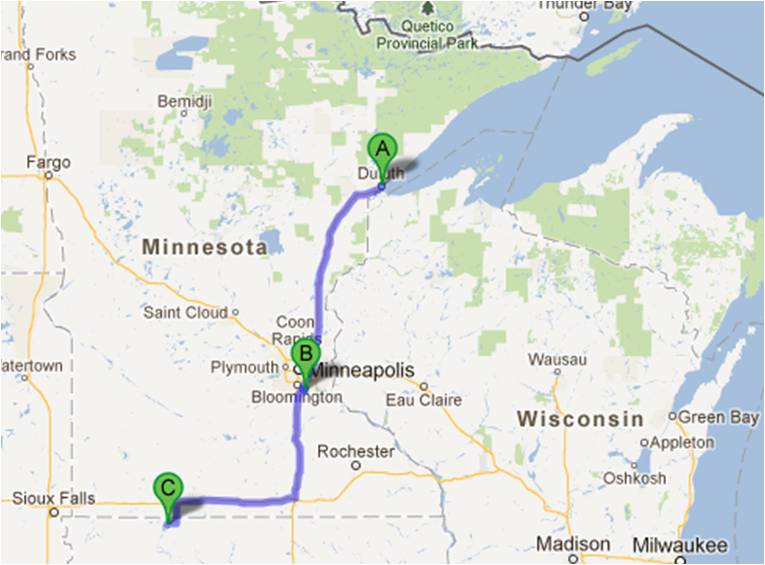
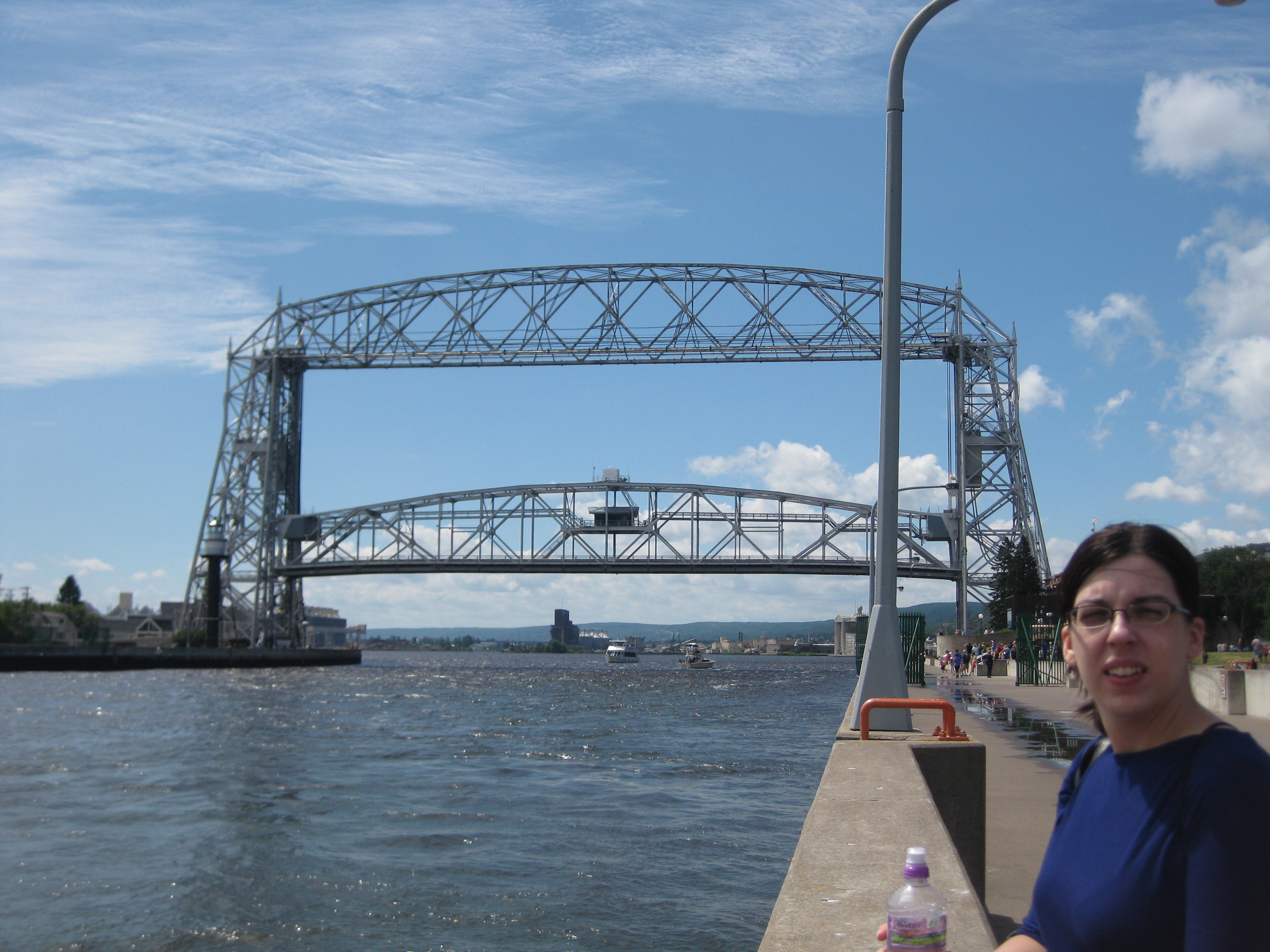
As we left Michigan we decided our next stop should be Minneapolis because Bob was flying to Pittsburgh and needed to be near an airport.  On our way there, we decided to break up the trip by stopping overnight in Duluth, MN.  We had no idea where to stay but we discovered that the Lakehead Boat Basin, just past the Aerial Lift Bridge in downtown Duluth, has RV sites.  The RV sites are nothing more than sites on the parking lot where they store boats in the winter, but it fit our needs perfectly.

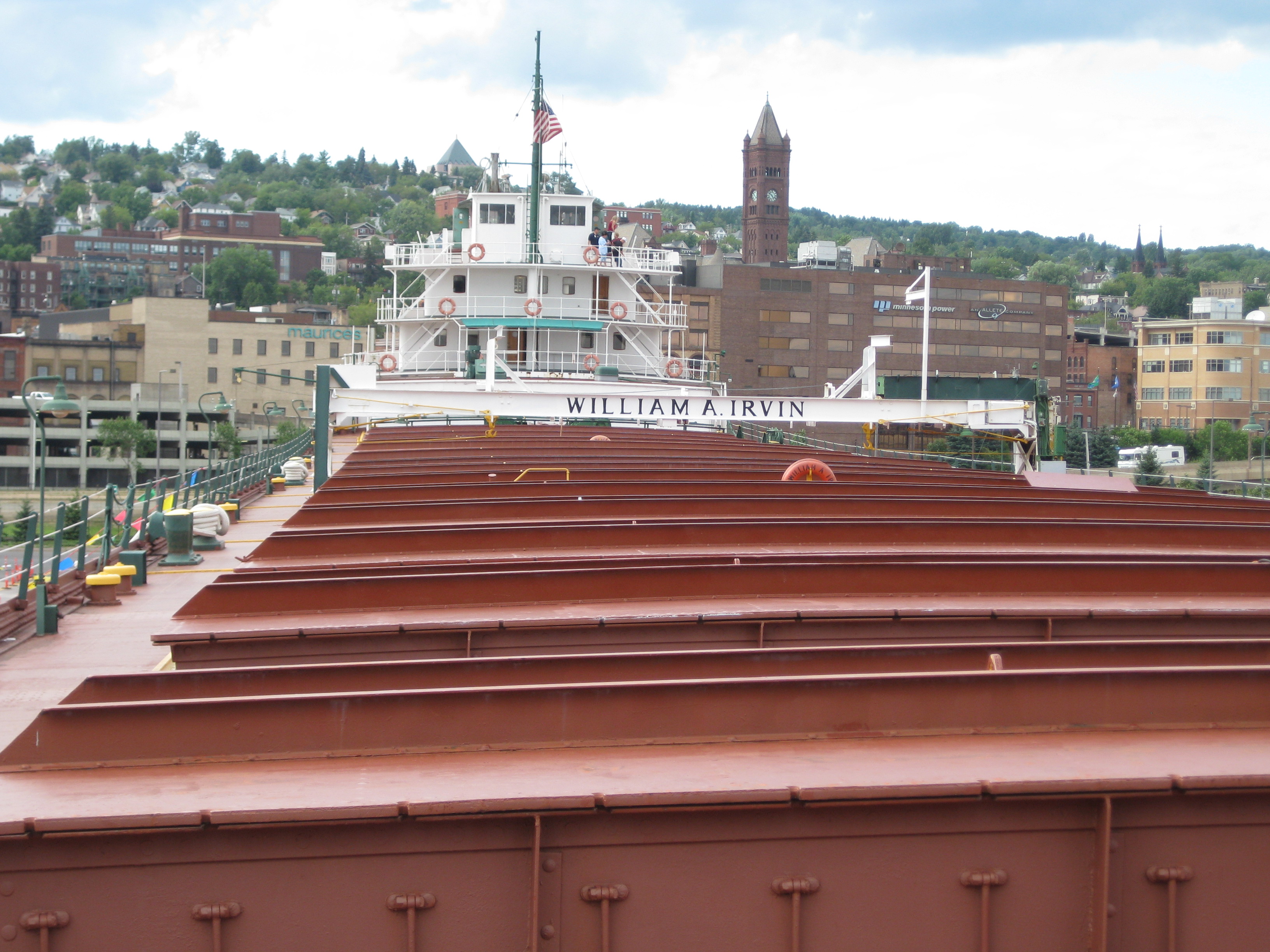
We arrived around lunch time, got set up, had lunch and then walked the few short blocks to Canal Park Area.  The first place we stopped was the Lake Superior Maritime Visitor Center and took a tour of the Duluth ship canal and the three lighthouses on the canal wall.  The Canal Park area is loaded with various shops and restaurants and we wandered through most of them.  Bob took a tour of the William A. Irvin, a Great Lakes Iron Ore ship that was turned into a floating museum and then we had dinner.  After that we headed back to the RV to watch the Olympics.  After more than two weeks without TV it was a treat to see what was going on with our athletes in London.

The next morning we did a walk along the Lake Walk, an exercise/walking trail along the lakeshore, a great way to start the day, then we packed up and headed for Minneapolis.

In Minneapolis we stayed at the Lebanon Hills County Park.  It’s one of the unique campgrounds where you can be in the middle of a metropolitan area, but still feel like you are out in the country.  Bob took off for two days for his Corps of Engineers training program.  As a part of this program he takes his class to visit the Flight 93 Memorial in Pennsylvania.  We both visited it last year a month before it was open to the public.  This year’s visit was even more impressive.  Because the program is presented to the class by the Deputy Superintendent of the National Park Service district, the class is able to see parts of the site not accessible by the general public.  The class visited the VIP viewing area.  That is the closest anyone can get to the actual point of impact other than the families of the passengers and crew of United Flight 93.  This is the site of the first battle with a foreign enemy on U.S. soil since the War of 1812 and is both a humbling and inspiring experience.

While Bob was gone Pat had posted on Facebook that she was in the Minneapolis area and one of her high school classmates who lives in Minneapolis contacted her and showed her some of the local sites.

When you are in the Minneapolis area, the Mall of America is on the list of things to do and we did that the day after Bob return from Pennsylvania.  We picked up a small table we wanted for the trailer at Ikea, had lunch at the Mall, but didn’t buy anything there.  I doubt that most people could say they went to the Mall of America and left empty handed!

We left on Saturday, August 11th and traveled to Spirit Lake, IA and spent the night with our nephews, Matt and Adam.  They both work at a windmill farm in Minnesota and live in a house just over the border in Iowa.  They have a very nice place with a great view, just the right place for two guys who grew up on a farm.  We fixed them a home-cooked meal that was greatly appreciated and they let us camp in their driveway.  The next day we were back on the road for a long drive to the Badlands National Park in South Dakota.

Posted in Michigan Traveler, Minnesota, National Parks, South Dakota, Working on the Road | Tagged , , , , , , , , , , , , | Leave a comment

Porcupine Mountains – July 2012

What a lovely drive it is from the Pictured Rocks to the Porcupine Mountains!  The first part of the trip parallels the Lake Superior shoreline, what a great view!  The Porcupine Mountains Wilderness State Park is the preservation of a mature forest, as much of a true wilderness as can be maintained in this modern age.  Very few roads penetrate the interior of the park, making it accessible only by foot.  Hiking trails, back country campsites, and hike-in rustic cabins are plentiful throughout the park.  We stayed at the Union Bay Campground.  This is the only modern campground with electrical hookups.  The sites are nice and most are large enough for large RVs.  Presque Isle Campground, a more rustic campground without hookups is located on the west end of the park.

The Visitors’ Center has displays that describe the history and the environment of the park.  Pamphlets and maps of the hiking trails and backcountry campsites and cabins are available and rangers assist with advice on how to make the best of your wilderness experience.

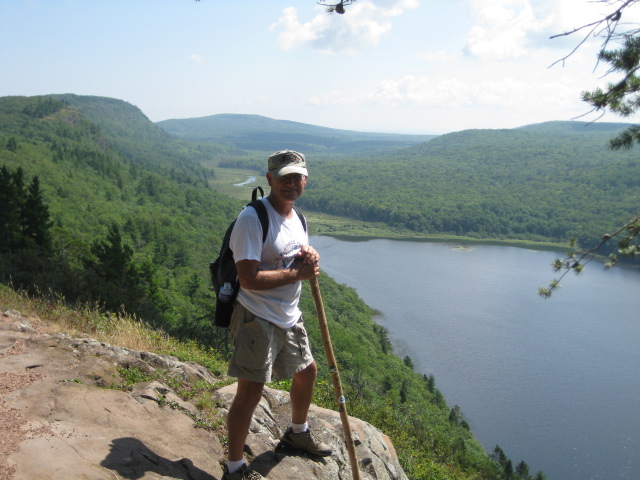
Summit Point is the highest point in the park and we decided to start our visit at the top, so we hiked to the top of Summit Point and the five-mile Summit Loop hike.  The view from the top was well worth the climb.  We saw several hikers as we hiked the loop, and saw a number of backcountry campsites.  Some of these were in prime spots on the shore of small inland lakes.

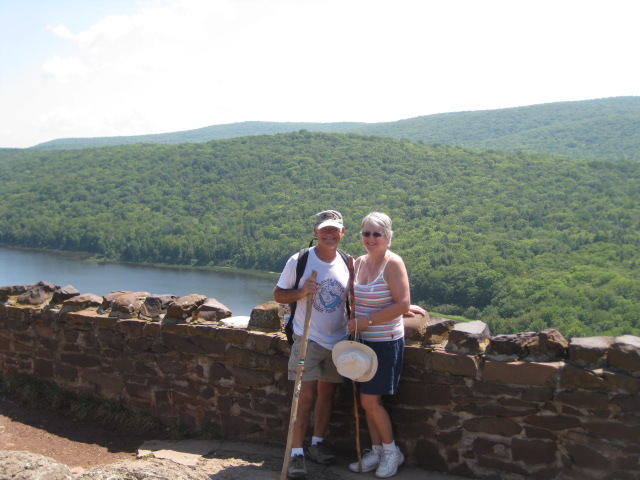
The Escarpment Trail is also a trail that offers some great views.  We spotted the truck at the end of the trail and Bob rode his bike back to the eastern trailhead.  The beginning was a tough climb and once we got to the top of the Escarpment we quickly decided the view was worth the climb.  Along the Escarpment Trail you can look down on the Lake of the Clouds and look out over much of the Wilderness Park.

With all of this activity we decided to take a day off just to be lazy, although that included doing laundry and some other chores around the trailer.  We spent a lot of time just reading and taking it easy.  We had to make sure that we got at least one more Upper Peninsula pastie and went to a little restaurant called Syl’s Cafe and had a couple of the best pasties we had ever eaten.  We even got two frozen ones to take with us to enjoy at a later date.

We had not been to the western end of the park and decided to drive to the Presque Isle campground and hike around the three falls on the Presque Isle River.  There was a foot bridge to the other side of the river so we crossed, went up river on the East River Trail and then crossed on the road bridge to see the falls from the other side on the West River Trail.  It was our easiest hike, but very picturesque.

If you want to see a true Michigan wilderness, then the Porcupine Mountains need to be on your list.  You can hike and camp in the back country or enjoy a modern camping experience, but however you decide to enjoy it, I’m sure you will.

Posted in Fulltime RV, Michigan, Michigan Traveler | Tagged , , , , , , , | Leave a comment