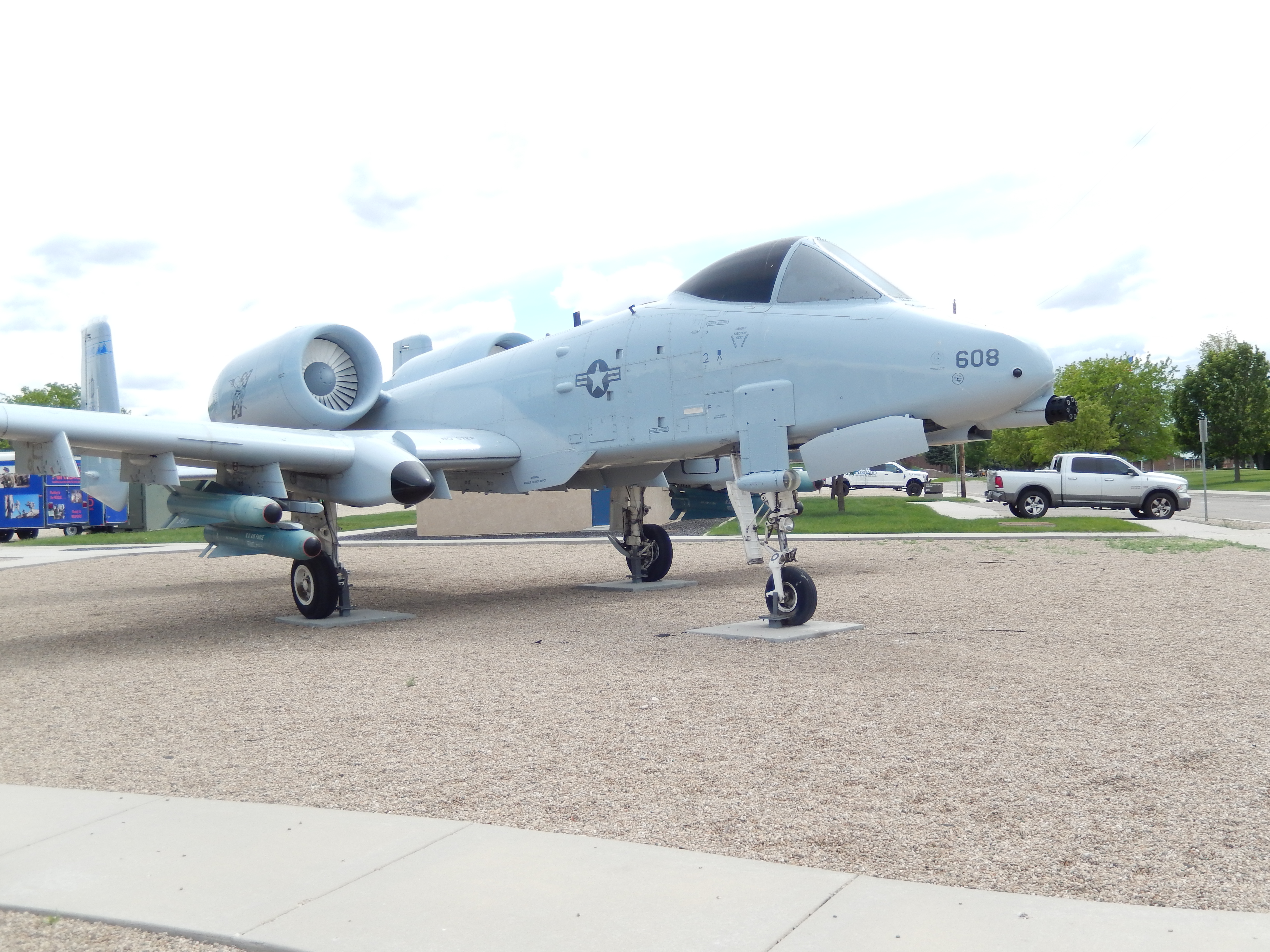
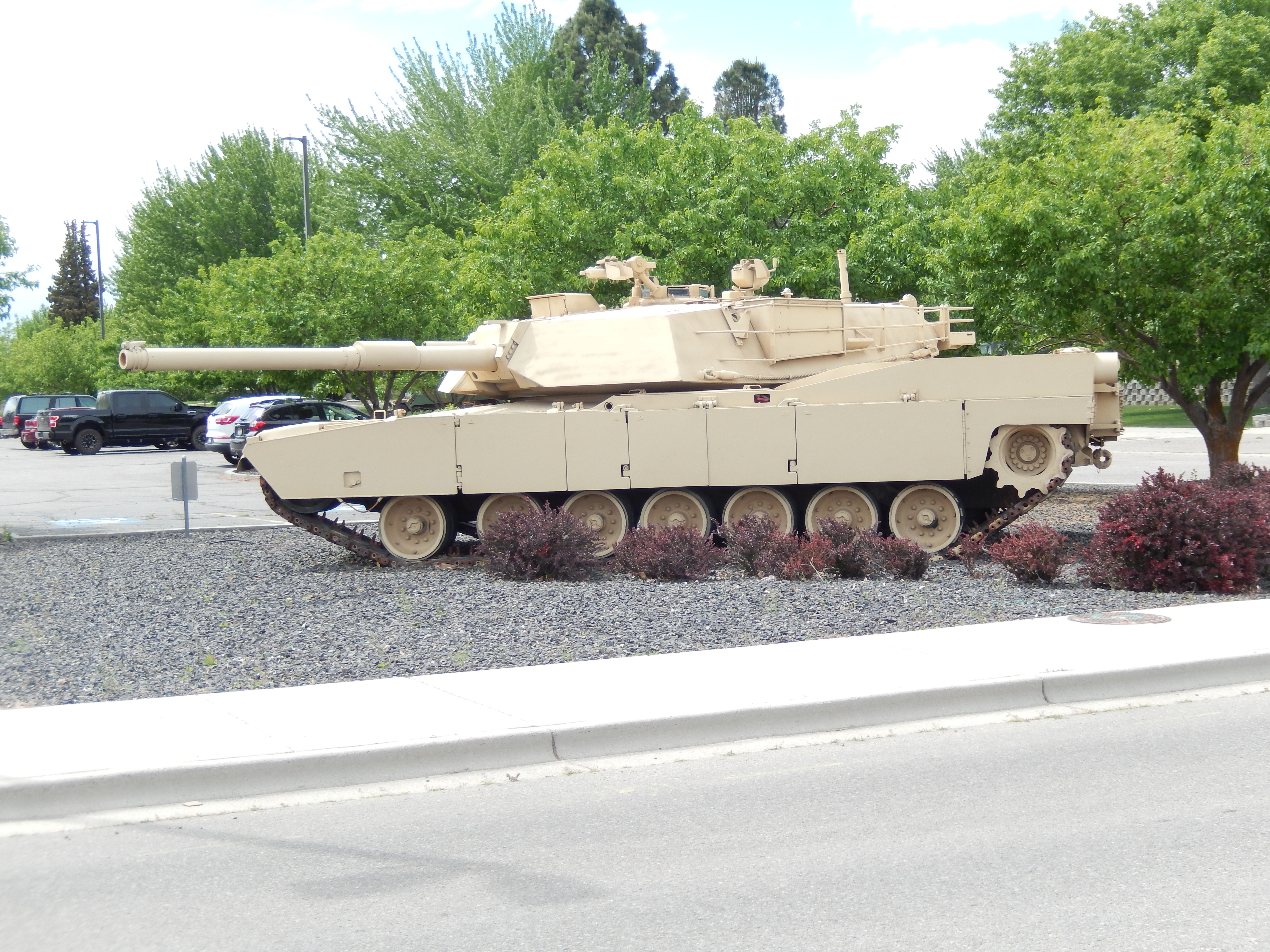
While staying in Boise, ID we checked out a new campground, the RV park at Gowen Field. Gowen Field is the Headquarters of the Idaho National Guard and operates an RV park with seven sites. It’s small but nice. All of the sites are paved and full hookups and the proceeds support the base Morale, Welfare, and Recreation (MWR) program. There is a small convenience store nearby and the base gym is right across the road with a fitness track and all kinds of equipment. It was nice to walk around the base and then ride a stationary bike to finish my workout.
One of Pat’s cousins used to be stationed here and still lives in the area. We were able to visit with him and have lunch. I was enjoying the conversation so much I forgot to take any pictures.
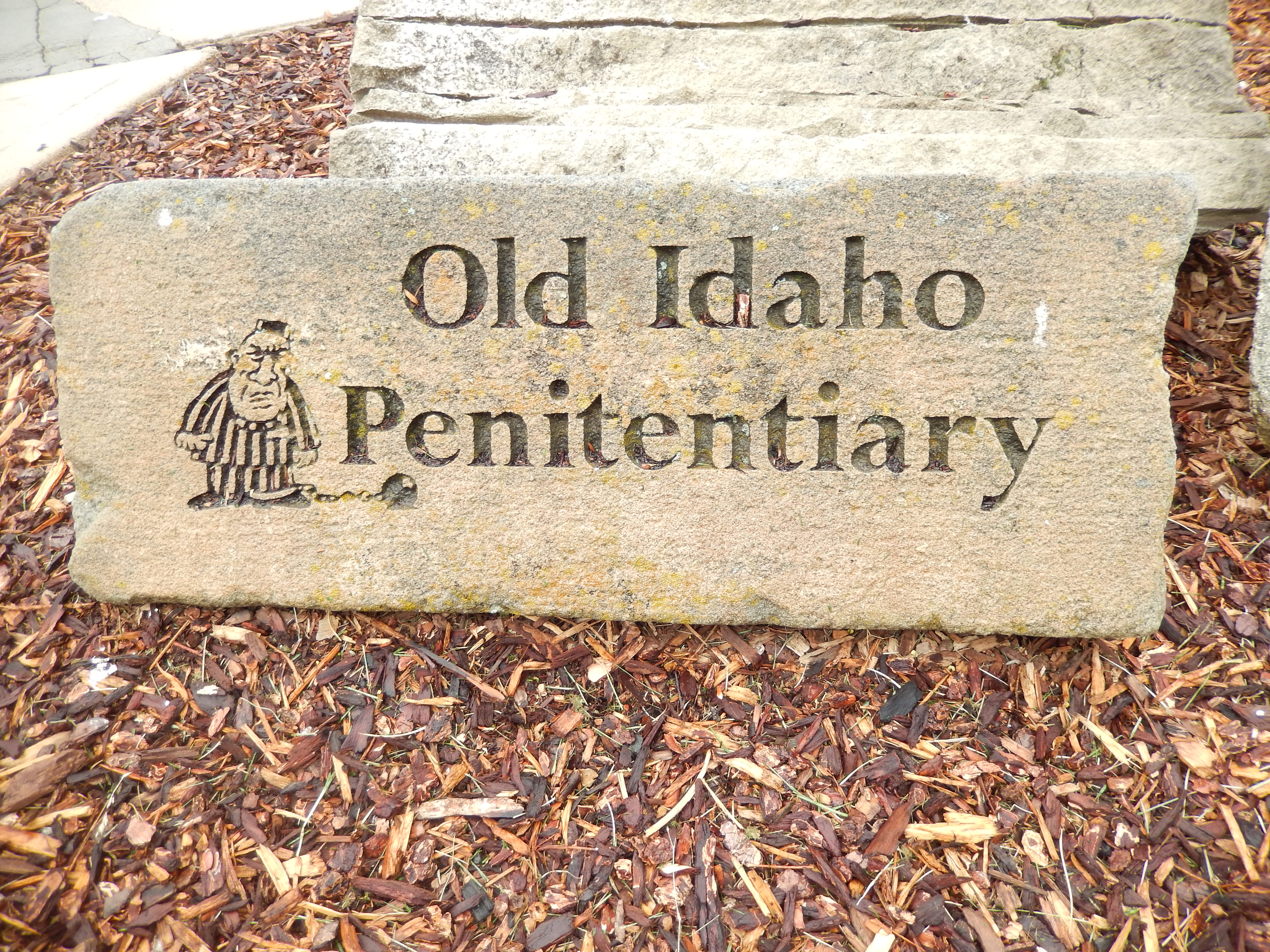
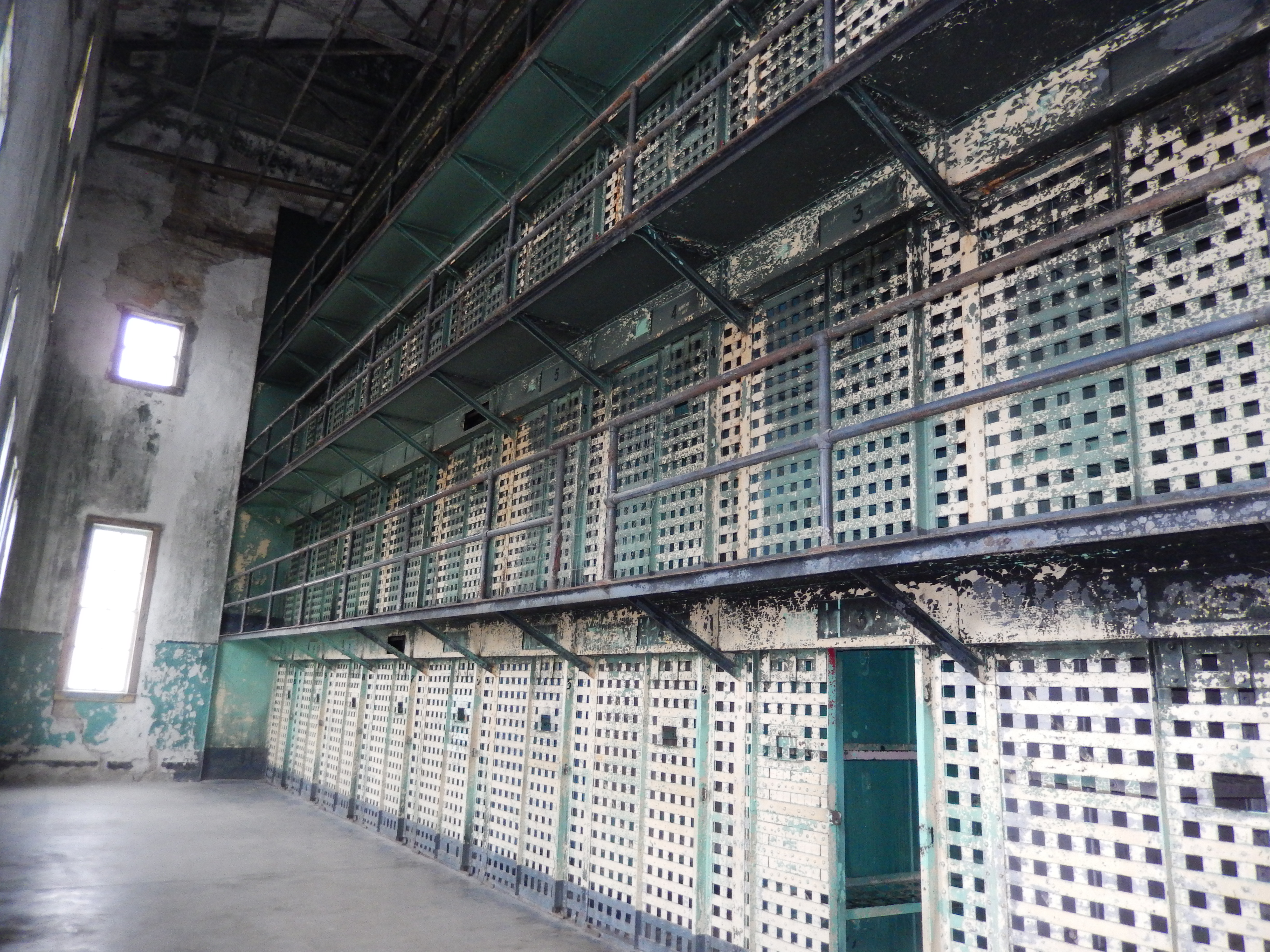
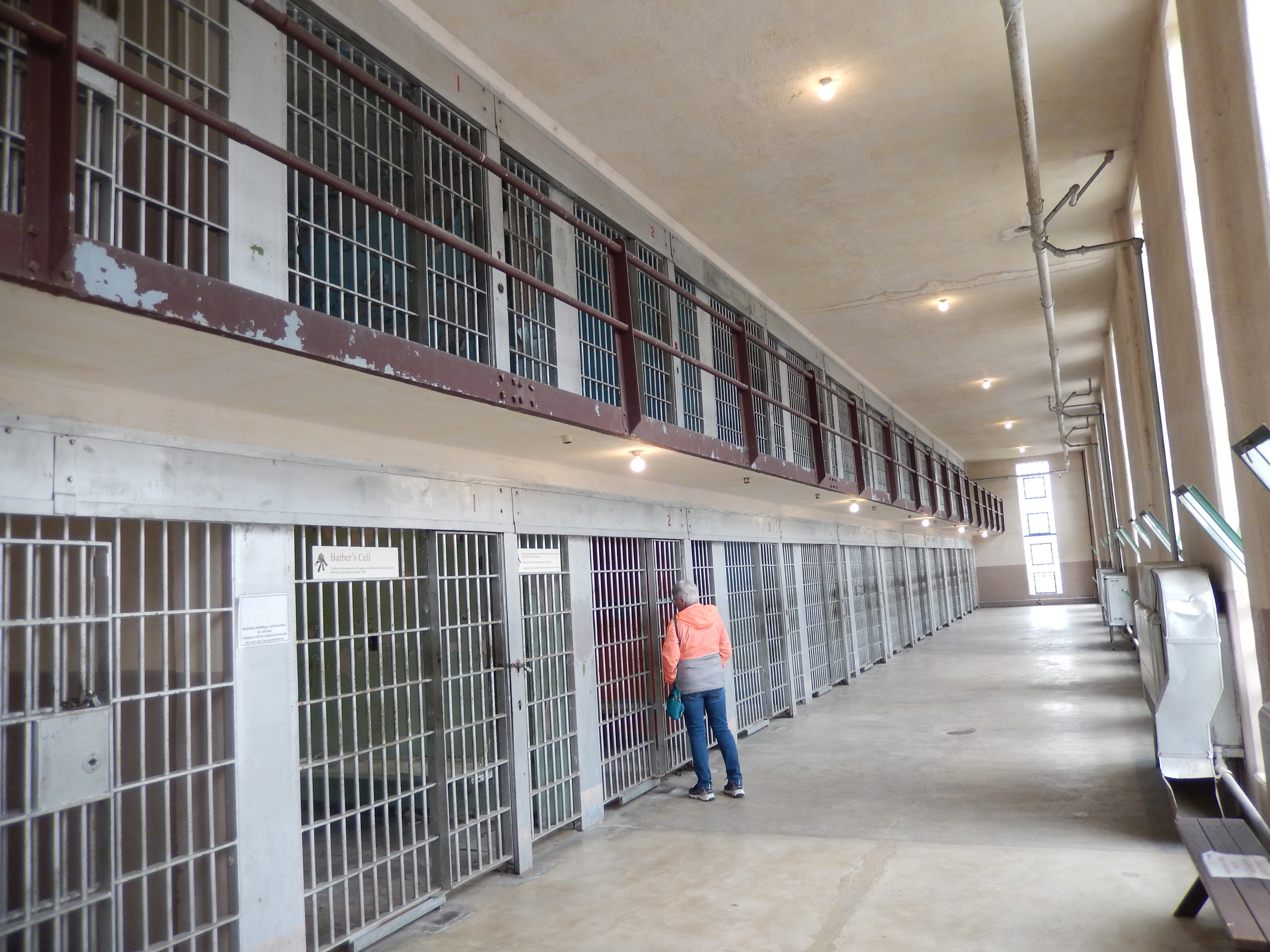
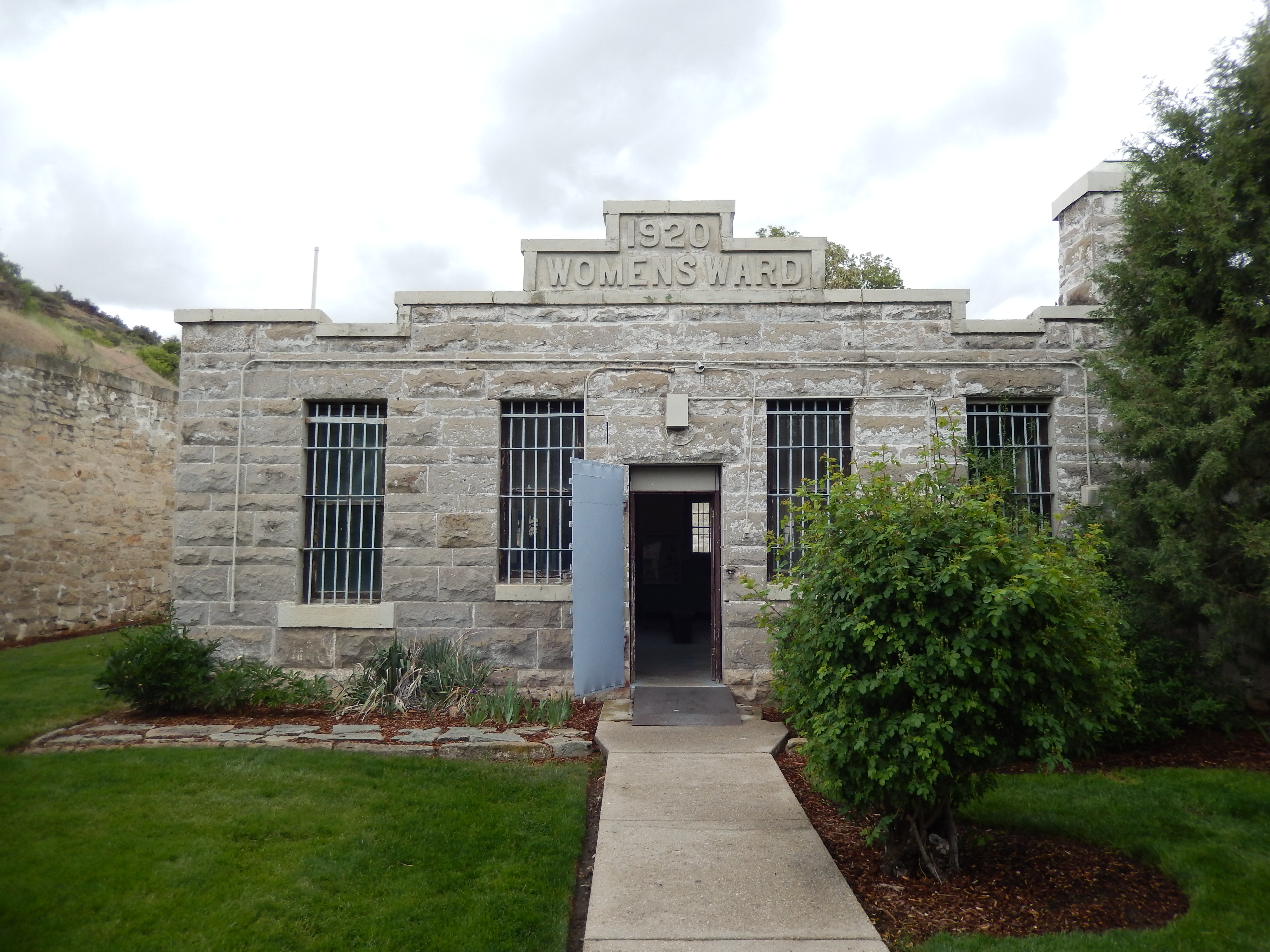
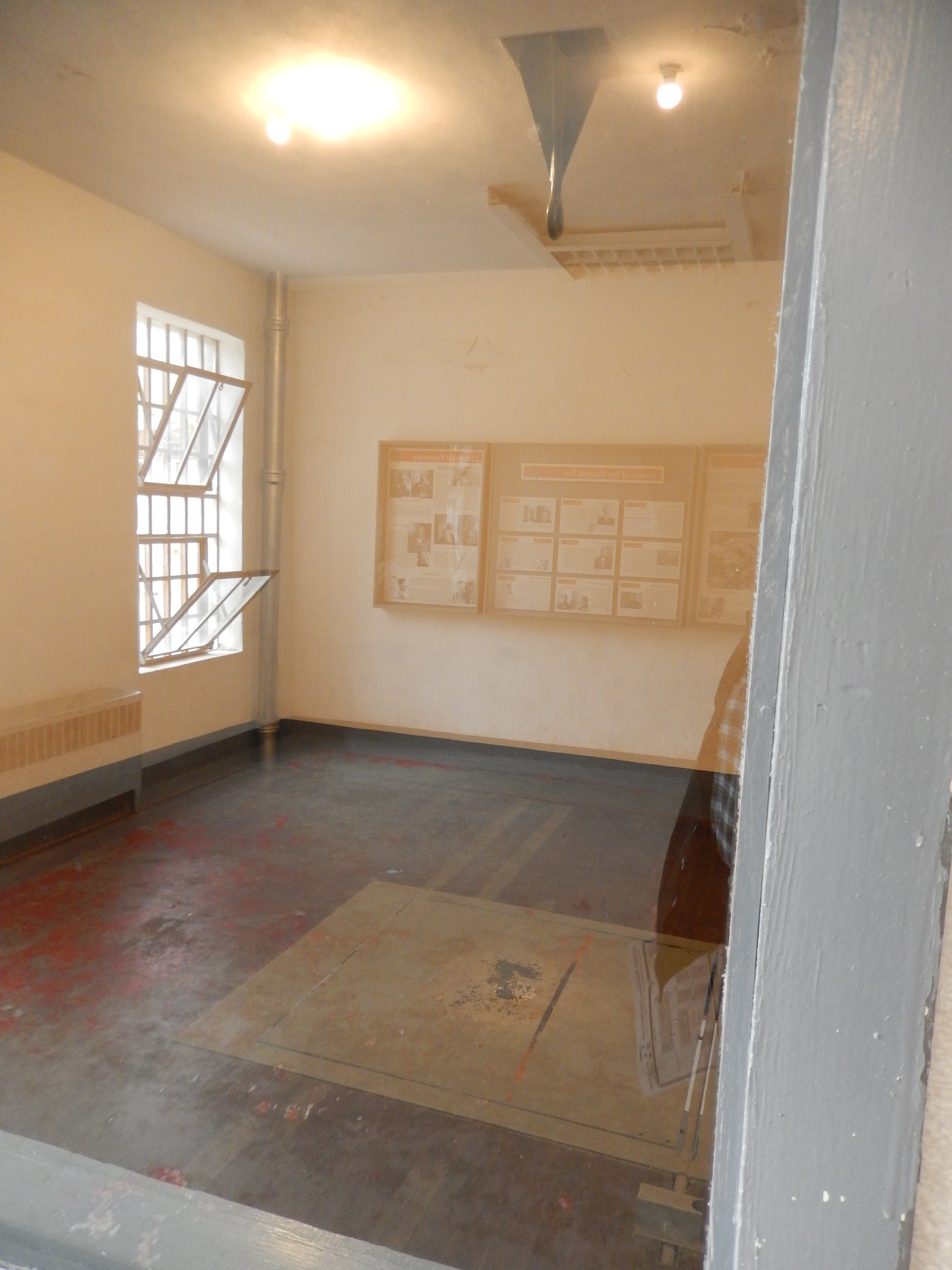
The next day we drove to the Old Idaho Penitentiary. If you are ever in this area, I highly recommend this historic site. We were able to tour the various cell blocks and see how prisoners were housed and treated over the years. We attended a slide presentation on the history of the prison that was very interesting and informative. Would you believe that an architect who was a prisoner designed the prison dining facility? You can visit the maximum-security cell block that housed death row and the gallows. When I think of gallows, I imagine a large wooden structure, but this was nothing more than a room with a trap door in the floor and a huge eyebolt in the ceiling to attach the noose. Hanging was the most frequent method for applying a death sentence.
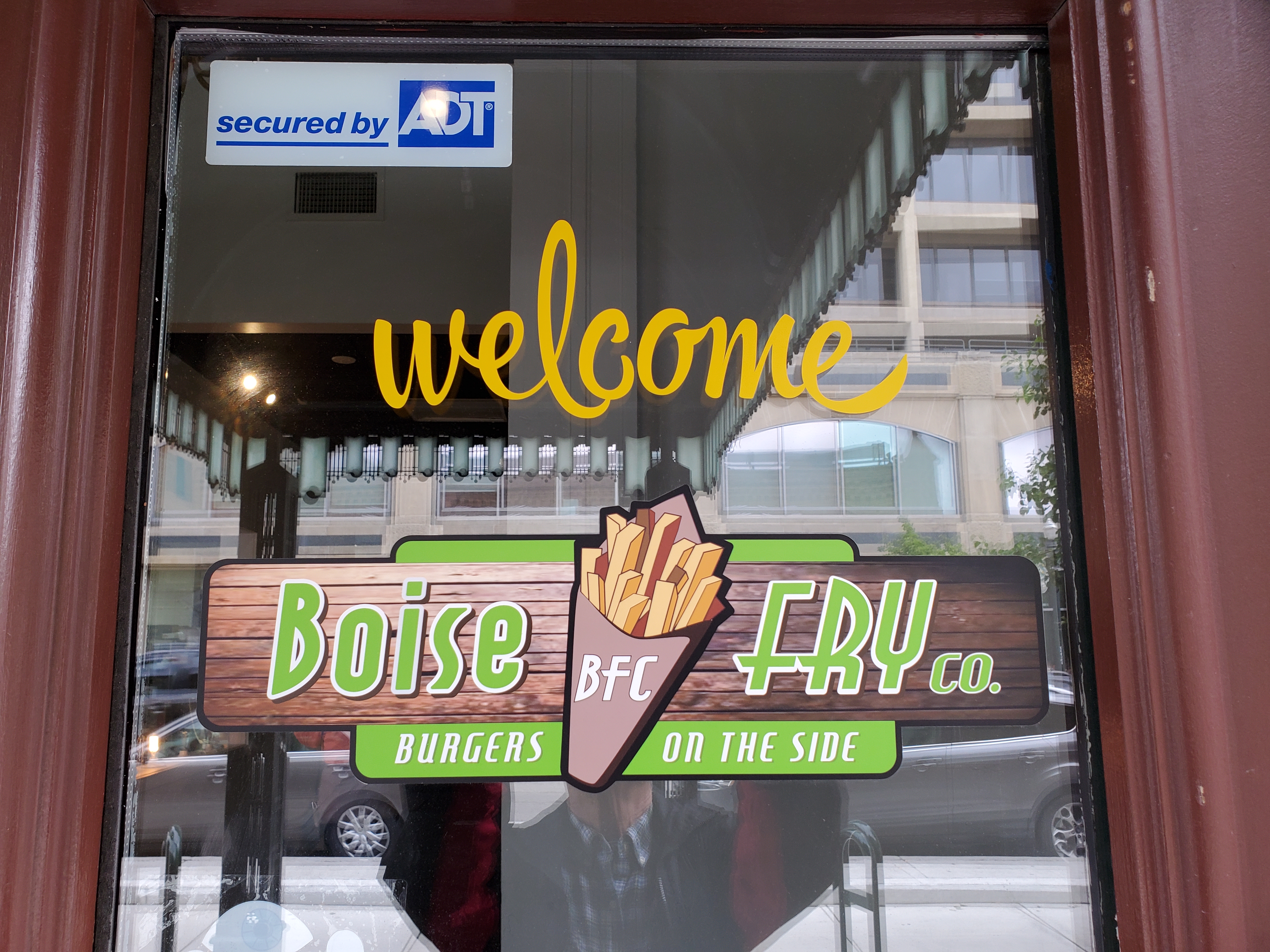
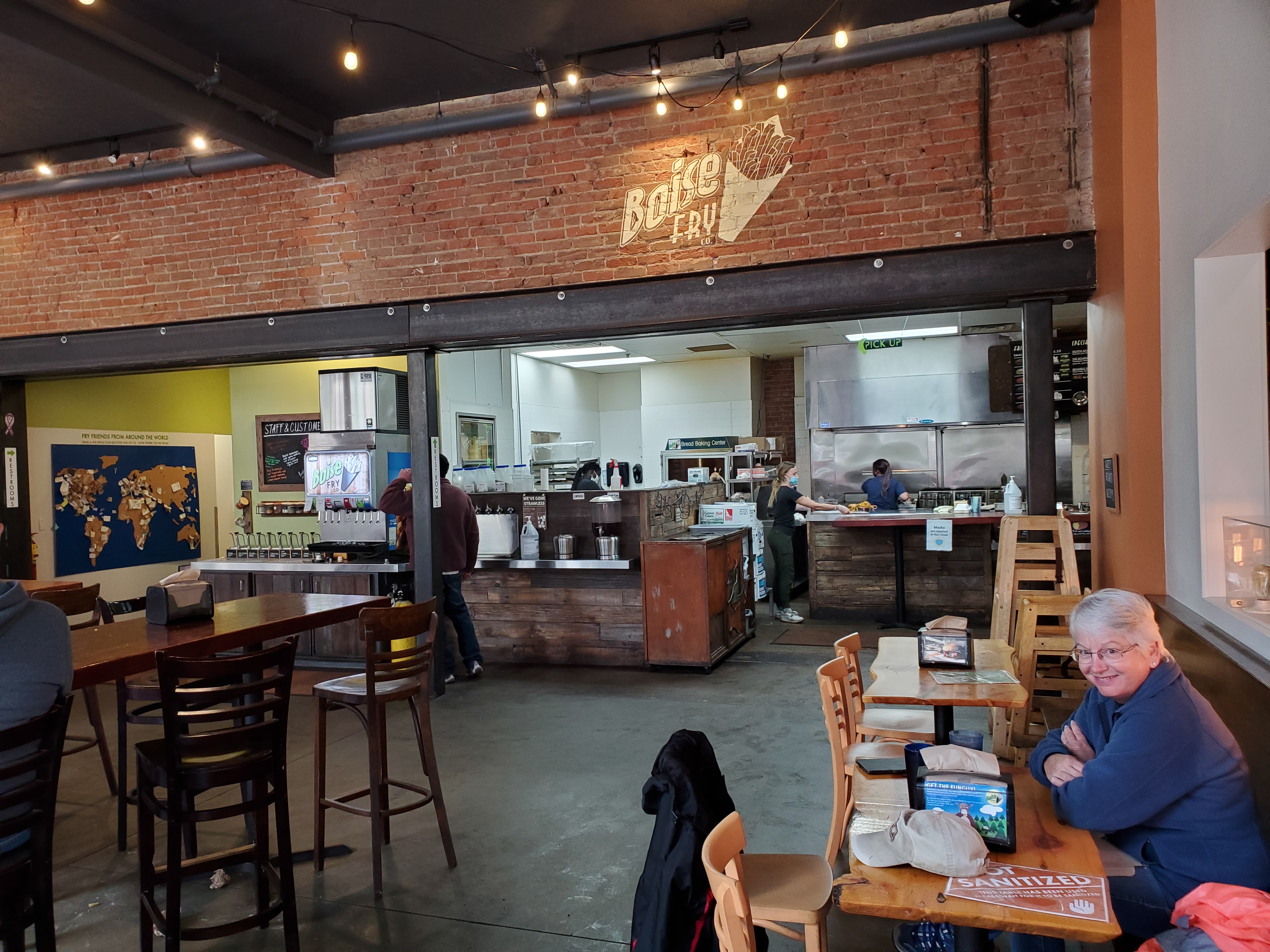
After that, we had lunch at a classic Boise restaurant, the Boise Fry Company. After all, we are in potato country and what could be better than an order of Idaho potatoes with a side of hamburger?
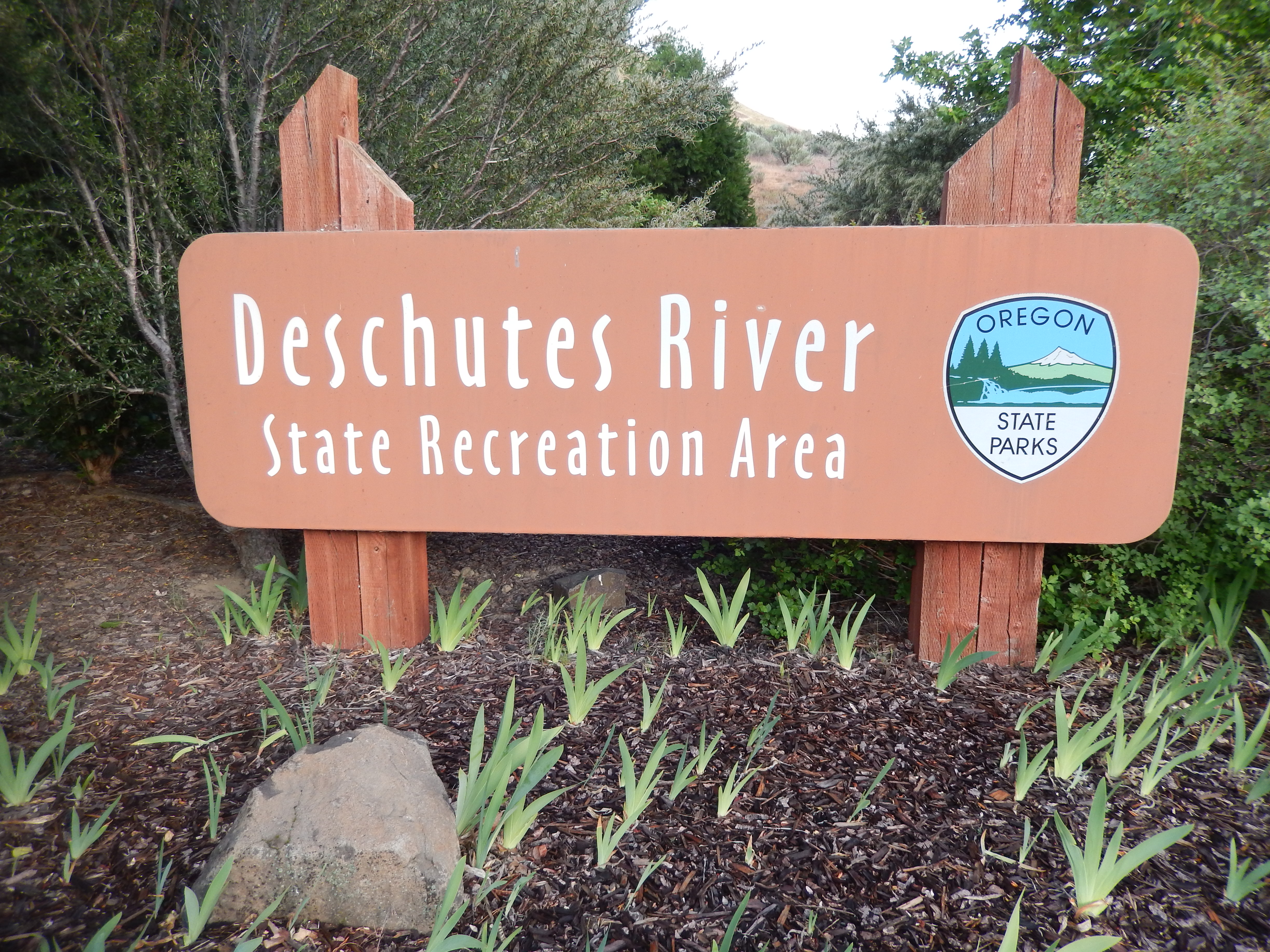
On Saturday, May 27th we headed farther west for the Deschutes State Recreation Area in Oregon.
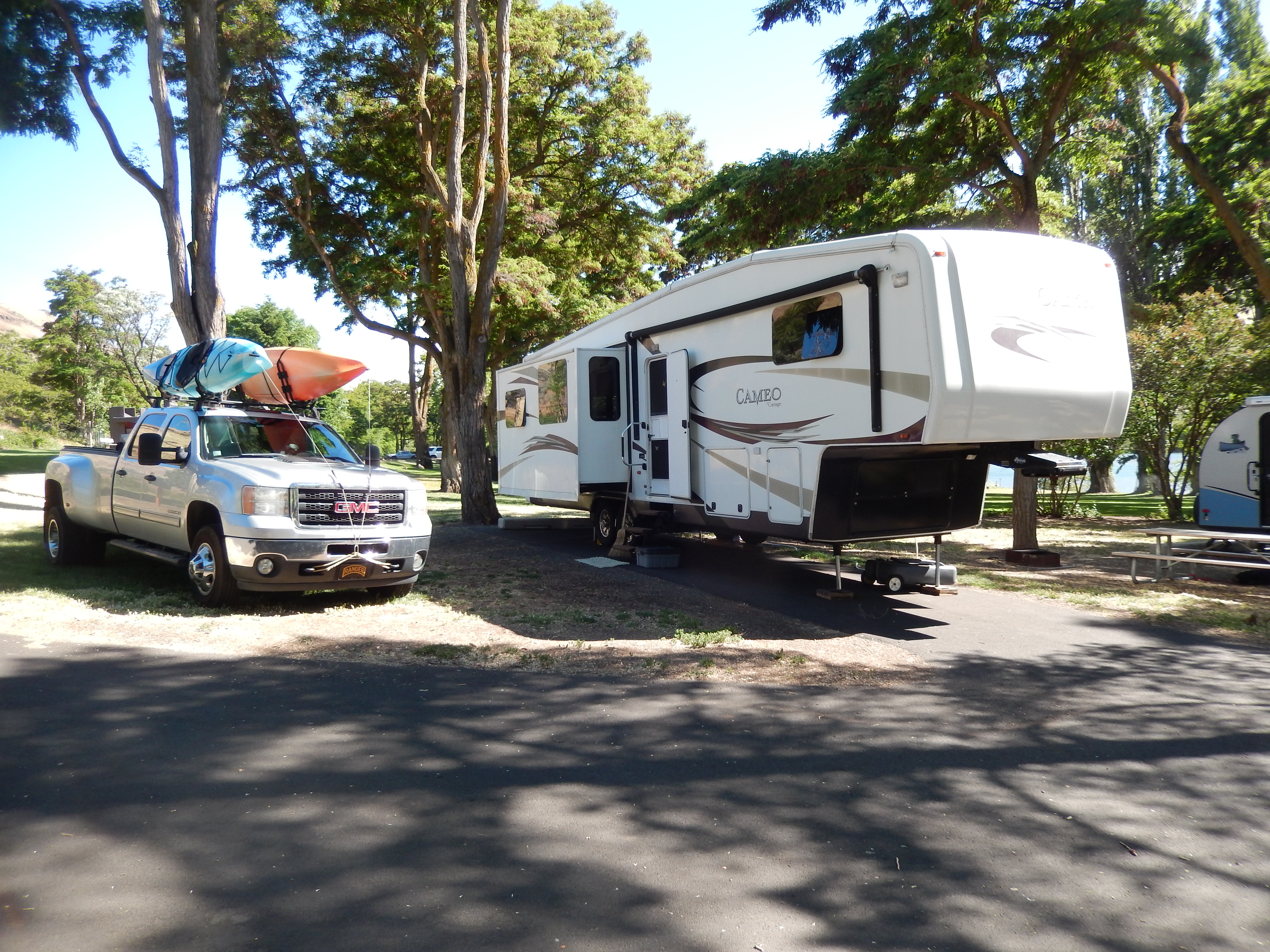
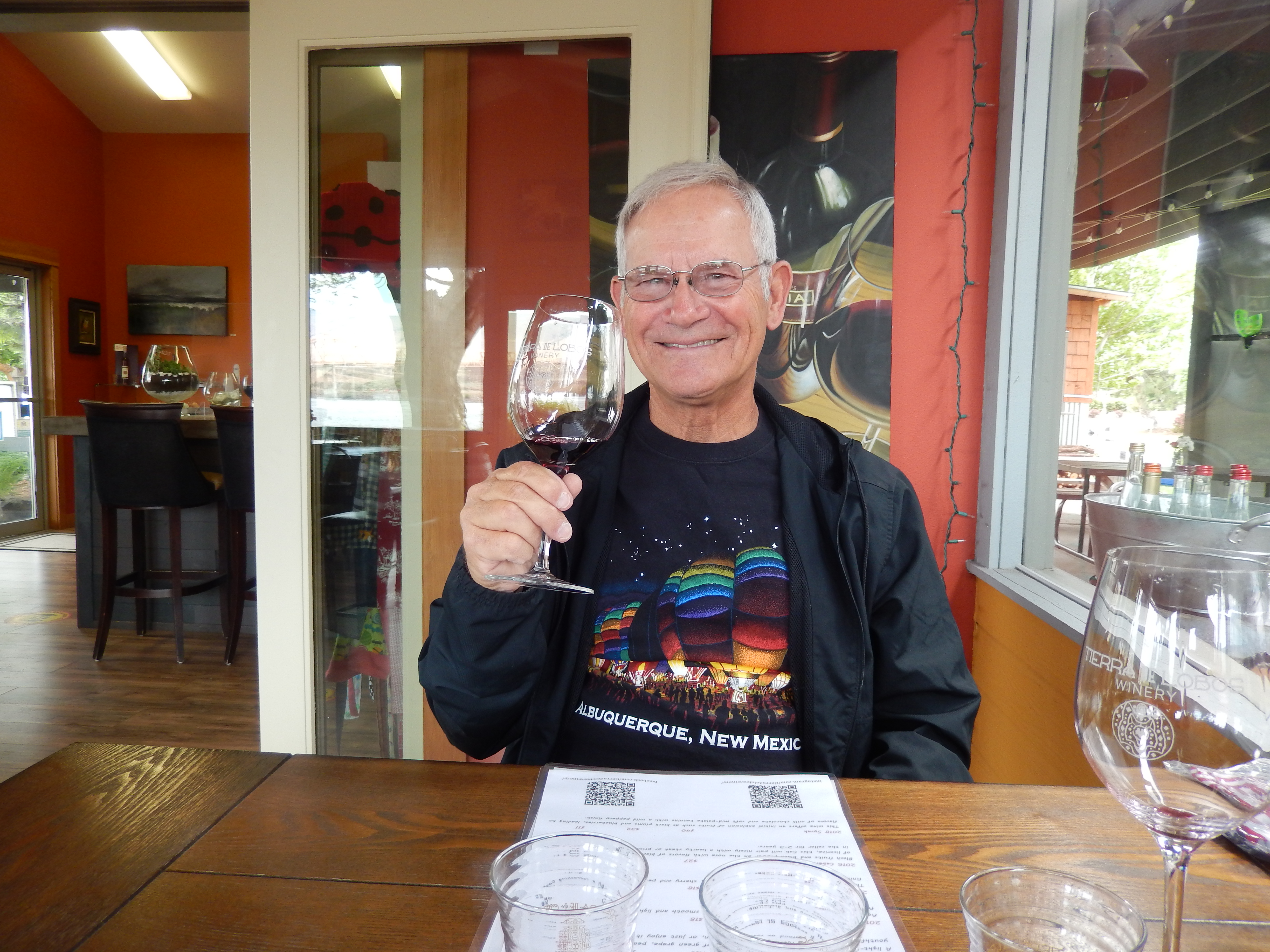
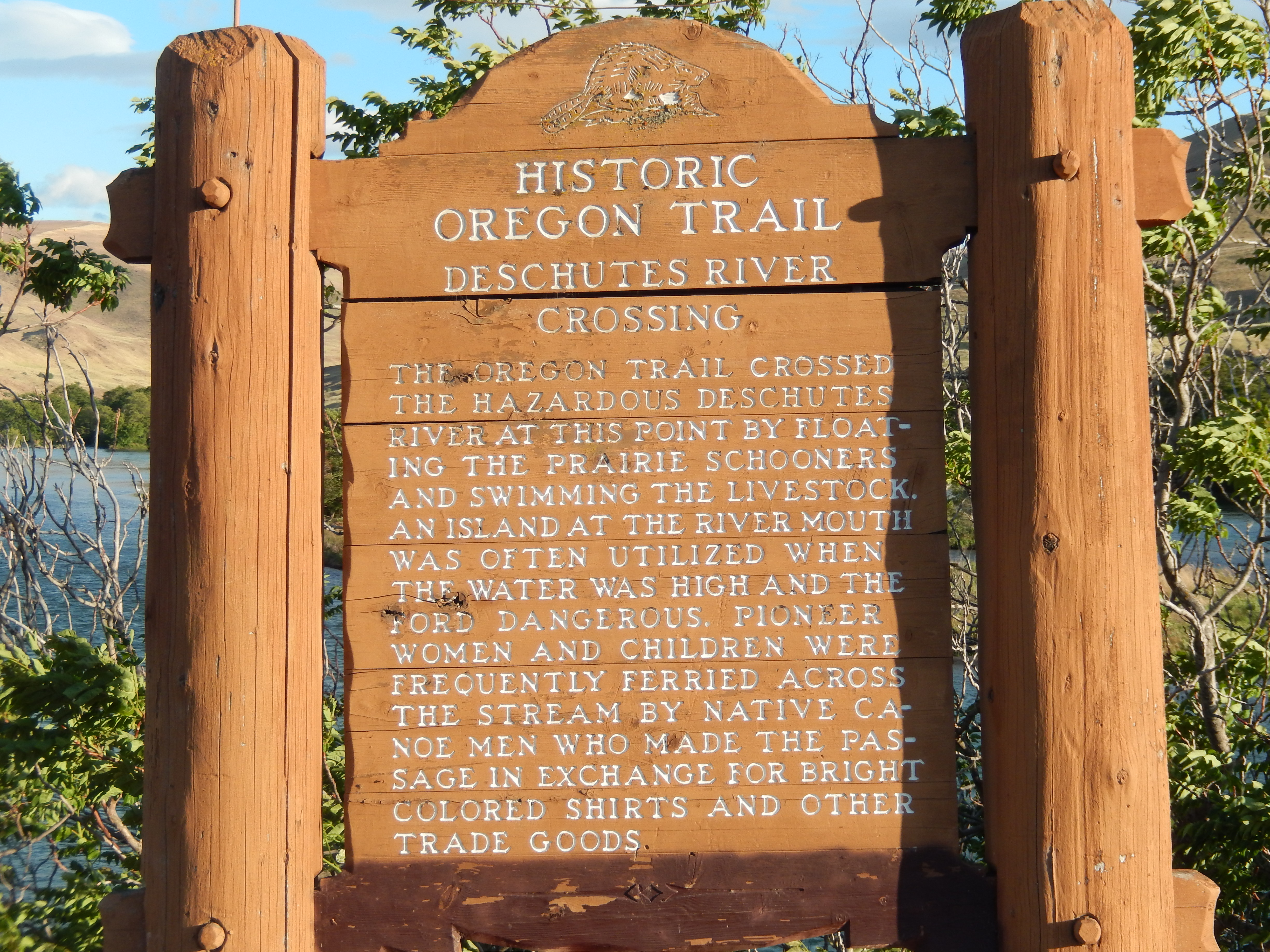
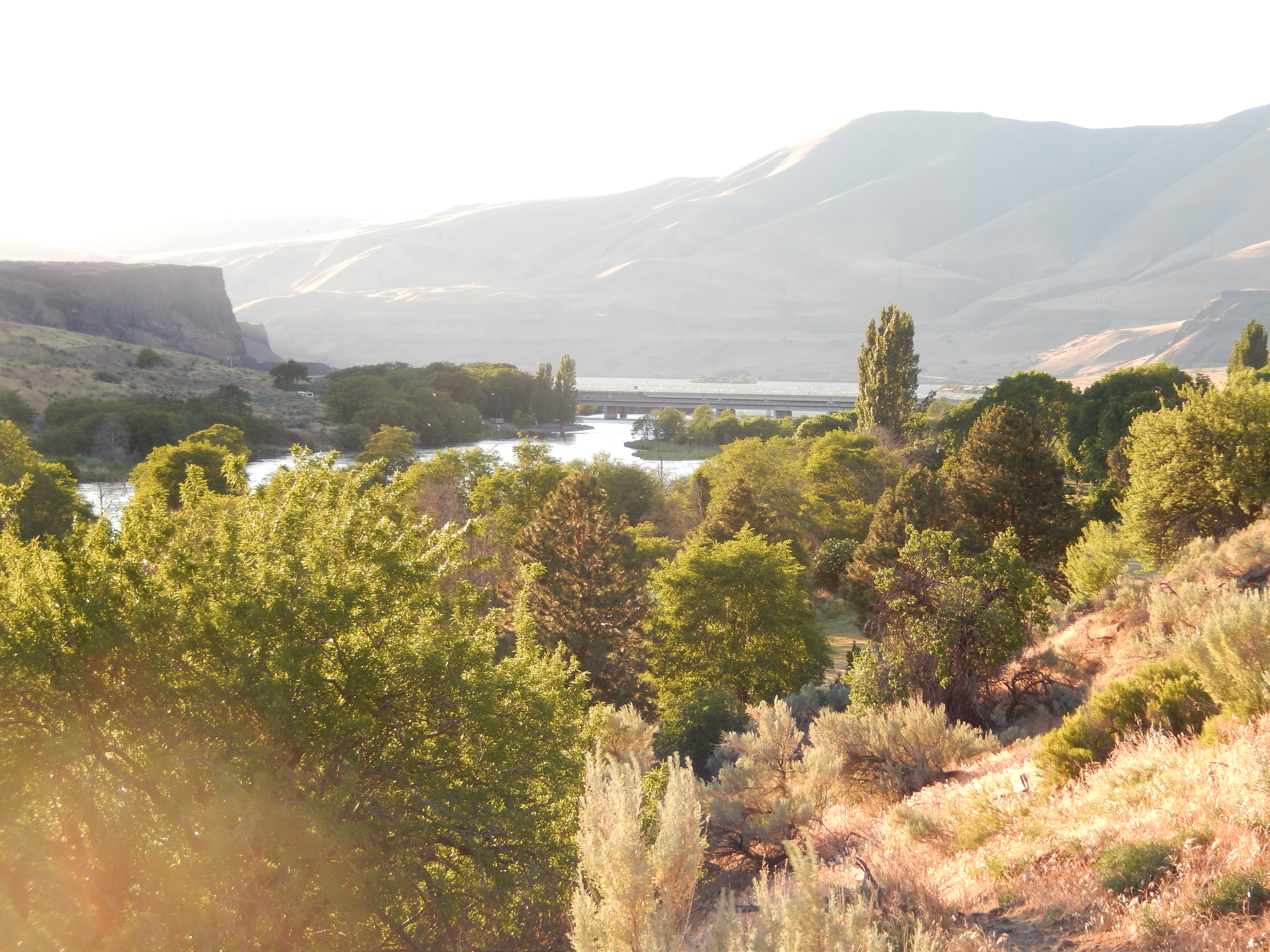
The Deschutes State Recreation Area in Oregon is at the confluence of the Deschutes River and the Columbia River. The campground is right on the shore of the Deschutes River and is an idyllic setting. The temperatures were cool and comfortable but the winds were blowing hard every day. We were able to hike every morning along hiking trails that paralleled the river and we had some great views. We spent most of our time enjoying the nature in the area, but did take some time to visit a nearby winery.
My only issue with the park is that there is no dump station and the closest dump station is twelve miles away at the Port of The Dalles. No a big problem, but I wish we had noticed it in our planning.
On Wednesday, May 26th we headed out on our last leg of this trip. Next stop is Camp Murray Beach Campground near Tacoma, WA.
Lake Havasu has been highlighted on many of the RV groups that I follow on Facebook. In reading the various posts, I was intrigued by the place and always wanted to visit. This year worked out to be the best time to do that.
In 1938, Lake Havasu was formed by the Parker Dam on the Colorado River to store water for two aqueducts, and provide hydroelectric power. It is a very popular boating area.
On our first day in Lake Havasu State Park, the high temperature was 100°. We hid inside our air-conditioned trailer. We looked at the weather forecast and determined that the winds would be low the next morning so the next day, we woke up early when the temperatures would be cooler, and rode our bikes to the London Bridge and onto the island. We rode past a few RV parks and I was happy we were staying at the state park. The state park may not have full hookup sites, but the individual sites are more spread out and it feels like you are camping.
In the afternoon, I toured the Lake Havasu Museum of History. This is a small, but well organized museum that made it very easy to understand how the area was developed. I was amazed how much the area owed to two visionary men, Robert McCulloch and C.V. Wood.
The community started as an Army Air Corps recreation camp on the shores of Lake Havasu, called “Site Six,” during World War II. In 1963, Robert McCulloch, owner of McCulloch Motors, was flying over Lake Havasu looking for a place to test his outboard engines. He thought that the land surrounding Lake Havasu had great potential for an emerging city. Lake Havasu City was established on September 30, 1963. McCulloch and developer C.V. Wood joined efforts and founded what would be a thriving community. C.V. Wood had previously designed the Disneyland amusement park in Anaheim, California.
In 1964, there was only one unimproved road into the city. McCulloch needed a way to get prospective buyers to the new city so he chose air charter. Between 1964 and 1978, 2,702 flights brought 137,000 potential land buyers to Lake Havasu City. This huge sales push that targeted mainly people from colder states. In 1978, the last parcel of land was sold, and the city was incorporated. By 1981, Lake Havasu City boasted a population of 17,000. In subsequent years, the city experienced population growth at a steady flow of about 1,000 people annually. Most came in search of refuge from big cities to enjoy Lake Havasu City’s laid-back lifestyle. McCulloch even moved his chainsaw manufacturing operation to Lake Havasu to provide the community with a core business to build the economy.
Lake Havasu City’s claim to fame is the London Bridge. This purchase did not come out of a sudden impulse. The London Bridge built in 1833 in London, England was gradually sinking into the River Thames and had been for sale by the London Council for quite some time. McCulloch placed his bid for the bridge of 2.4 million dollars in 1968. Completing the project took three years. Each block was marked and numbered, then shipped through the Panama Canal, unloaded in California, and transported to Arizona. The bridge was reassembled by matching the numbered stones. The bridge was built as a conventional structure and covered with the original granite to retain its antique look. The bridge was reconstructed on a dry piece of land. The land was then dredged from underneath the bridge, creating Bridgewater Channel and “The Island” across the bridge. On October 10, 1971, the completed bridge was formally dedicated in a ceremony attended by over 50,000 American and British spectators and dignitaries.
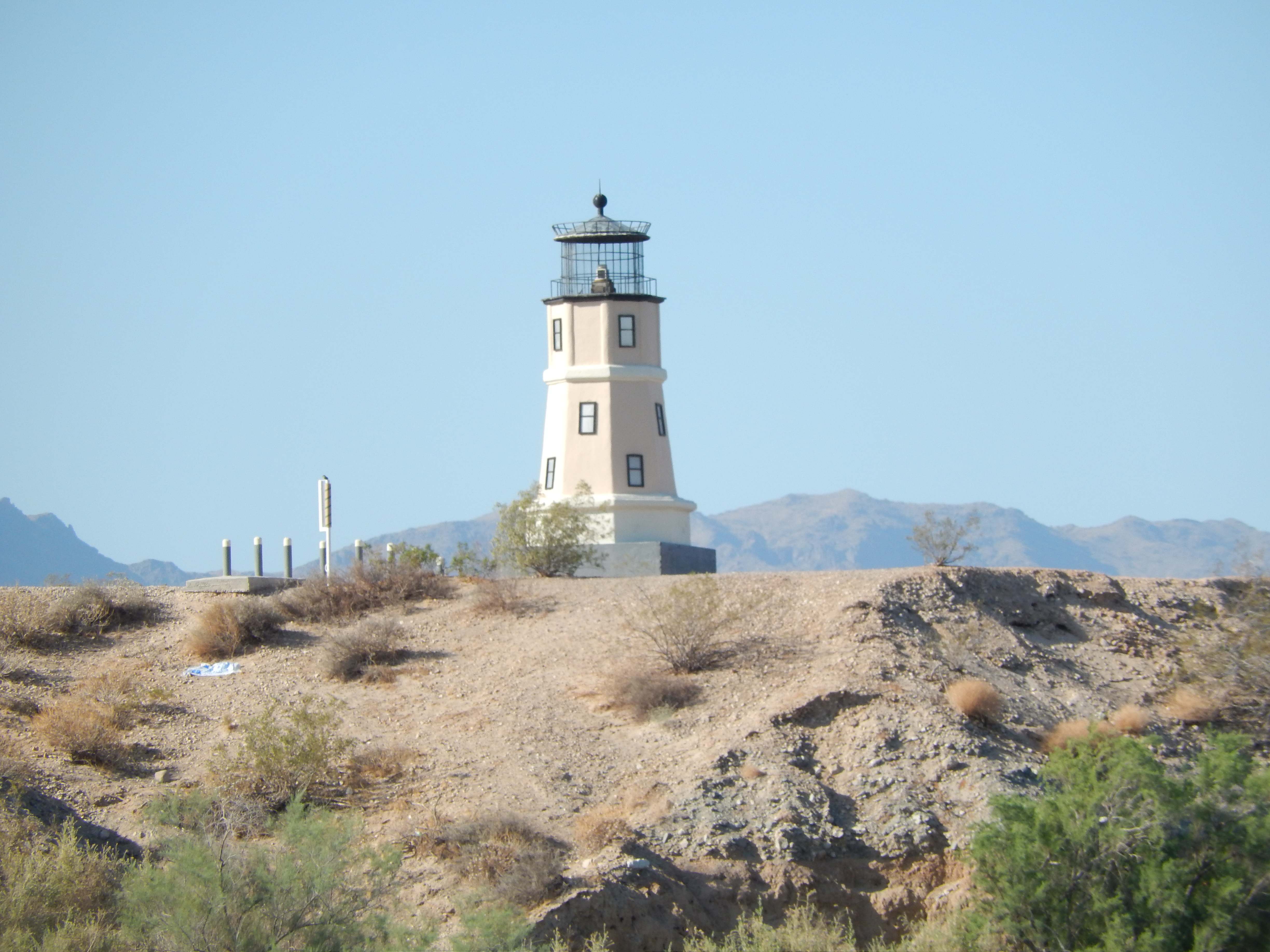
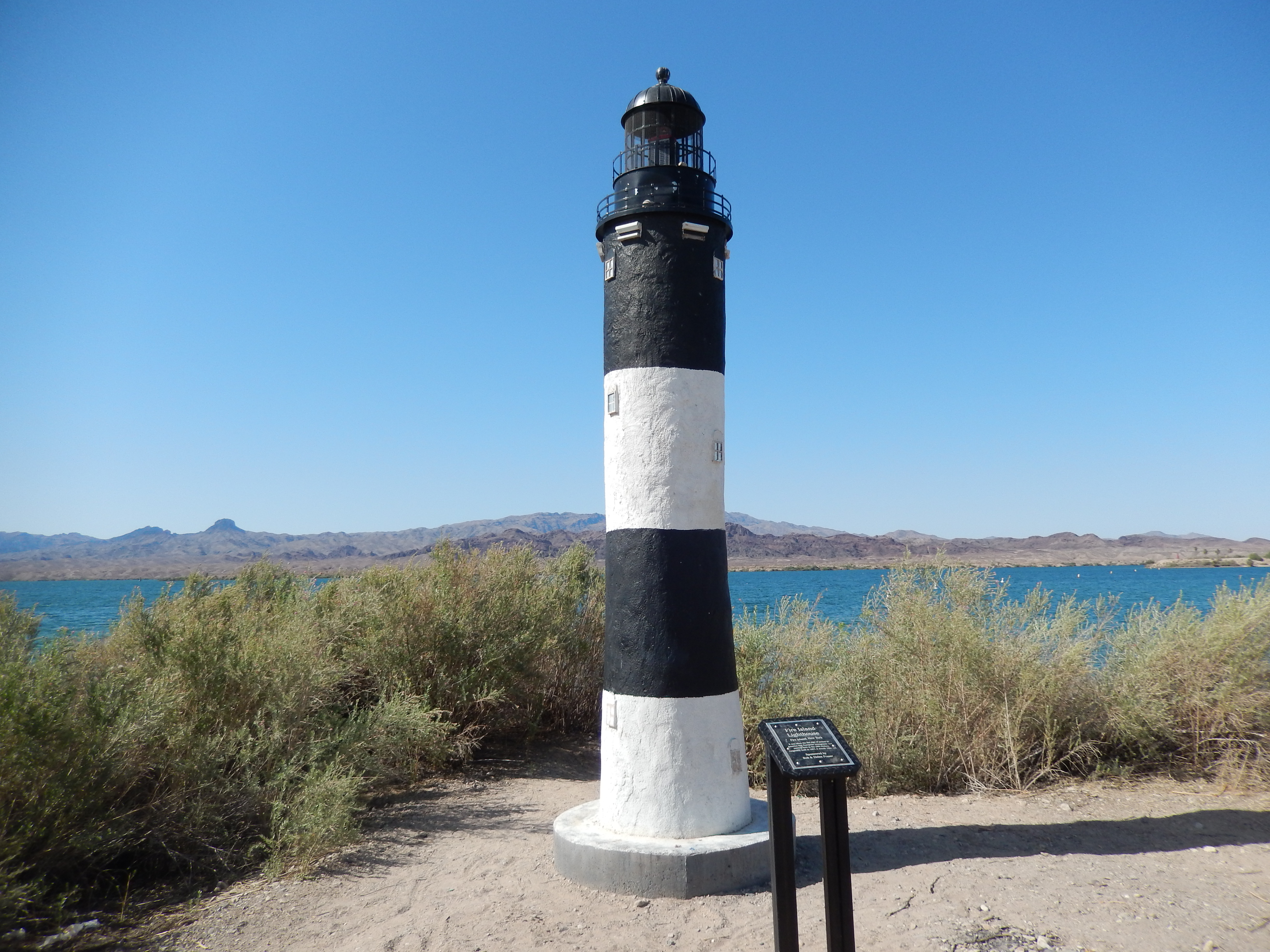
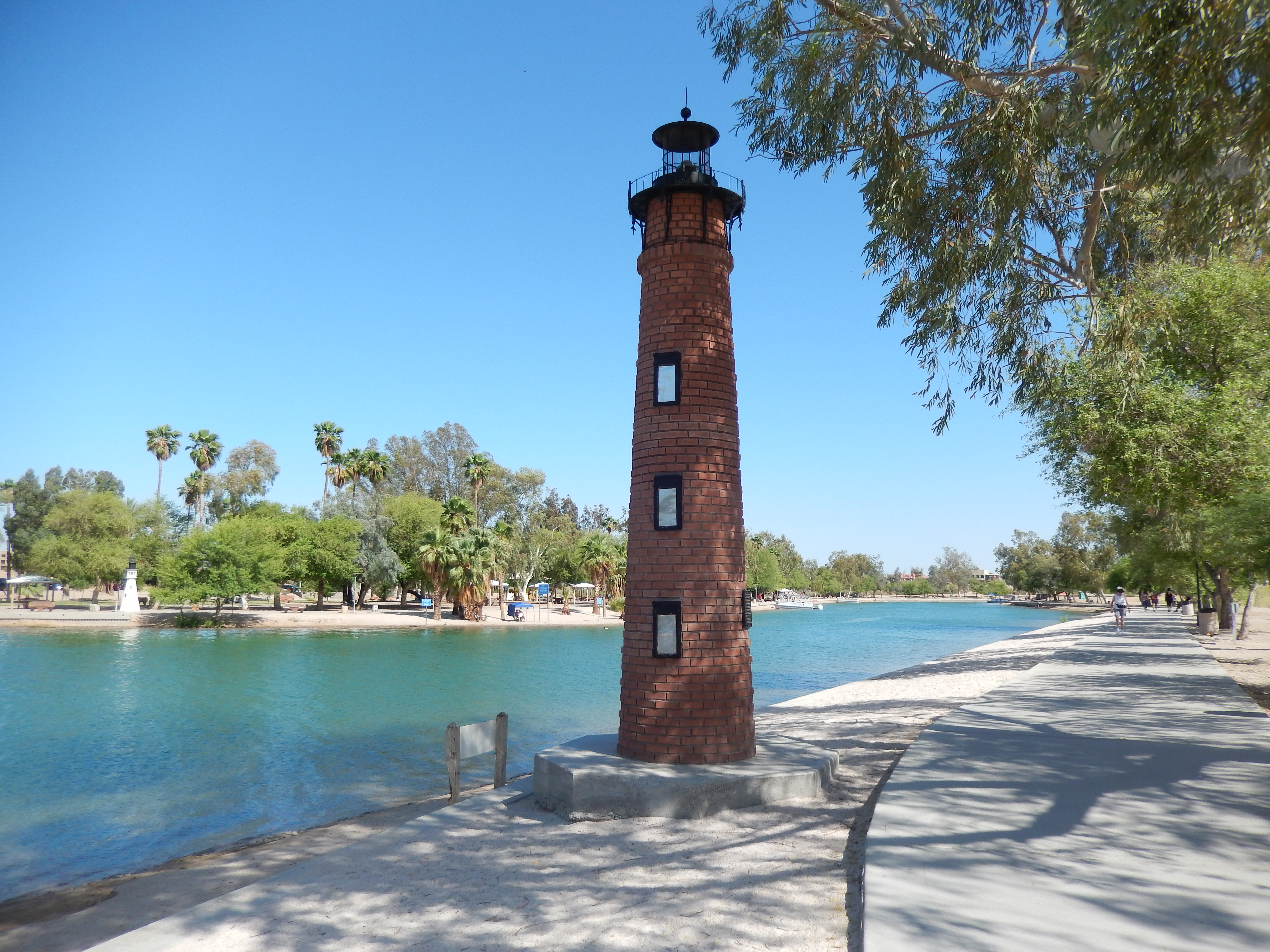
The next day we decided to walk and I was able to check out some of the lighthouse replicas that line the shore on the island and the mainland. When one thinks of lighthouse locations, they rarely consider a landlocked, desert state such as Arizona for their location, but it just so happens that Lake Havasu City is home to more lighthouses than any other city in the entire country. These scaled-down replicas are actual functioning navigational aids built to the specifications of famous lighthouses on the East Coast, West Coast and Great Lakes. The Lake Havasu Lighthouse Club is a non-profit group of independent citizens dedicated to the preservation, improvement and promotion of Lake Havasu and the City. They wanted to make the lake a safe place for night boating and fishing. Instead of just settling on simple and mundane lighthouses that could be cheaply produced, they took pride in their development and chose to highlight the famous lighthouses in the U.S. by making smaller replica lighthouses. These fully-functional replica lighthouses make an already adventurous boating experience even more beautiful and unique. All of the lighthouses on the west side of Lake Havasu are replicas of famous lighthouses on the West Coast, while the east side consists of East Coast replicas. The lighthouses around the island are all replicas of lighthouses from the Great Lakes.
On our fourth day the winds were low again and we launched our kayaks from a small beach a few sites away from our own. As we paddled around the island, we saw the ferry to the California side of the Colorado River. There was a lot of boat traffic on the lake, including many “cigarette boats” that didn’t believe in mufflers. You could hear them coming a long way off. It was a longer paddle than we planned on, but quite interesting. At one spot, we pulled in for a short rest. The local groups are doing their best to keep the area clean. They provide stands with large trash bags to prevent littering. It was pretty sad that I was able to almost fill one bag with trash that included two other partially filled bags that had been left behind. Ours ended up in a dumpster.
We try to go out to eat at least once wherever we stay and we chose a place called the Burgers By the Bridge. It was in the English Village, in the shadow of the London Bridge. Our table was a surfboard and we had a view of the boat traffic on the channel as we ate.
On Monday, we paddled down the Bridgewater Channel under the London Bridge and walked on a trail along the shore. It was a great day for a paddle and to see some different sites along the trail. We enjoyed cooling off with a short swim at “our” beach. These short dips sure helped to deal with the 90 plus degree temperatures we had been feeling all week.
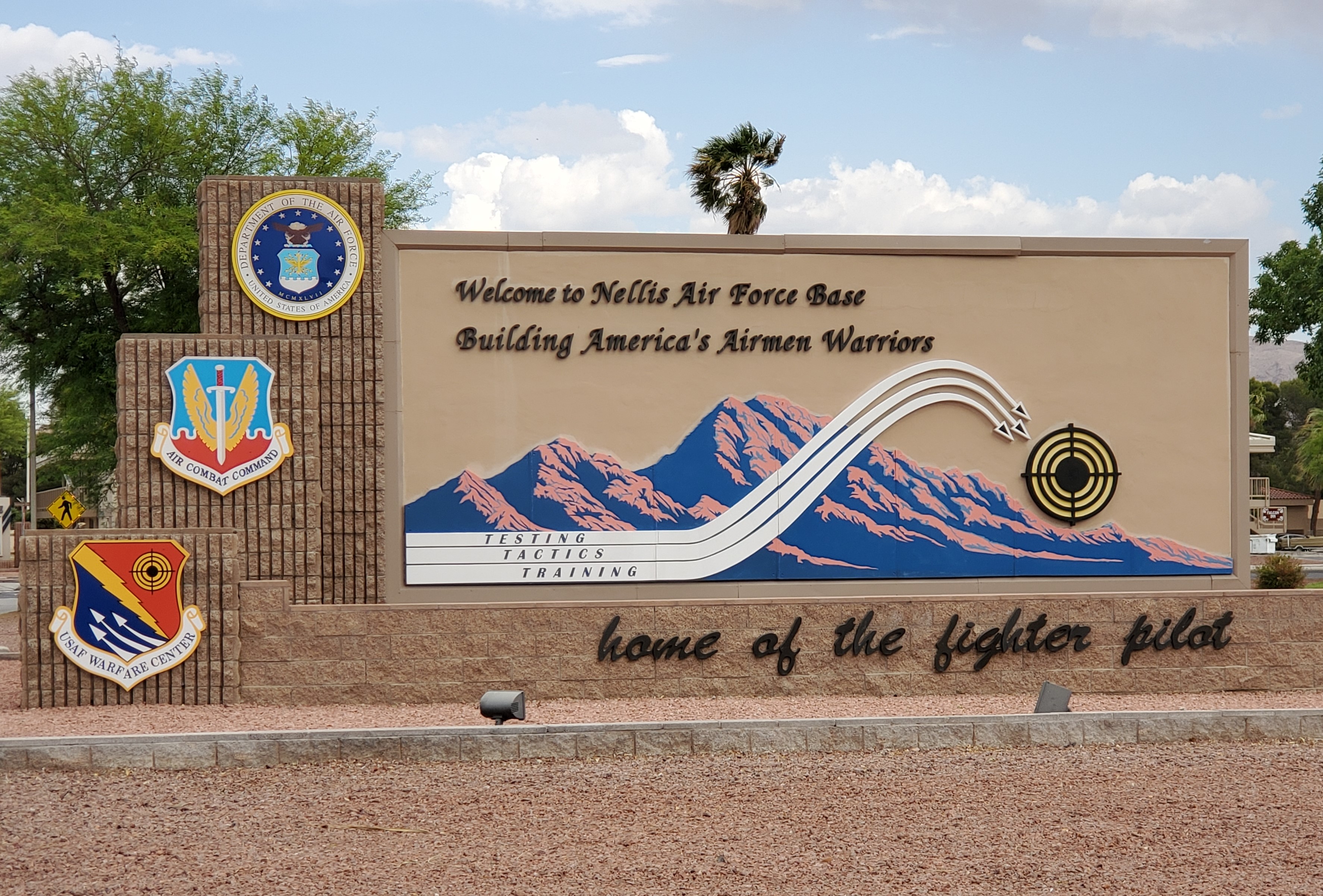
Tuesday morning we made a relatively short drive to Nellis Air Force Base, near Las Vegas.
When we got to Nellis AFB, we breathed a sigh of relief – there were mature trees in the campground and we had a couple that provided shade on the trailer. The FAMCAMP at Nellis AFB has received recognition for its quality and customer service, and continues to deliver on that reputation.
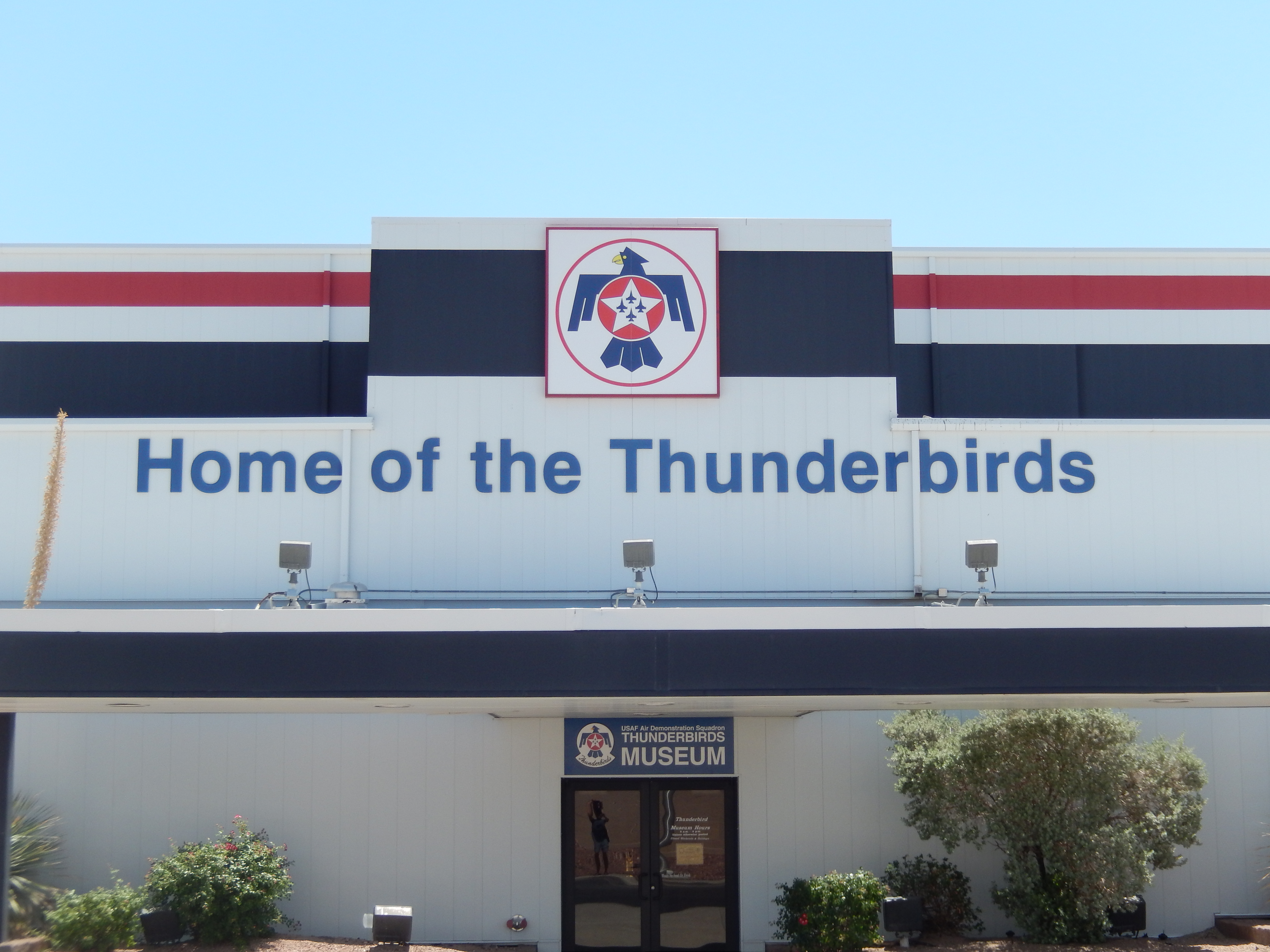
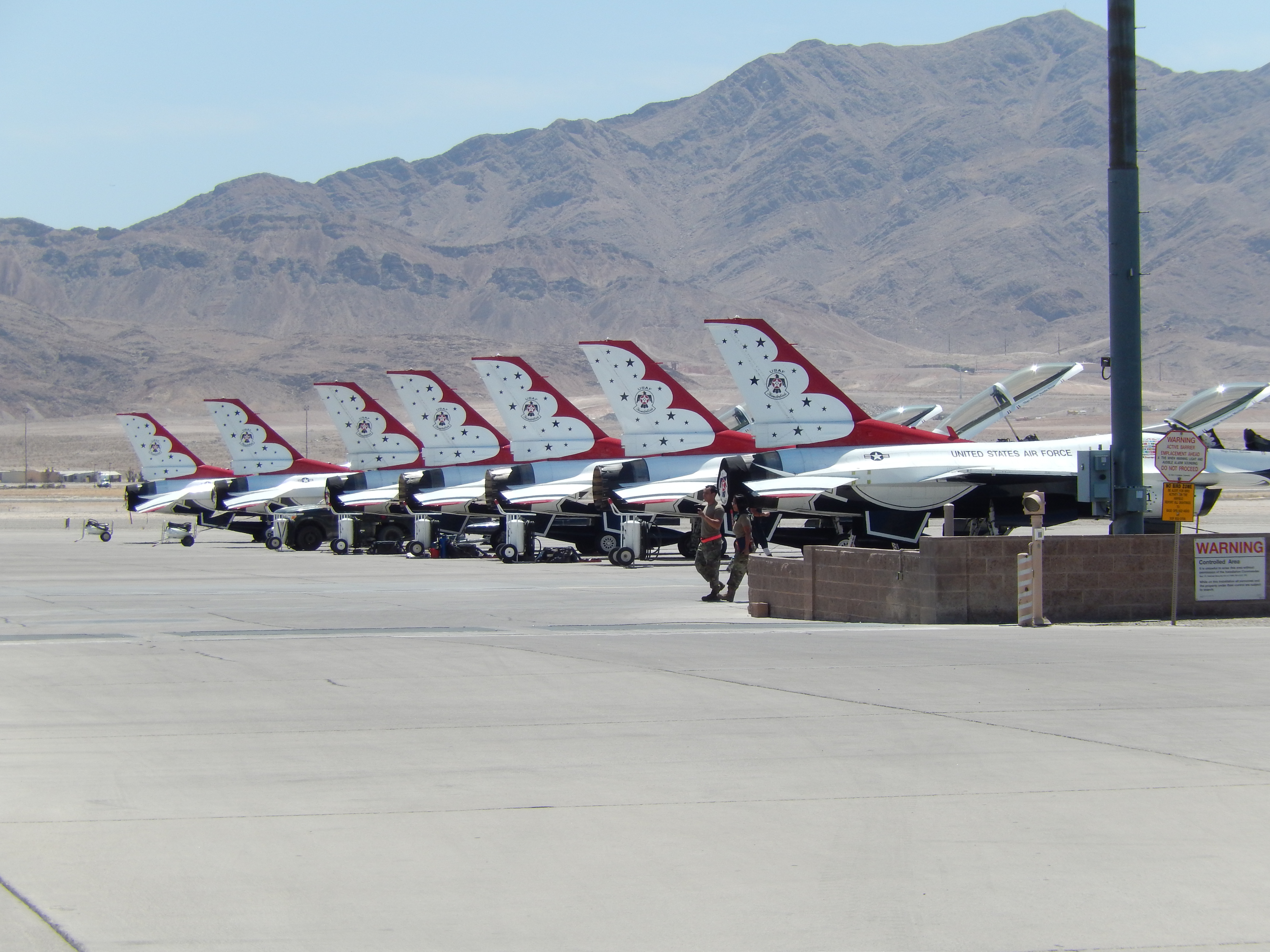
Nellis AFB is home to the USAF Weapons Center and is the host of the Red Flag exercises that train fighter pilots from the United States and around the world. Nellis is also the home of the Air Force Demonstration Team, the Thunderbirds. The Thunderbirds have been representing the Air Force as ambassadors since 1953. There is a small museum at the headquarters.
Our primary purpose for stopping in Las Vegas was to see some friends from our RV caravan to Alaska in 2014. We met George and Ann for dinner and caught up on how they had been dealing with the pandemic. One of the stories they shared was that as they were driving to an airport to board a flight to Ecuador, they received a call telling them not to board their flight because their tour had been canceled. Talk about cutting it close! We had a great visit and we may be able to see them again in the fall.
On Tuesday we headed north for Gowan Field in Boise, Idaho.
Big Bend National Park had been on my “to do” list for years. This year our route from Florida to Washington State made that stop possible. Big Bend is right on the Rio Grande River and shares a border with Mexico. Big Bend refers to the southwest Texas U-turn in the Rio Grande River – something that defines the park boundary for 118 miles. There are campgrounds in the park, but only one can handle a rig of our size. We were unable to make a reservation, so we had to stay in a commercial park, Big Bend Resort and Adventures, in nearby Terlingua.
If you plan to visit Big Bend, be prepared to do a lot of driving. The park covers a lot of ground, 1251 square miles, and some of the most direct routes are unimproved roads. During the four days we were there, we drove over 150 miles in the park.
Big Bend Resort and Adventures is as nice a park as you will find here. If you want big shade trees, green lawns and level concrete pads, you are in the wrong part of the country. This park is well organized, clean, and the staff was great.
We explored taking a raft or kayak trip down the Rio Grande, but discovered that the water levels were too low for that. In fact, the local raft companies had cancelled their one-day trips and only offered 2-3 hour trips. We decided that kayaking would have to wait until we found some good water.
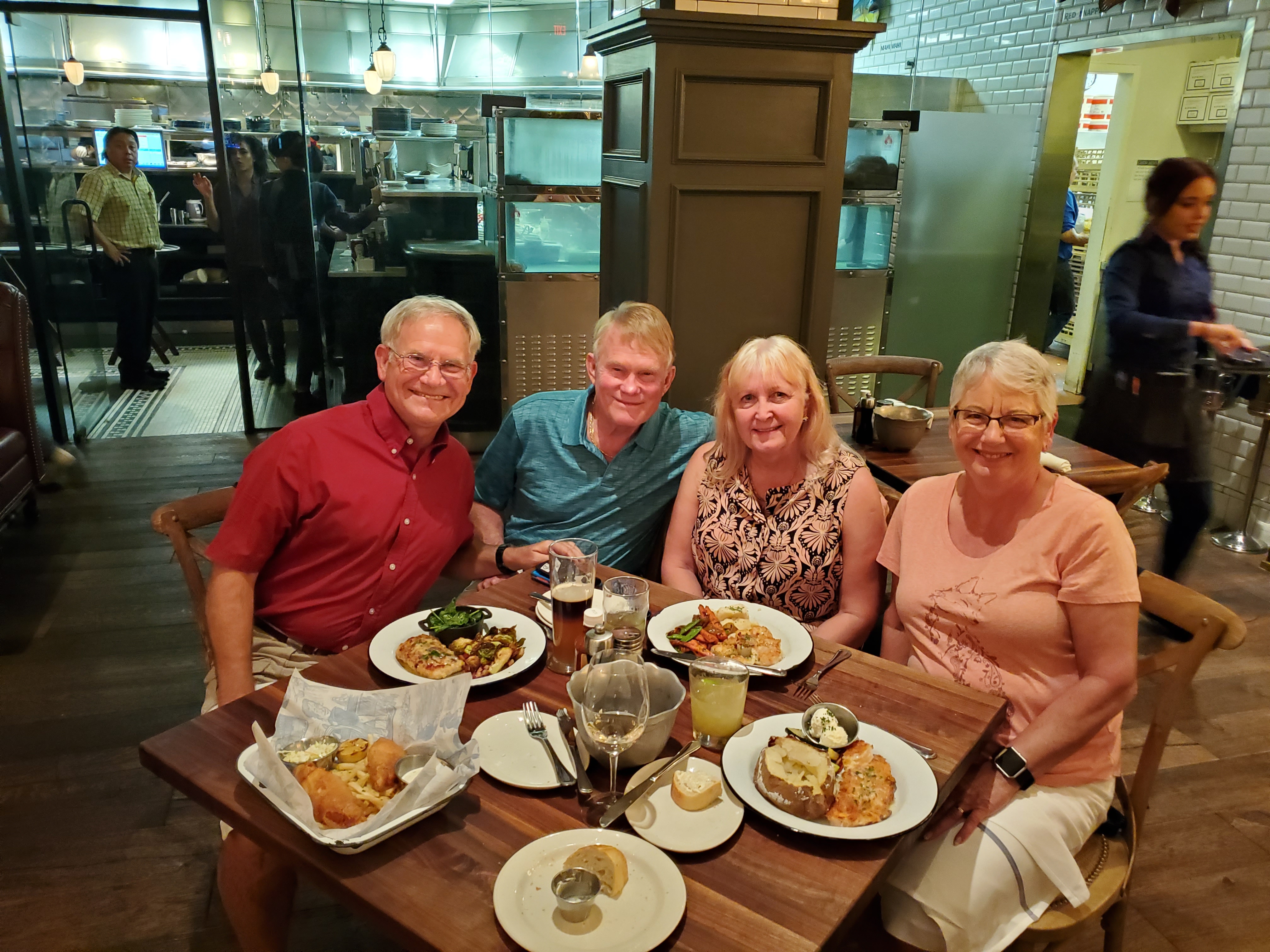
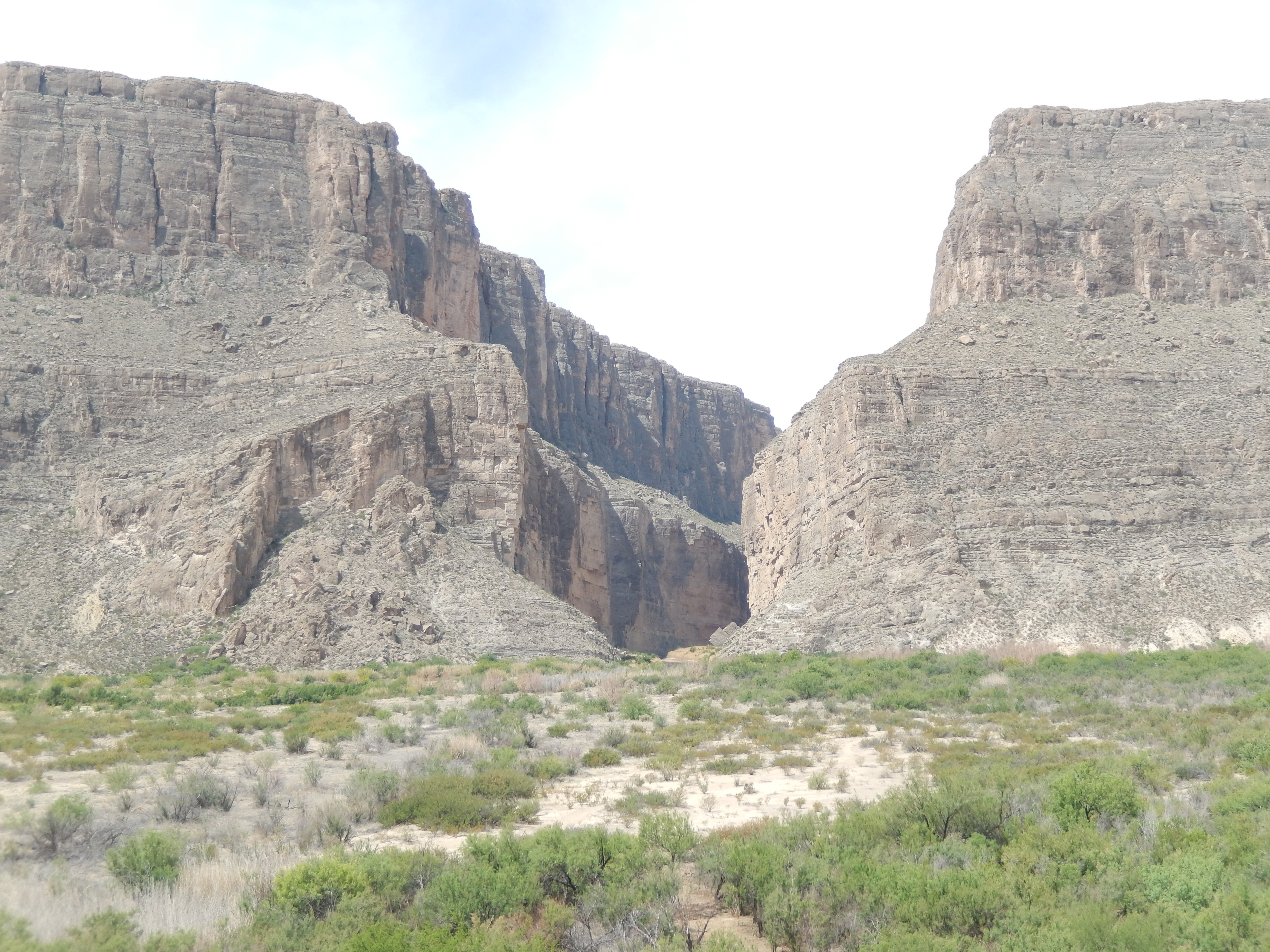
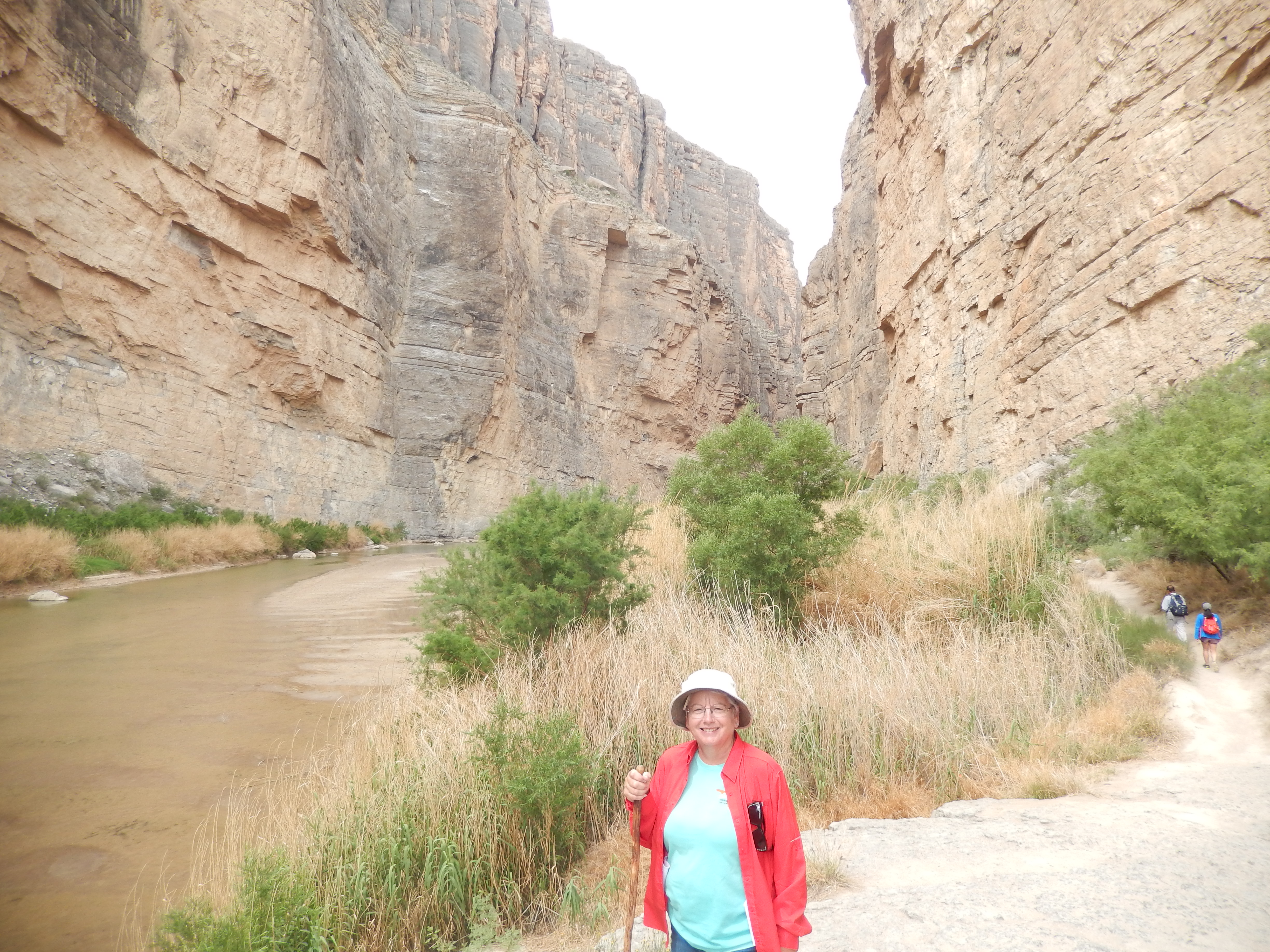
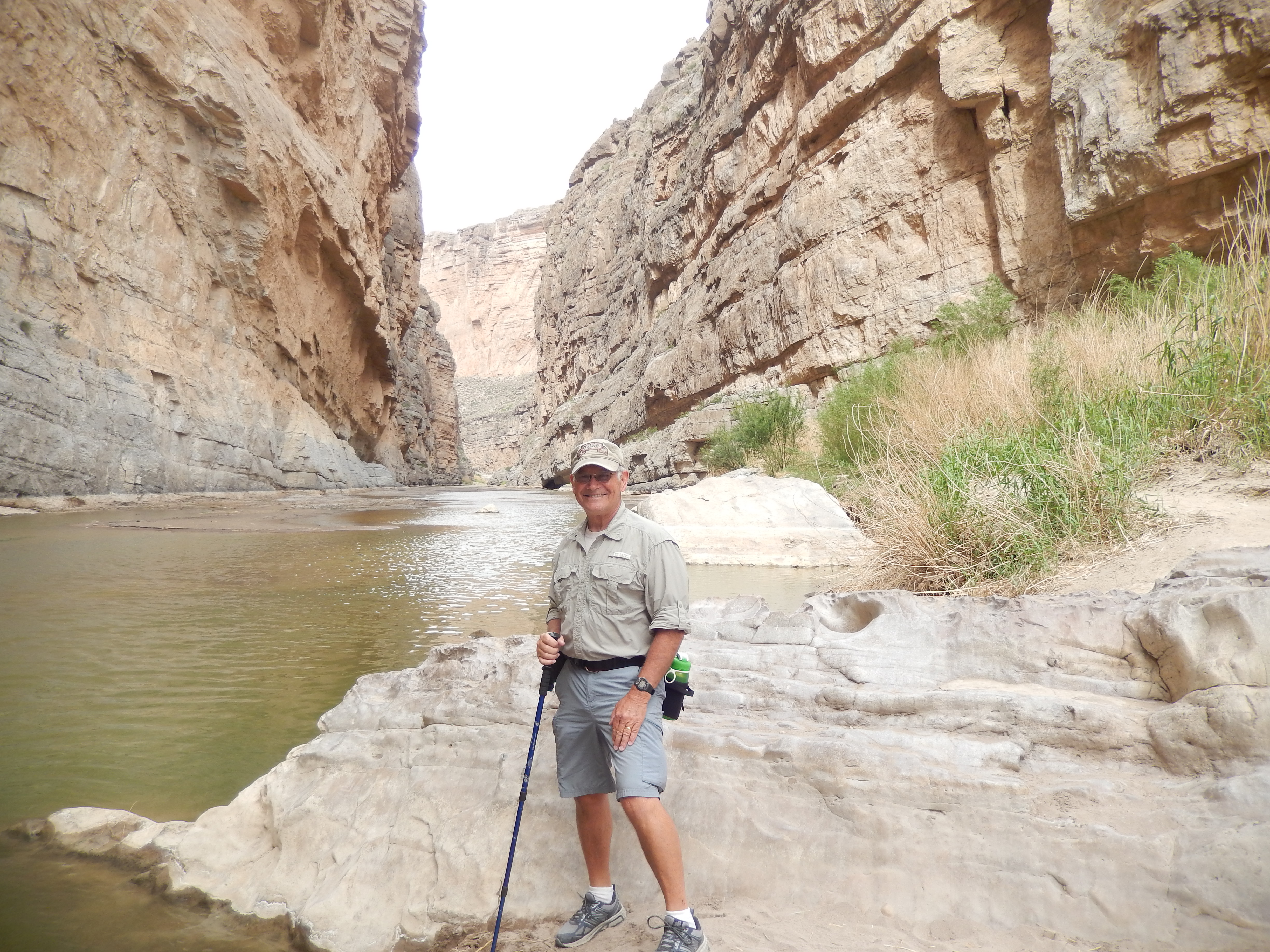
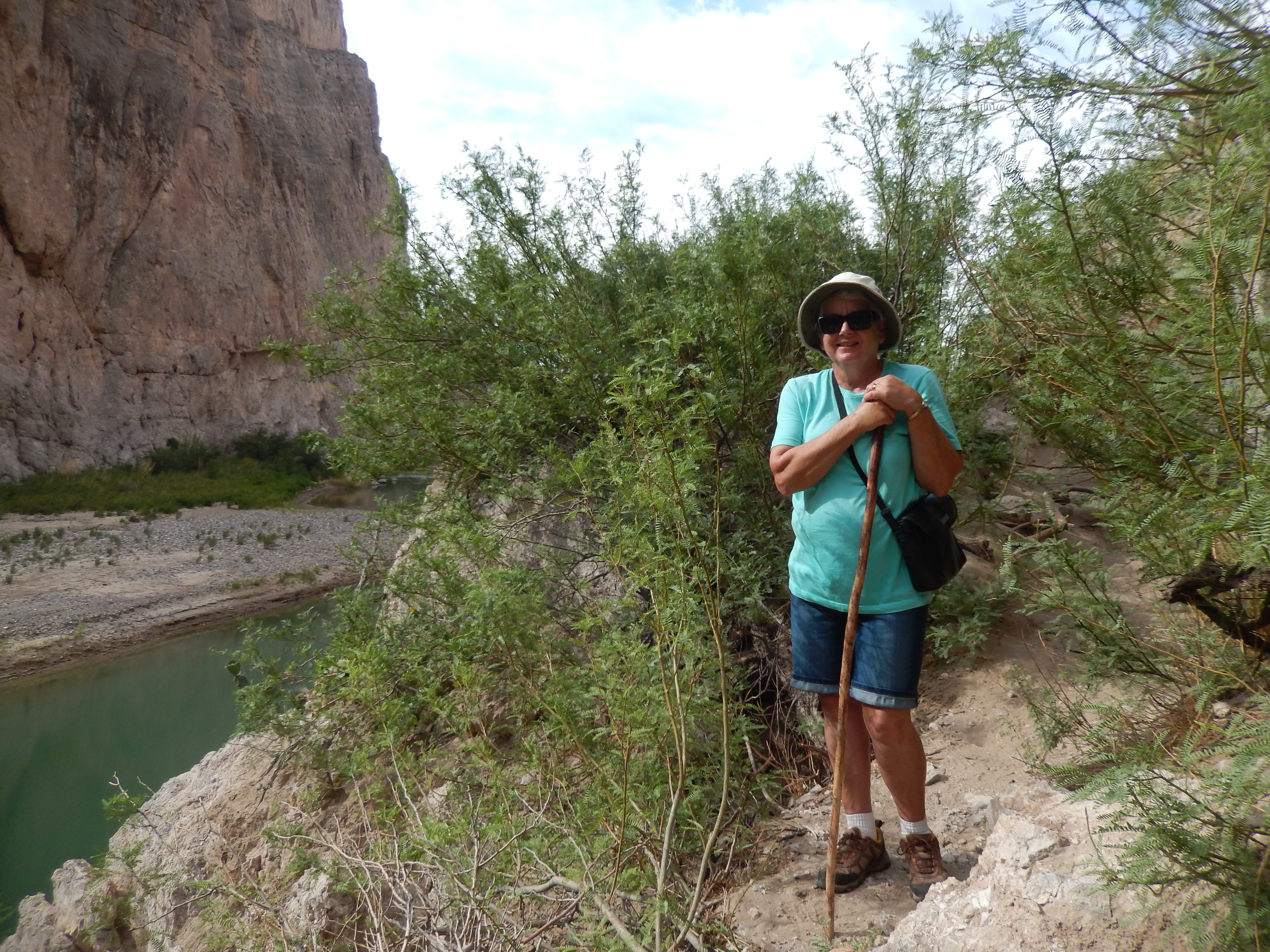
We decided to drive down the unimproved Old Maverick Road to the Santa Elena Canyon. The road was rough and wash boarded, but not terrible. We explored some side roads, looking for blooming flowers on the cacti. The Santa Elena Canyon Trail is an easy hike, but scenic. It follows the Rio Grande River. It is interesting to look across the shallow and narrow river that is easy to wade and see Mexico. Of course, in the canyon, there is no way to exit the river into Mexico, as the canyon walls are sheer cliffs.
From Santa Elena, we drove along the Ross Maxwell Scenic Drive to the Castolon Visitor Center. There wasn’t much to see here as much of the complex had been destroyed in a fire in May, 2019. The rebuilding is still in the early stages. We stopped to eat lunch in the Cottonwood Campground and it was obvious that we would have never fit into any of the campsites. We did enjoy a picnic lunch under a shade tree.
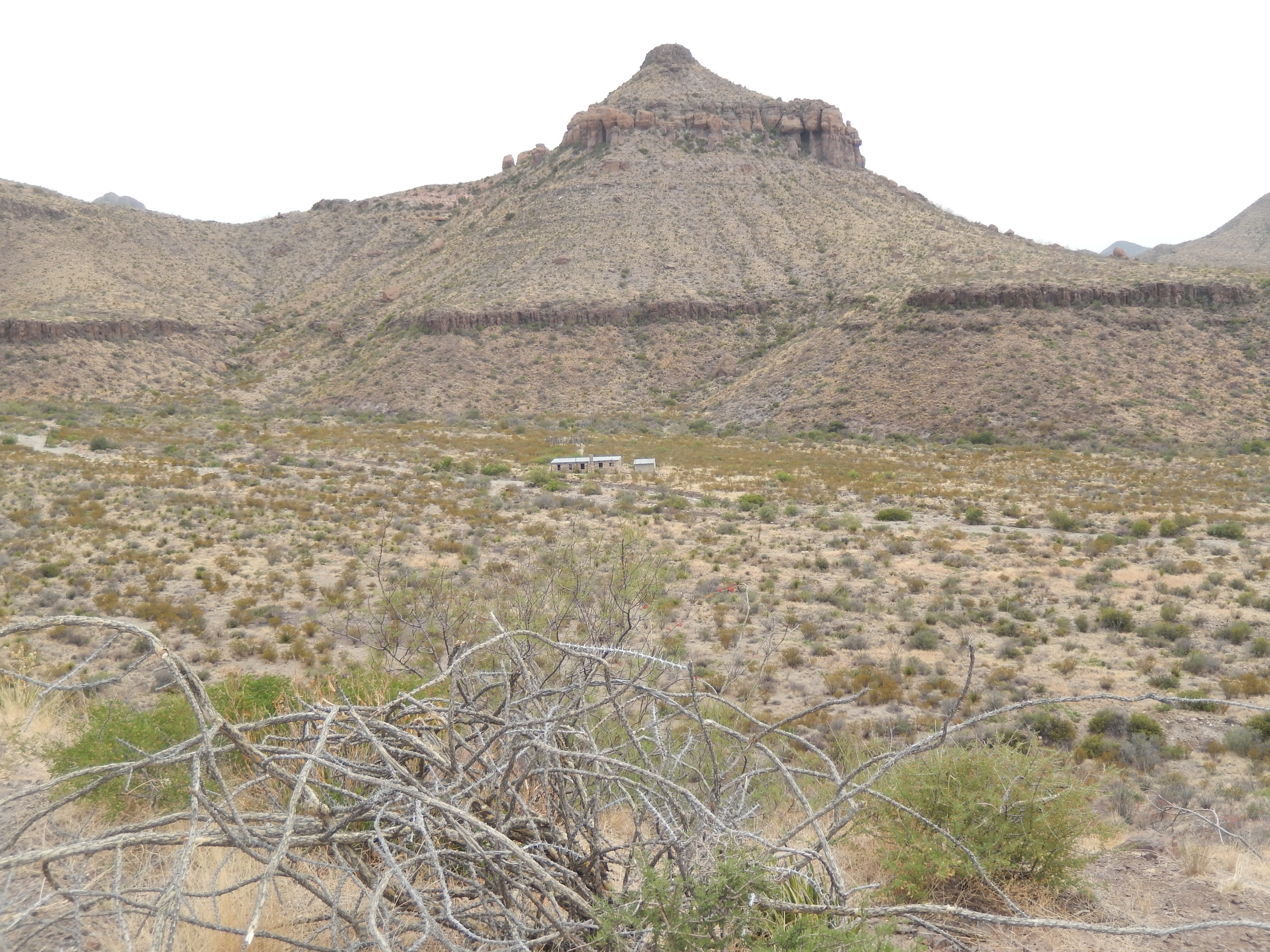
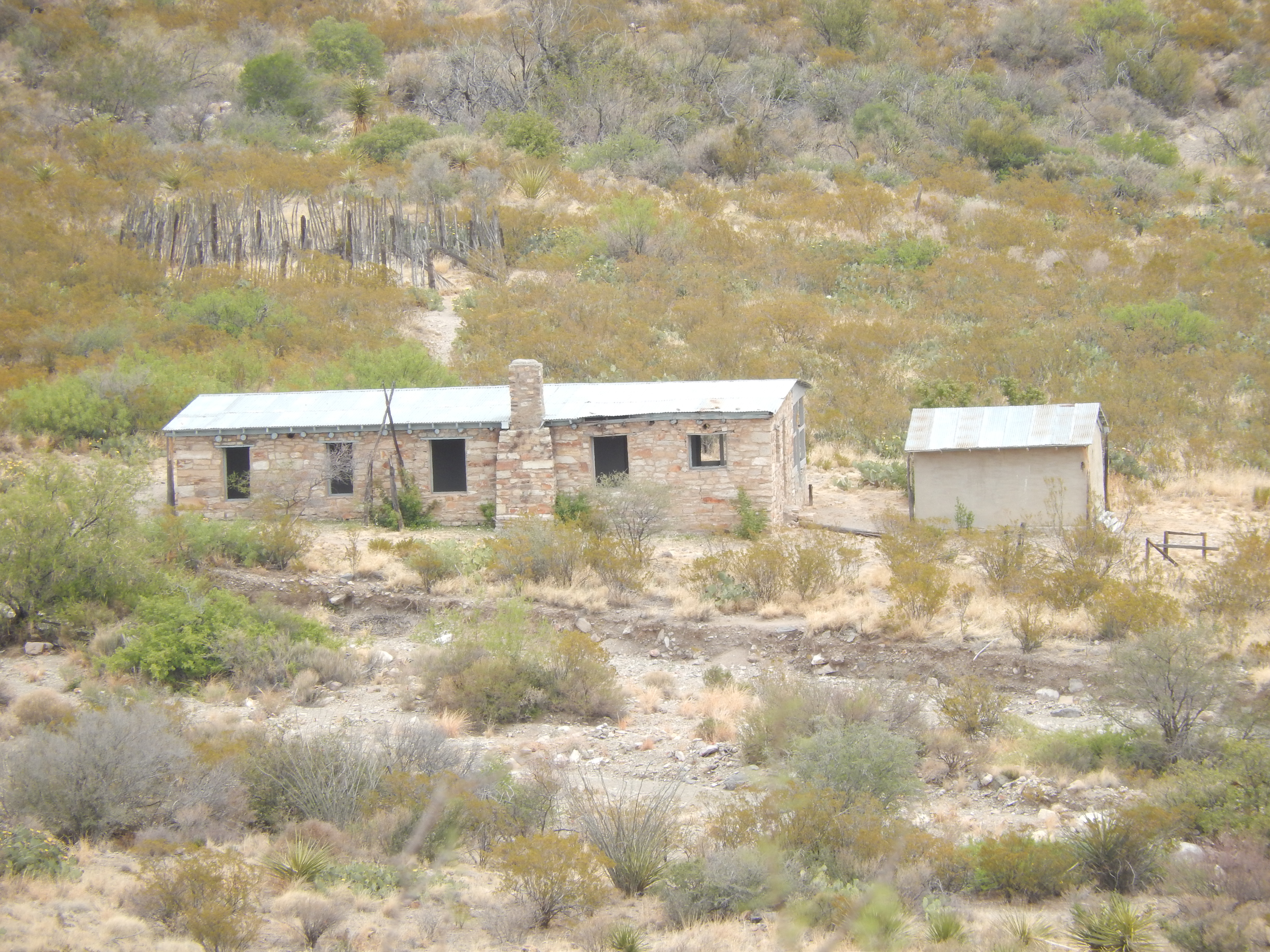
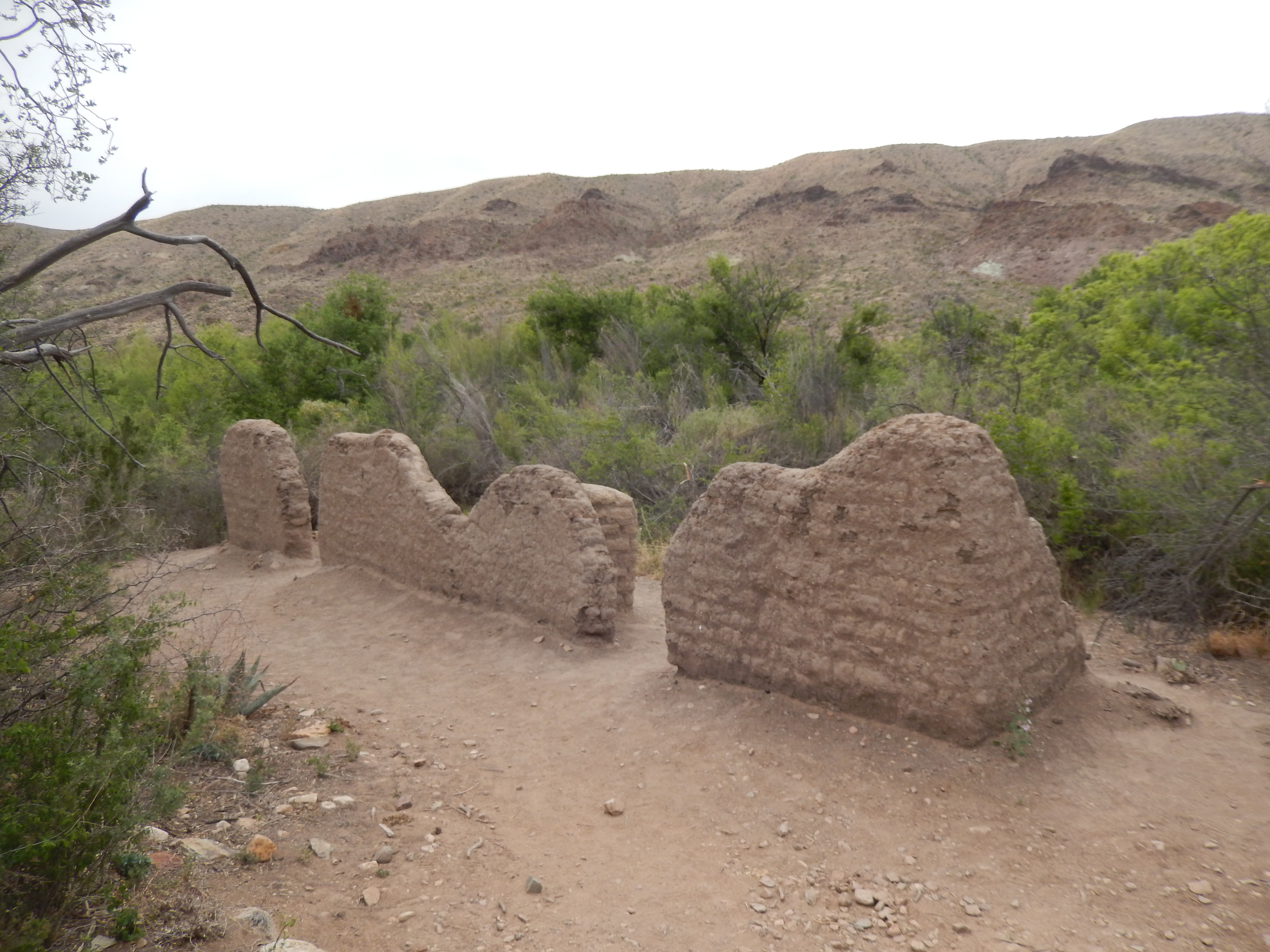
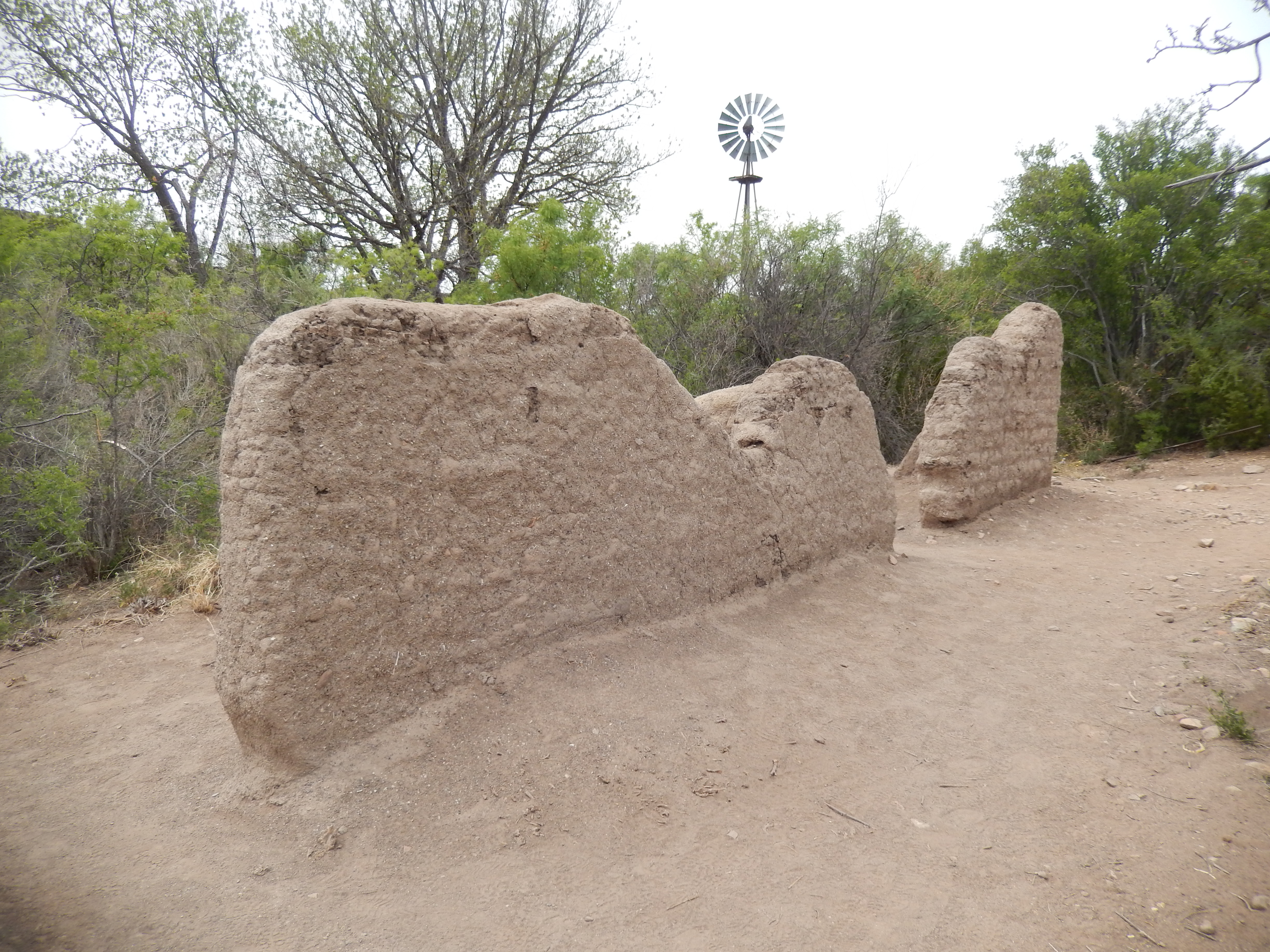
From there we drove north along the Maxwell Drive through the Mule Ears lookout, and stopped at the Homer Wilson Ranch. I was struck by the hardships that the early ranchers had to endure to make a life in this area. The Sam Nail Ranch was our last stop, here we saw where Sam and Nena Nail dug a well with a windmill to pump the water, built livestock pens, planted a garden, and dealt with drought, predators, and isolation.
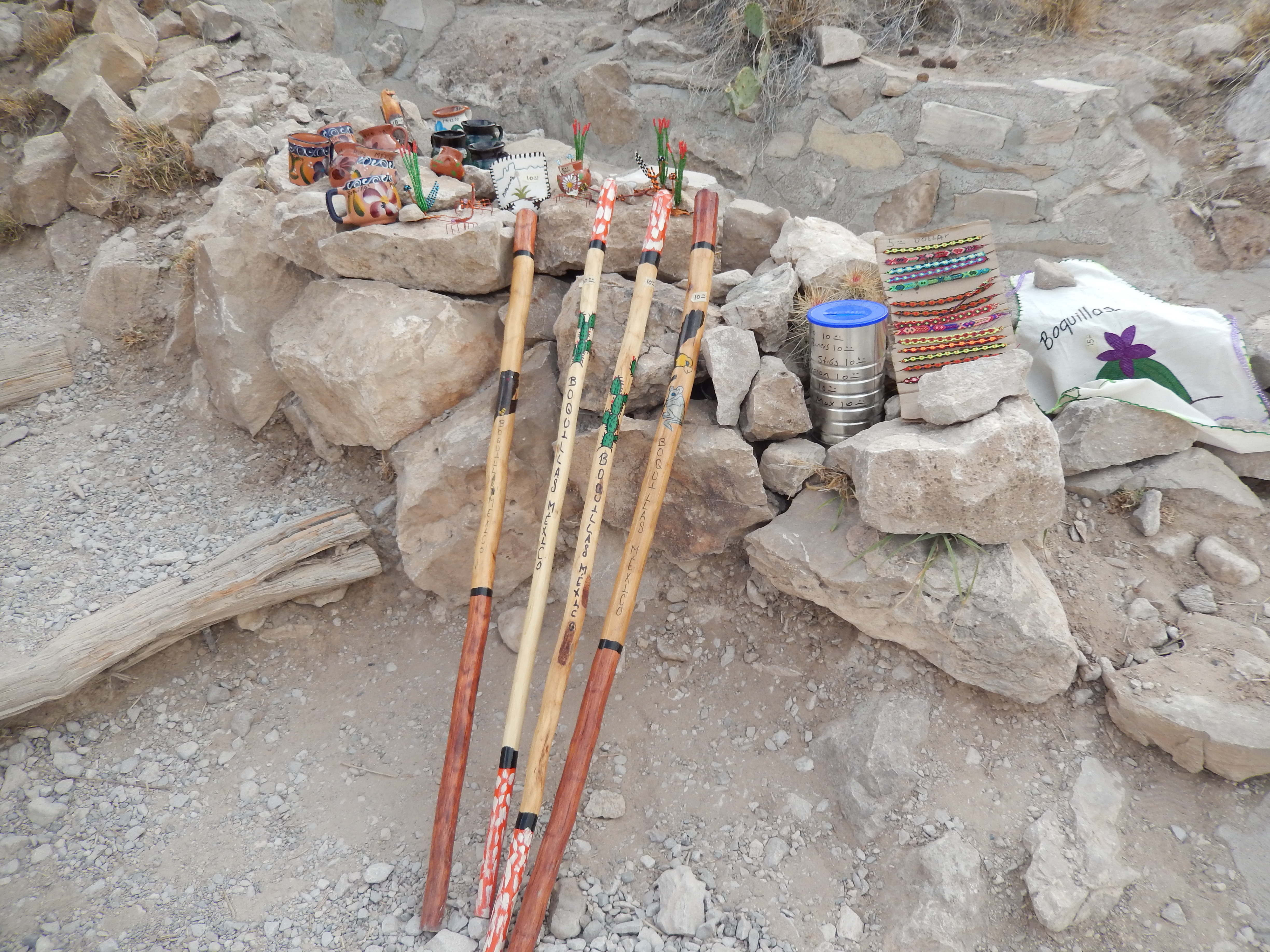
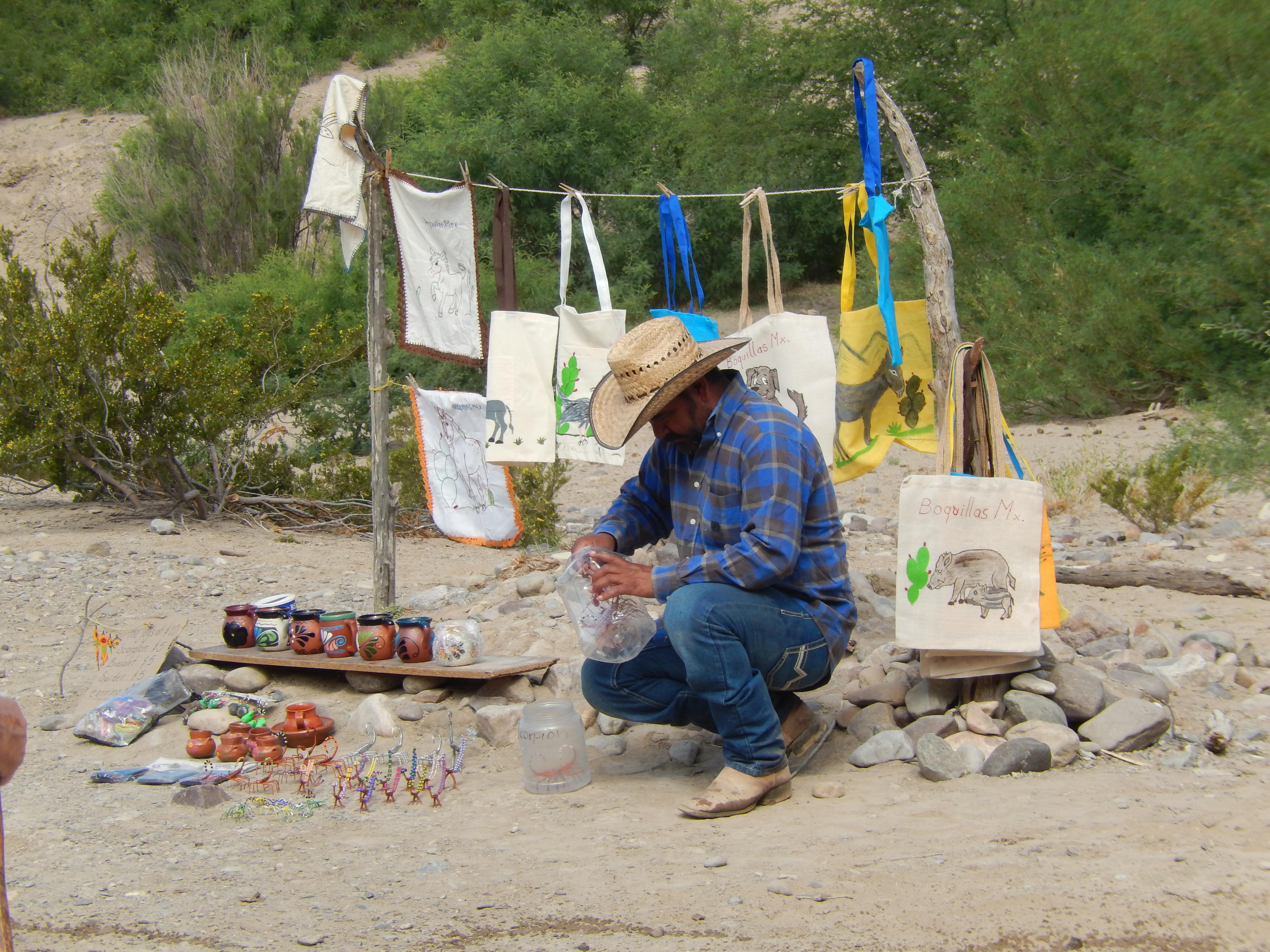
The next day we drove the entire width of the park to the eastern end, to the Rio Grande Village. We began by hiking the Boquillas (Bo-KEY-las) Canyon Trail. Boquillas is a Mexican village, just across the Rio Grande. During non-COVID times, visitors could cross the river at a Point of Entry and shop in Boquillas; however, the border crossing has been closed due to the pandemic. To make up for the loss of income, families from Boquillas have set up small camps on the Mexican side and ride across in canoes or horseback to set up small “stores,” some attended and some not. There were even a couple of men on horseback selling fresh tamales. The river was clear and reportedly has some great fishing. The canyon walls were interesting, with caves caused by erosion.
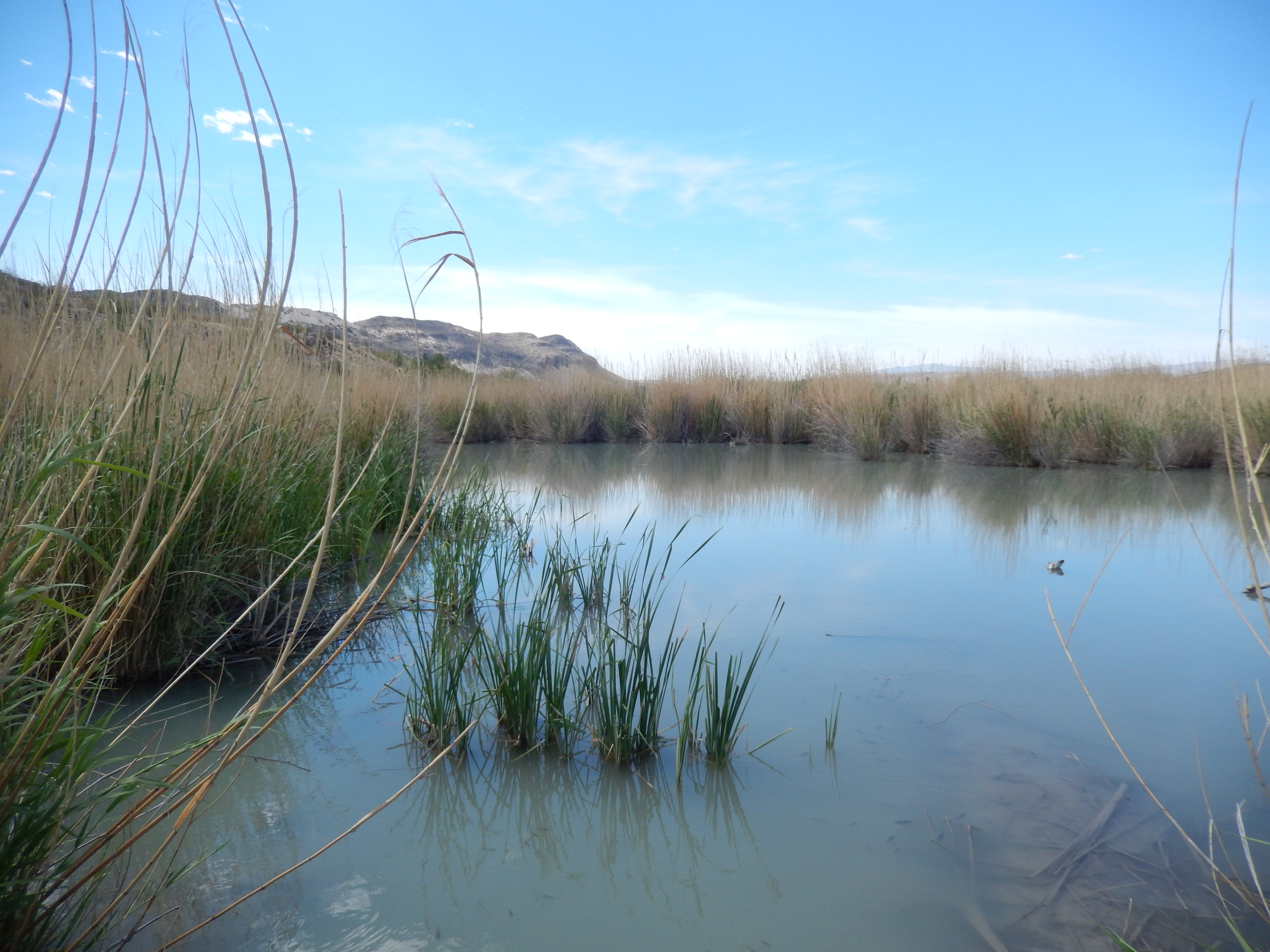
Our next stop was the Rio Grande Village where we hiked the nature trail that began with a beaver pond. Beavers in this area do not make beaver huts like they do up north, but tunnel into the riverbank. They do build dams that create these ponds. It was amazing to see this green oasis in the middle of the desert. In the space of a few miles we walked through a pond with fish and turtles, rocky foothills, and barren desert. Talk about a diverse ecosystem!
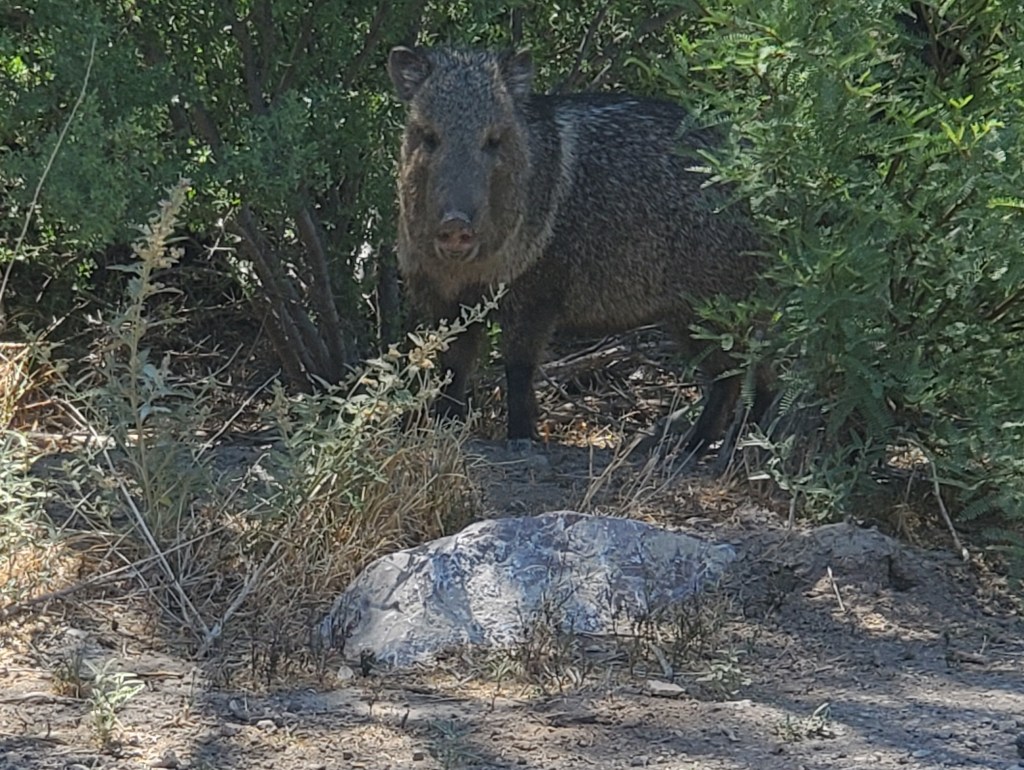
We ate lunch in an empty campsite near the trailhead. As we were eating, a javelin (a wild pig) approached from the other side of the road. It was ironic, I had just finished reading a notice to not leave food outside because of javalinas and now we had one almost walk up to us!
On our way out, we stopped at the Dugout Wells. Here we hiked a short nature trail and saw another example of the challenges that the early settlers faced. Around 1900 a settler dug a well and improved the flow with a windmill.
We didn’t think we were going to be able to hike in the central part of the park, the Chisos Basin. The whole area had been closed due to a fire on the south rim of the canyon. Fortunately, they reopened it shortly after our arrival. It had been getting hotter every day, and the road to the Chisos Basin area was being resurfaced and was closed between 8:00 and 11:00, so we decided to get there before the road closed. We arrived at the campground about 7:45 and began hiking the Windows Trail. We saw the sunrise on our drive out and we were able to see it again over the mountains as we began our descent along the trail. It was nice to hike in the cool morning. The trail was interesting with a variety of plants along the way. The end of the trail was amazing! The canyon wall opened up in a window that overlooked the basin.
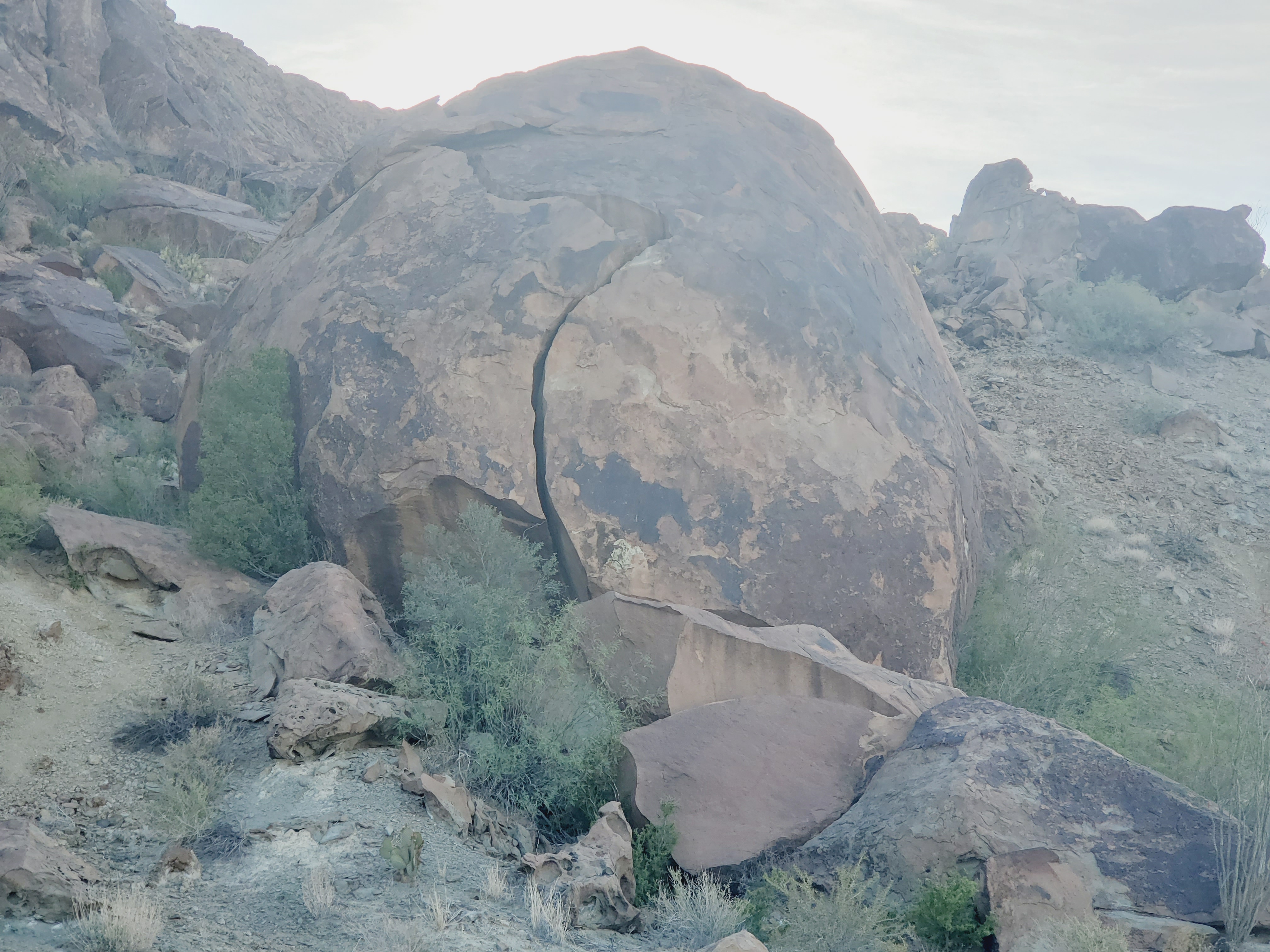
Our last day was forecasted to be the hottest day of our stay and we planned for a day off. The winds were light in the morning and we took advantage of that to ride our bikes. I integrated some geocaching with my ride and found a geocache called the Dinosaur Egg. It was an easy find, but required a little rock climbing to reach it.
The next morning we were on our way to Fort Bliss in El Paso, TX
After a few weeks of some fairly active sightseeing, we were ready for some relaxation. Staying at the RV park at Fort Sam Houston in San Antonio seemed to fill that need. Fort Sam Houston is home to the Army’s Medical Corps and it is very busy with soldiers (as well as sailors and airmen) attending basic and advanced medical training courses. The RV park is very nice and in a remote section of the post. There is a nice office with a lending library and lounging area, although the lounging area was closed due to the pandemic. (I am going to be so glad to be able to stop using that phrase, “due to the pandemic.”)
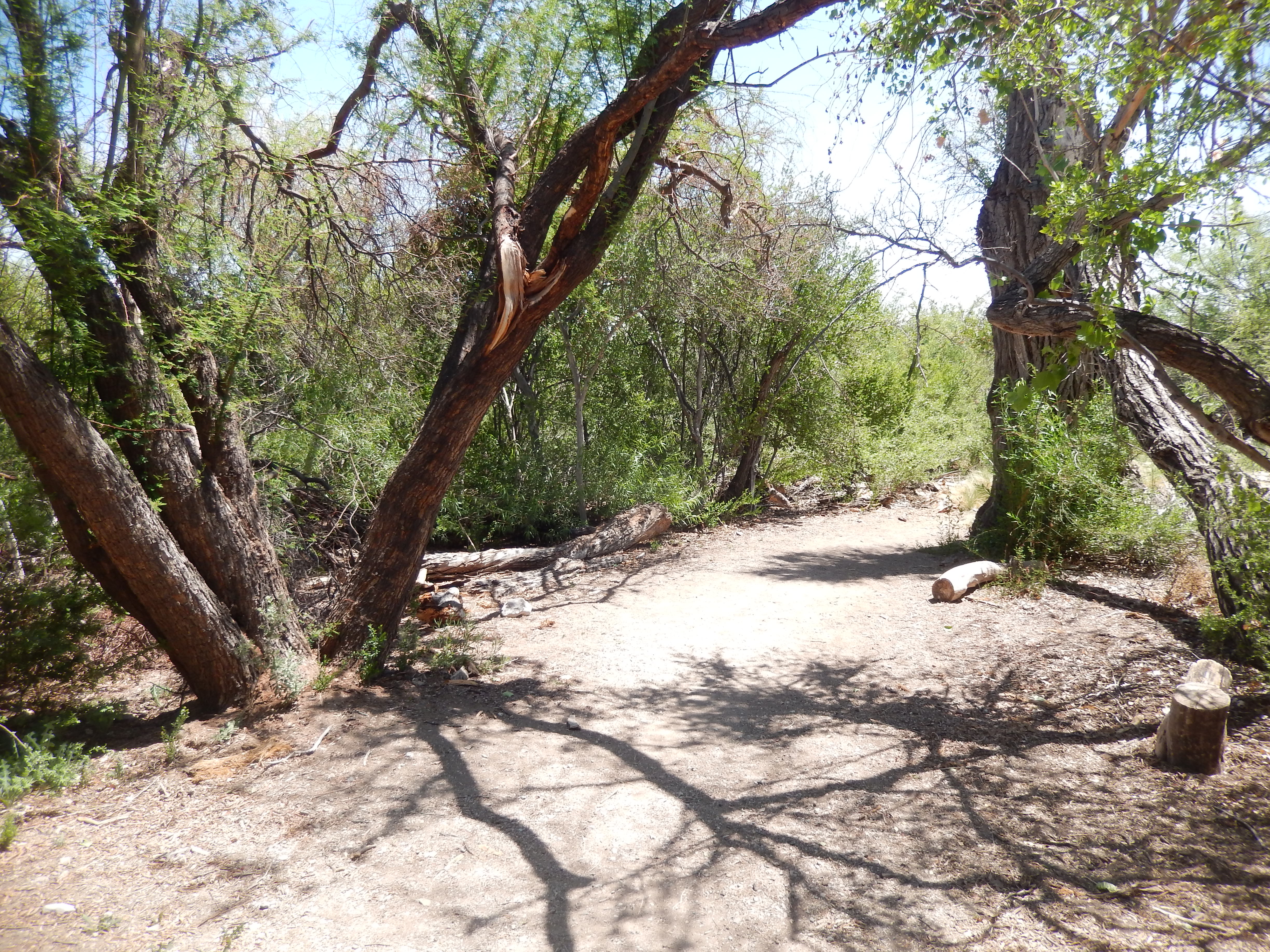
There were routes we could use for biking and walking, I even found a wooded trail that made me feel like I was on a hike.
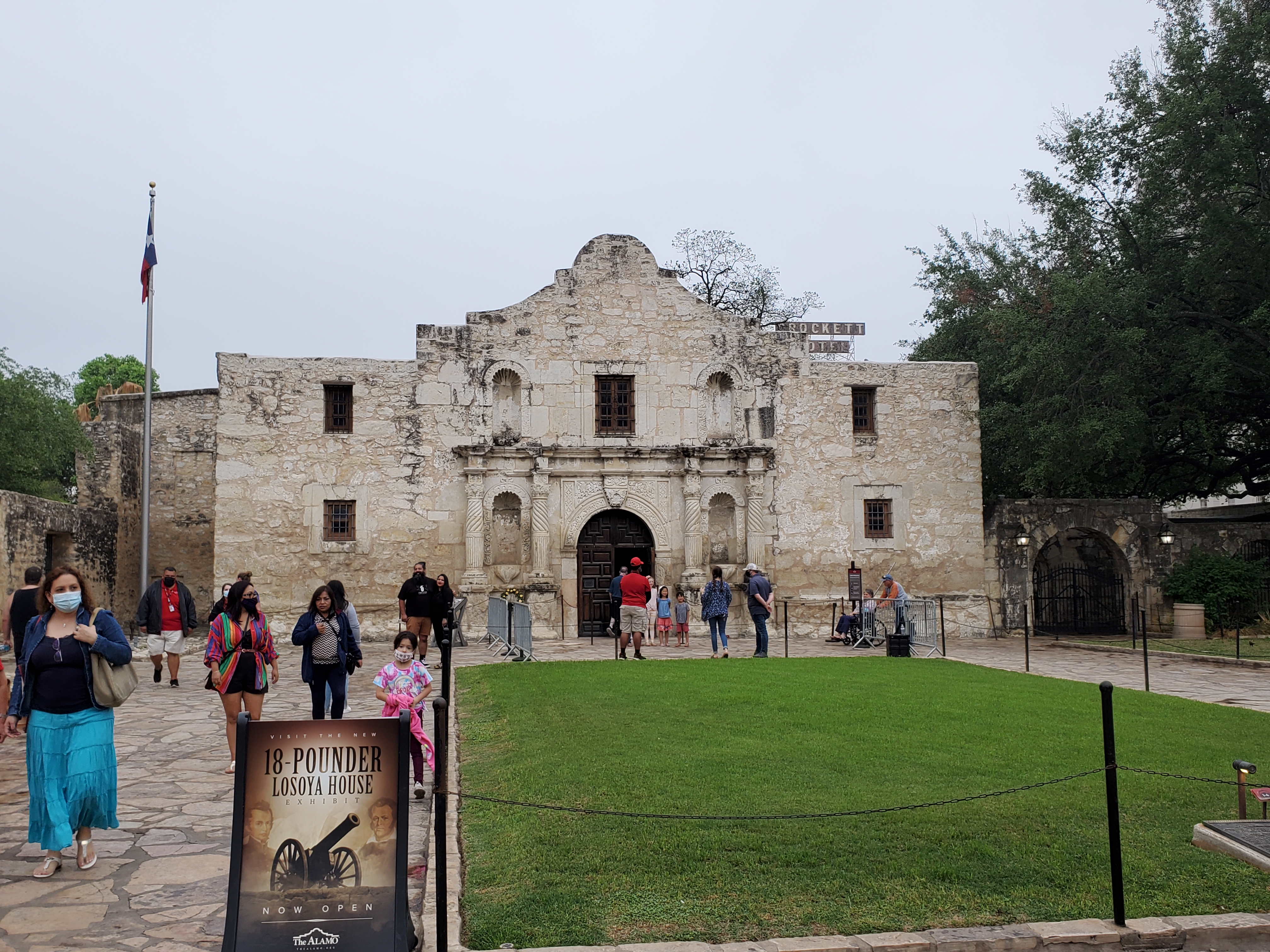
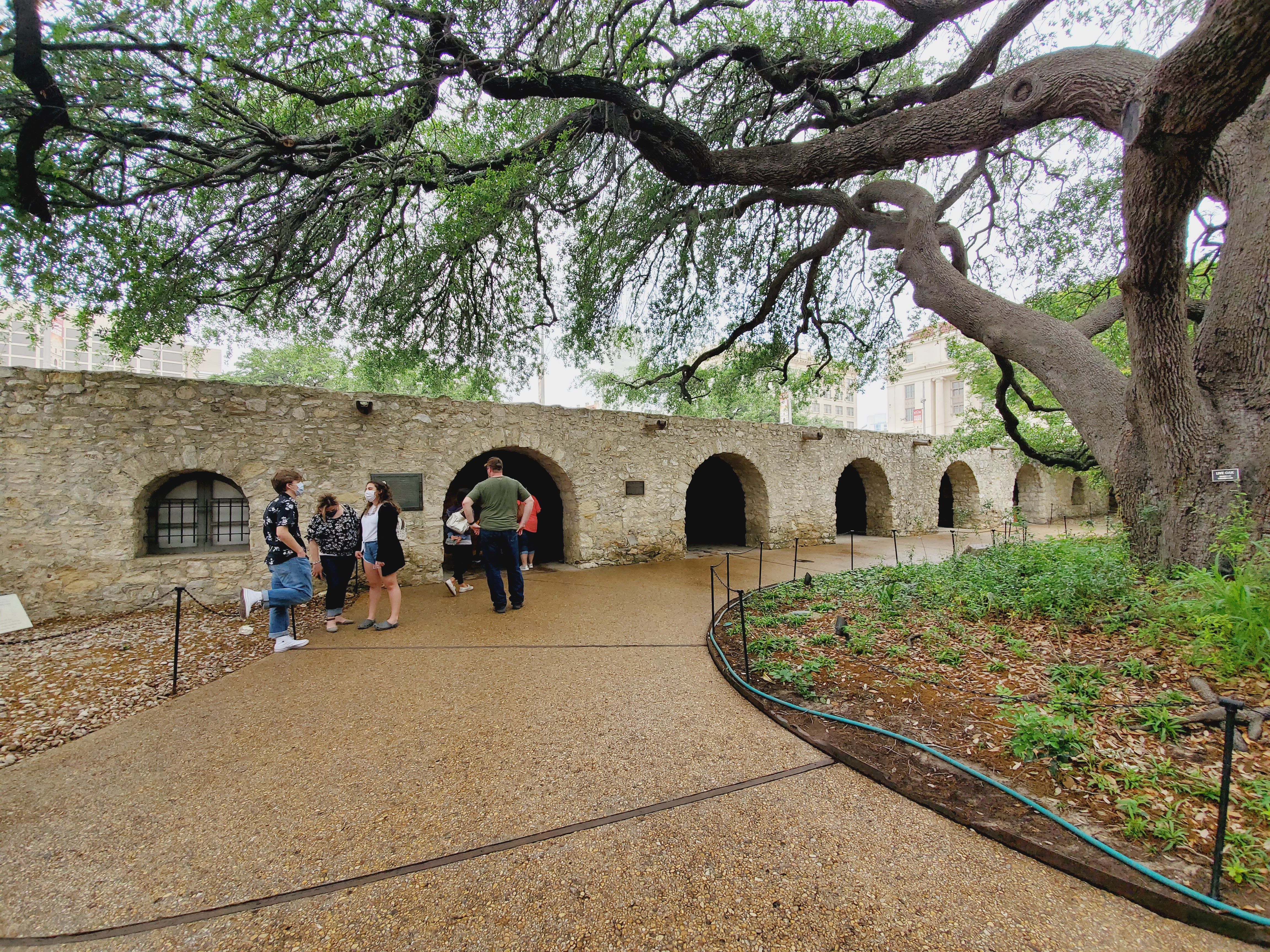
Two of the more popular tourist attractions are the Alamo and the Riverwalk. We had done these on previous visits, but I wanted to see the Alamo again. I was glad that we did as they had expanded the exhibits and I learned things about the era and the battle of which I had not been aware. I am still impressed that many of the men who fought and died in the Alamo were not from Texas, but were seeking a new life and were willing to fight for it. They had the opportunity to leave before Santa Anna attacked, but were willing to sacrifice themselves to give General Sam Houston and the brand new Texas Army a chance to prepare.
Later in the week we decided to ride the San Antonio River Trail to tour the San Antonio Missions National Historical Park. In the 1700s Franciscan monks (members of the Order of Saint Francis of Assisi) established a chain of missions along the San Antonio River. The mission system sought to bring Indians into the Spanish society and the Christian faith. Financed by the Spanish Crown, the missions served both the church and state. The missions became communities for native Indian tribes and centers of commerce. They were also military posts, protecting the mission communities from marauding Indian tribes of Apache and Comanche. All of the missions shared common designs in that they were surrounded by a wall to protect them from Indian attack, a central area that served as a trading center, a church with lodging for the Franciscan monks.
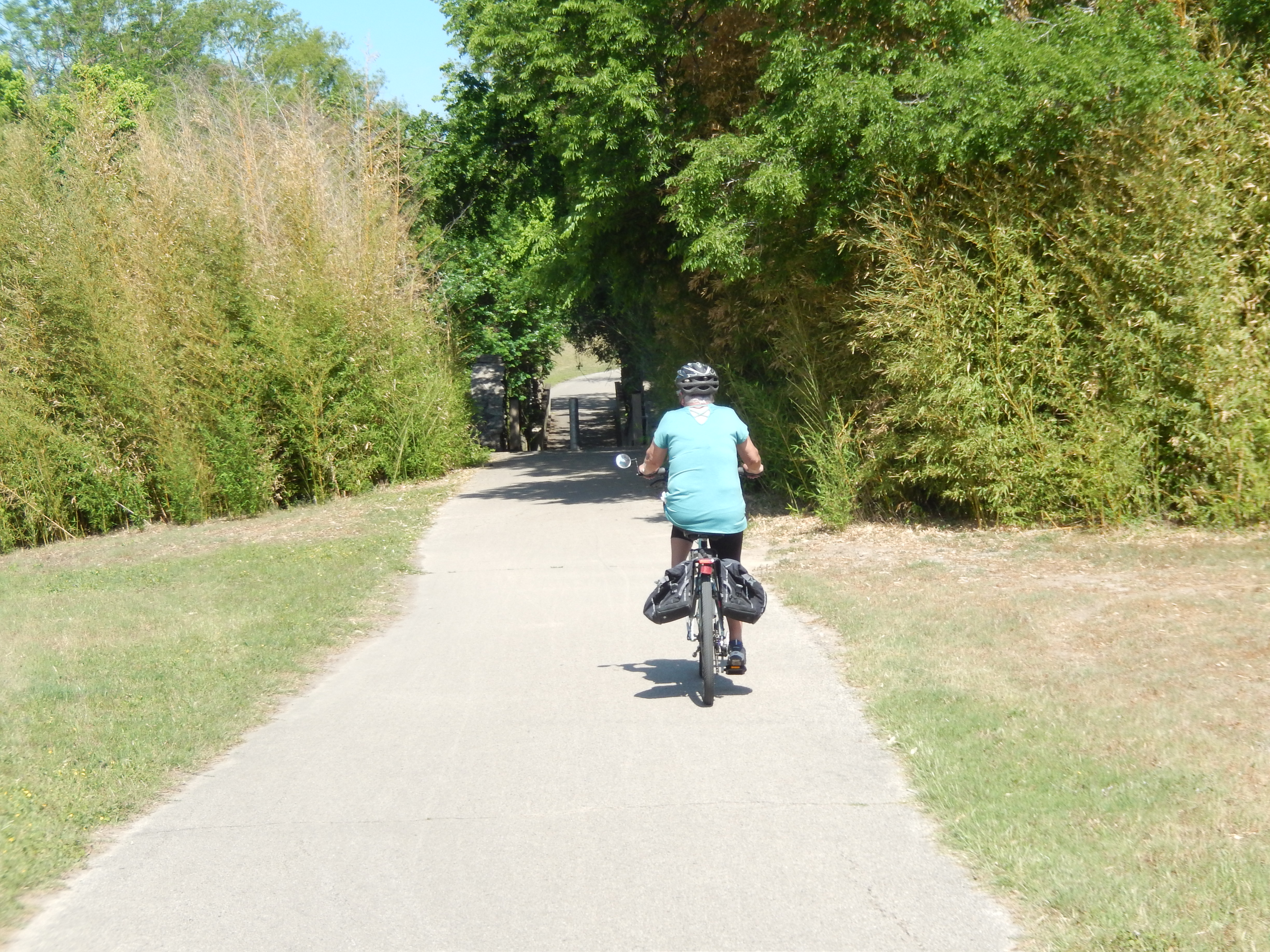
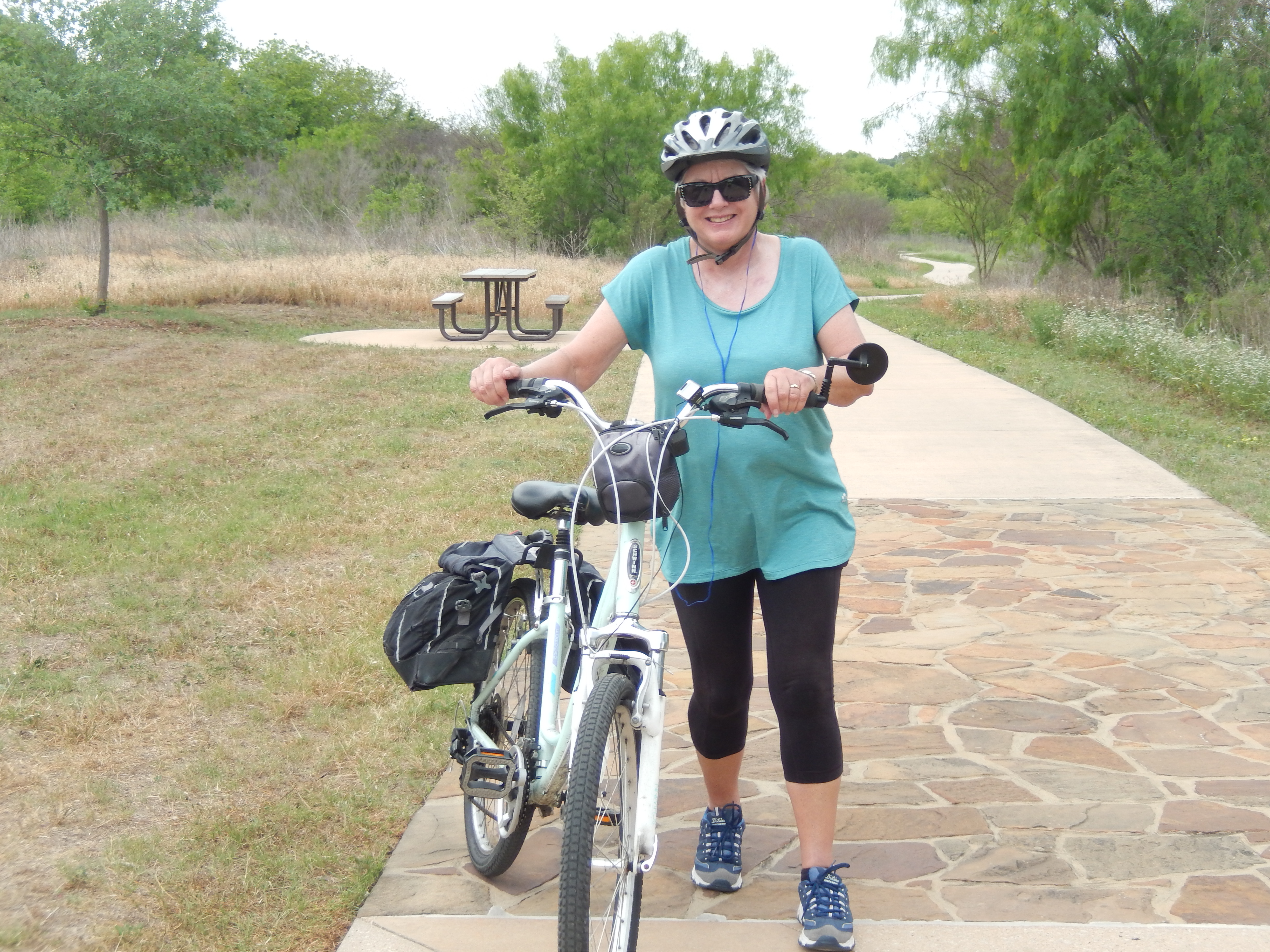
The Hike & Bike Trail winds alongside the San Antonio River through old neighborhoods and farmlands. Dedicated paved pathways that connect the missions along the river are reserved for bikes and pedestrians only. The Hike & Bike Trail is an easy walk or ride and is suitable even for children.
We began our ride at the Mission San Juan Capistrano. This is the third in the series of mission from San Antonio, and was established in 1731. By 1762 there were 203 Indians residing in the mission. They attempted to build a second church at the mission in 1772, but construction was stopped in 1786.
We rode north, toward San Antonio, and our next stop was the Mission San Jose. This mission was founded1720. At its peak in 1768, there were 350 Indians from three tribes living within the mission in 84 two-room apartments in the perimeter wall. The limestone church and “convento,” where the monks lived, are the centerpiece of the mission. The Rose Window is the premier feature of the church.
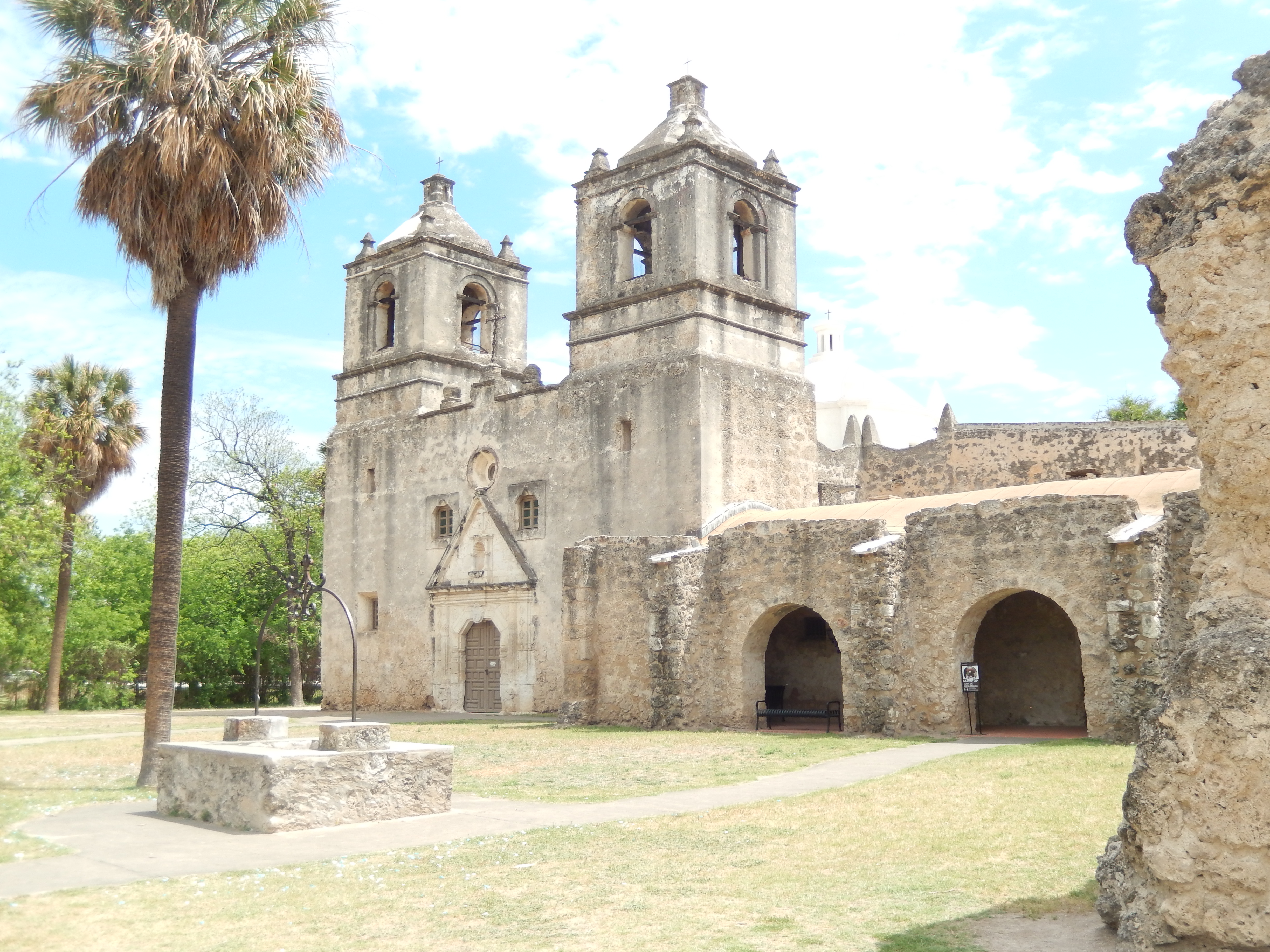
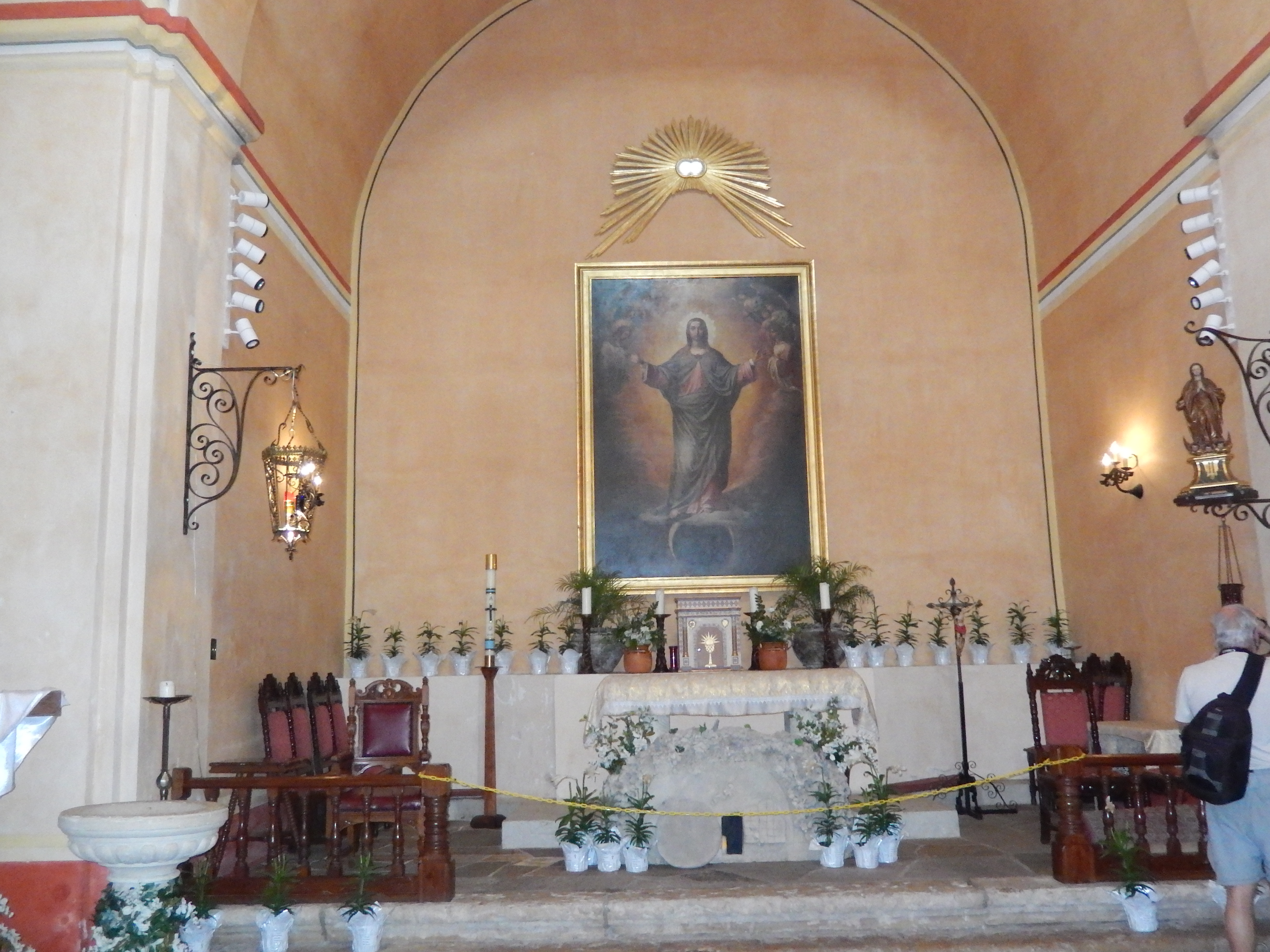
The third mission we visited is Mission Concepcion. This is the closest to San Antonio and is one of the country’s oldest stone churches. This mission and the others combined the teachings of Catholic Spain with native cultures, giving rise to the unique culture of South Texas. The perimeter walls and other buildings are gone and all that remains is the central church building.
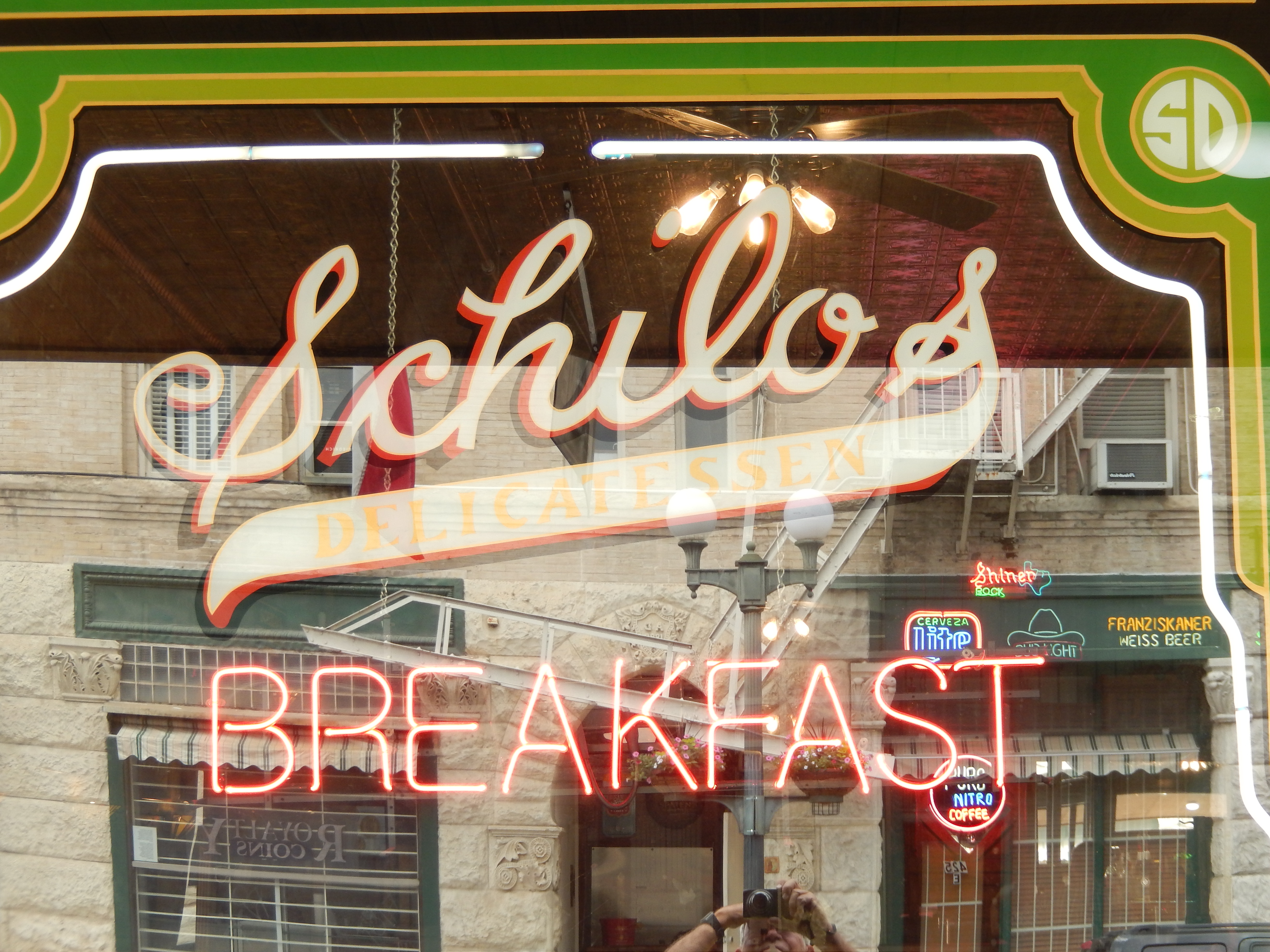
From there we rode the rest of the way into downtown San Antonio for a special treat. We stopped at Schilo’s, a German restaurant near the Riverwalk. It is famous for its homemade root beer and each of us enjoyed one of their root beer floats.
We then retraced our route to Mission San Juan where we loaded our bikes back into the truck and drove to Mission San Francisco de la Espada. This is the fourth and farthest from San Antonio. In addition to the monks and Indians, there were eight Spanish soldiers stationed there to teach the Indians how to defend the mission. In 1826, a band of Comanche raided the cornfields and killed the livestock. The same year, a kitchen fire destroyed most of the buildings.
All of these missions continue to serve their communities, conducting worship services and ministering to the local population.
We rode over twenty miles, enjoyed some beautiful weather, learned a lot about the history of the area, and enjoyed a special dessert. What a great day!
On April 20th we headed west to visit Big Bend National Park.
We left Panama City and headed west along the Florida Panhandle. Our next major stop was New Orleans, but that was too far to drive in a day. Rather than staying overnight in a Walmart parking lot, we looked for an appropriate campground. Mobile, AL was about halfway between Panama City and New Orleans and, much to my surprise, there is a state park on an island in Mobile Bay, Meaher State Park.
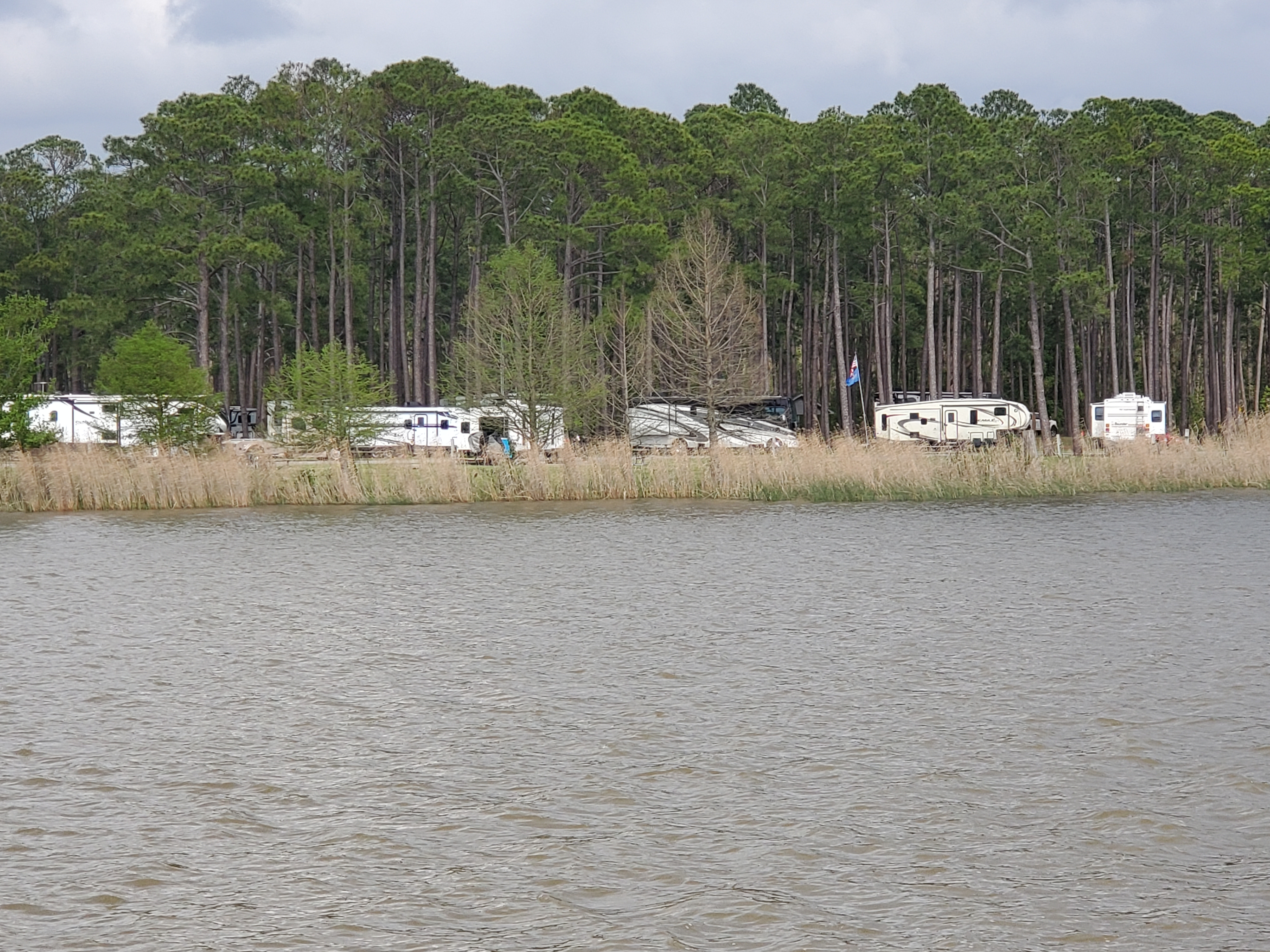
Meaher State Park is on US-98 as it crosses Mobile Bay just north of I-10, making it not far off our route. I was impressed by this little park. There are plenty of trees, the sites are all full hookups, it had a boat launch for us to launch our kayaks, and three geocaches. We were able to ride our bikes across the road to Five Rivers Delta Center and explore the complex. If you are in the area this is another great place to launch kayaks.
We had explored Mobile and the Battleship Alabama on previous visits so we took advantage of this time to just relax and enjoy the setting. Our first morning we kayaked in Ducker Bay and Bay John, at the north end of the larger Mobile Bay. It was a good thing that we did it then because the next day we were hit by a big storm with high winds. There were white capped waves on the Blakely River.
After three days, we hit the road for New Orleans.
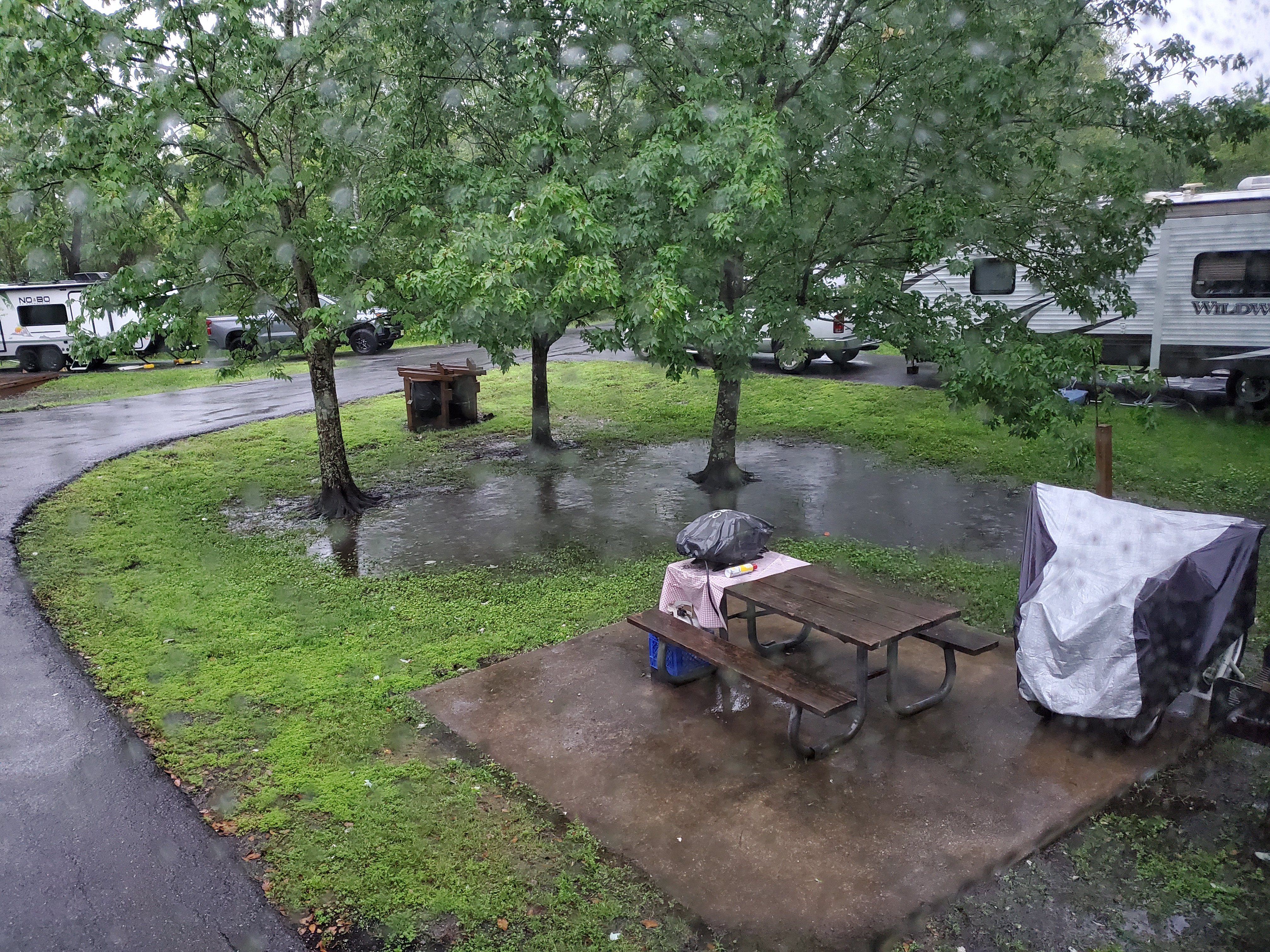
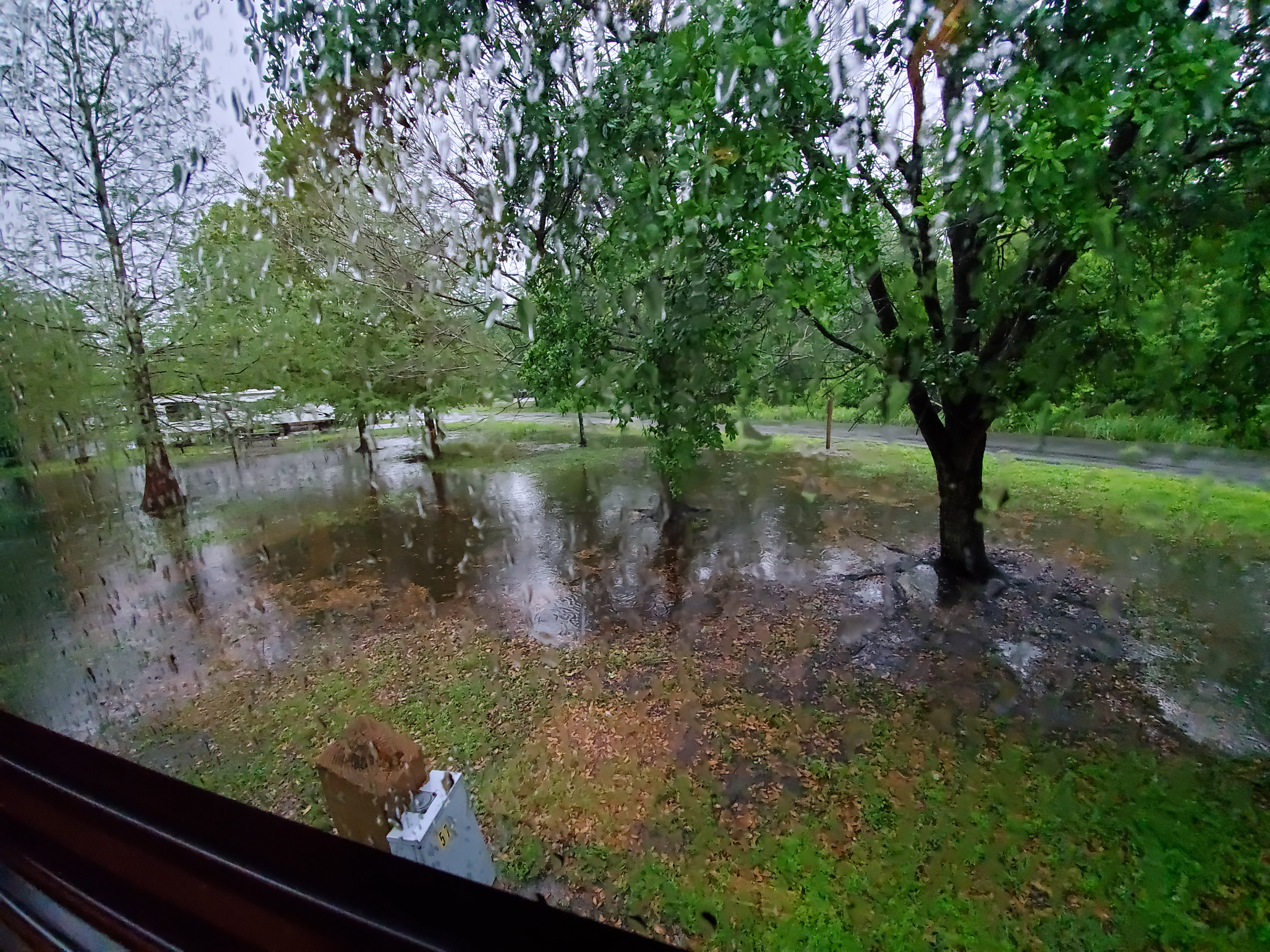
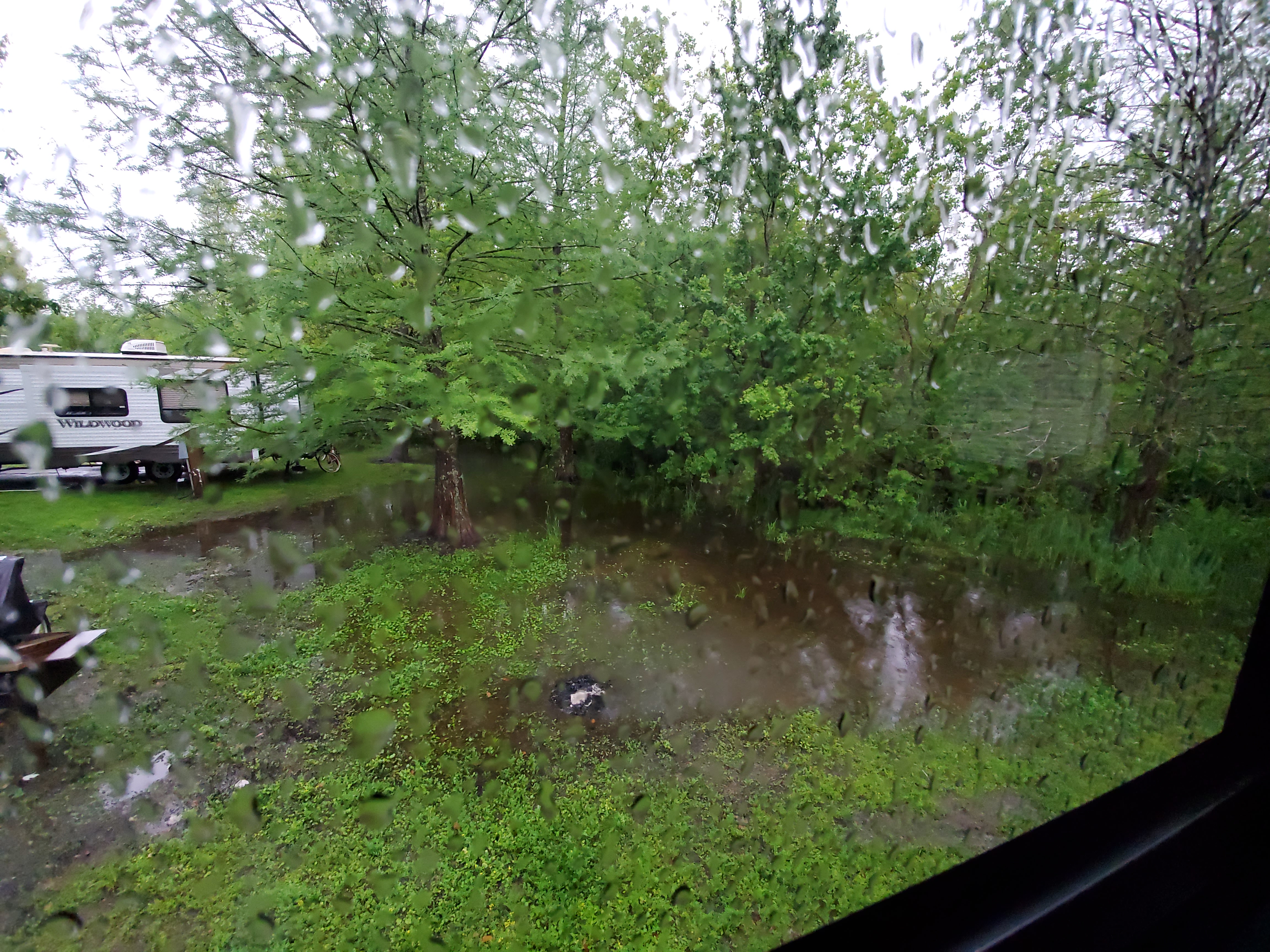
We had already run into one glitch in our travel plans. We had reservations to stay at Joint Base Belle Chase, but we were notified that our reservation had been canceled because the RV park was closed due to the pandemic. That caught us by surprise, but we recovered and were able to get reservations at nearby Bayou Segnette State Park. Bayou Segnette is a nice park with good-sized sites and good areas to ride bikes and walk. The downside of the park is that it is in a wetland and there were large areas of standing water throughout the campground. We made the best of the situation.
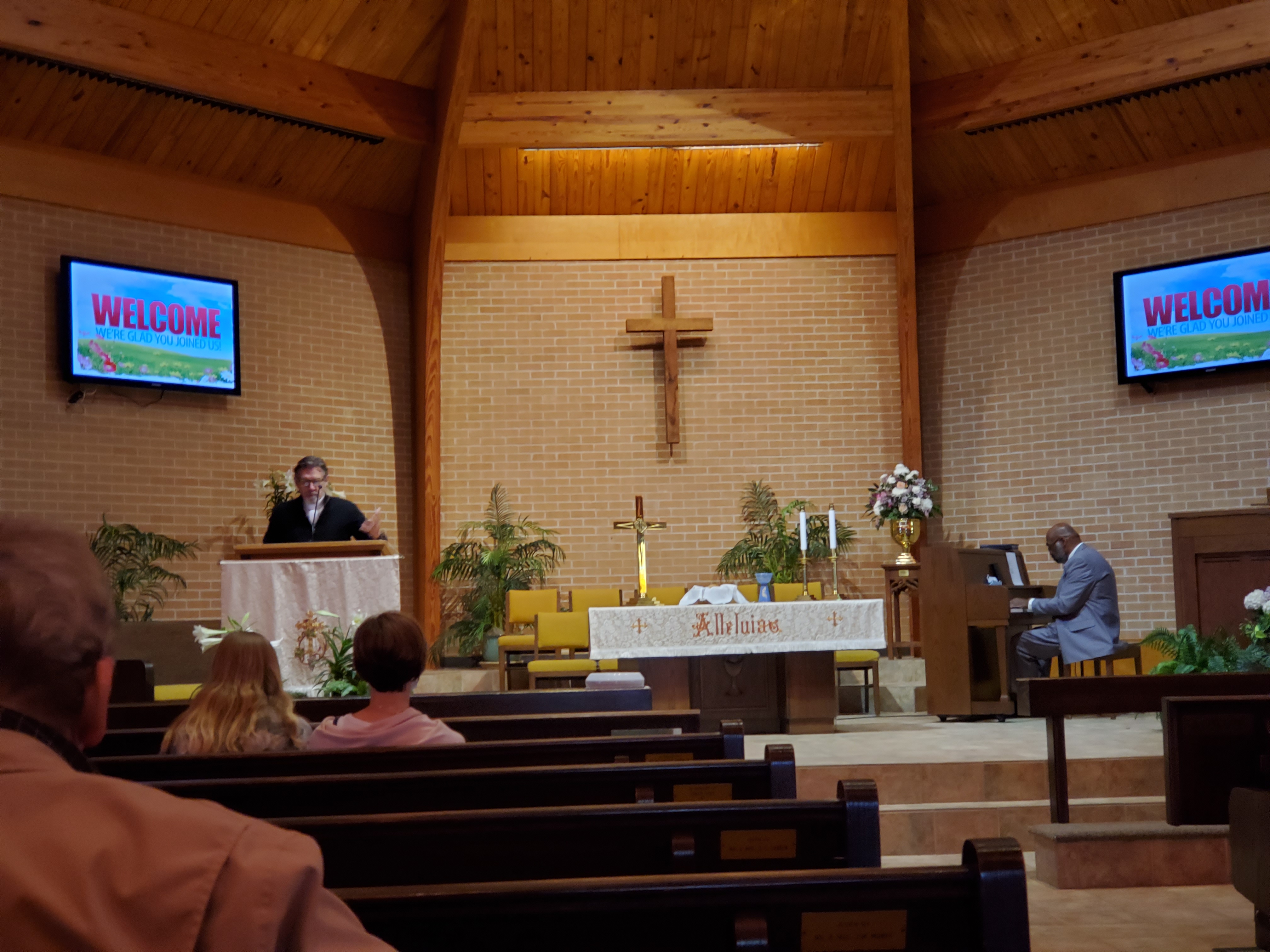
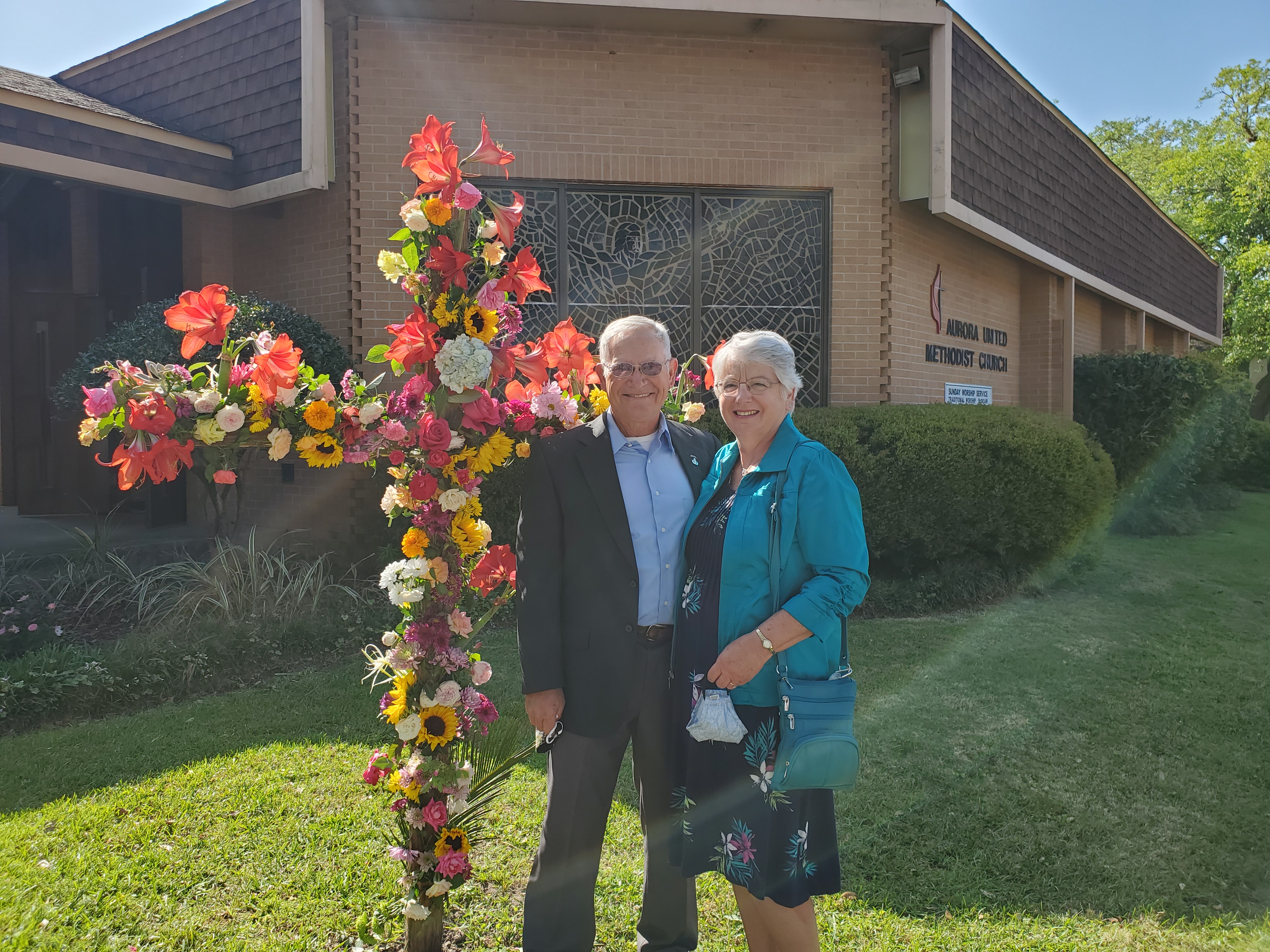
We were able to ride our bikes, for exercise, almost every morning. On Easter Sunday, we were able to attend an actual church service, our first since the beginning of the pandemic. The pastor of Aurora United Methodist Church was especially thrilled that we chose to join them for worship that Sunday.
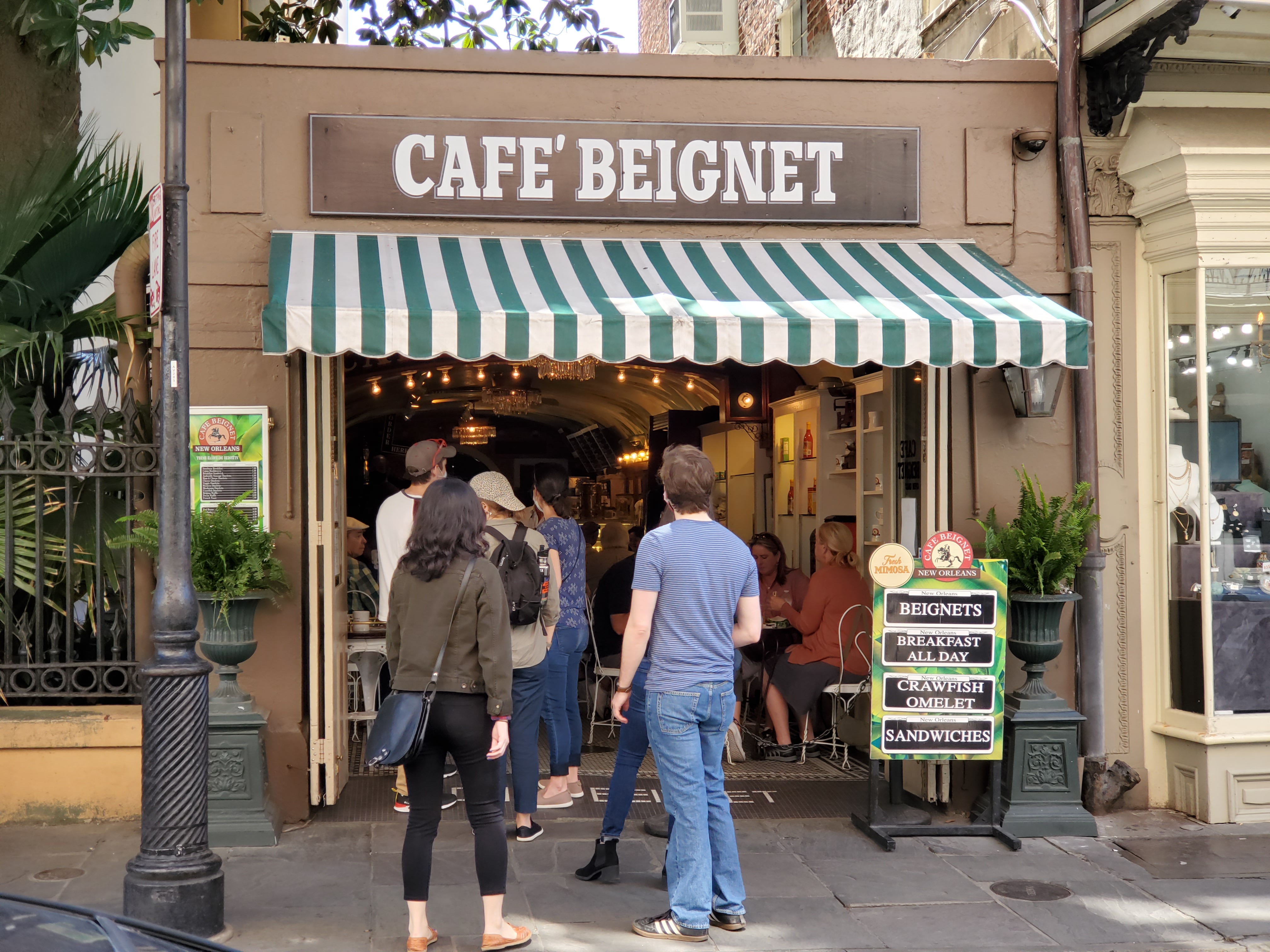
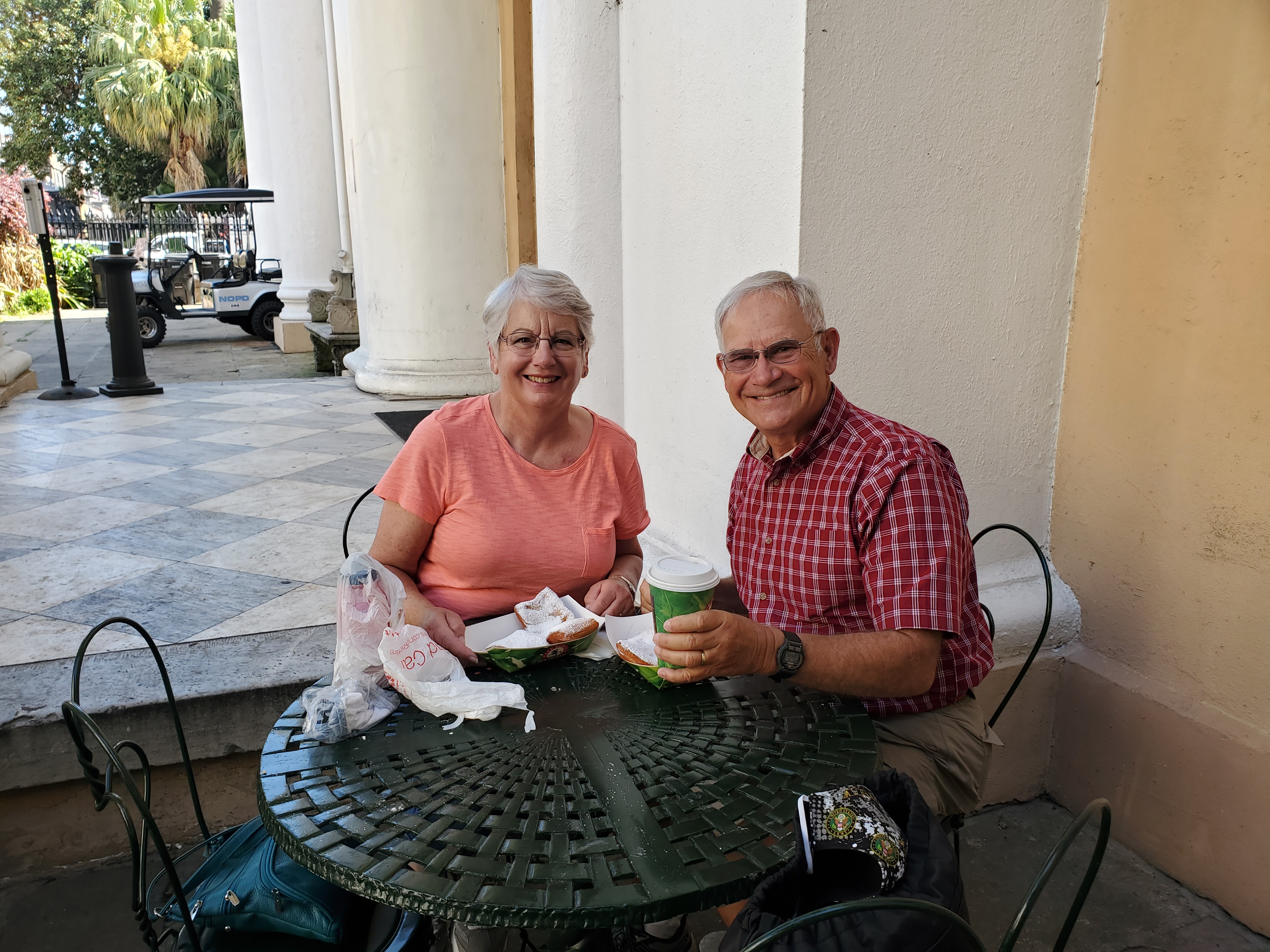
On Monday, we drove to the town of Algiers and took the Algiers Ferry across the river to New Orleans. For a buck apiece, this is much easier than driving and finding a place to park our one-ton dually! Our first stop was Café Beignet for breakfast. We had eaten at the more famous Café Du Monde before and wanted to try a new spot. The beignets were a little heavier than at Café Du Monde, but I liked them better.
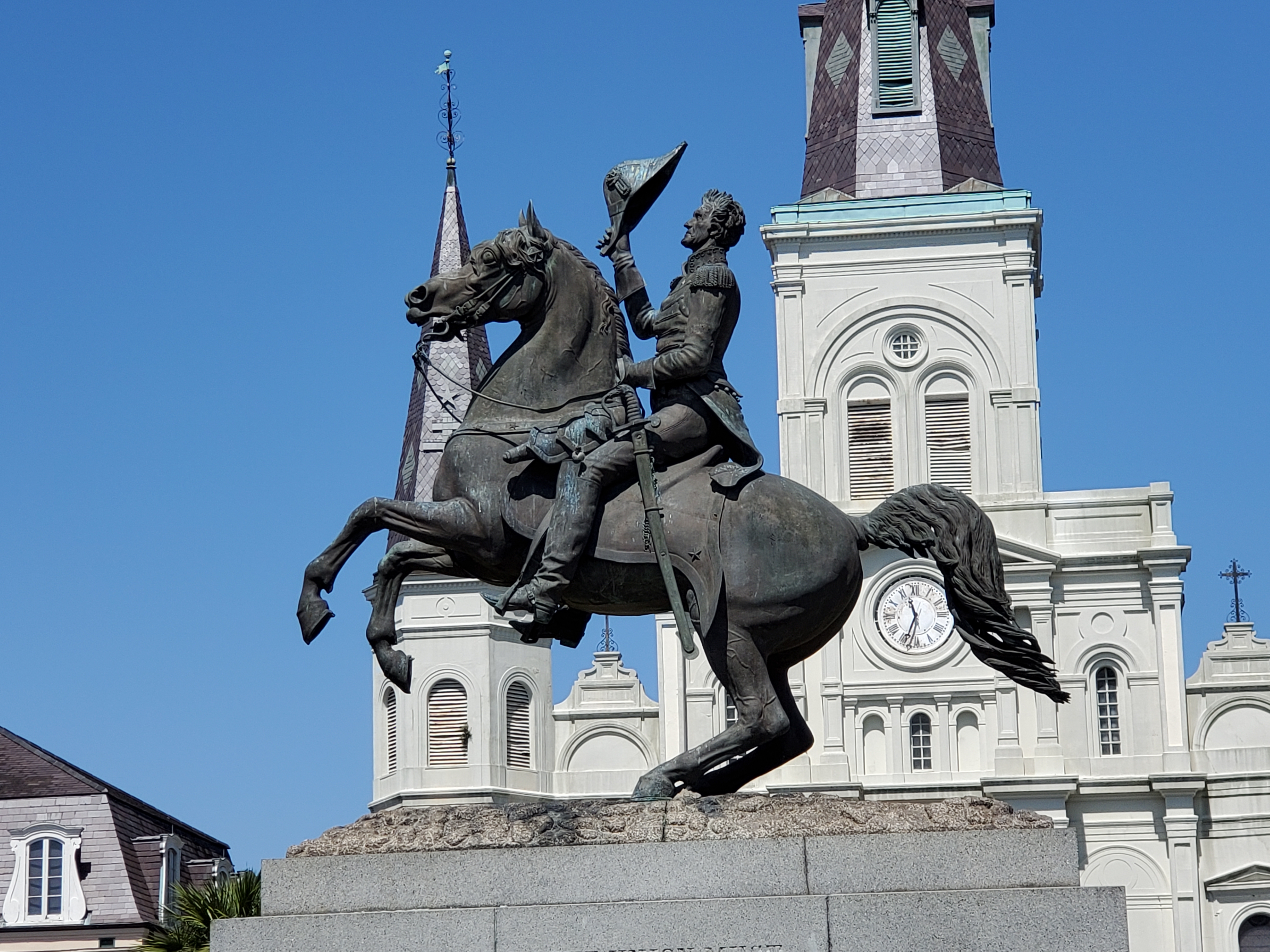
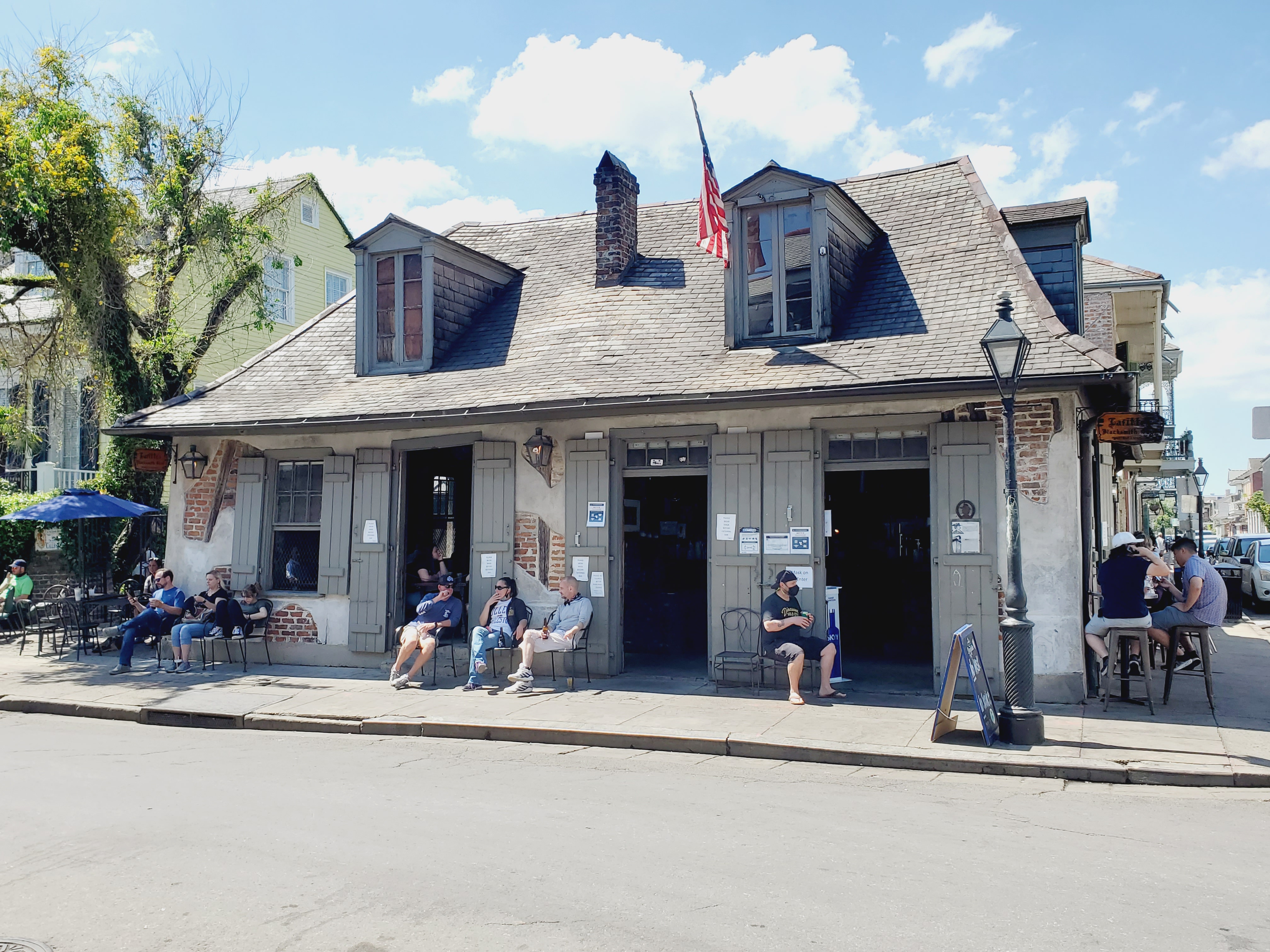
From there we wandered the French Quarter. We followed a cell phone app that gave us a walking tour. It was fun to listen to the street musicians as we toured the buildings. We stopped for an adult beverage at the Lafitte’s Blacksmith Shop Piano Bar and Lounge and enjoyed their outdoor patio. After wandering through the Shops at the Colonnade, we took the ferry back across the river.
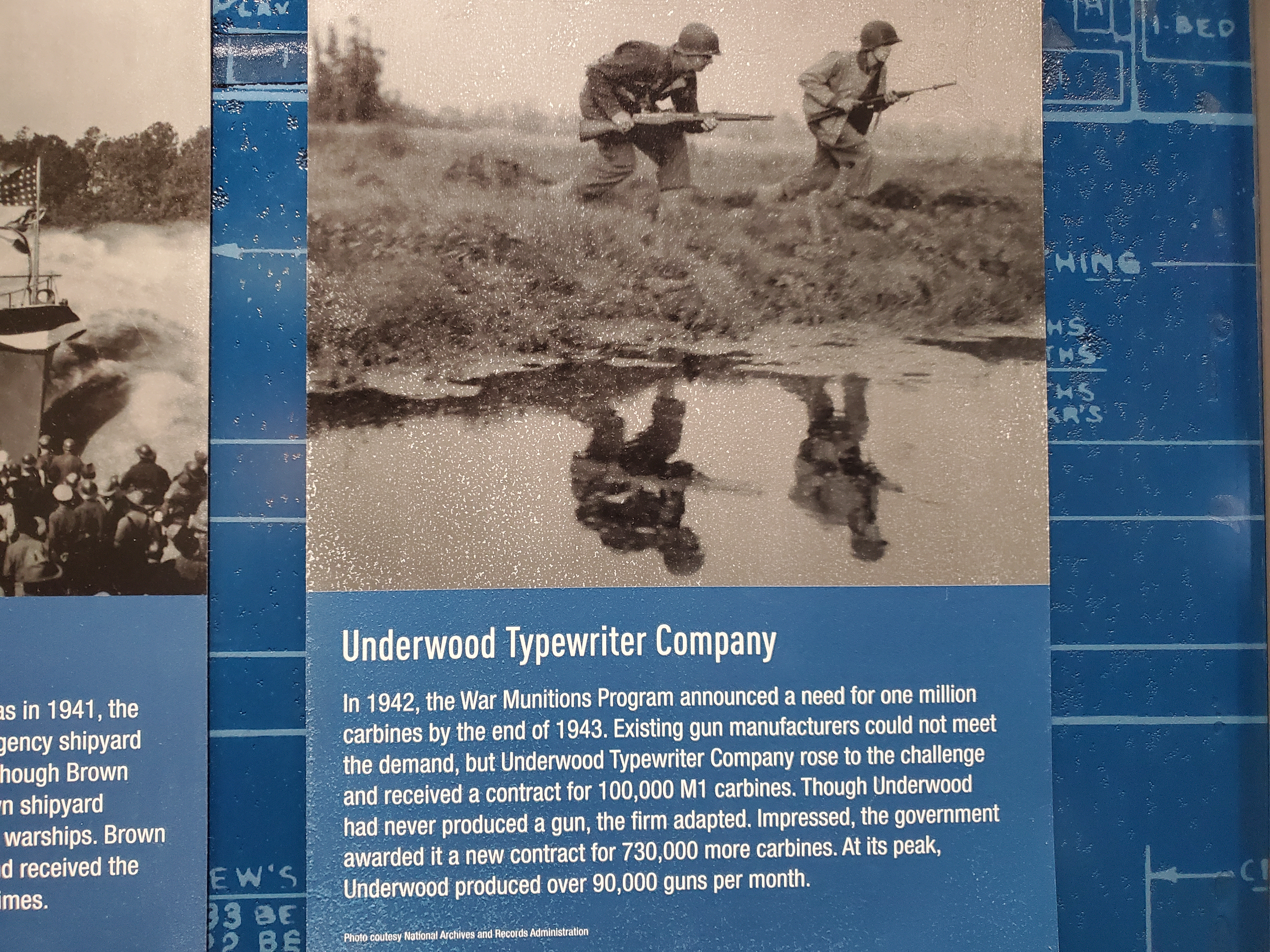
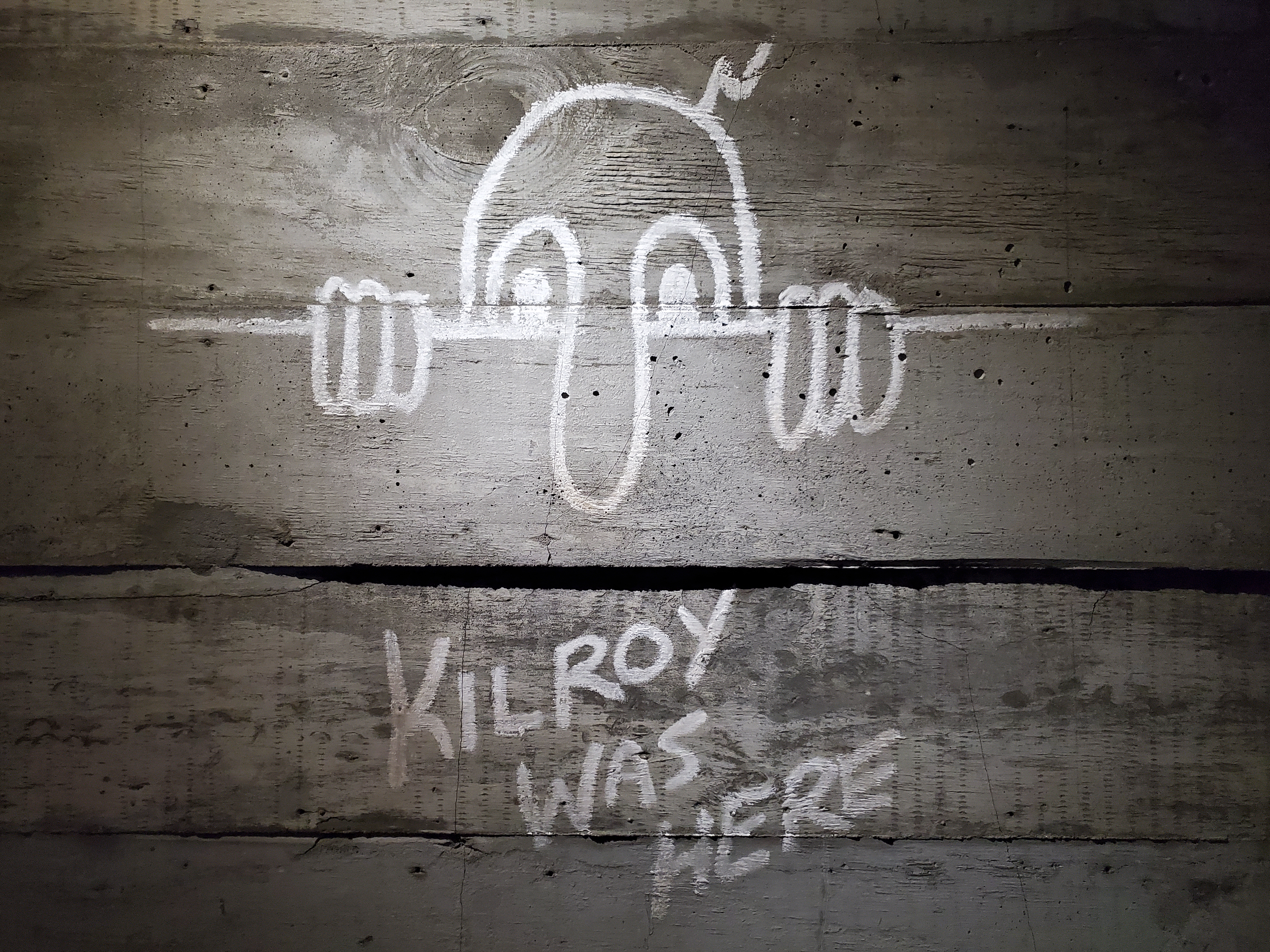
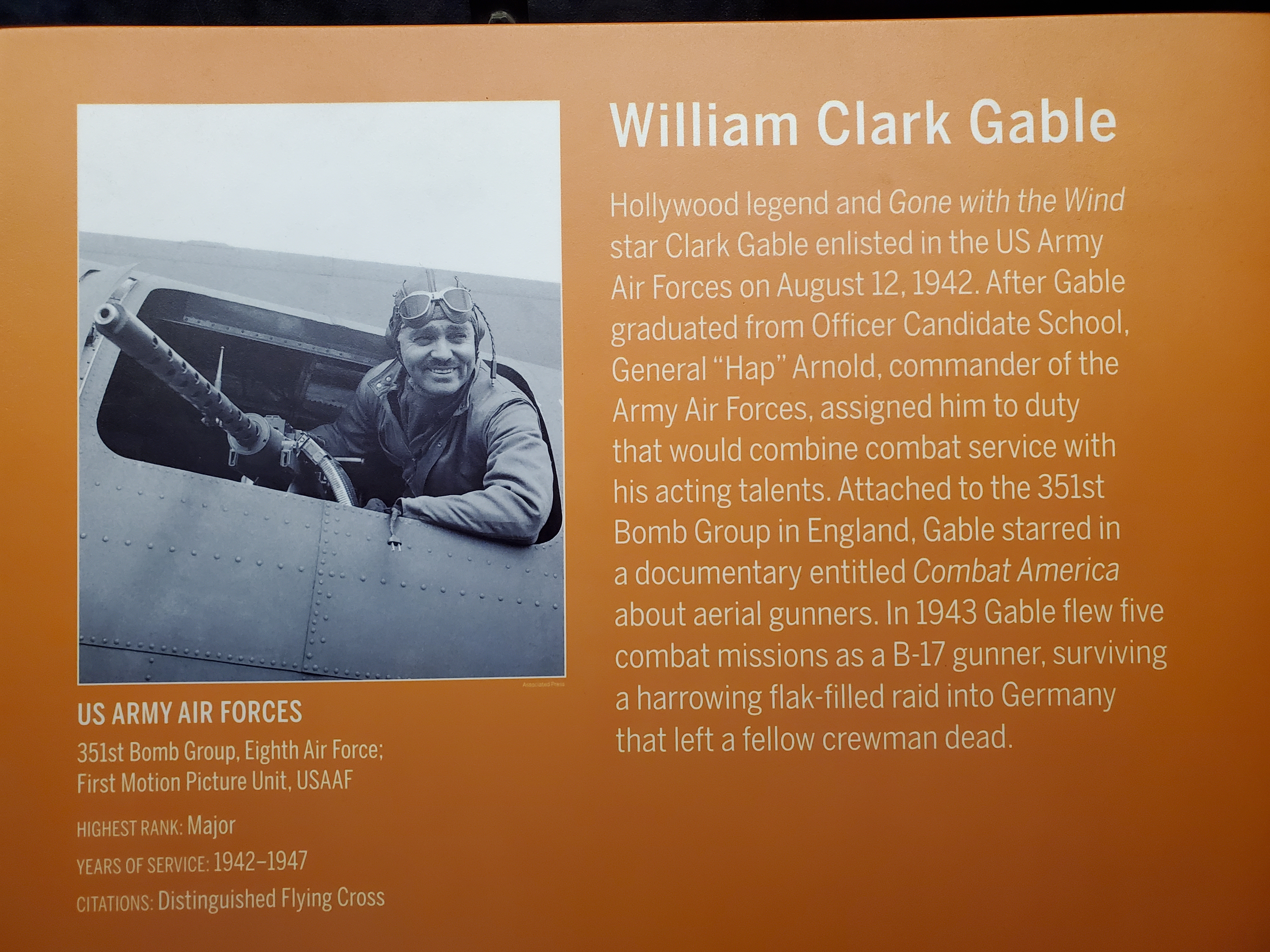
The next day we again took the ferry across and walked about a mile and a half to the National World War II Museum. The Museum was originally the D-Day Museum but has expanded to encompass all theaters of WW II. You will need at least one full day to tour the museum and many take two days to fully explore it. It is an excellent experience. You can pick up a “dog tag,” register it, and follow your WWII participant’s story at kiosks throughout your Museum experience and online after your visit. The displays cover a wide variety of historical information. I found the display about war correspondent Ernie Pyle very interesting. He was a spokesman for the common soldier. After covering the campaigns in Europe, he continued his covering of the war in the Pacific where he was killed by a Japanese sniper. I really liked the personal stories that were highlighted in almost every display. It helped me to relate and more clearly understand what the display portrayed. For example, I discovered that movie star Clark Gable flew five missions as a B-17 waist gunner
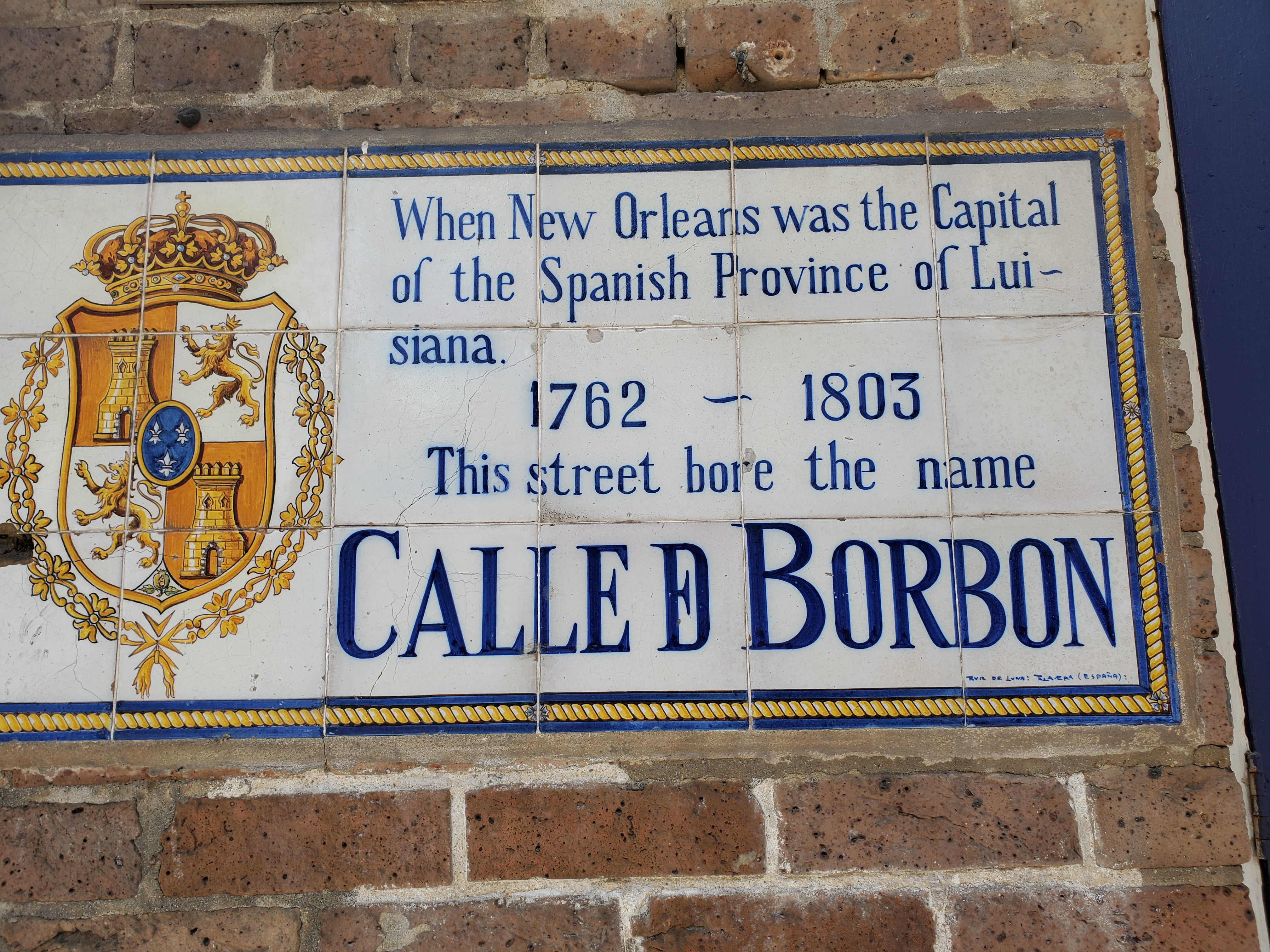
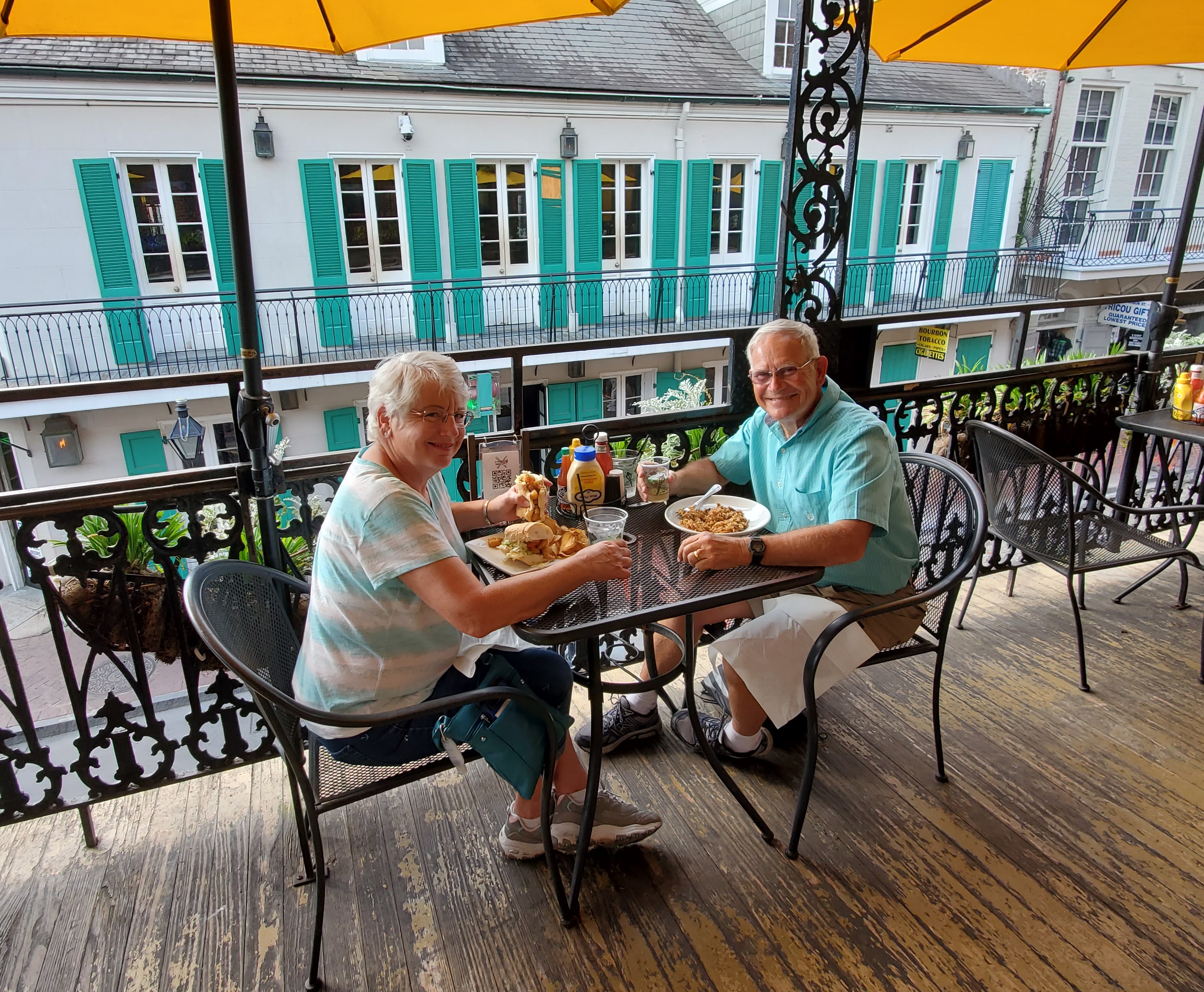
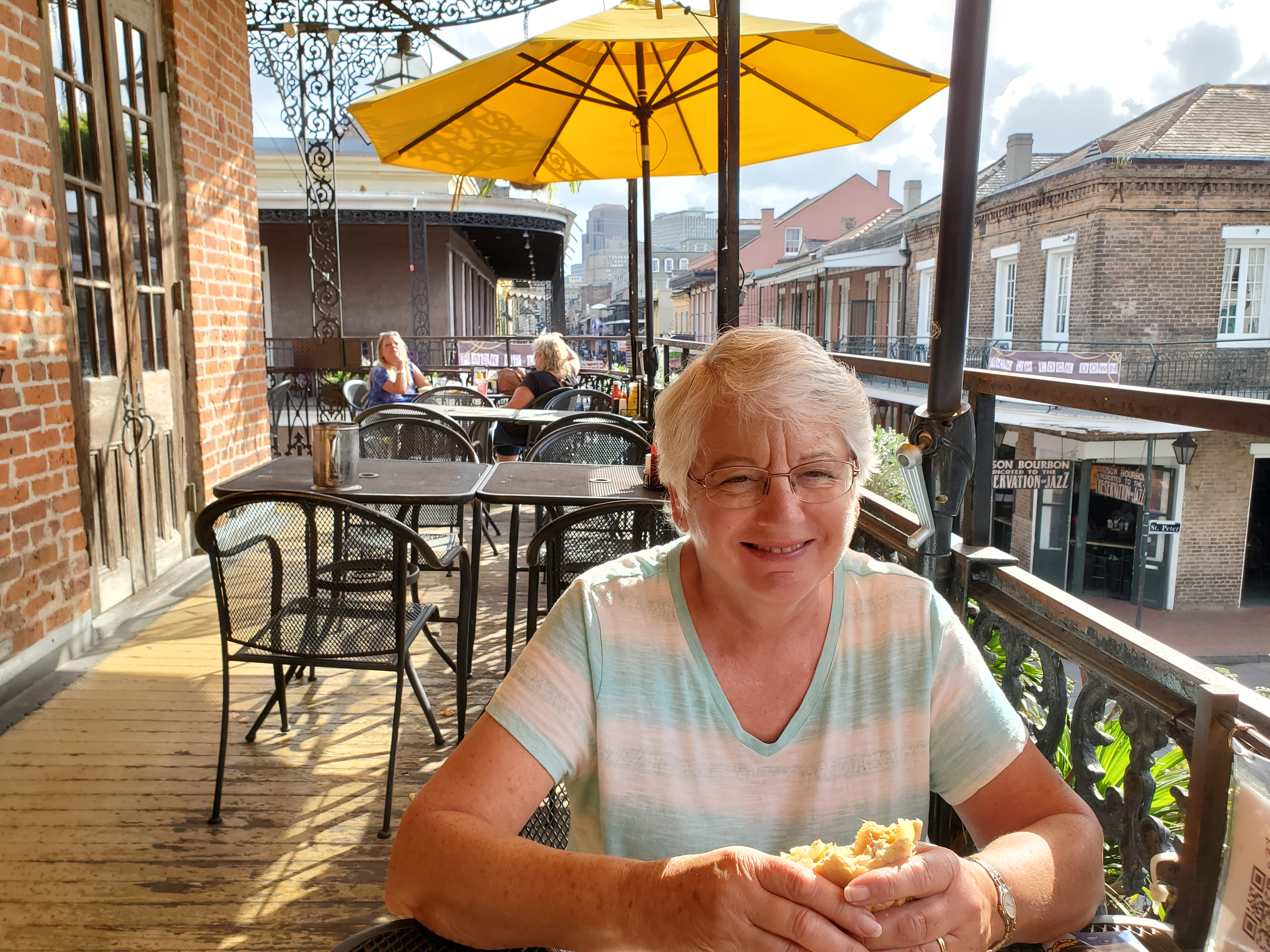
After touring the museum, we walked back to the French Quarter and had dinner in a balcony overlooking Bourbon Street. While we enjoyed our dinner, we could watch the crowd and listen to the action and entertainment of the French Quarter.
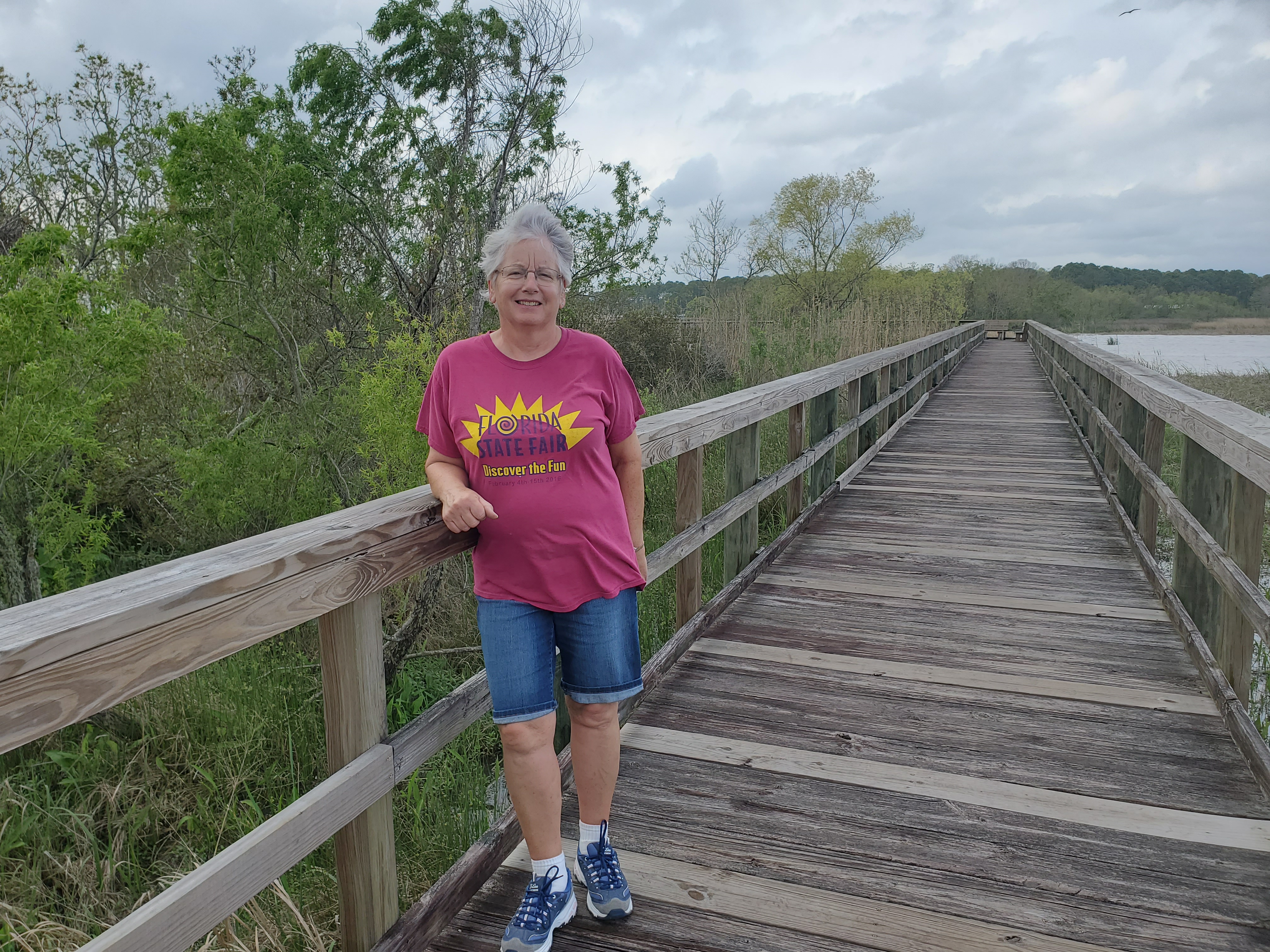
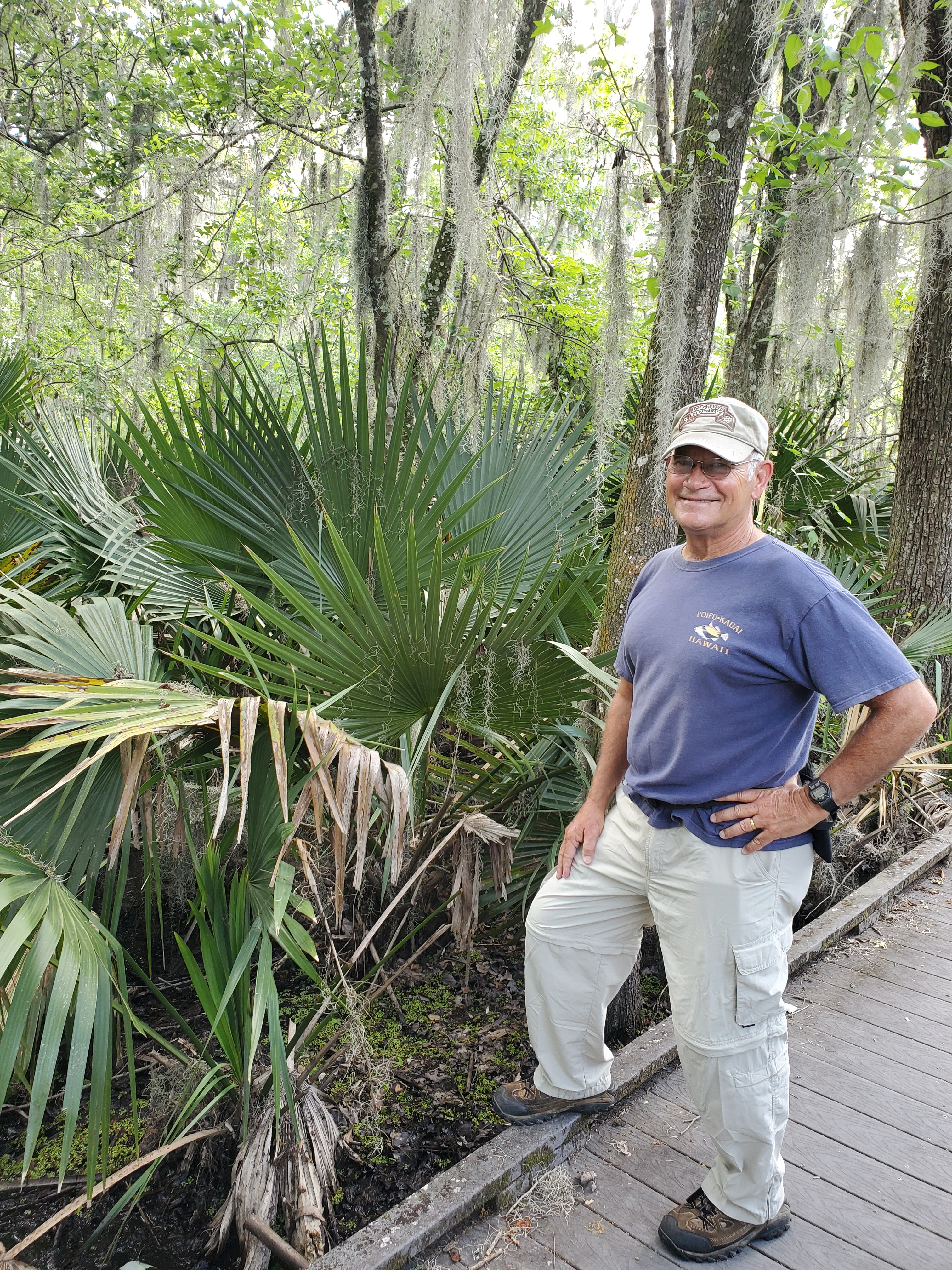
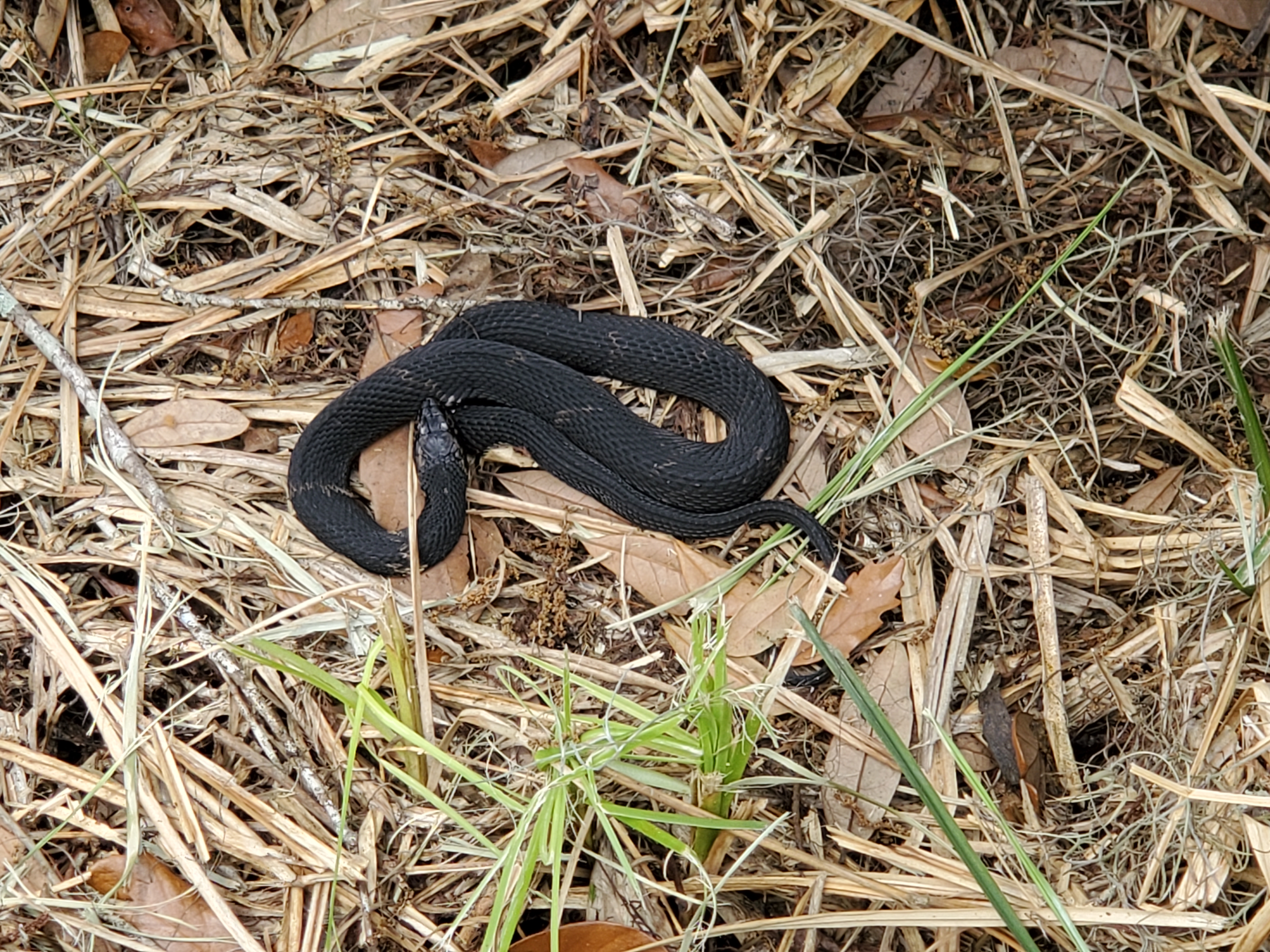
The Jean Lafitte National Historical Park and Preserve is made up of six sites; the French Quarter Visitor Center, the Prairie Acadian Cultural Center, the Acadian Cultural Center, the Wetland Acadian Cultural Center, the Barataria Preserve, and the Chalmette Battlefield and Cemetery. We visited two of these areas. At the 26,000-acre wetland of the Barataria Preserve, we hiked along the boardwalk. Wetlands are a unique ecosystem that never ceases to amaze me. In addition to providing habitat to a wide range of animal and plant life, they act as a filter, preventing much pollution from traveling downstream.
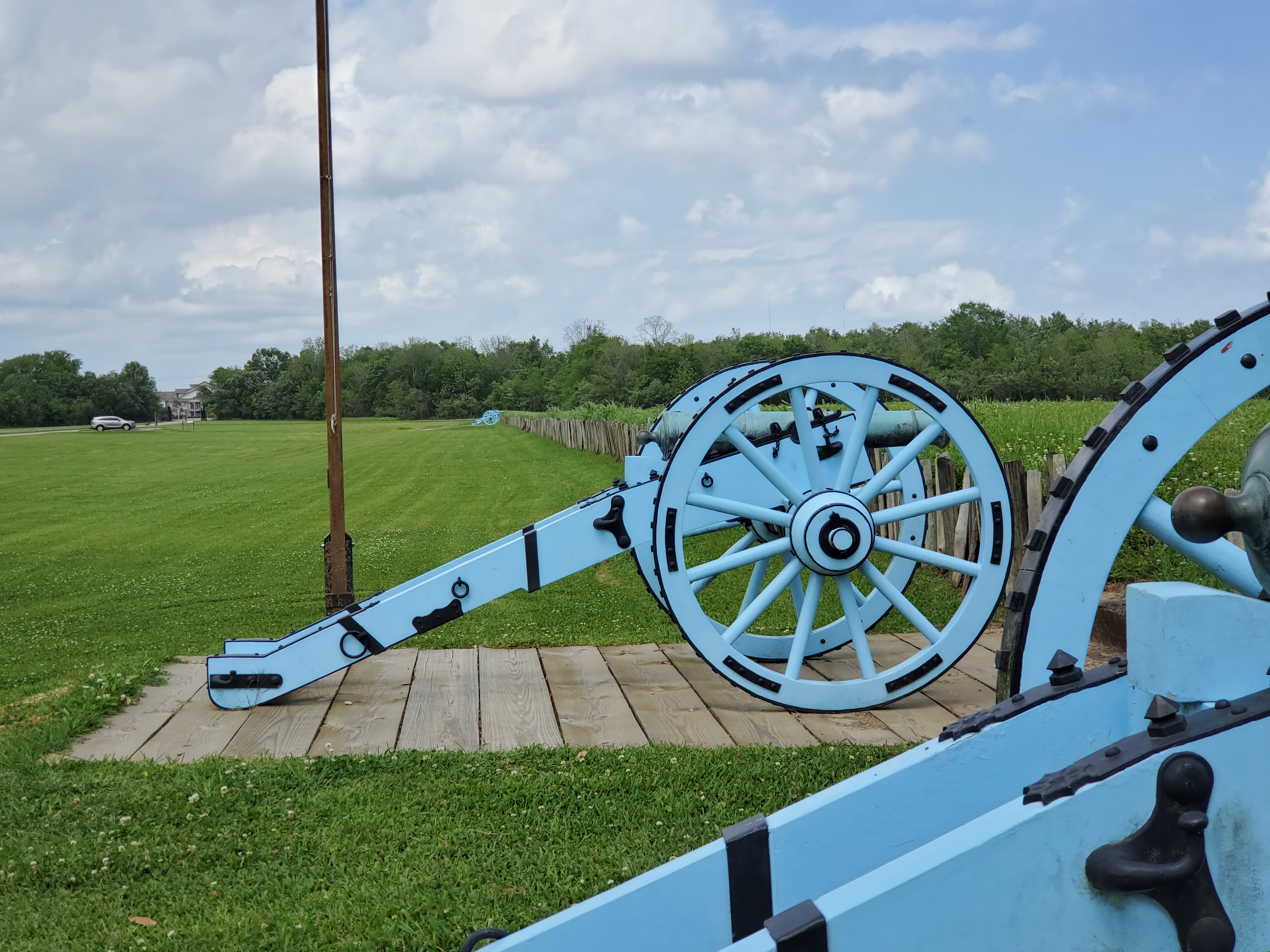
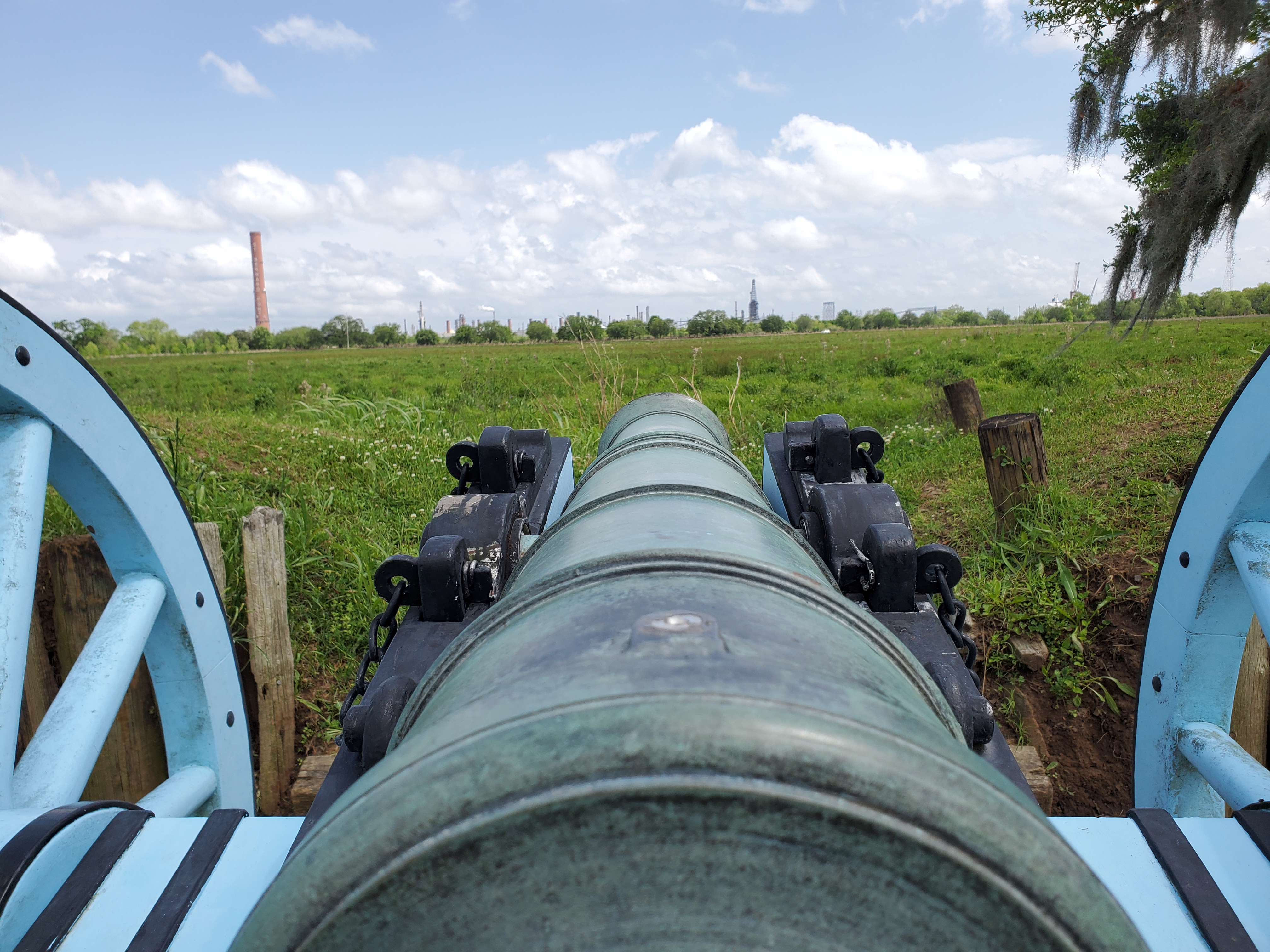
We also toured the Chalmette Battlefield where General Andrew Jackson, with federal troops and volunteers, including colored freemen, fought and defeated a superior British force in the last major battle of the War of 1812. Ironically, the battle was fought two weeks after peace had been negotiated, and the Treaty of Ghent had been signed. I always imagined that the battle was fought over a larger mass of terrain, yet it was confined to a relatively small area.
They day before we left we were hit by a huge rainstorm that brought even more flooding into the campground. Fortunately, the campsites are located on built up land and most were high and dry, although a few families looked like they were camped on small islands.
On the morning of April 11th we were back on the road and headed for Fort Sam Houston in San Antonio, TX.
From Recreation Plantation we made the short drive to Port Richey in the Tampa area. Pat’s brother and sister and their spouses had rented a house in New Port Richey, we have a niece that lives in nearby Oldsmar, and friends from Key West (Butch and Linda Kurfees) that live in New Port Richey. How many more reasons do you need to visit the area?
We stayed at Sundance Lakes RV Resort. As with many other parks in Florida there was plenty of room for us as many of the Canadians that “snowbird” had to stay home because of the pandemic. Sundance Lakes is another nice park. They normally have plenty of activities going on, but due to the pandemic, the pace was much slower than normal. The big benefit of this particular park was we are within an easy bicycle ride to Pat’s family’s rental and a short drive to Butch and Linda’s house.
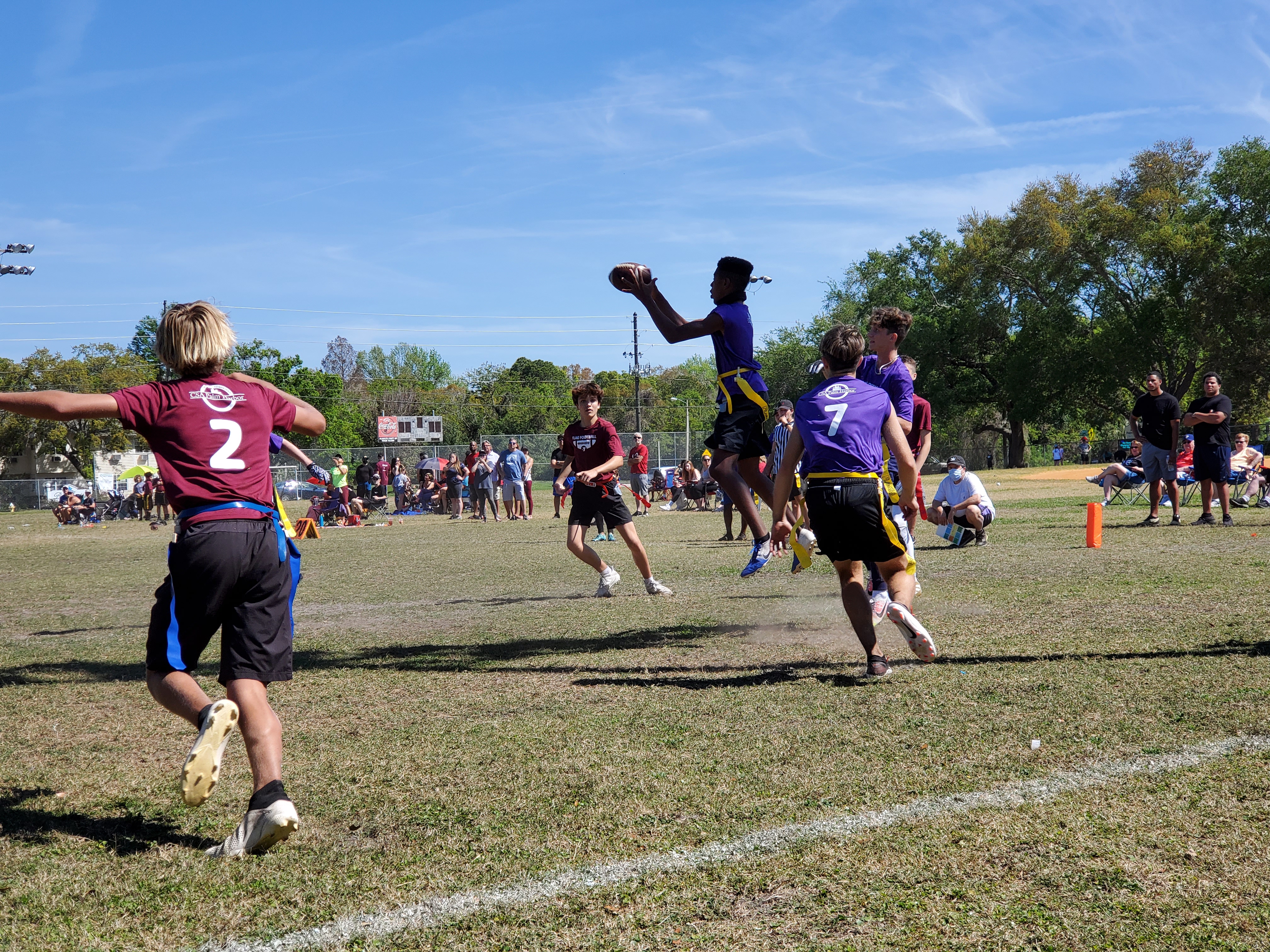
One of the first things we were able to do was watch our nephew, Jeremiah, play football. It’s always fun to watch him, sometimes more fun to watch his mother cheering him. The highlight of the game was Jeremiah making an interception. I was so lucky to have the camera shot framed at just the right time!
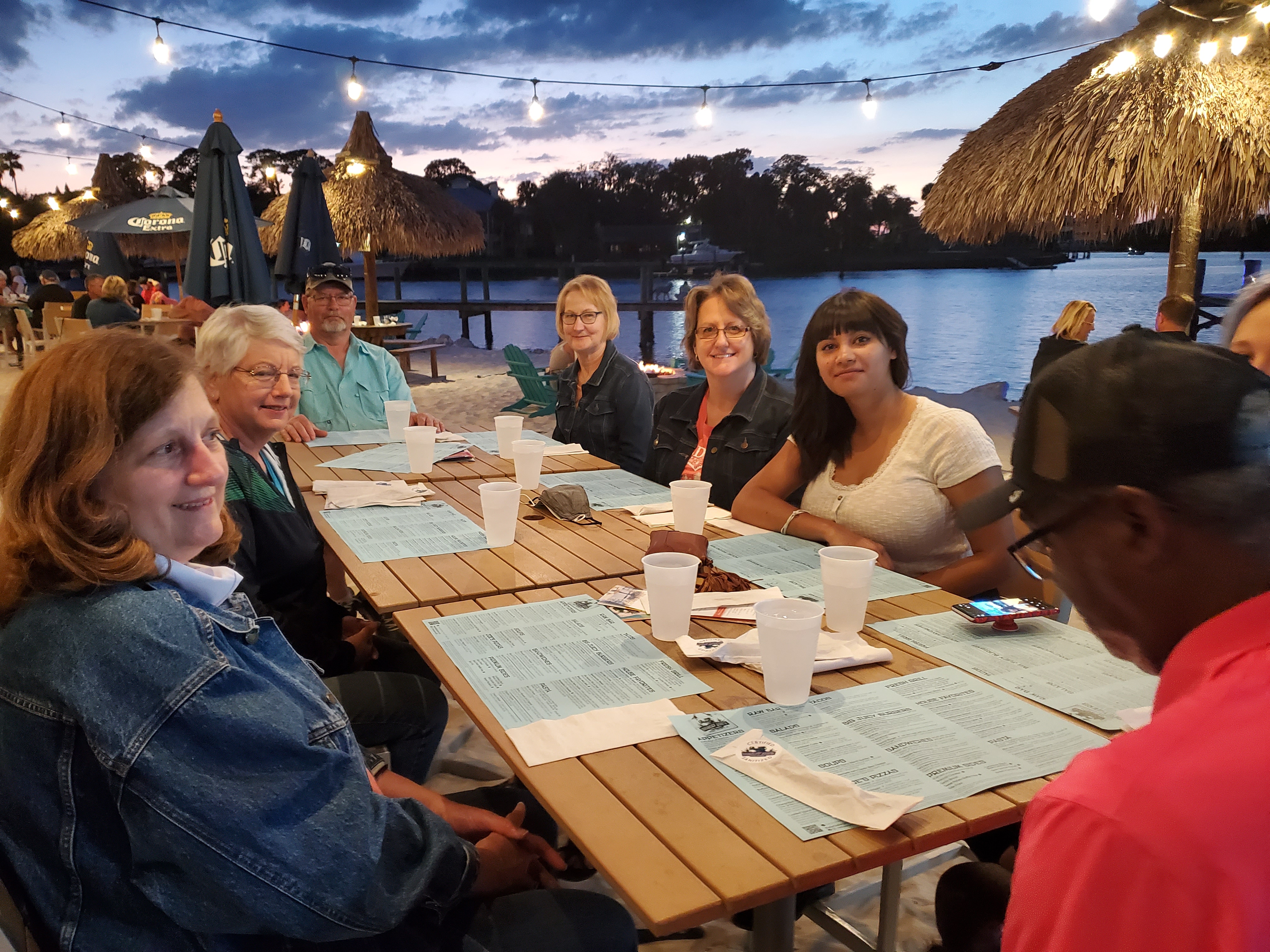
Throughout our visit, we got together for drinks, for meals, and just hanging out. We always have a good time when we are together.
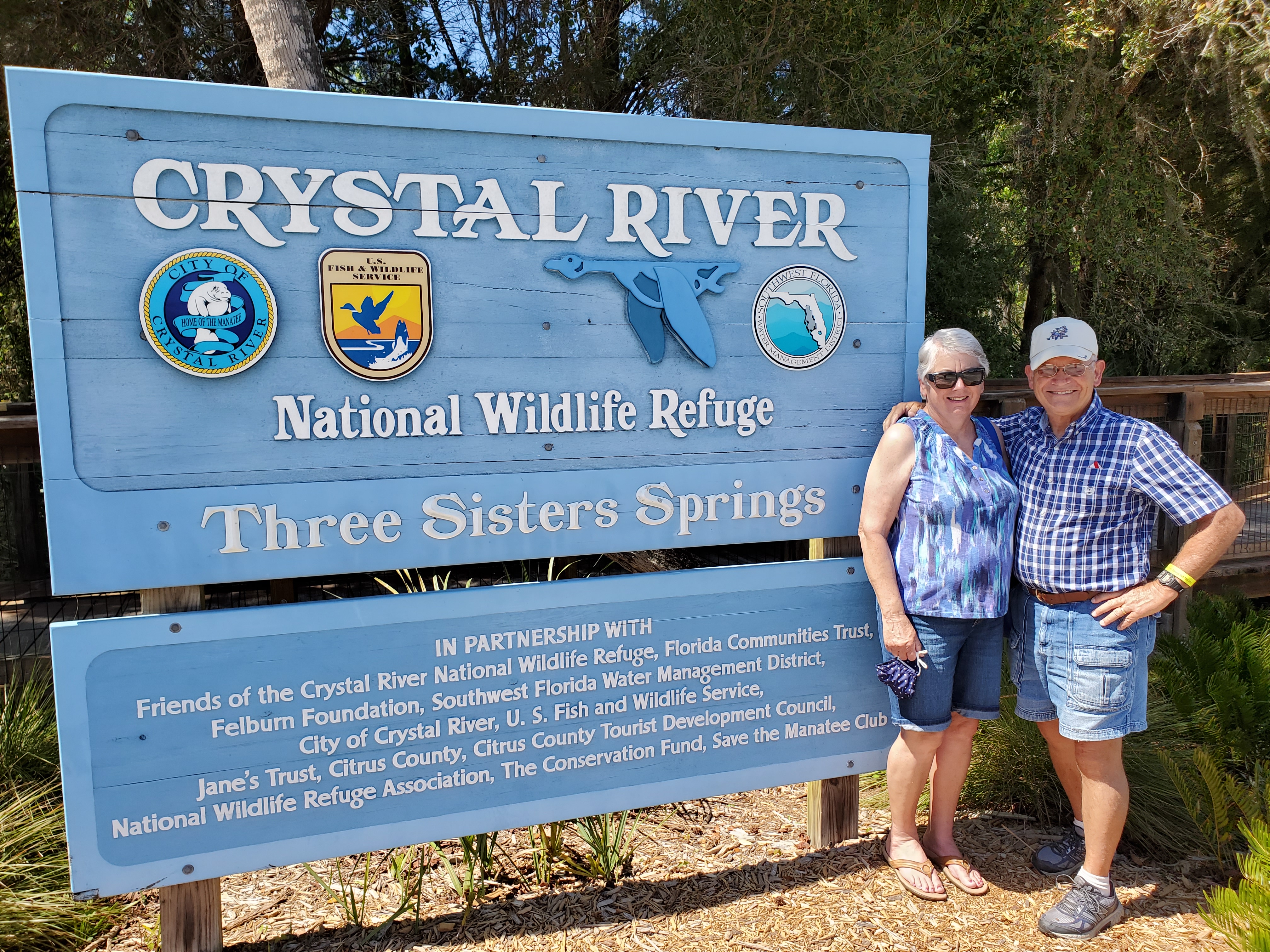
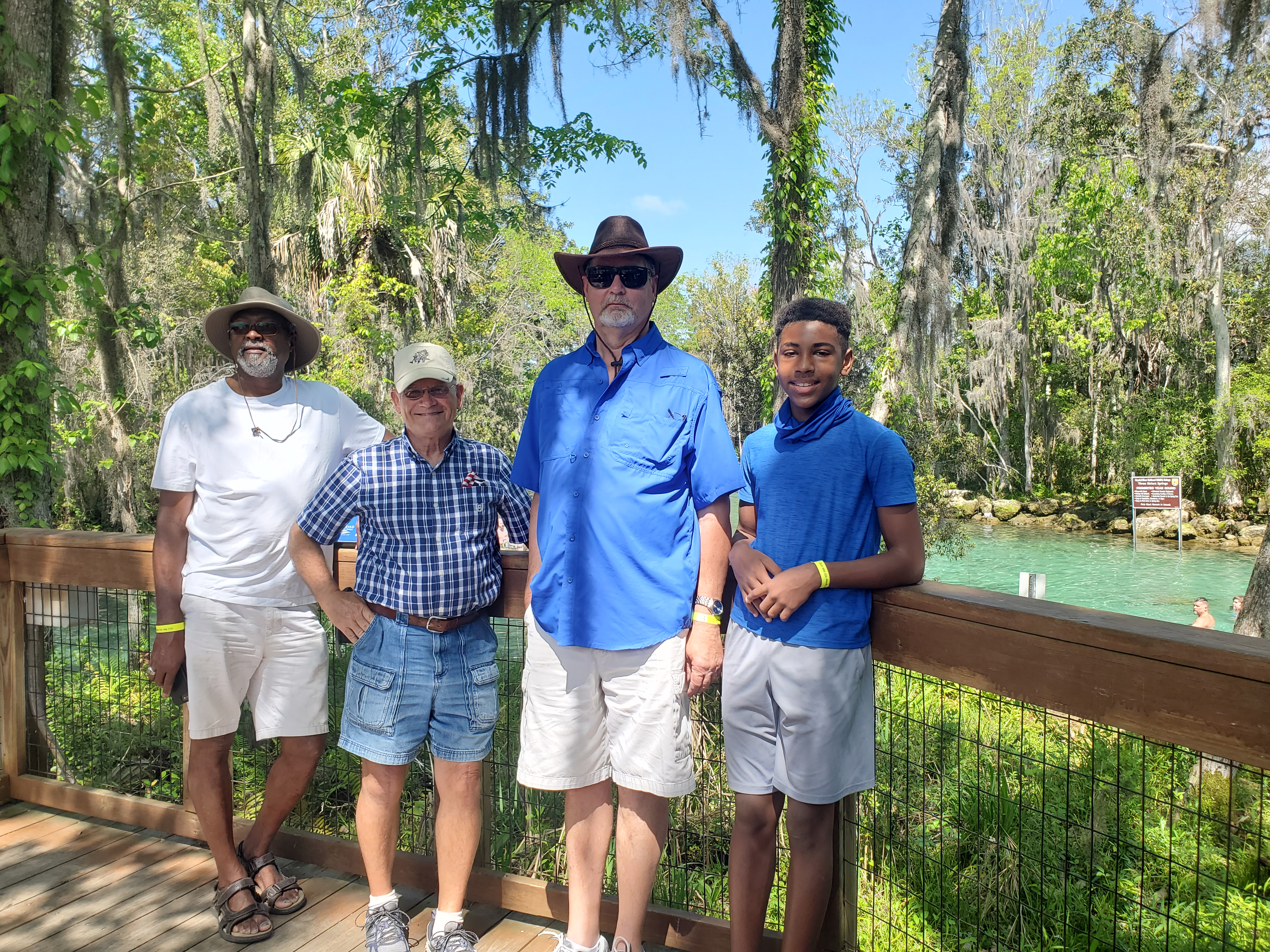
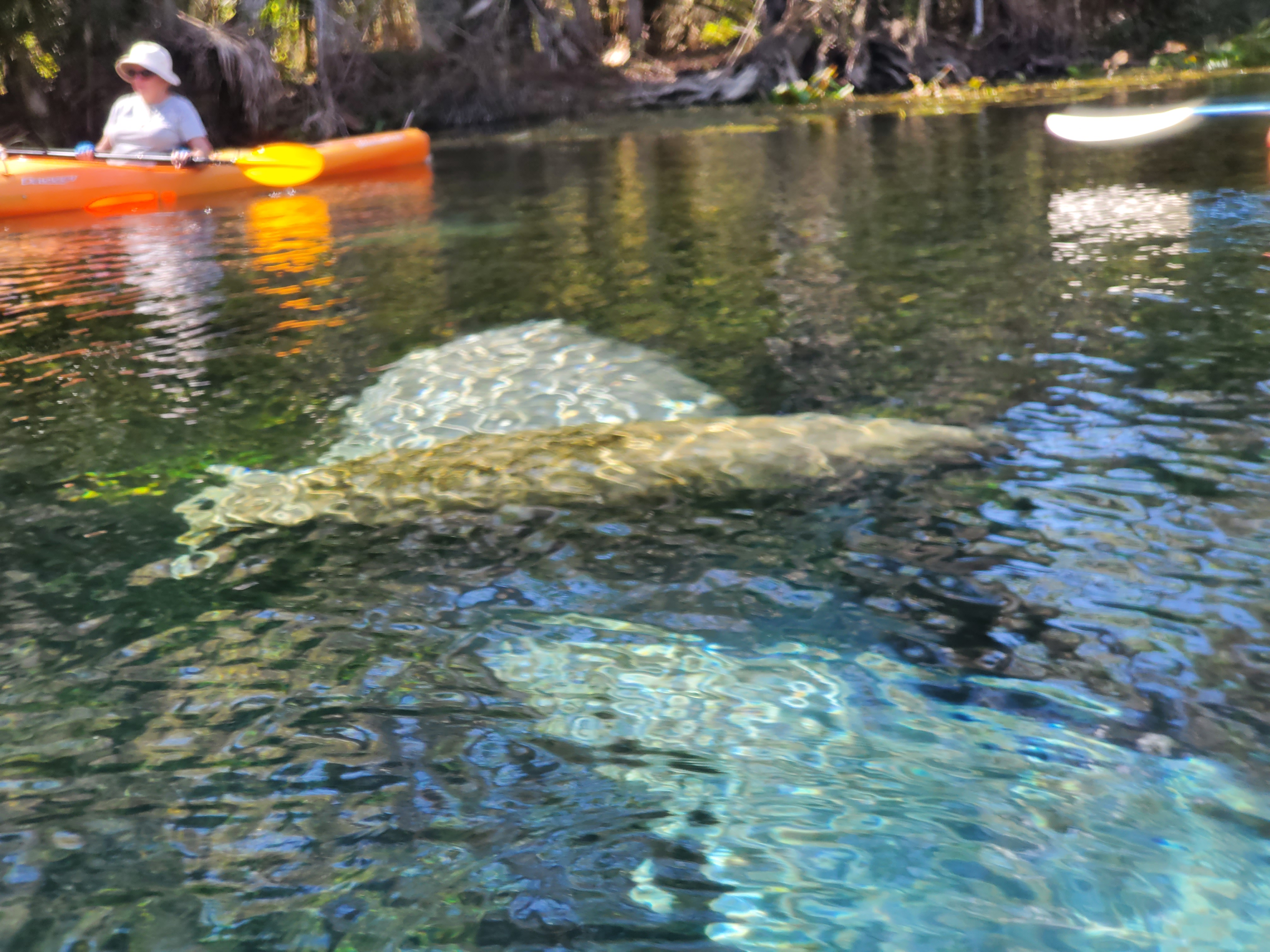
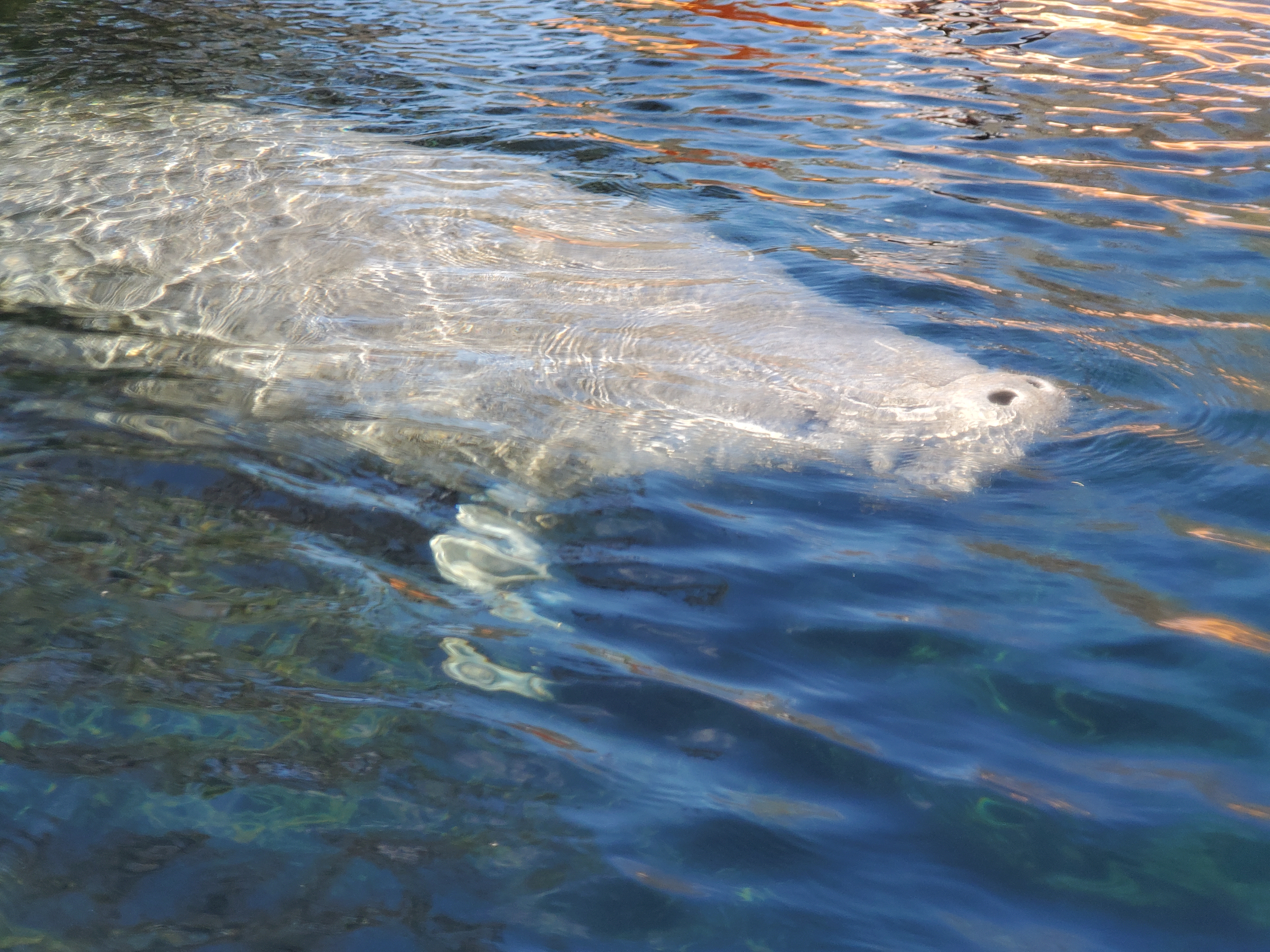
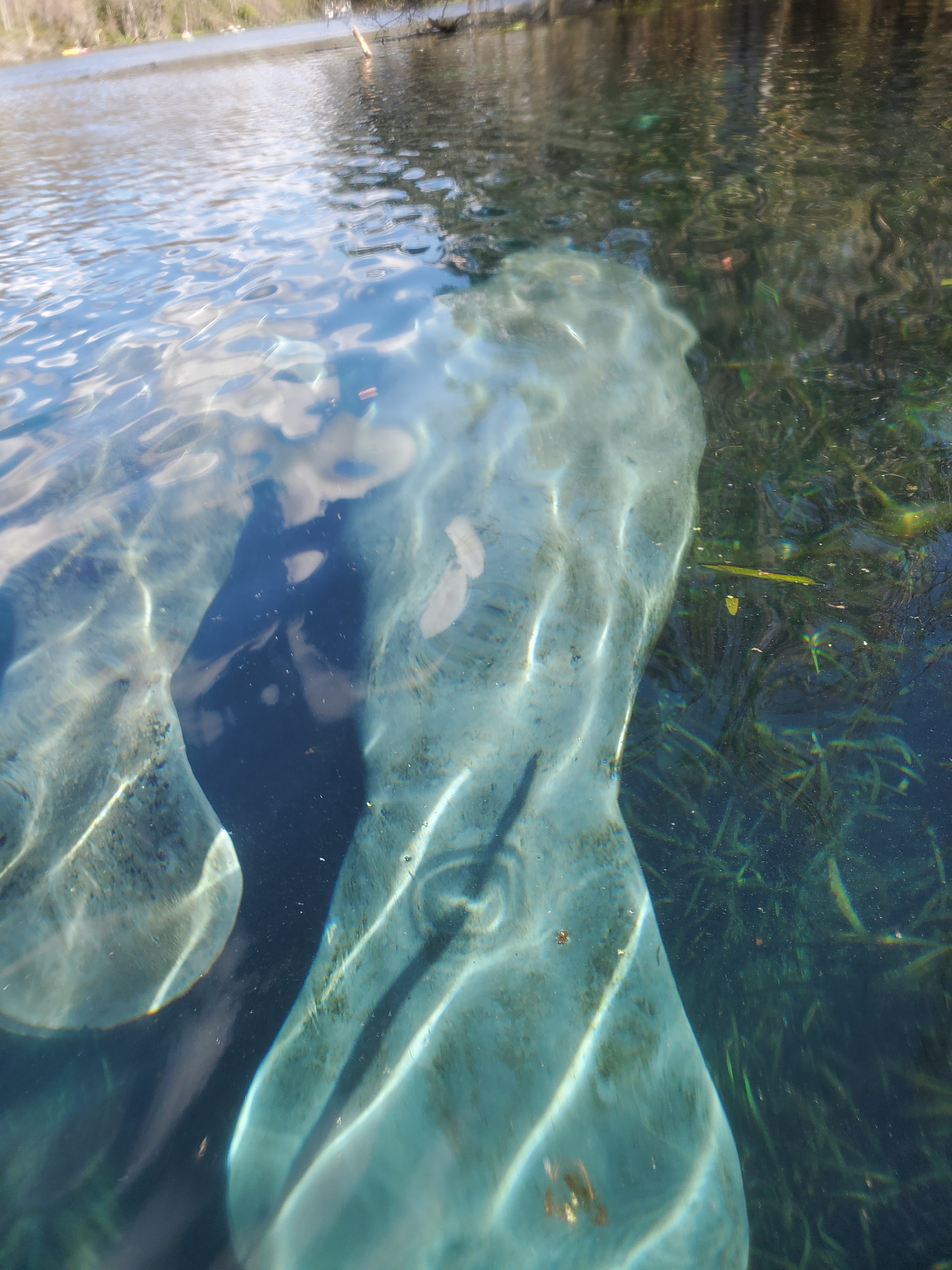
One day we all car-pooled to the Town of Crystal River to watch the manatees at Three Sisters Springs. The manatees migrate in and out of the springs as the weather changes. During the cold winter, they head for the warm fresh water and when it warms, head back out into the Gulf of Mexico. Normally Pat and I watched from our kayaks. This time we were on the boardwalk and got a different perspective from the higher vantage point.
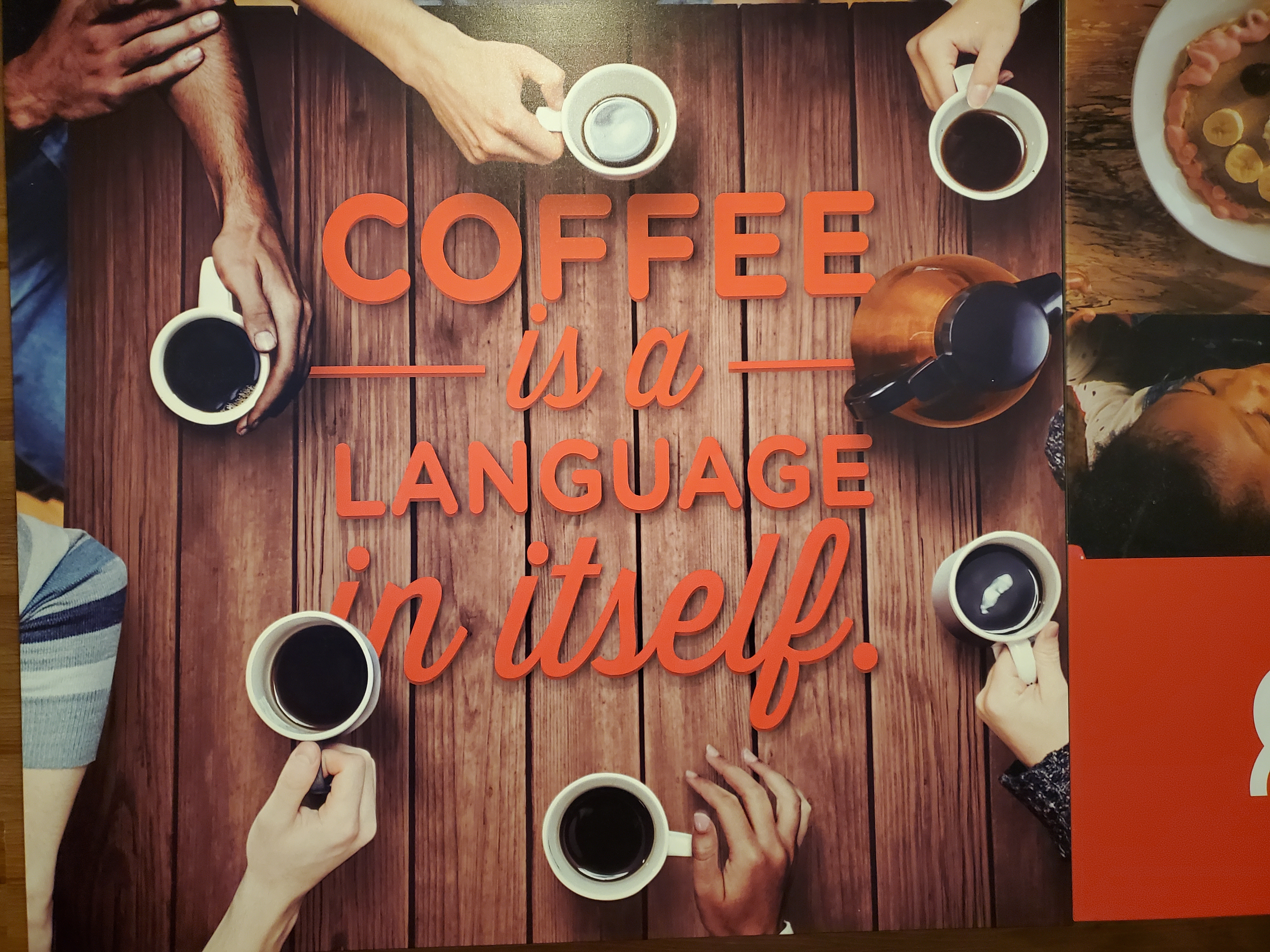
Pat’s brother, Geri and his wife, Marcia, were considering getting a new RV and they joined us to check out some of the larger RV dealers east of Tampa. We had a good time and I got a big laugh from the posters at the IHOP where we had lunch.
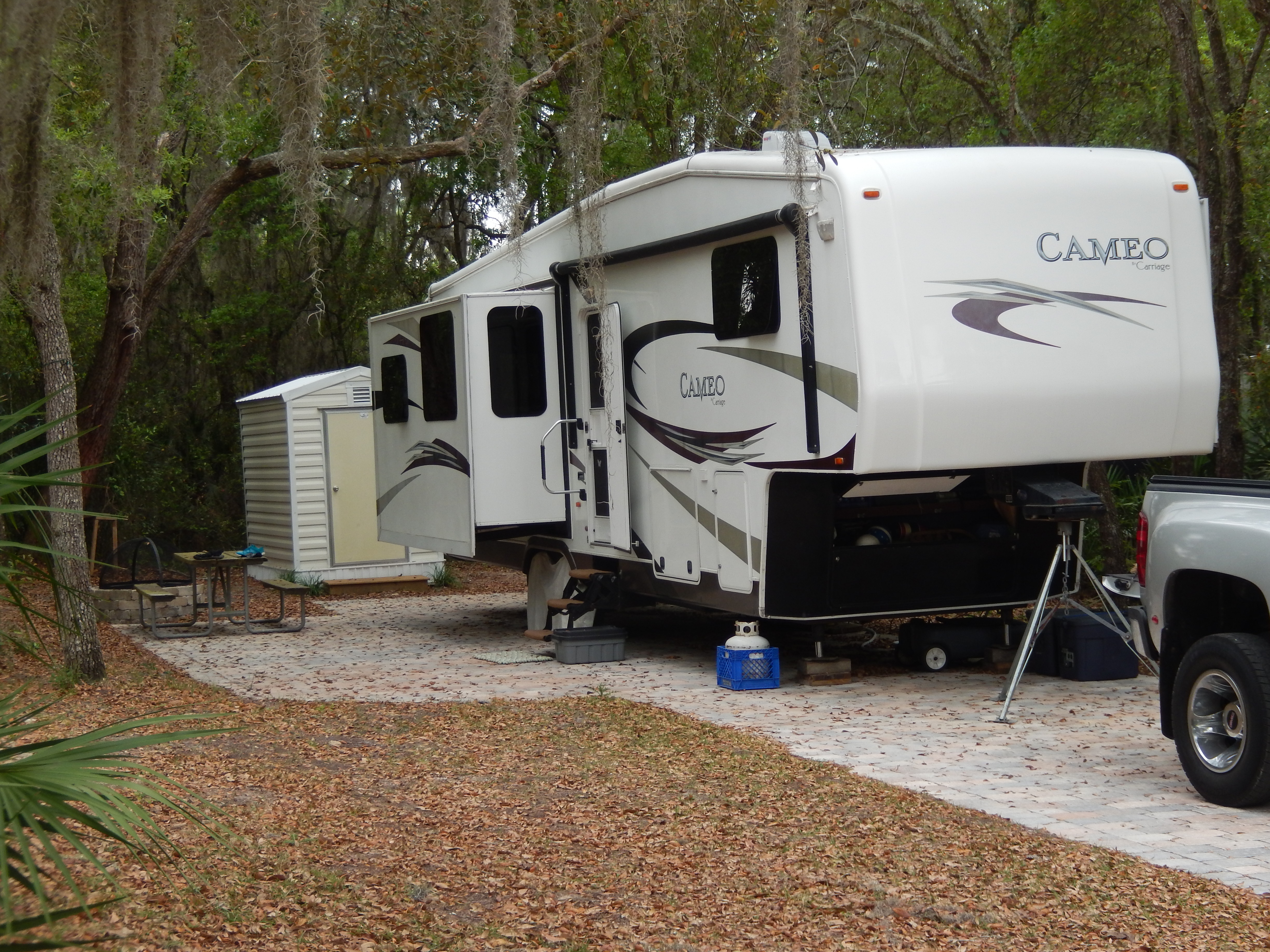
On March 21st we packed up and took the short drive to Rock Crusher RV Park in Homosassa to spend more time in the Crystal River area. Rock Crusher RV Park is a high-class facility and the site we were assigned had been upgraded with pavers and had a storage shed at the rear of the lot.
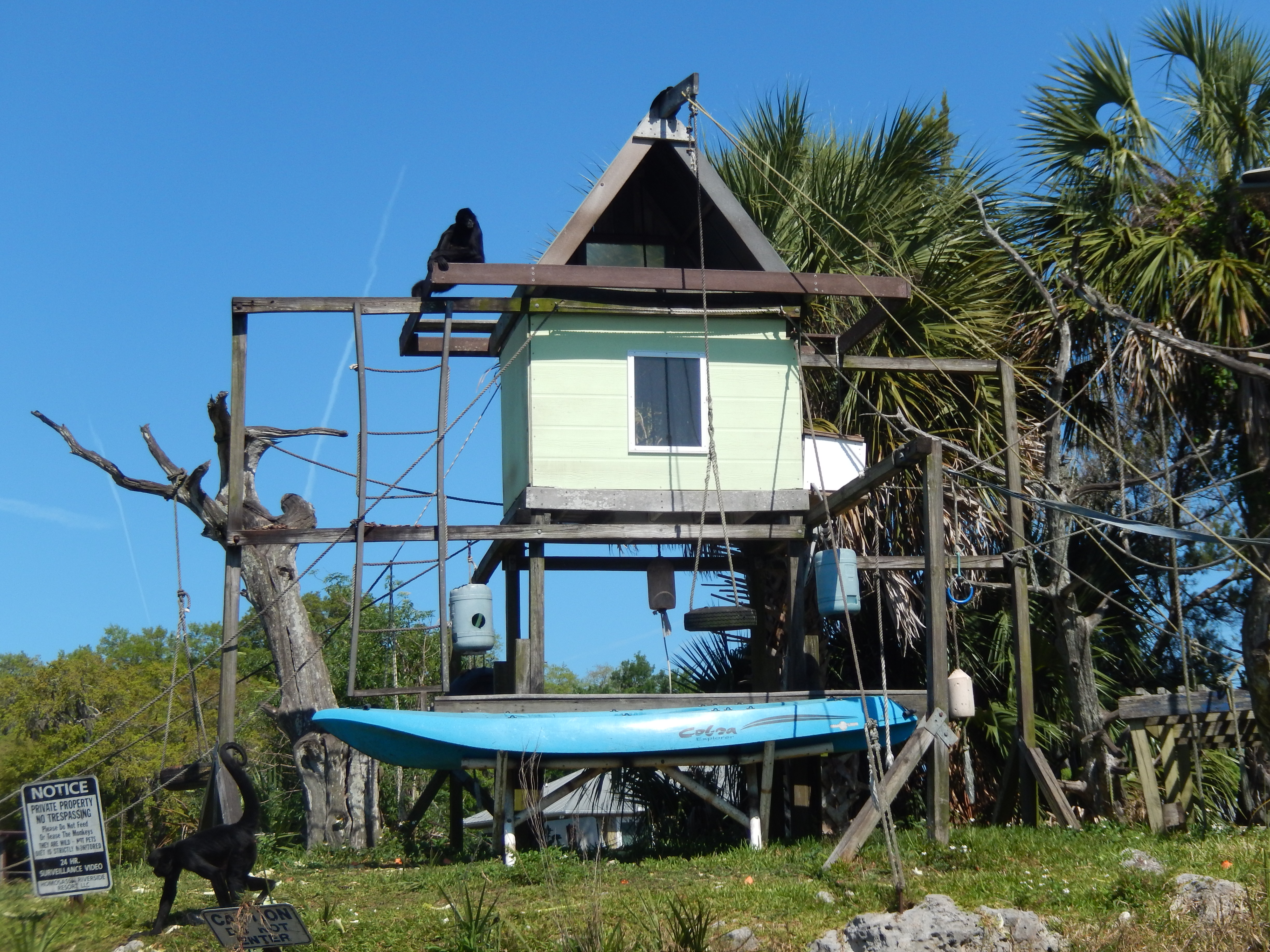
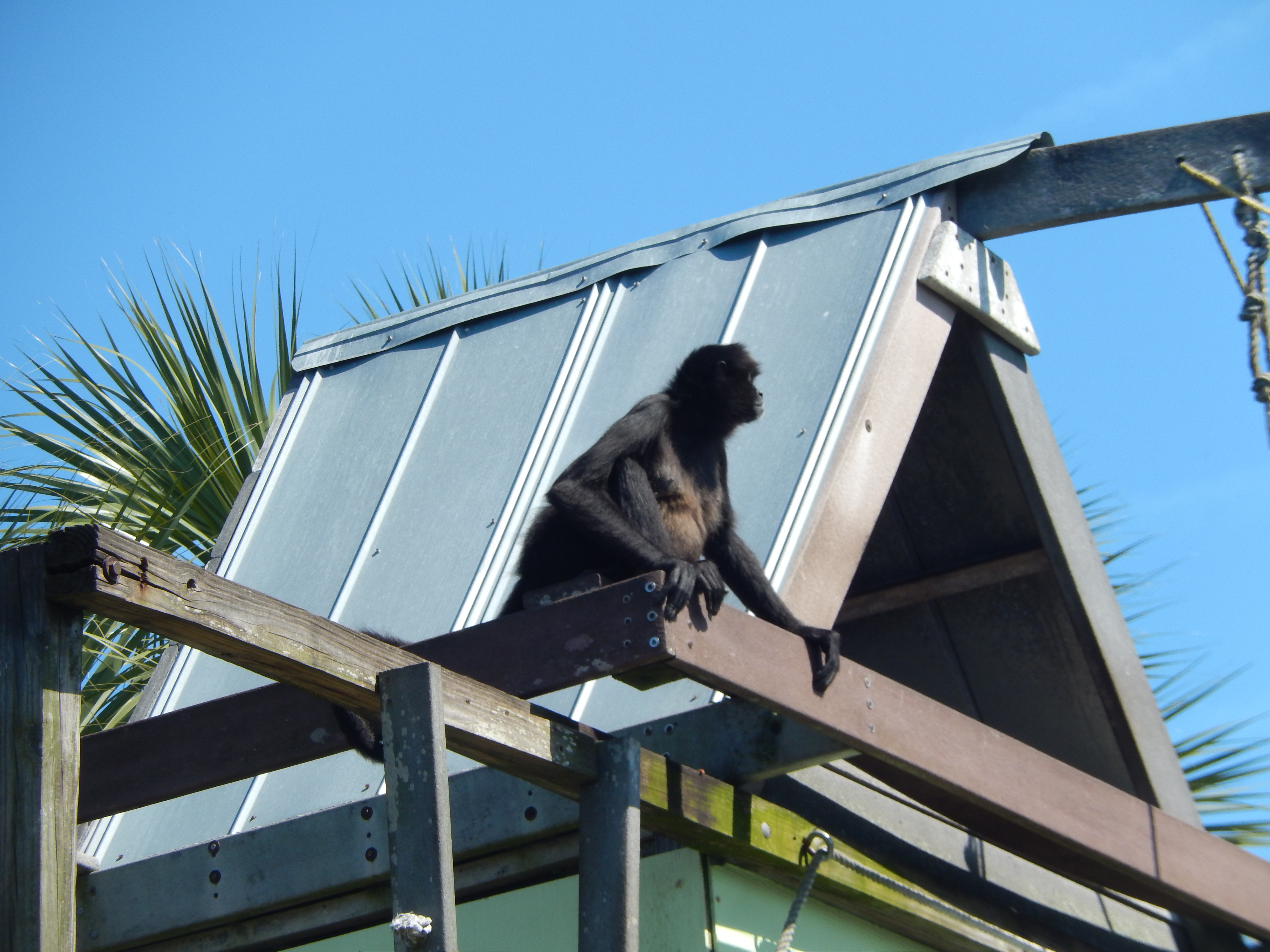
We spent a lot of time in our kayaks. After all, that was the reason we came here. First we launched from Hunters Spring City Park and paddled to Three Sisters Springs. Three Sisters appears to be the most popular manatee viewing site in the area and has suffered from being so popular. State Park personnel limit the number of people that can enter the spring. This was one of the periods when no boats were allowed in, so we could only watch from the main channel. I have fond memories from about twelve years ago when we visited Three Sisters and there were only a dozen or less in the area. The next day we paddled in the Homosassa River. We paddled pass Monkey Island and then to the Ellie Schiller Homosassa Springs Wildlife State Park.
On March 25th we were on the road again, this time to Tyndall AFB near Panama City, FL.
Throughout our stay at Recreation Plantation COVID-19 was always a factor in our planning and decision-making. We formed an informal “bubble” with our friends. On occasion, we did participate in community events, but did our best to be friendly and distant at the same time. I am so looking forward to when this pandemic is behind us.
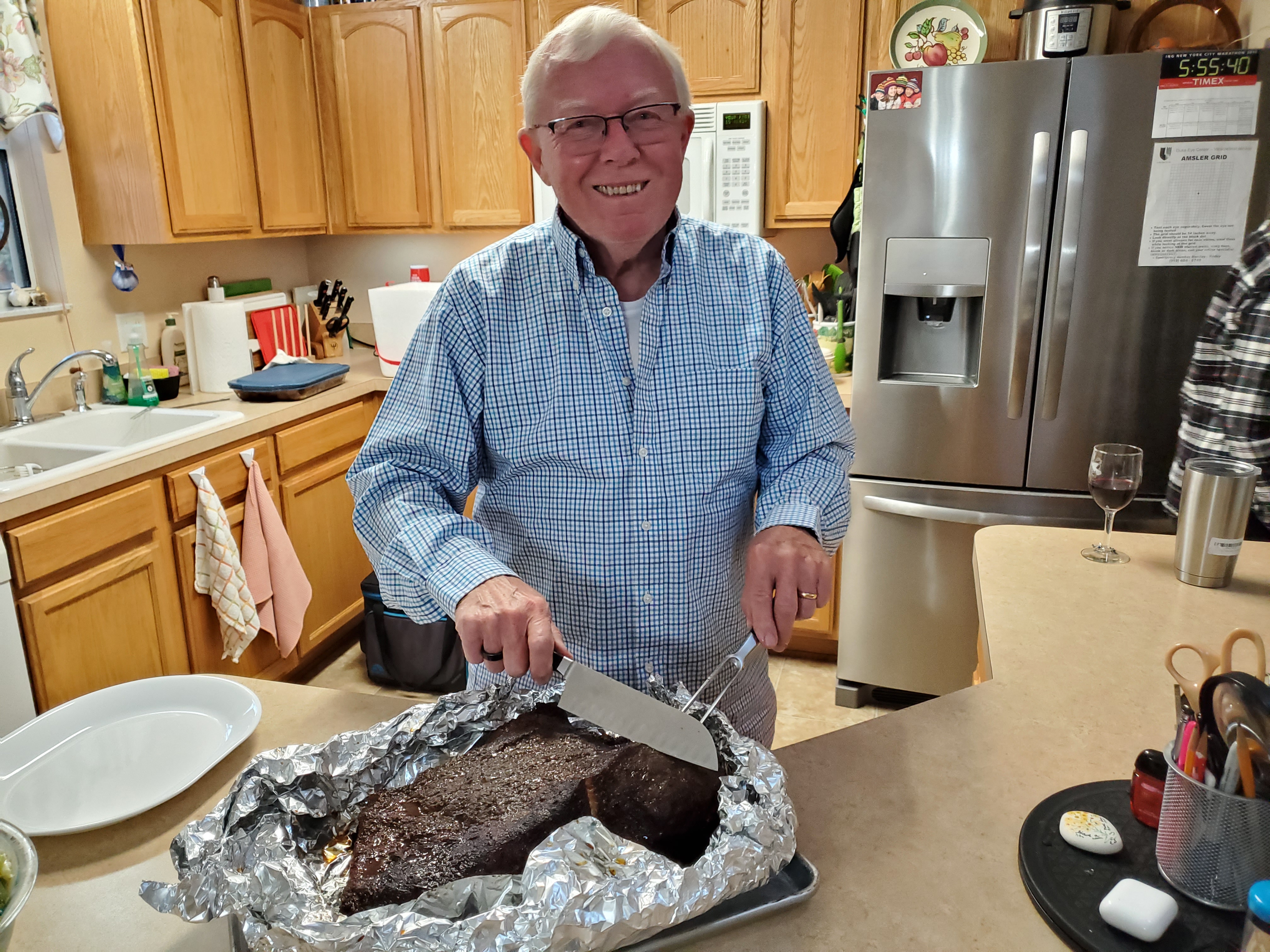
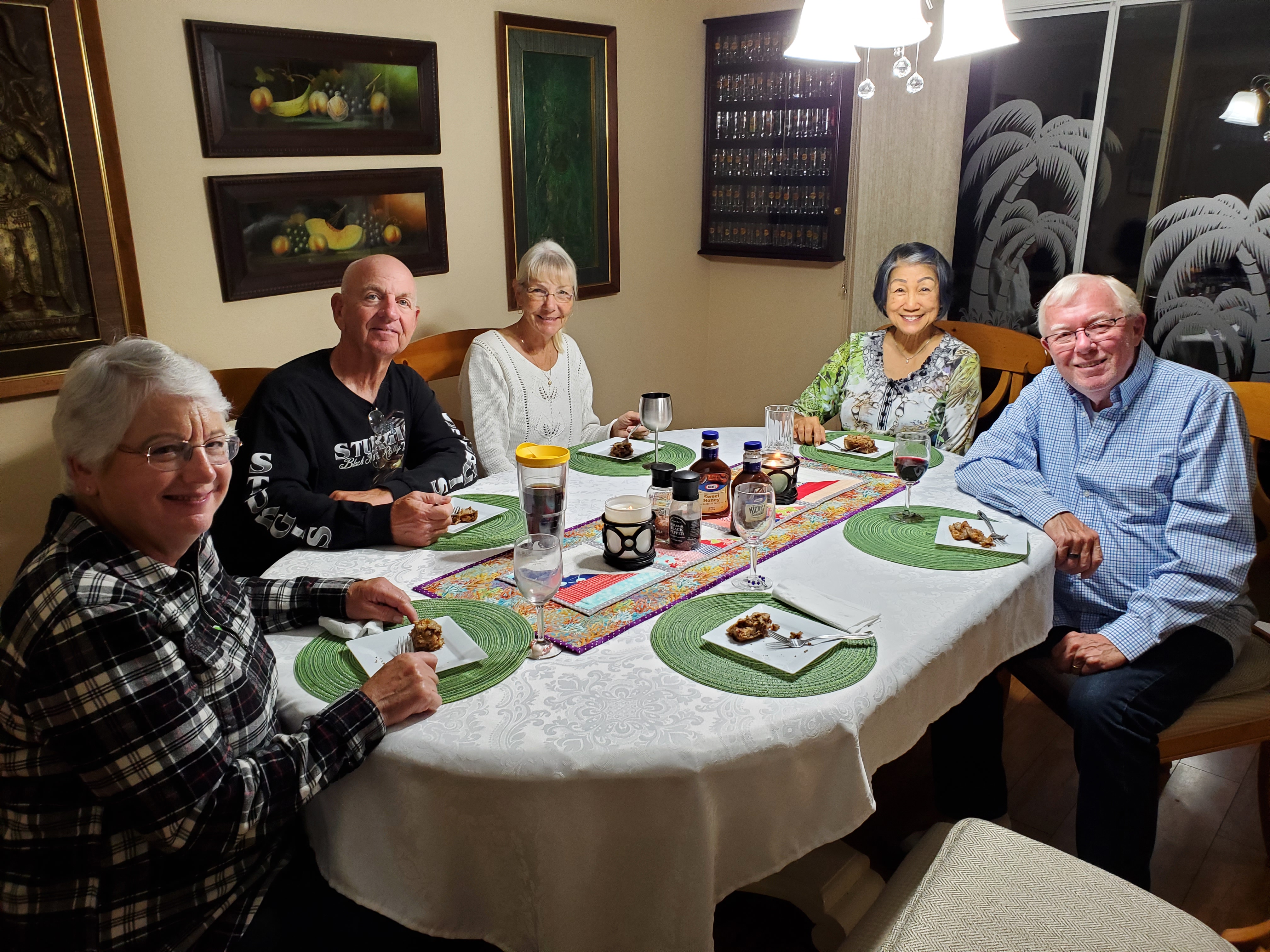
Our friends in Recreation Plantation included some Key West friends that had purchased homes in The Villages. Rusty and Charito Schlagheck were one of these couples. We had enjoyed Christmas Dinner with them and the Fords and they invited all of us to their house for a grilled brisket. They are certainly enjoying themselves in their new home. They had been full-time RVers until they decided to settle down, and it was interesting to see an actual home in The Villages.
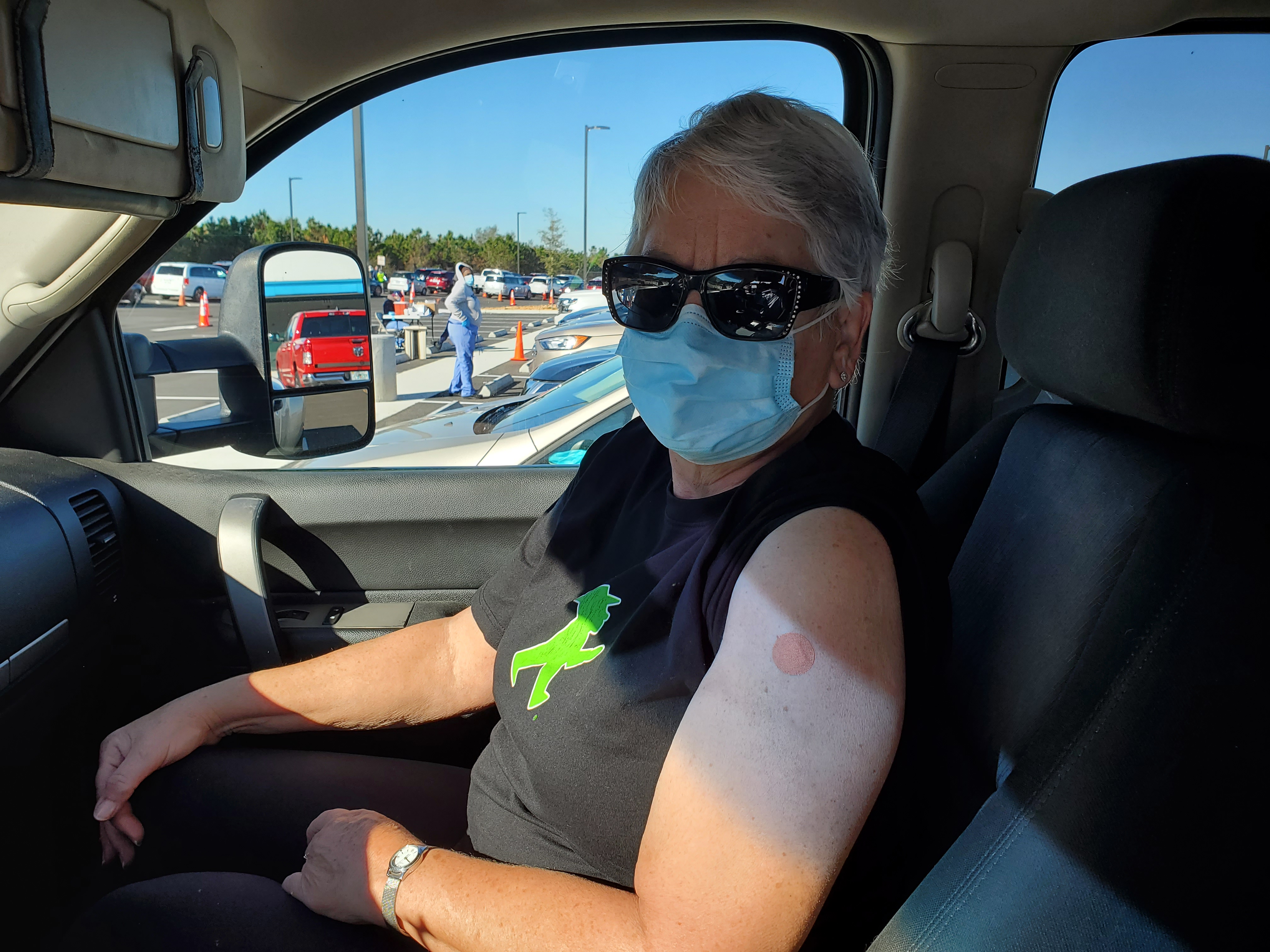
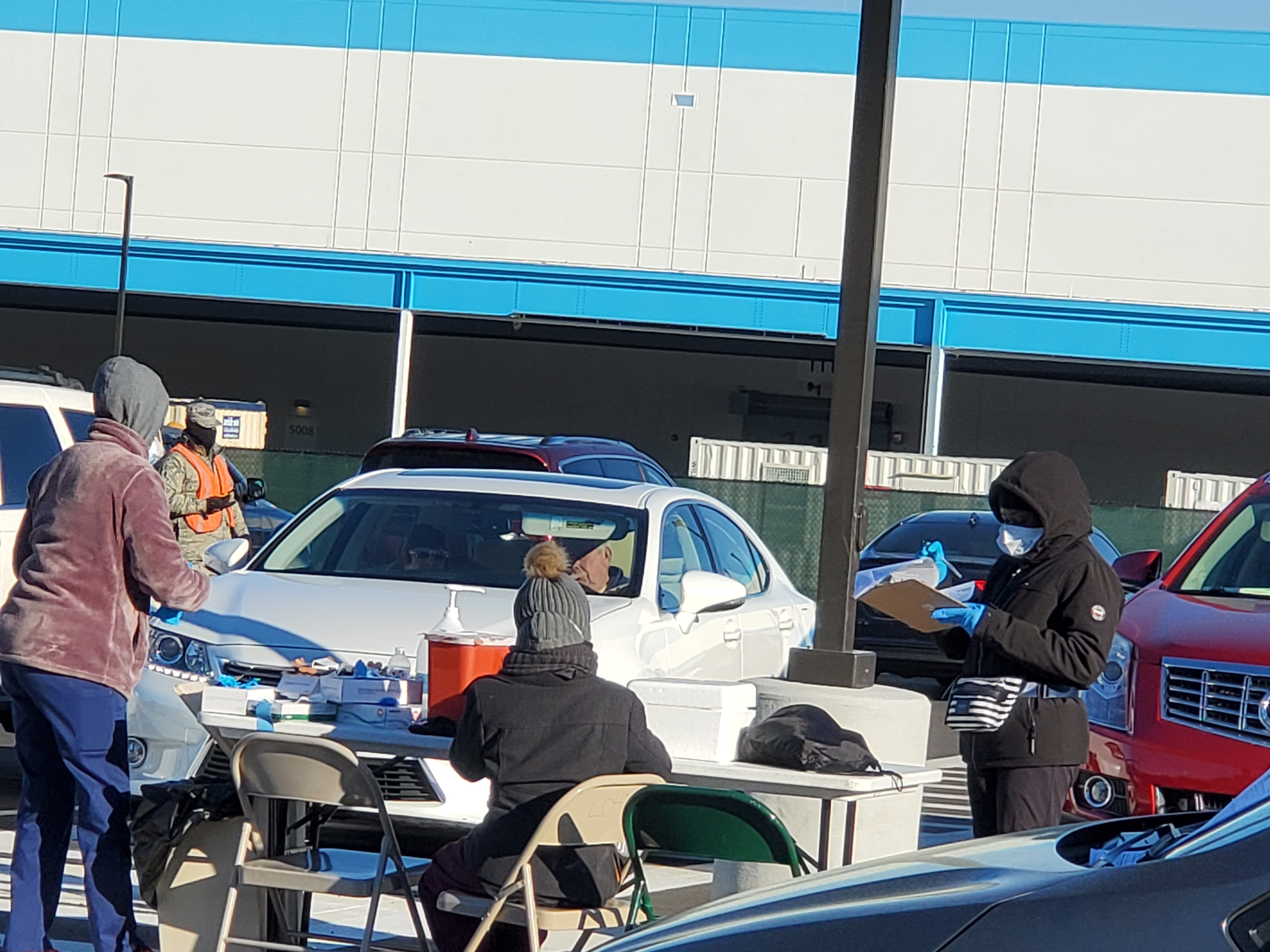
Getting our COVID-19 vaccinations was a priority for us. Fortunately we were able to get our shots before Florida insisted that their vaccinations be limited to permanent and part-time (Snowbirds who owned property) residents. Having our legal residence in South Dakota could have been problematic and we were not going to be in any one place long enough to get both shots until we got to the Tacoma, WA area in May. I felt sorry for the staff and volunteers working in the cold and wind, but appreciated what they were doing.
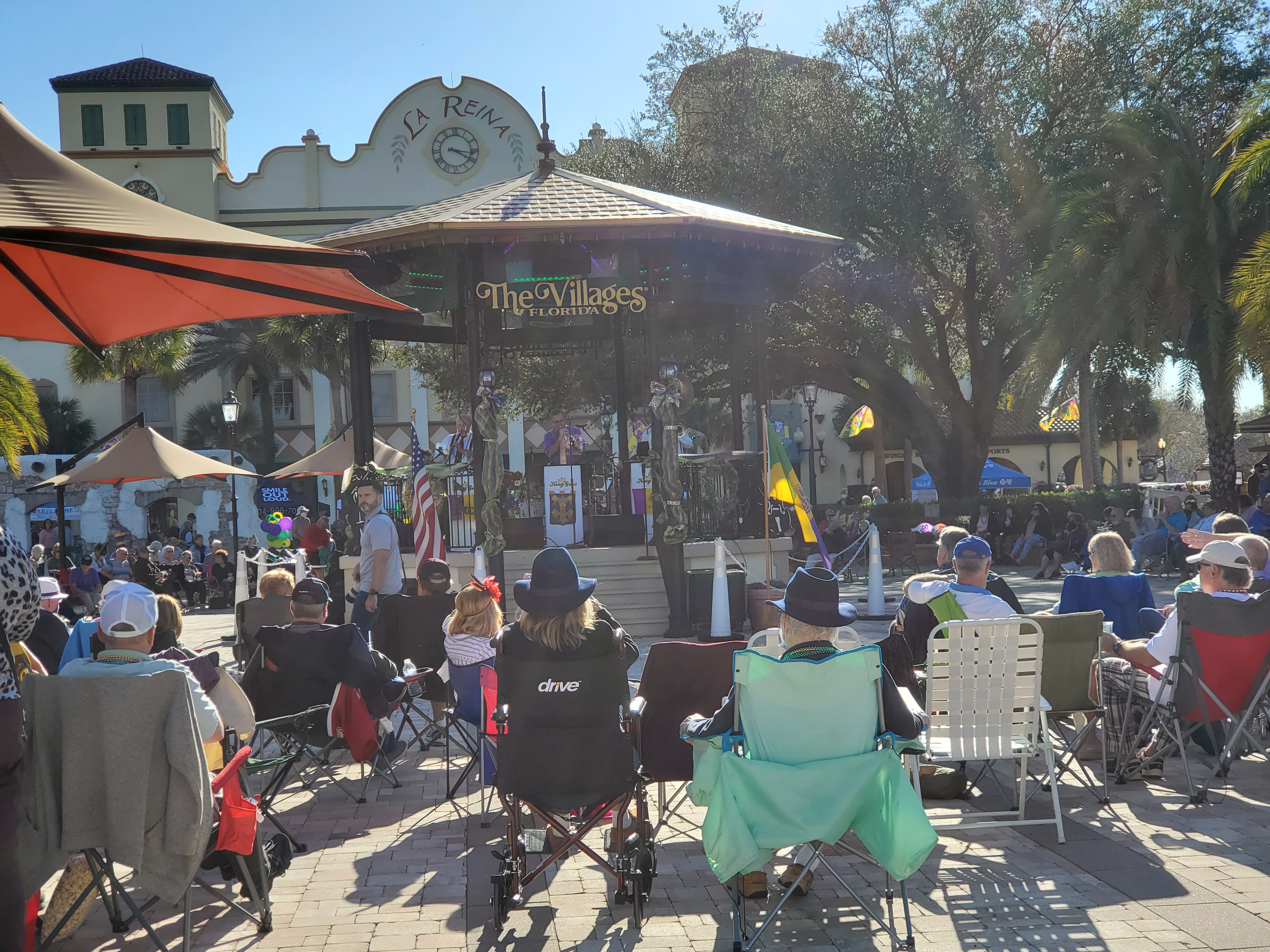
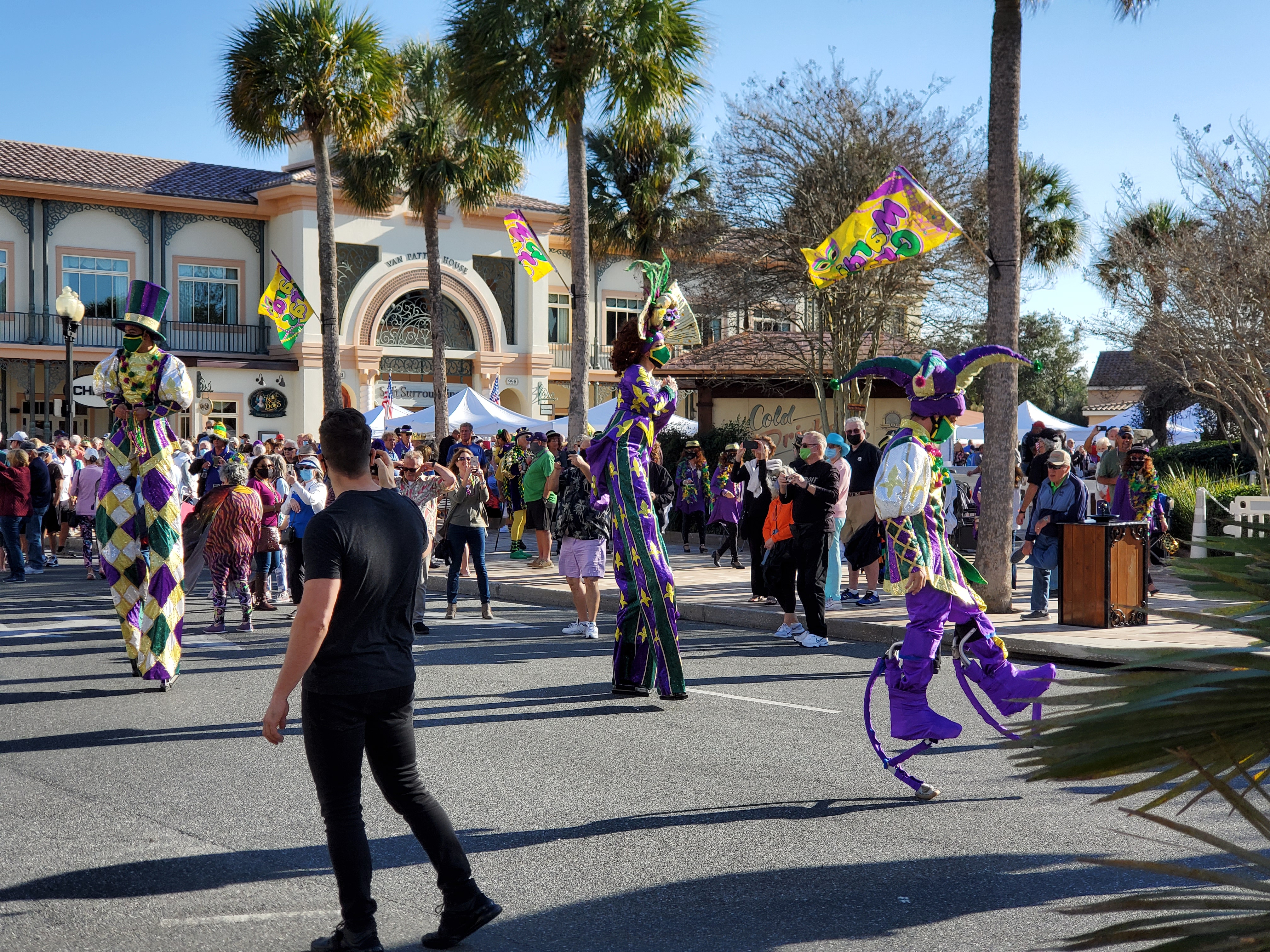
In The Villages, there are four Village Squares that are social centers for music, shopping, and restaurants. We visited the Spanish Springs Square and Sumter Landing Square several times for dining and shopping. Spanish Springs hosted a craft fair and a Mardi Gras celebration. It was interesting to see how people handled COVID protocols. Some consistently wore masks, maintained social distancing, and hand washing, while others acted as though COVID had never happened. We (and our friends) were very careful.
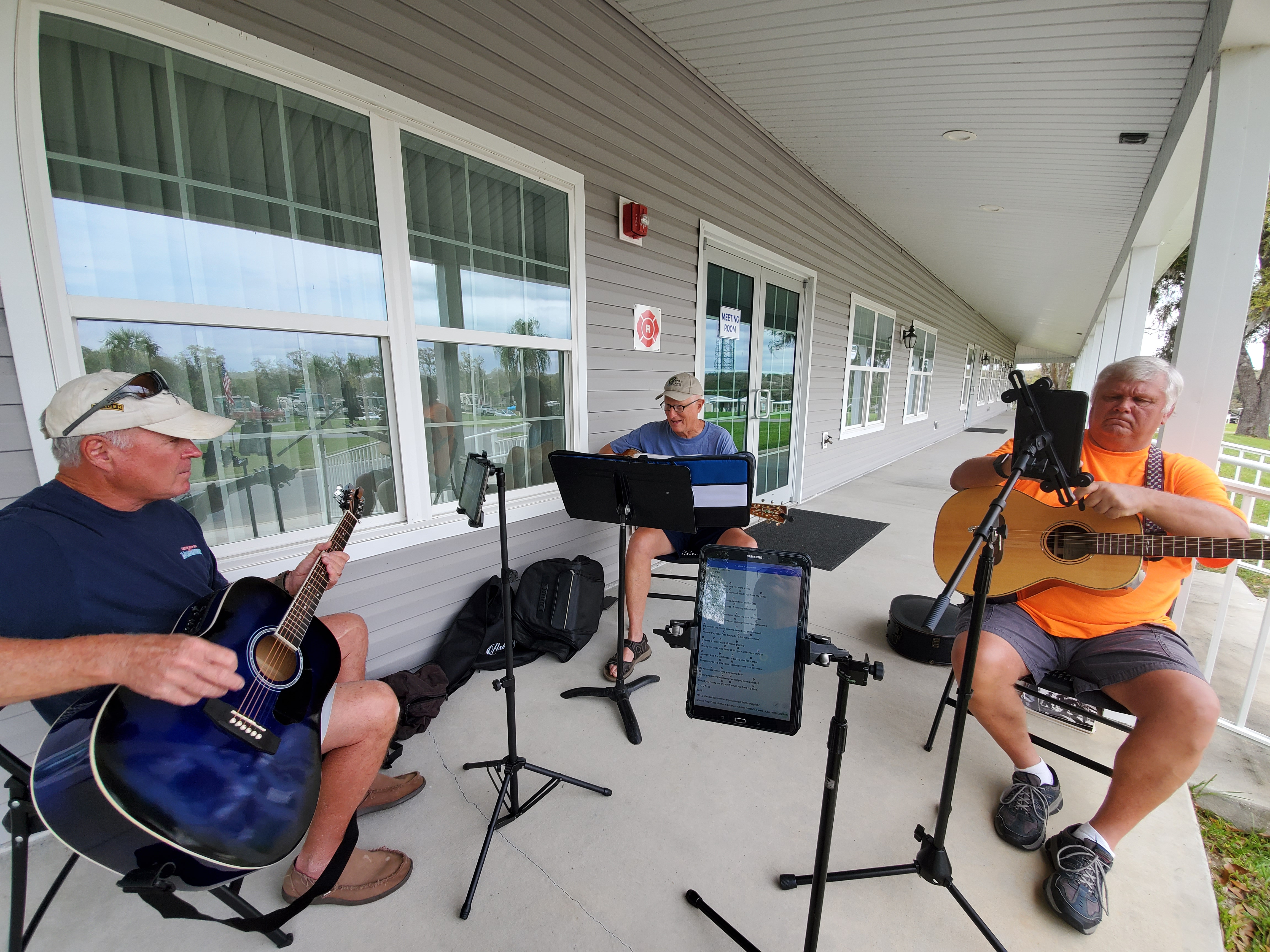
One of my favorite activities in Key West was the weekly jam session. For years, Gary Buck had coordinated this event in Key West. This year I picked up on his tradition and started a jam session that met on Tuesday afternoons. After a slow start, Gary and some other amateur musicians arrived in the park to form a group that had fun sharing songs and tips with each other.
I was struck by the hardships faced by the residents of Texas and neighboring states by the winter storms in February, and I wanted to do something to help. I performed two guitar concerts and put out the word that all of my tips would go to raise money for Feeding America to support the food banks in the area. Thanks to the generosity of the residents of Recreation Plantation, I was able to contribute $250 to Feeding America.
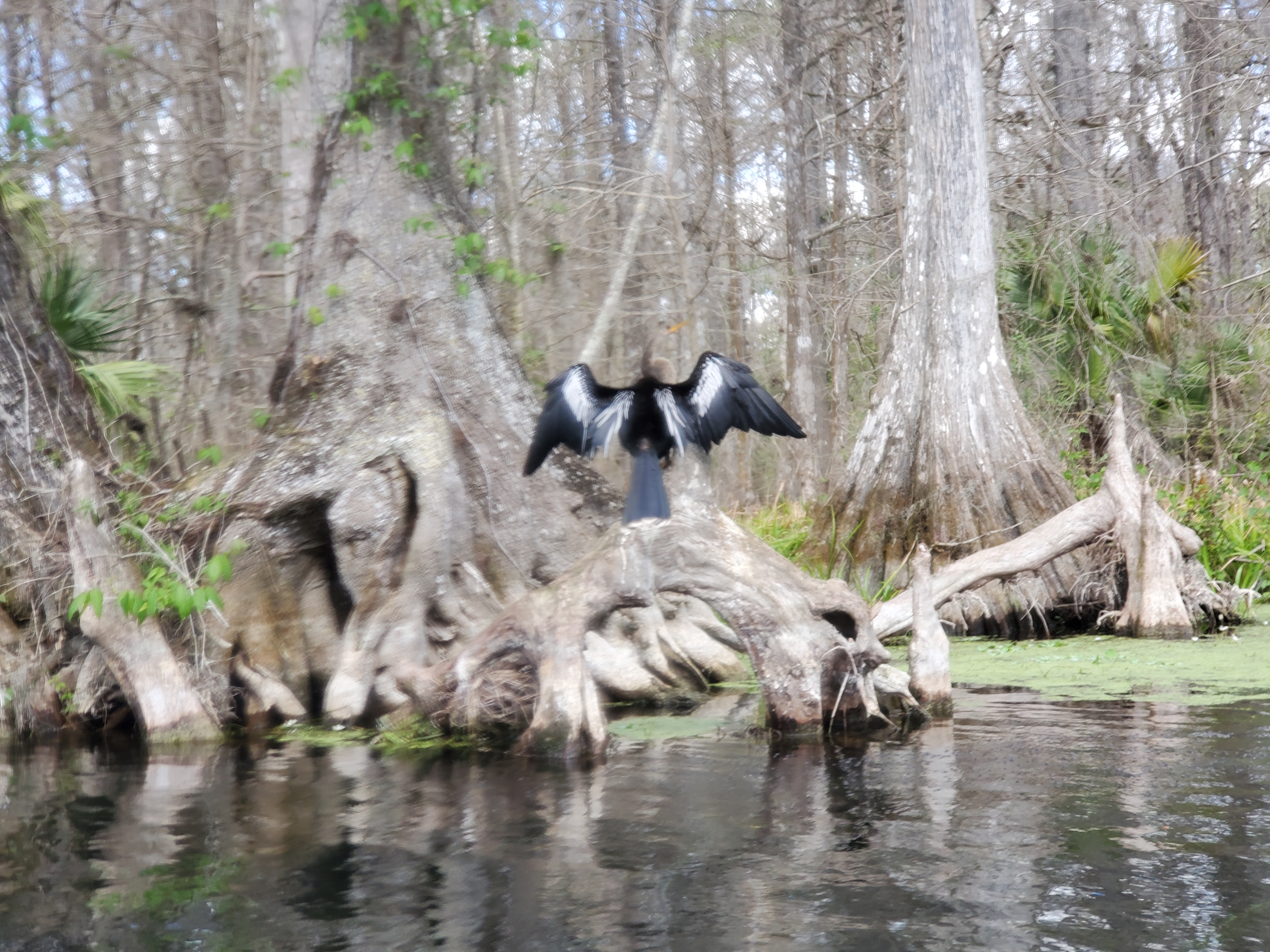
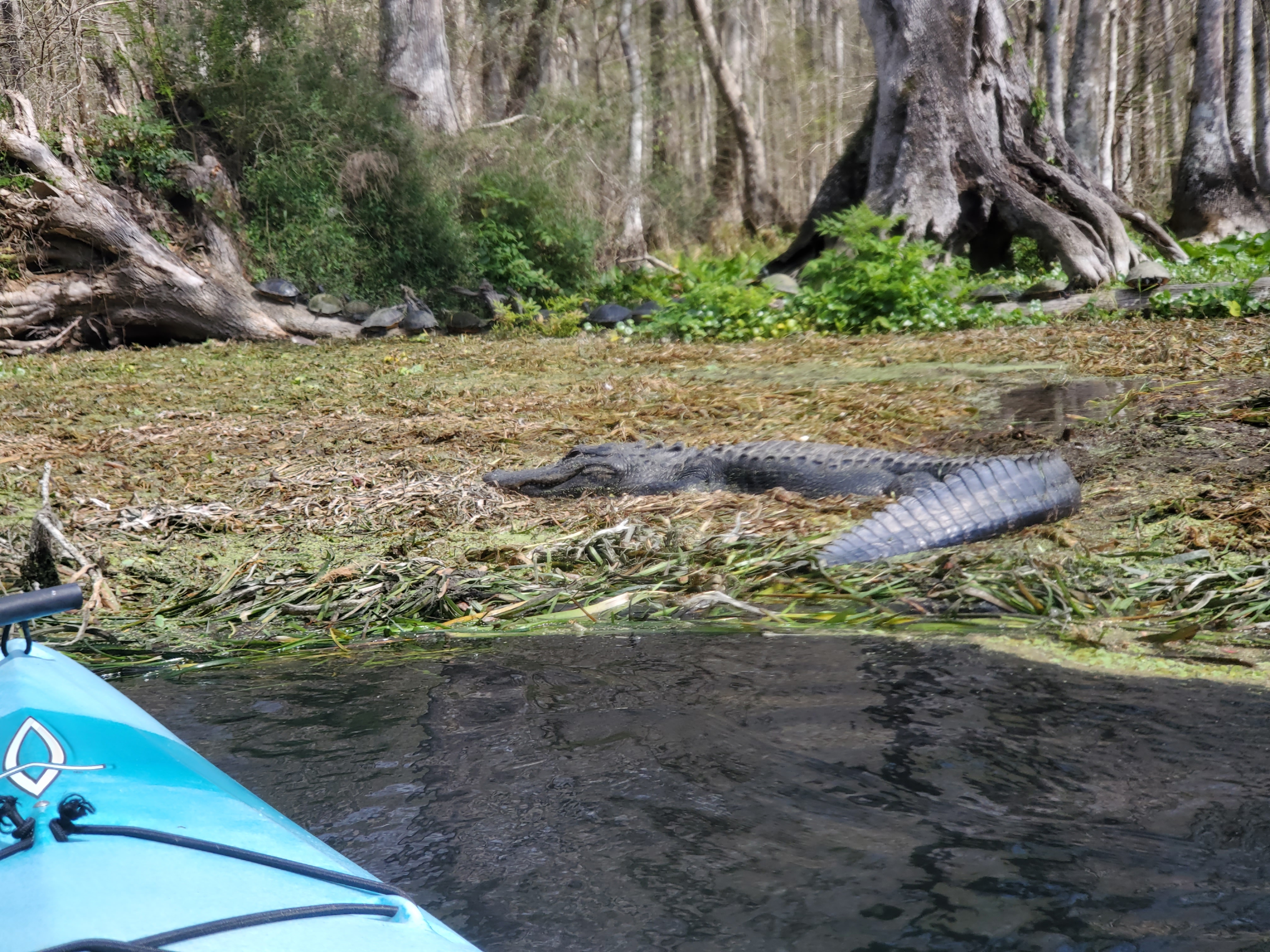
We took a day to drive to Silver Springs State Park to go kayaking. What a great time! There was wildlife everywhere. I was amazed how comfortable to the turtles and other wildlife were with humans. Normally the alligators don’t care, but the turtles normally slide into the water at the slightest interaction with people. At Silver Springs, you could paddle right up to them and they continued to sun on the fallen trees along the river. It seemed like you could almost touch them before they would move.
The day before we were supposed to leave, the starter on our truck failed. It took the local dealer three days to get a new starter and get it installed. Talk about a bummer! However, we continue to prevail.
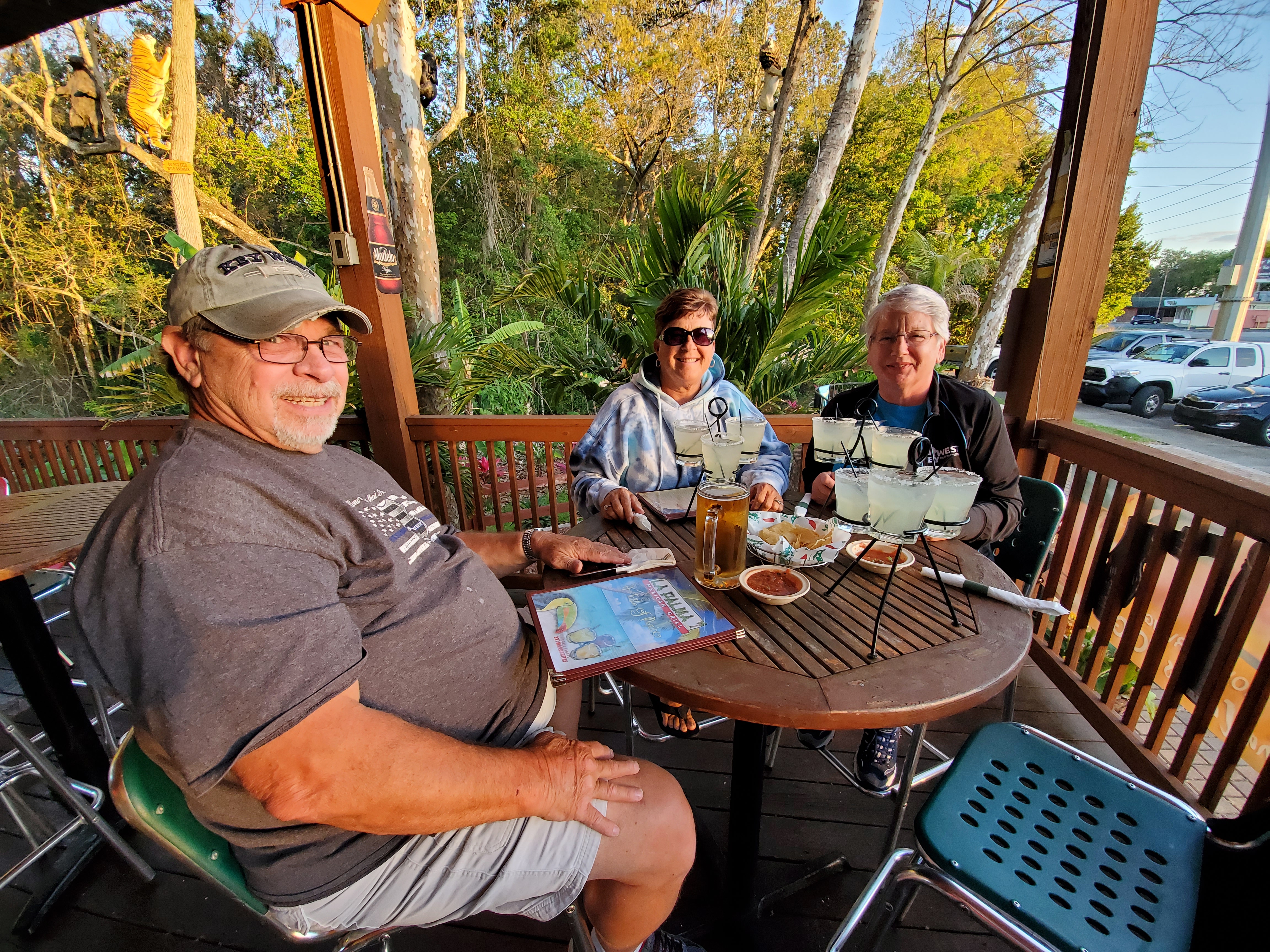
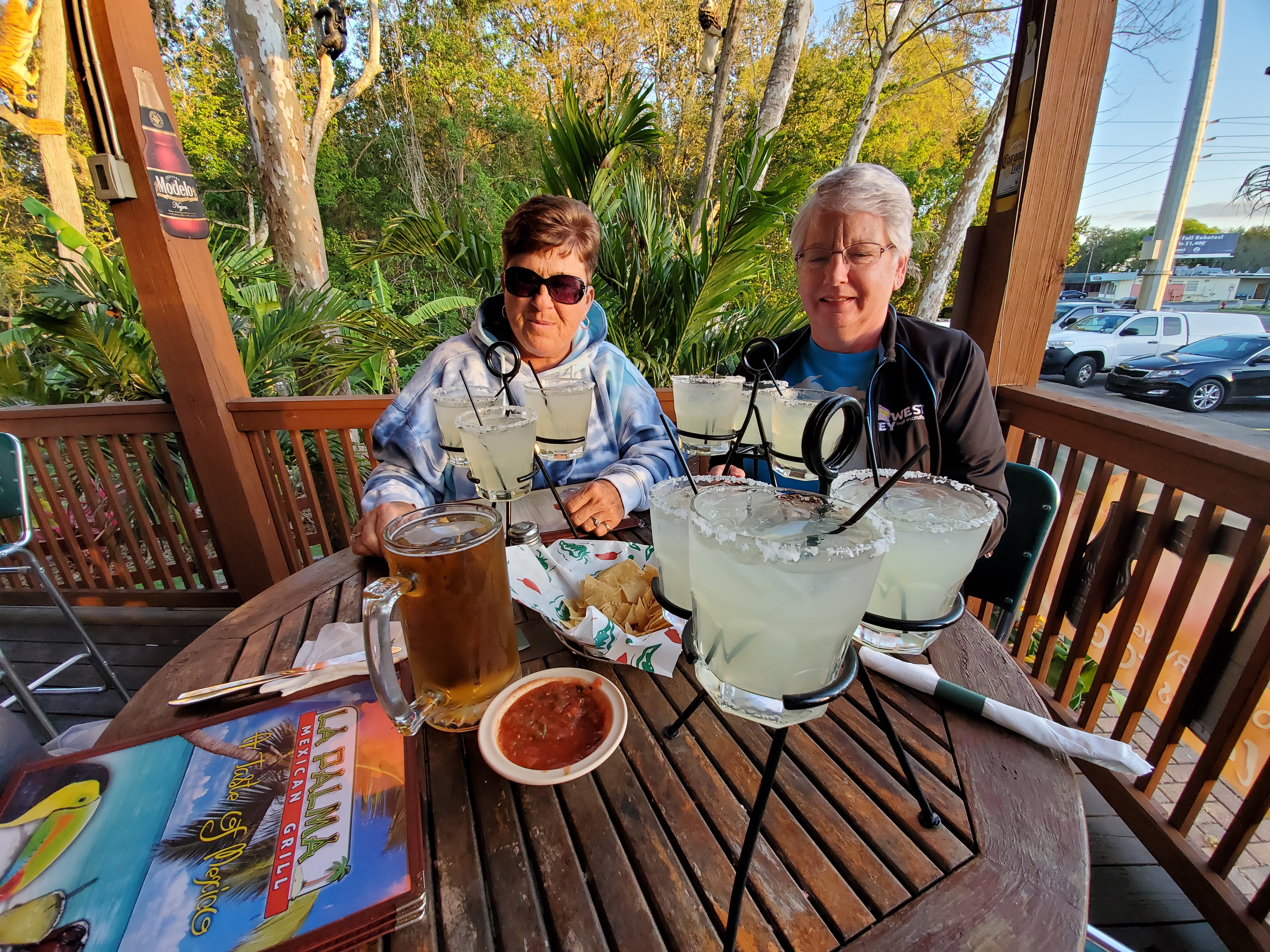
On our last night in the park, we went out to dinner at La Palma Mexican Grill in Leesburg with our good friends from Lansing, MI – Steve and Debbie Smith. The food was good, but we really enjoyed the 3 for 1 margaritas!
The Coronavirus Pandemic has caused many changes to our normal routine. While for most people that means wearing masks and maintaining social distancing, in our case it affects where we live. We normally spend our winters in Key West, but the RV park at the Naval Air Station remains closed so that wasn’t an option. The RV park at Patrick Air Force Base near Cocoa Beach, FL is a favorite location, but they don’t accept reservations and we didn’t want to base where we would stay from November through March on a “roll of the dice.” Many people we know from Key West have stayed at the Recreation Plantation near The Villages and were talking about spending the winter there instead of Key West. Based on all of this we made a reservation at Recreation Plantation.
So far it has been a great choice. While we miss the camaraderie of our “military family” at Key West, many of them are here, and the other “residents” of Recreation Plantation are very welcoming. There is plenty to do here. We are right next to The Villages and there is a system of golf cart/bicycle/walking paths through The Villages we can use. It makes for a nice, scenic ride without having to worry about vehicle traffic. There are many places to shop and eat within a short ride from the RV park. The park has an Activities Office that coordinates several events within the park. The Coronavirus has caused several to be cancelled, but the staff and residents have been very creative in keeping the place hopping.
There is a Thursday morning gathering for free coffee and donuts where they make general announcements about park activities. There is a trailer with fresh produce for sale on Thursdays and one morning there was a blood drive that I supported. I am easily bribed with free juice and cookies and a Wal-Mart gift card!
We celebrated Thanksgiving by inviting another couple Mike and Judy, friends from Key West, to join us for Thanksgiving dinner. Pat baked a turkey and apple pie and our friends brought side dishes. We ate at our picnic table and enjoyed a great meal with great company. I took pictures of the turkey and the pie, but we were having such a good time I forgot to get any pictures of the people! 😦
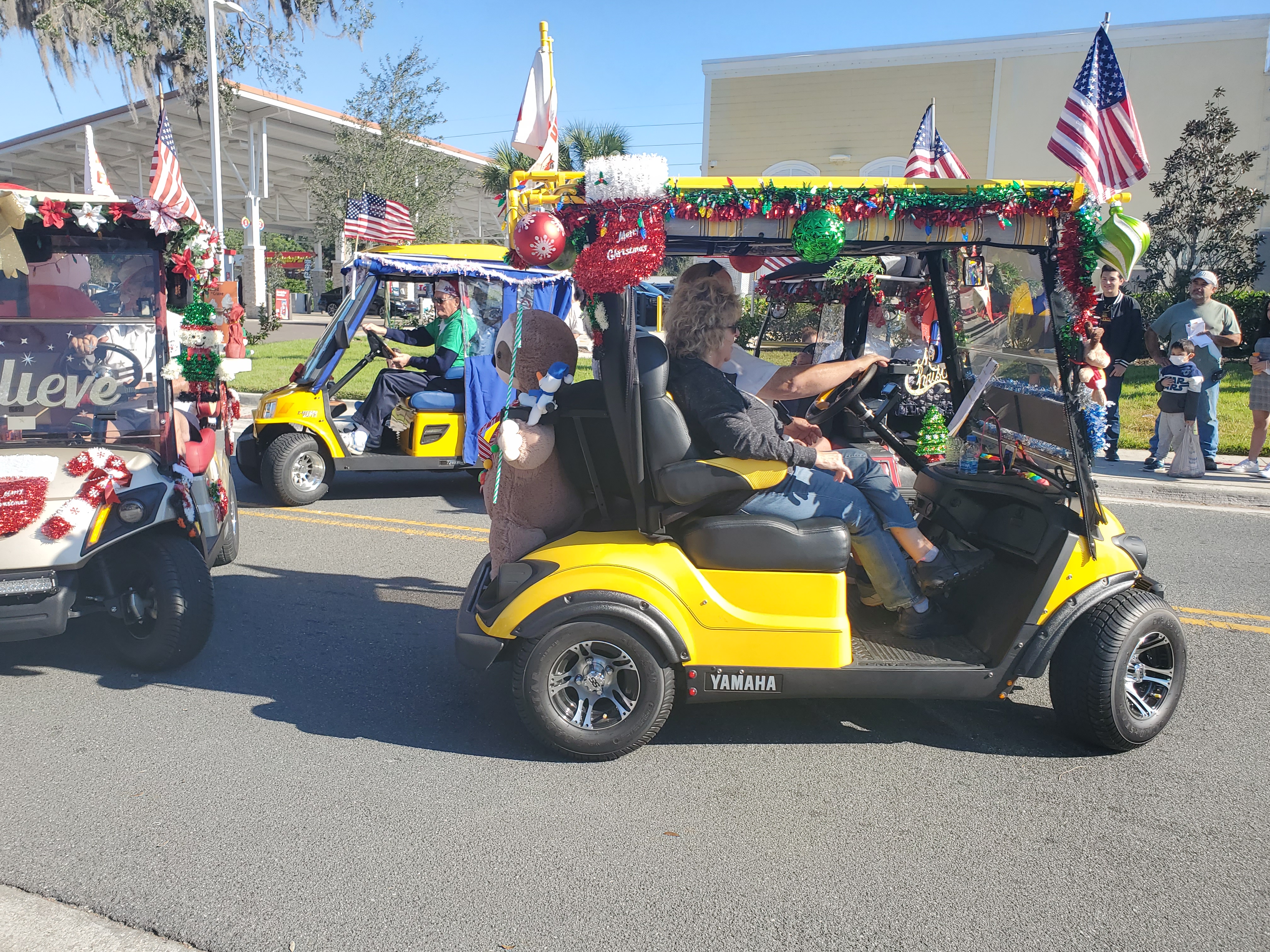
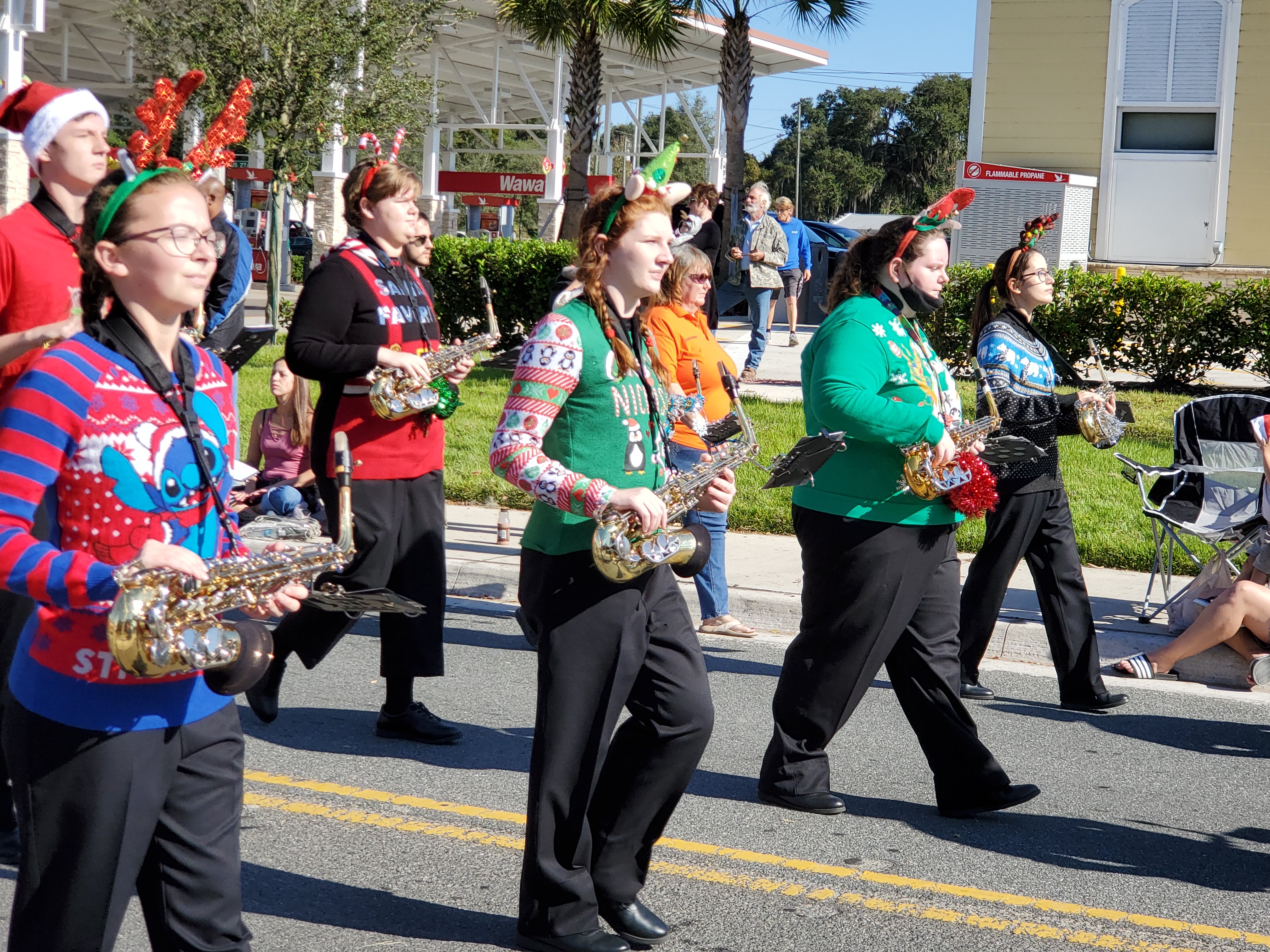
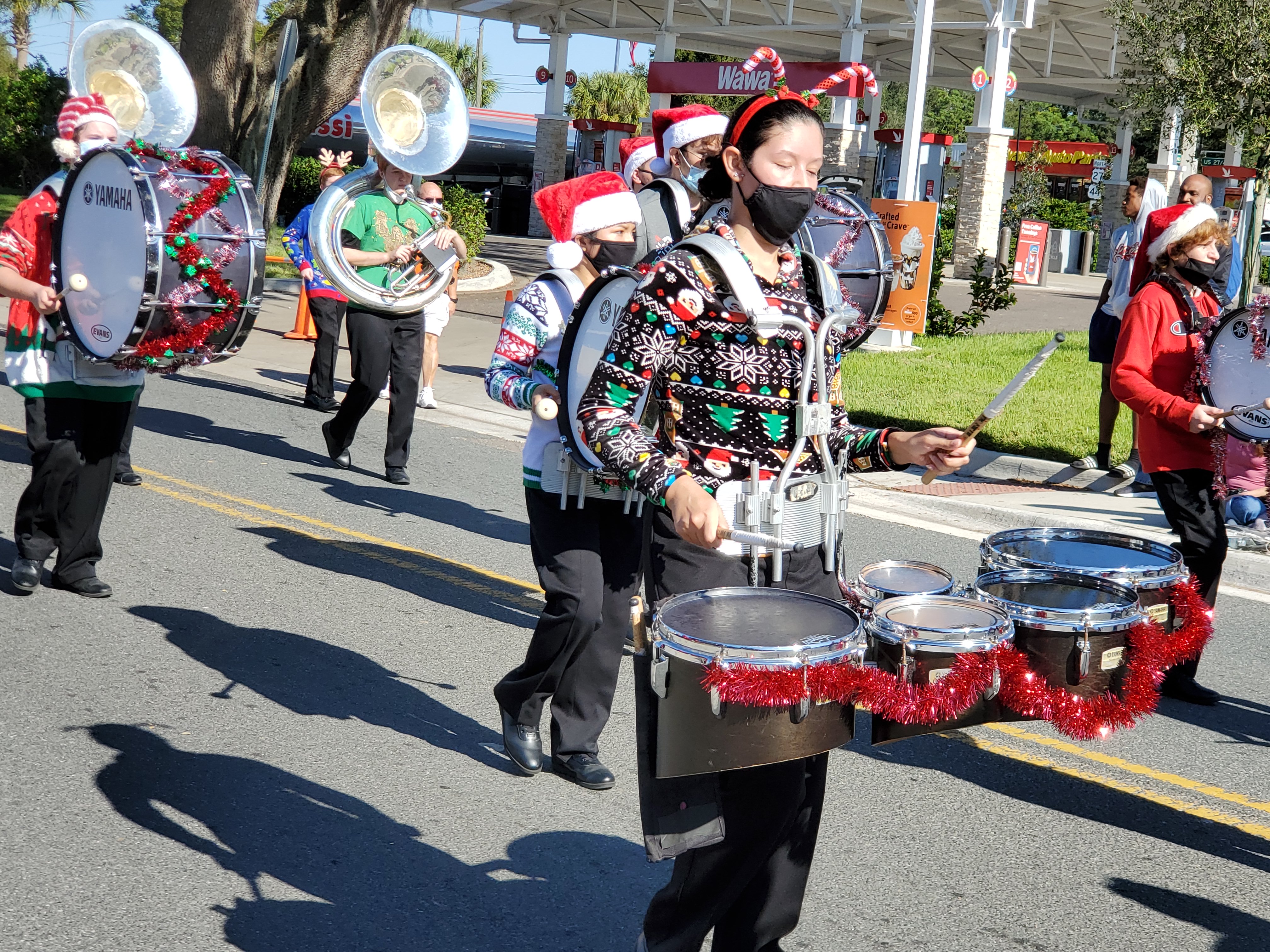
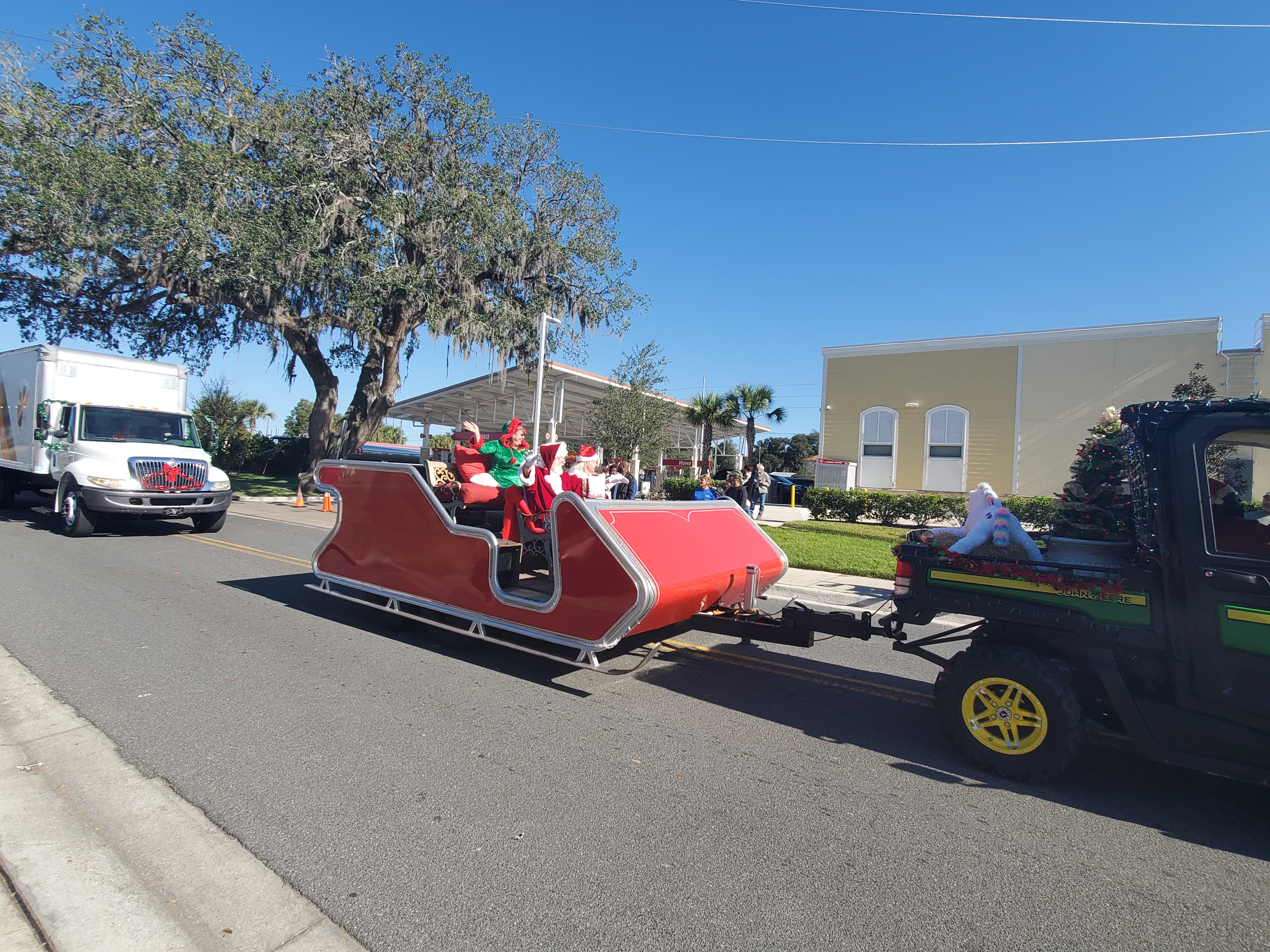
The local town of Lady Lake held a Christmas parade that was very entertaining.
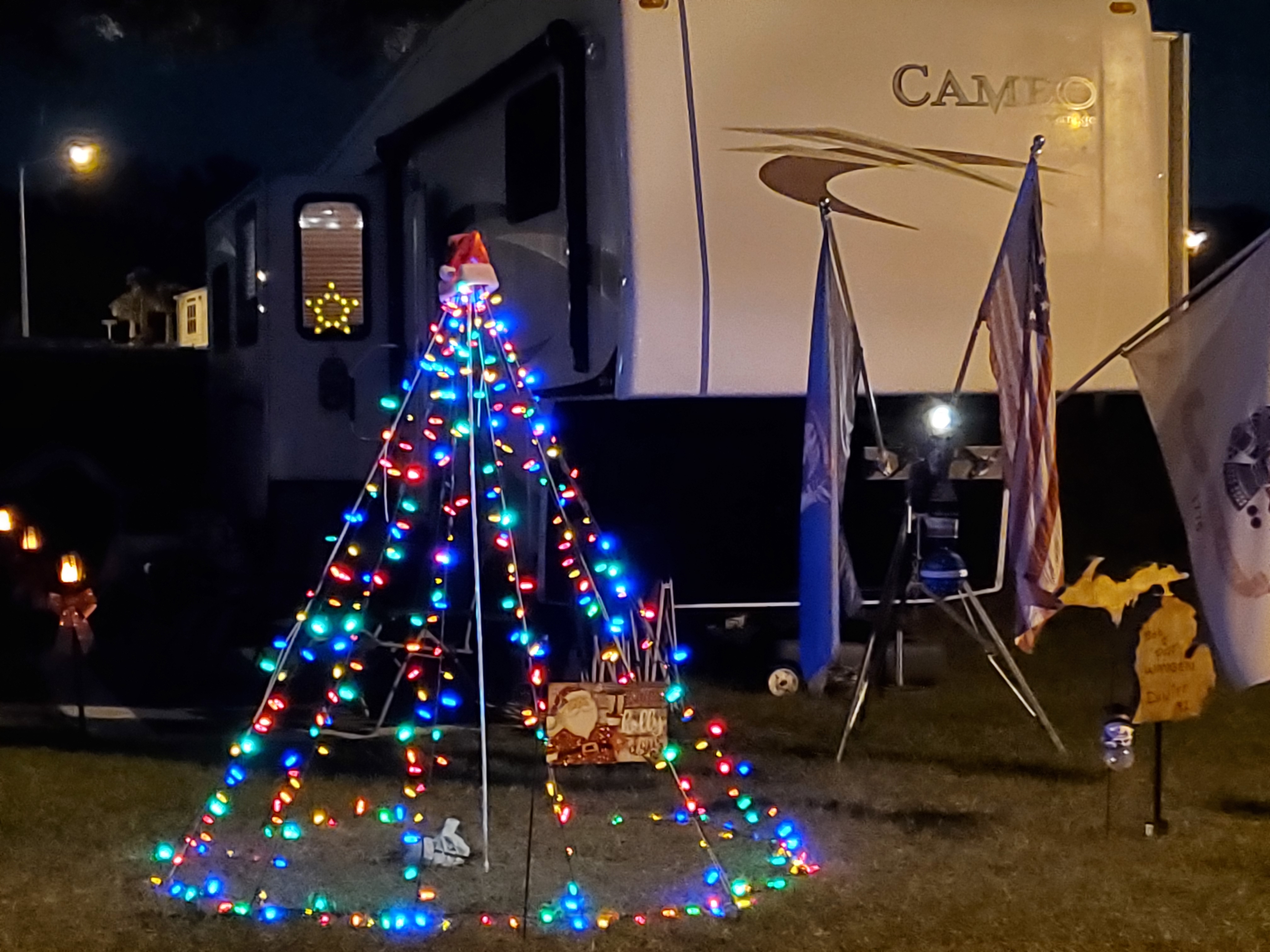
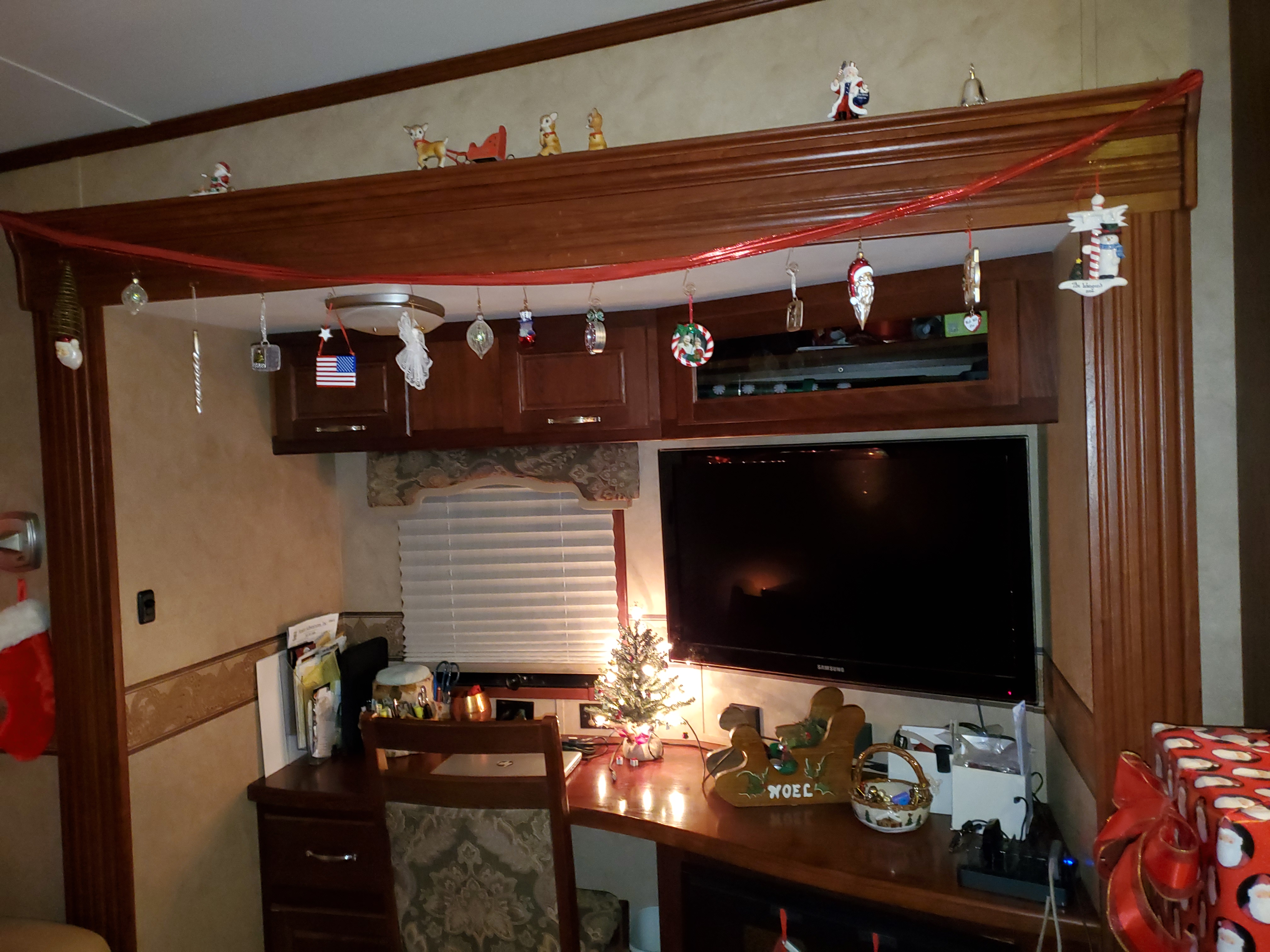
After Thanksgiving, we decorated our trailer with Christmas decorations. Usually we would have to take these down after a few days because we would fly back to Michigan for the holidays and store the trailer somewhere else. This year we were not flying back home because of the pandemic and not storing the trailer, so they could stay up! Our big decoration is our outdoor tree made out of lights we used to hang on our house.
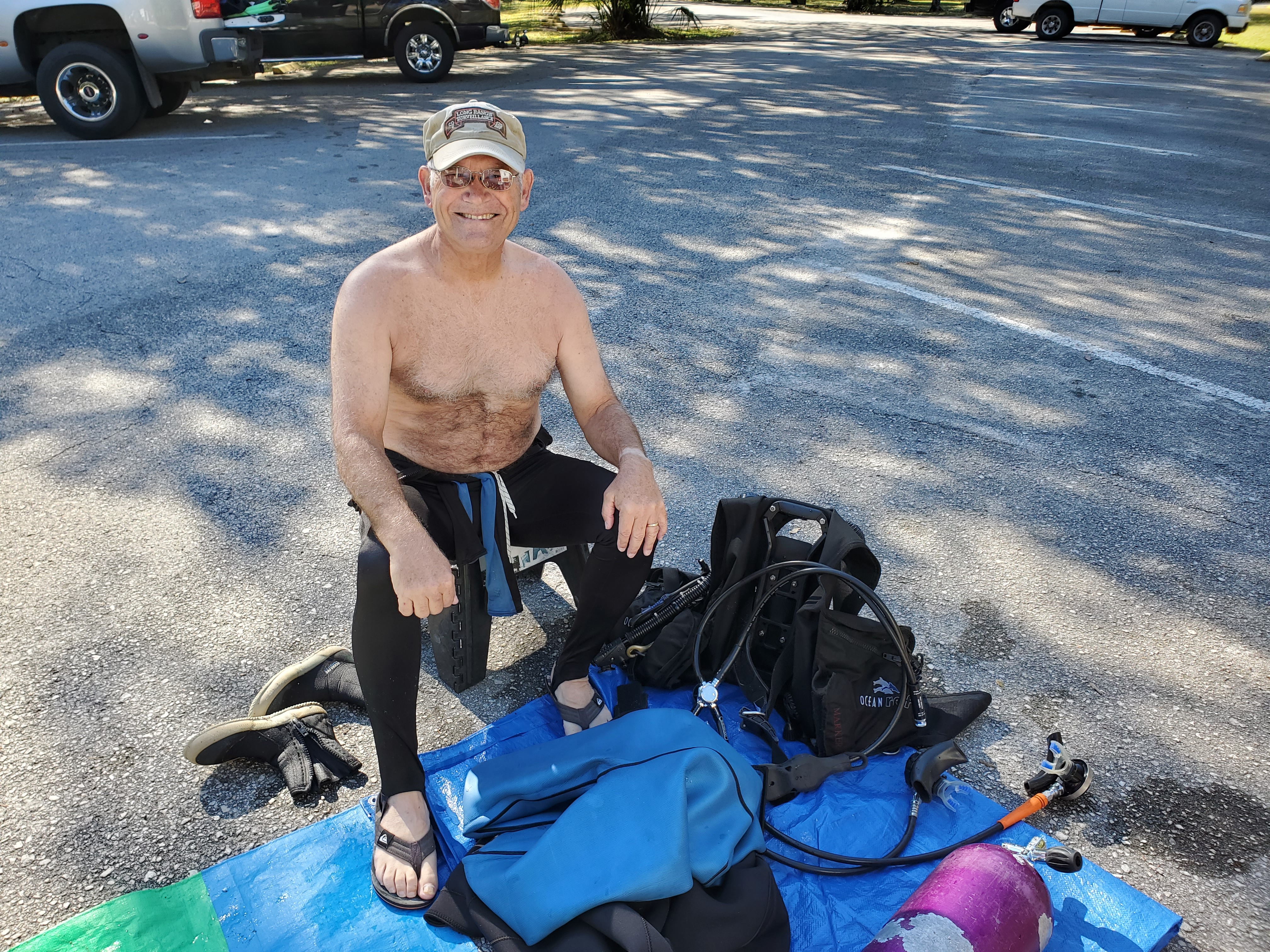
I discovered that a local SCUBA dive shop, Underwater Adventures, was offering the PADI (Professional Association of Diving Instructors) Rescue Diver course. I have wanted to take this course for a long time and decided to take advantage of the opportunity.
The course was challenging, mentally as much as physically. I was fortunate to have been a Red Cross Safety Programs Field Representative and, as a result, an Instructor-Trainer in both First Aid and Water Safety. That training and experience was a great help in completing this course. The course included preventing and dealing with equipment failures, assisting divers in trouble both underwater and on the surface. We did the open water diving at Alexander Springs, part of the Ocala National Forest. Our instructor wanted to do this training in poorer visibility, but I was happy to swim in the crystal clear water of the spring. The practical examination in open water was definitely challenging. Doing mouth to mouth rescue breathing while treading water was tough when I was 40, it was even more so at 71 years old!
I don’t see myself becoming a Divemaster or Instructor, but do feel that I am now a much safer diver and will be able to safely and effectively assist other divers who may be experiencing difficulties.
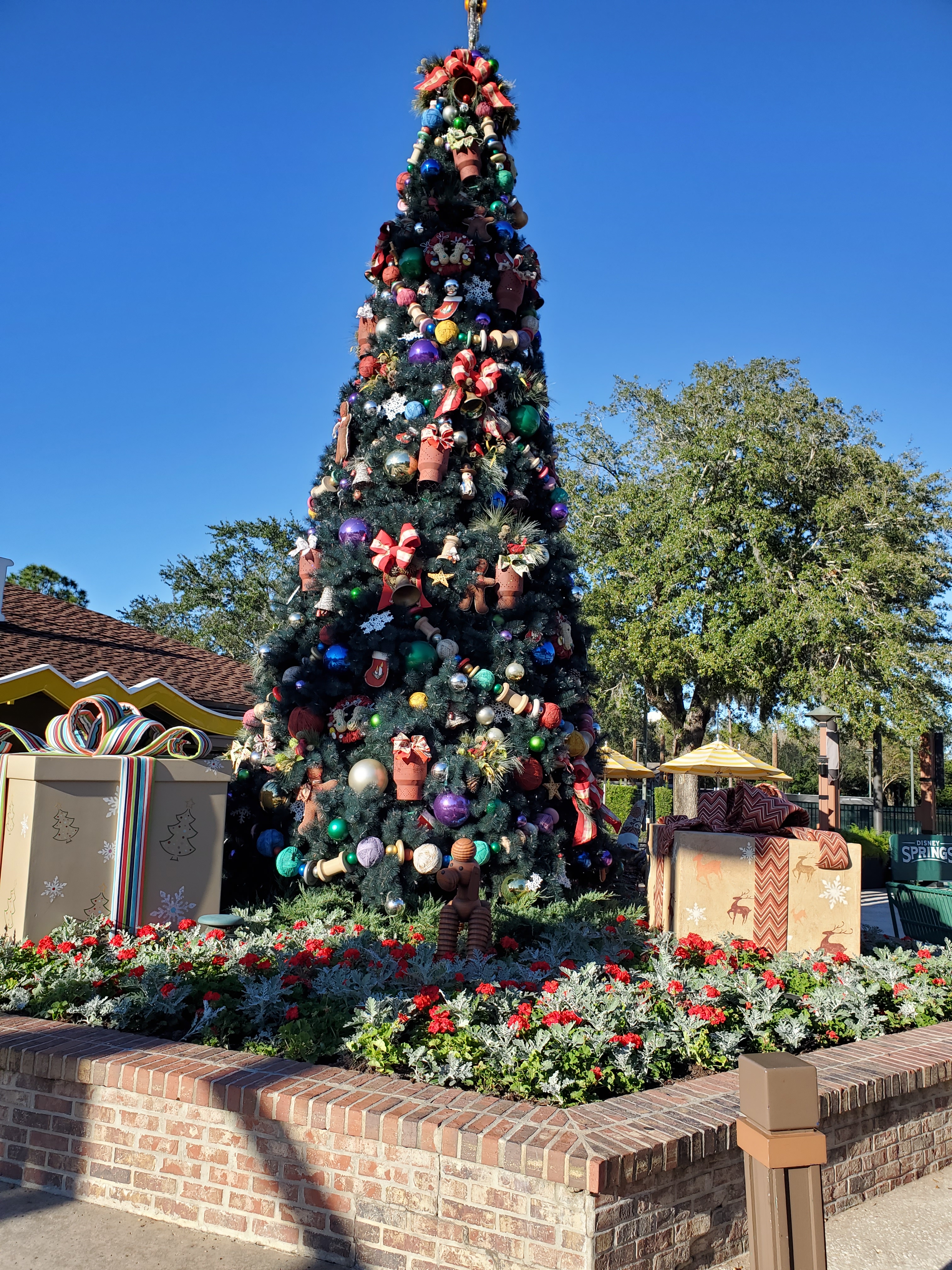
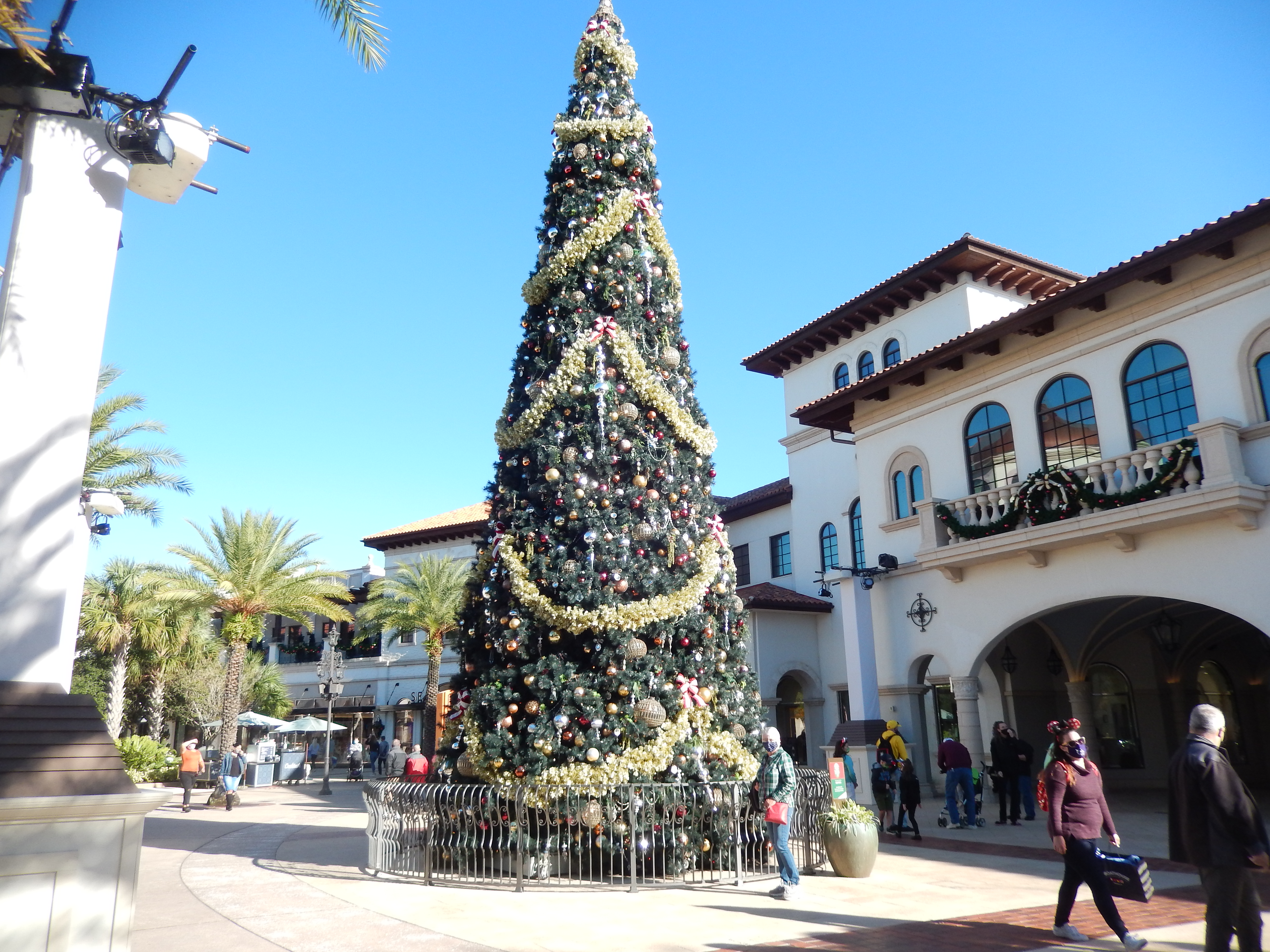
One Sunday morning (at about 1:00 am) we awoke to a whooshing sound and the strong smell of ammonia. When I went outside to investigate I found that the cooling unit of our refrigerator had ruptured and ammonia was spewing out of a rusted pipe. After almost ten years on the road and constant use, it was not surprising that it died. Granted, that didn’t make us happy about it. The next morning I called around and made arrangements to get it repaired at RV Specialist in nearby Leesburg. We had to leave our RV with them overnight for the repair and we took advantage of this to get a hotel room in Disney Springs and see the Christmas lights and displays. We picked up our rig the next morning and our refrigerator is now operating like it was brand new again.
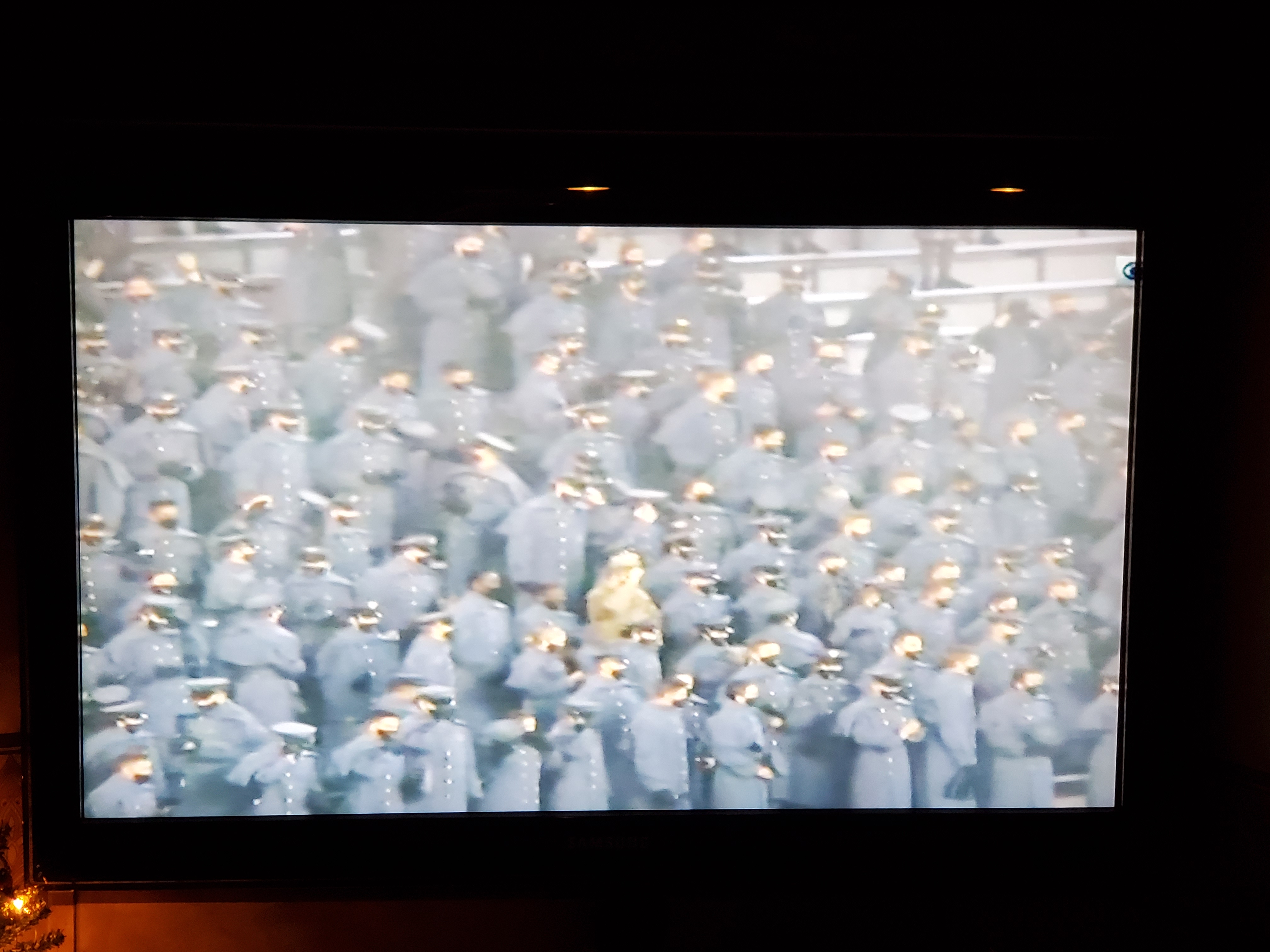
December 12th was the Army-Navy Game. Unlike the past few years when we were at Patrick AFB and this was a big deal, we didn’t find anyone in the park that was hosting a game party, so we did our own thing and cheered Army on to victory. We have no doubt that our enthusiastic support was key to the victory for the Black Knights.
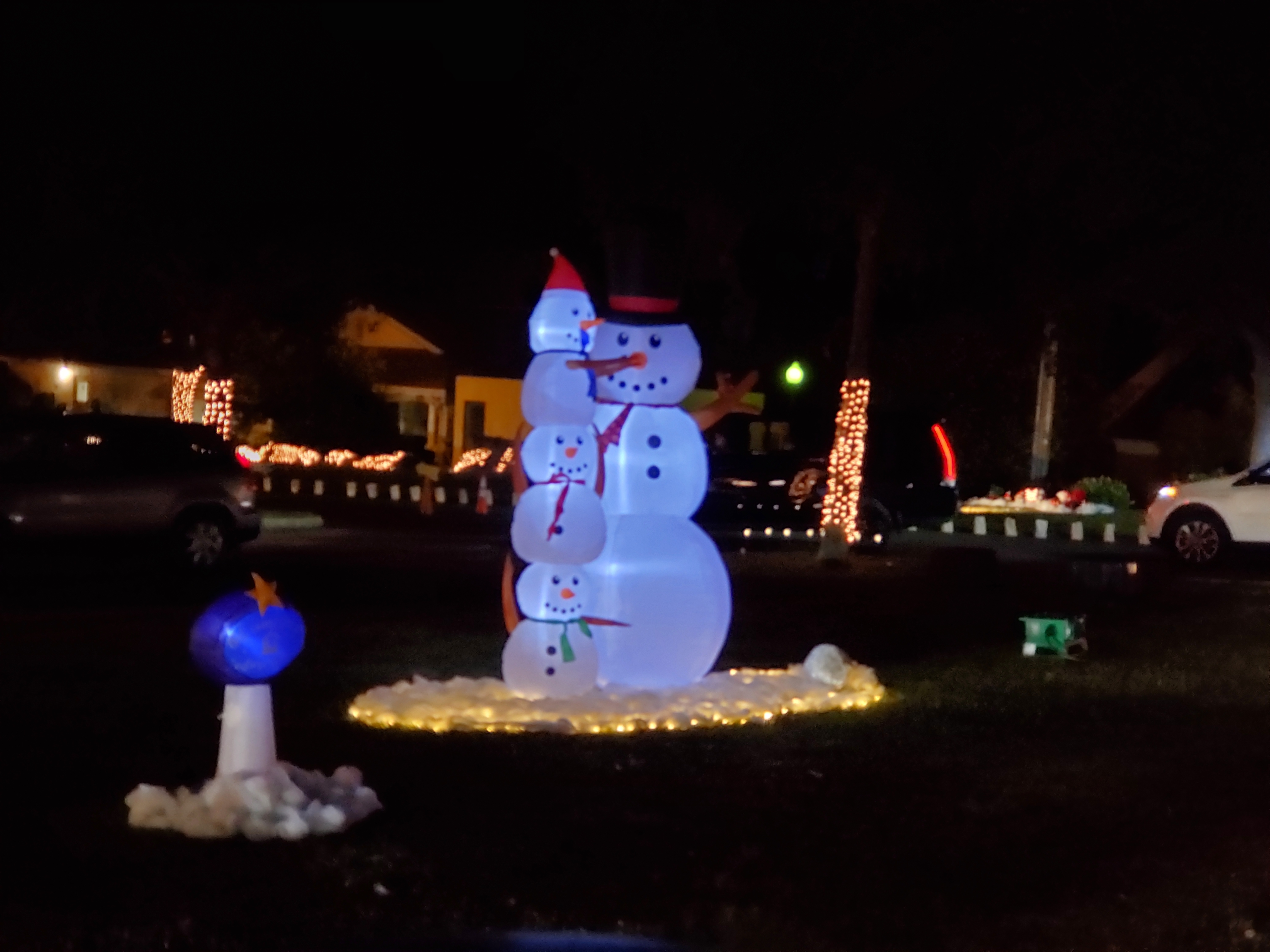
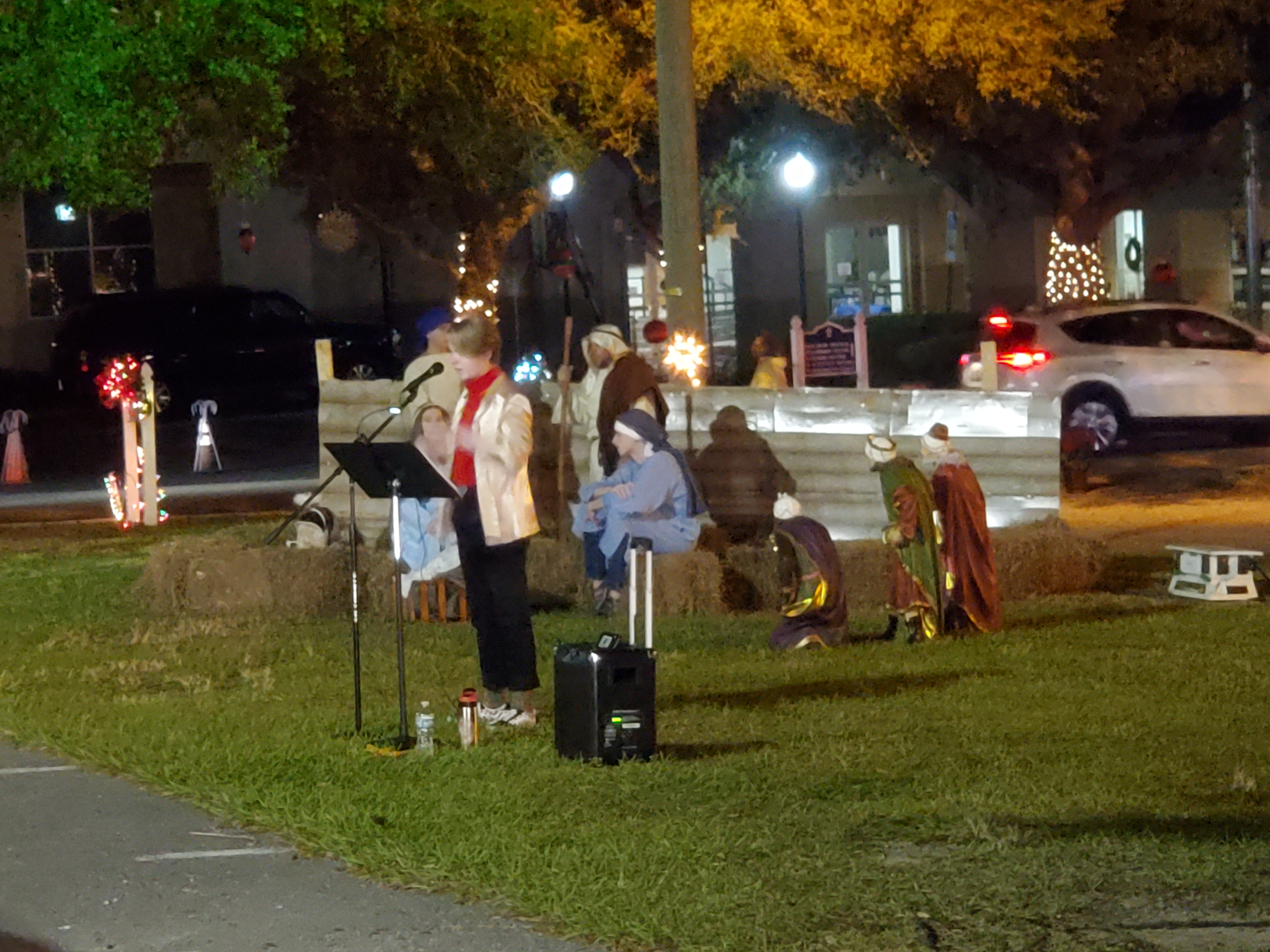
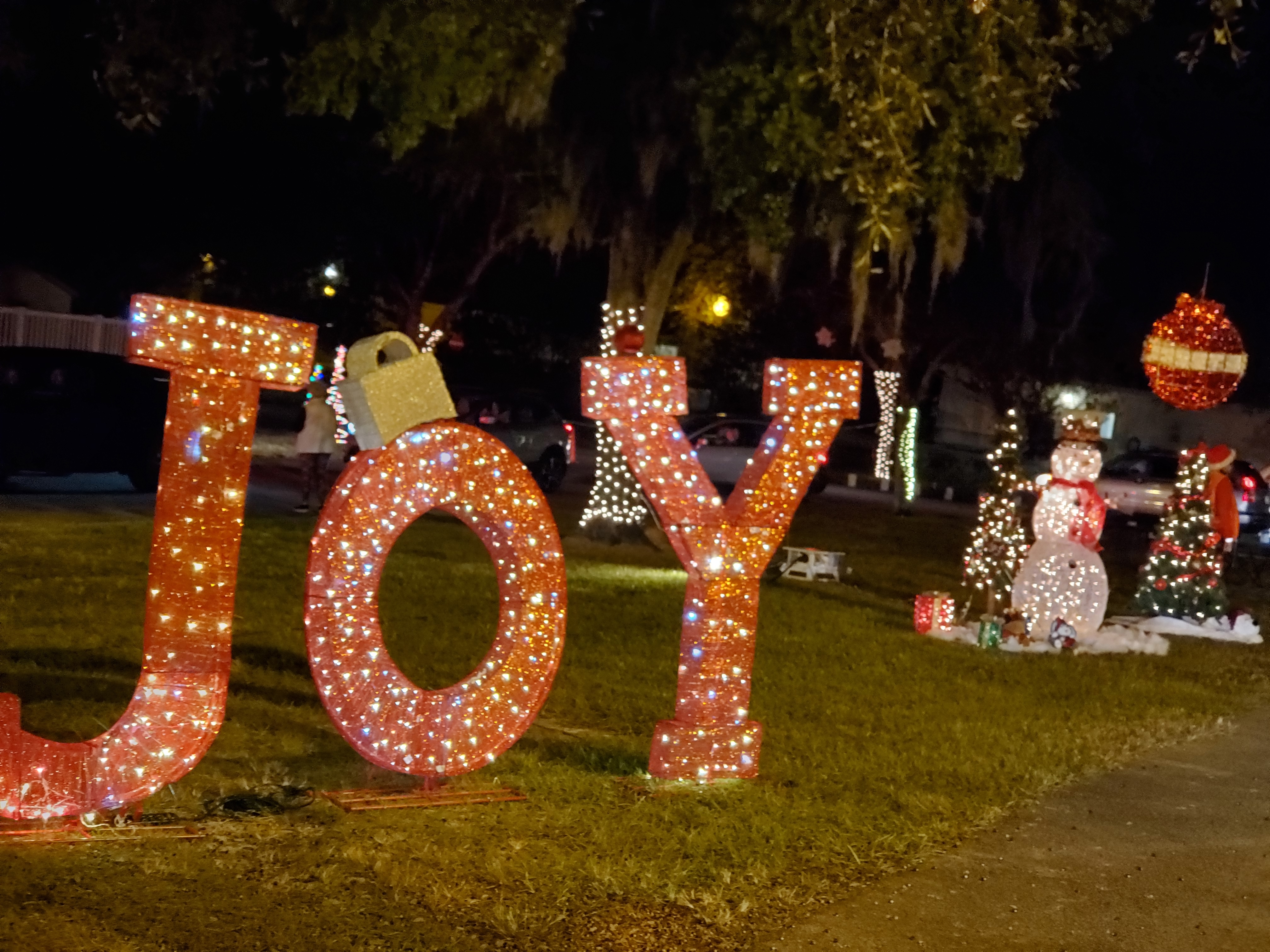
One of the local churches set up an outdoor Christmas light display and it was a pleasure to see the religious symbols of the season in lights.
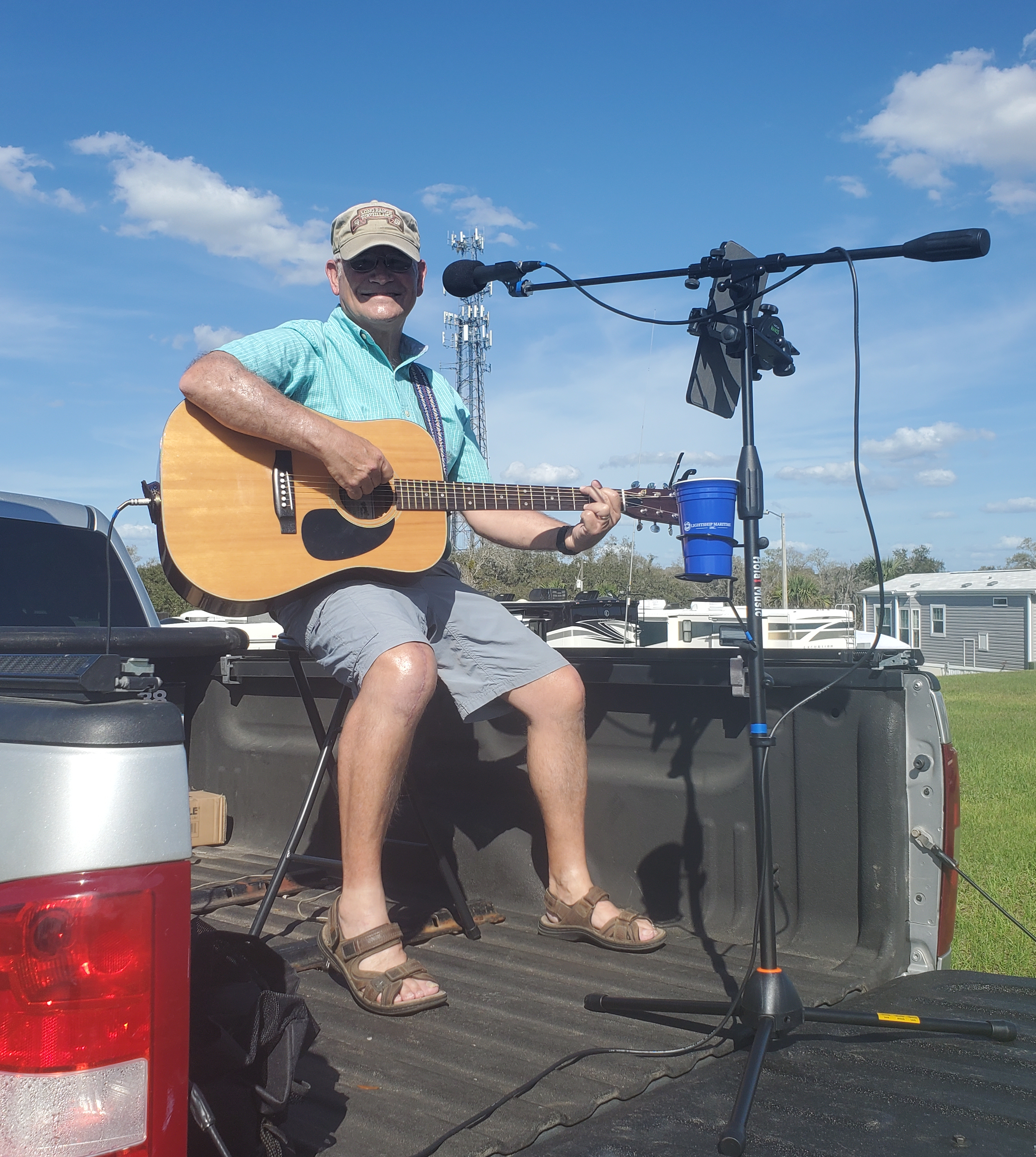
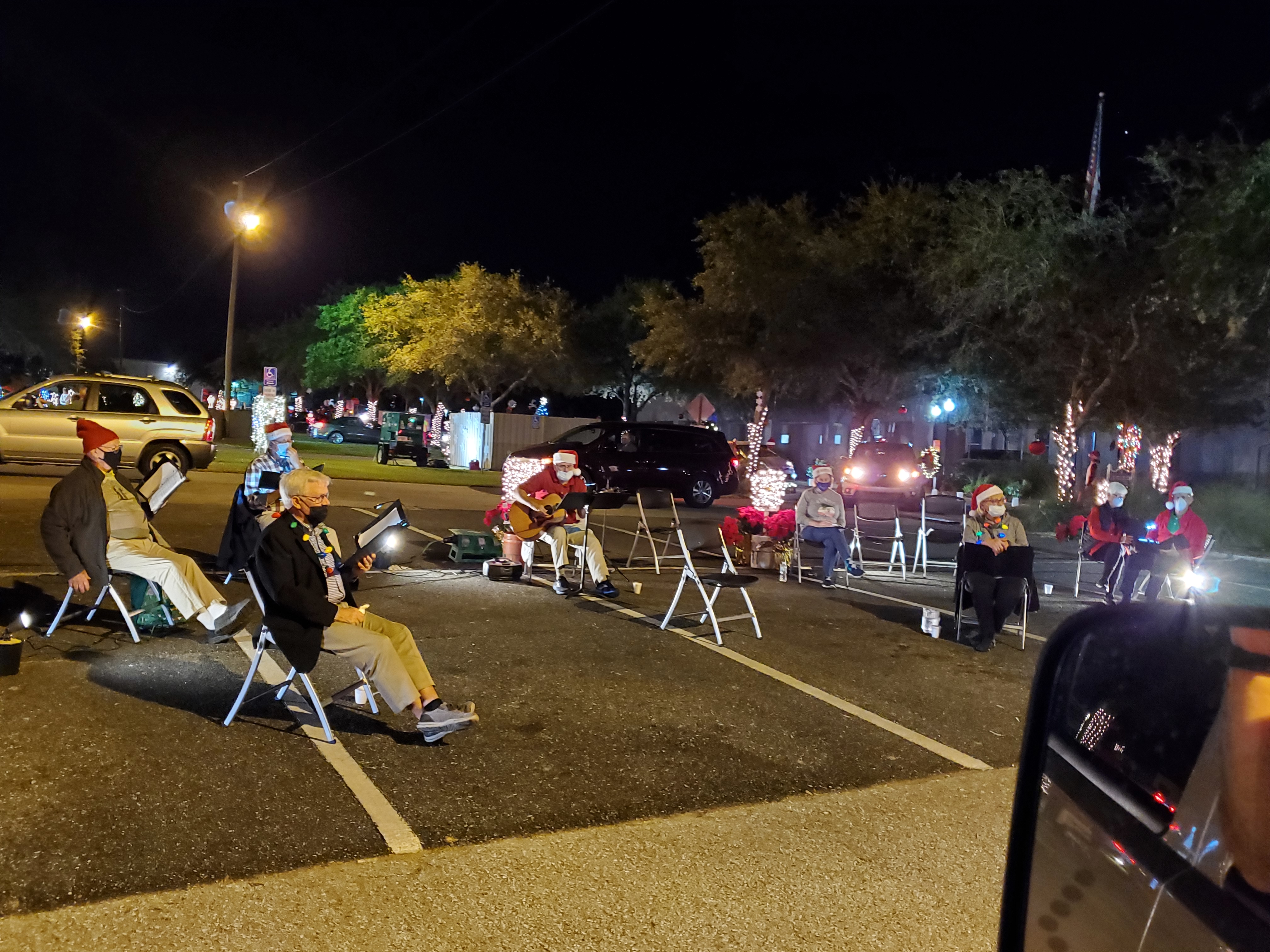
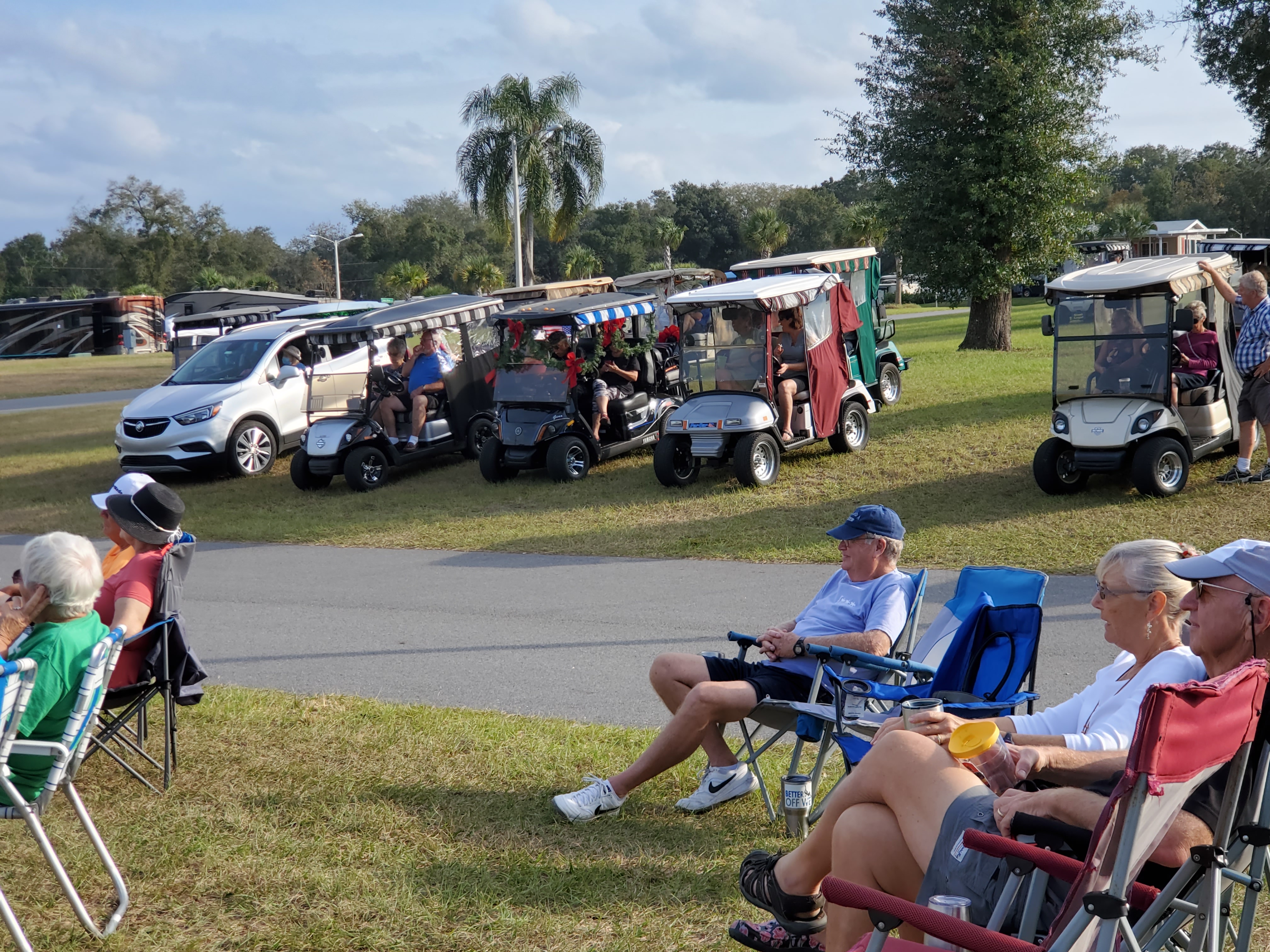
I usually practice playing my guitar outside our RV in the afternoon and many of the people who had stopped by to listen, encouraged me to do a performance for the park. On December 14th I used the back of our pickup for a stage and held a “Music on the Lawn” performance. It was unique, compared to other campgrounds. In the past people would show up with their lawn chairs, but here it was like a “drive in theater” for golf carts! It was fun and I put on my Santa hat to finish the performance with Christmas Carols.
On December 17th the park had a lighted Christmas Parade for golf carts and bicycles. We decorated our bikes with gift wrap and lights. What a lot of fun! Did I tell you there are a lot of golf carts around here? I discovered that Florida has regulations for golf carts and “Low Speed Vehicles” (LSV). LSVs are super golf carts with higher standards (turn signals, exterior rear view mirrors, head lights, and seat belts. These are considered street legal and you see them all over town.
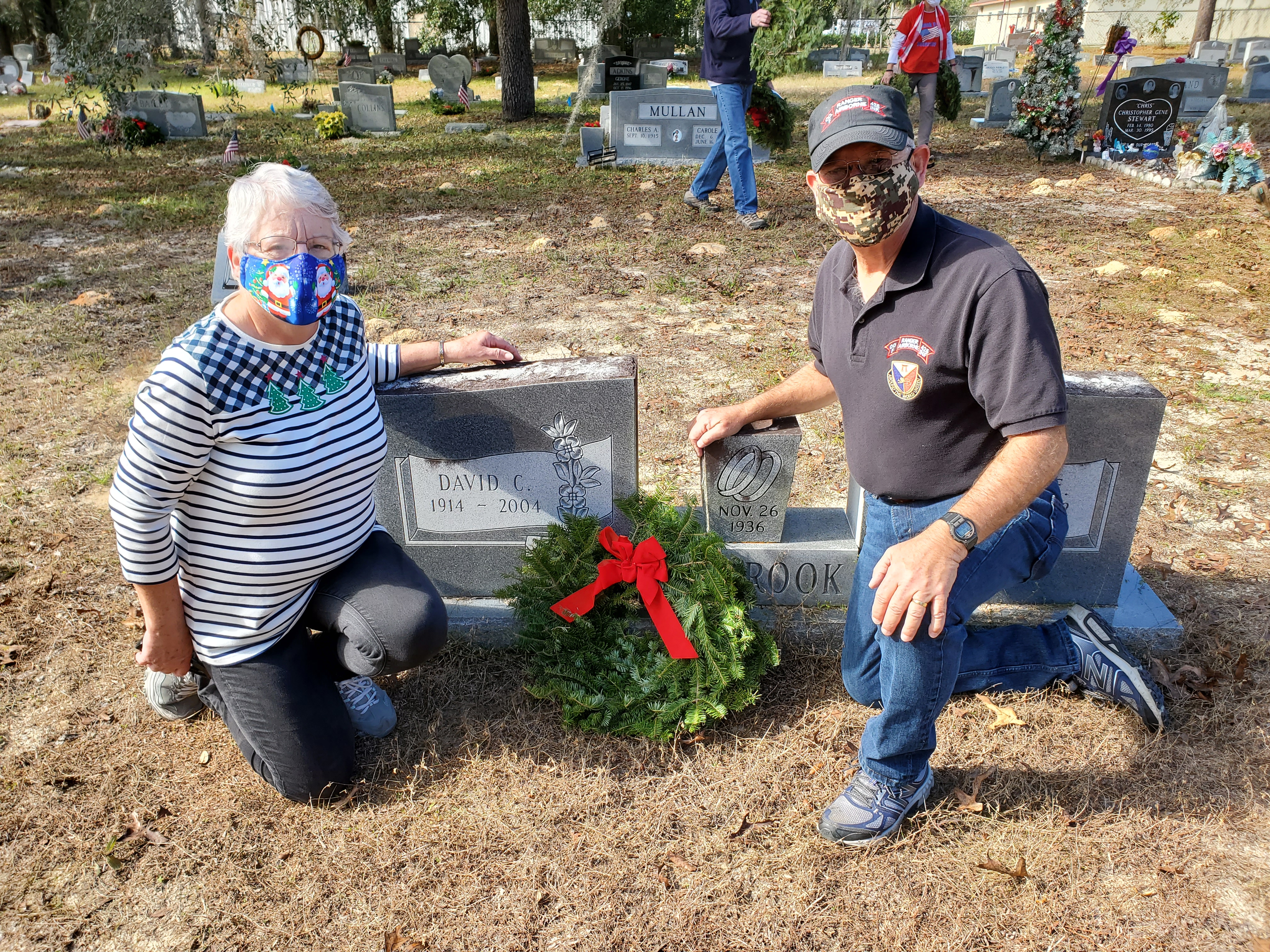
Wreaths Across America is a non-profit charity that coordinates wreath-laying ceremonies at more than 2,100 locations across the United States and abroad While most of the effort is on national cemeteries, some local ones participate. We volunteered this year at the Lady Lake Cemetery.
On December 22nd I gave myself an early Christmas present – a Total Knee Replacement on my right knee. Look for more information on this in a future post.
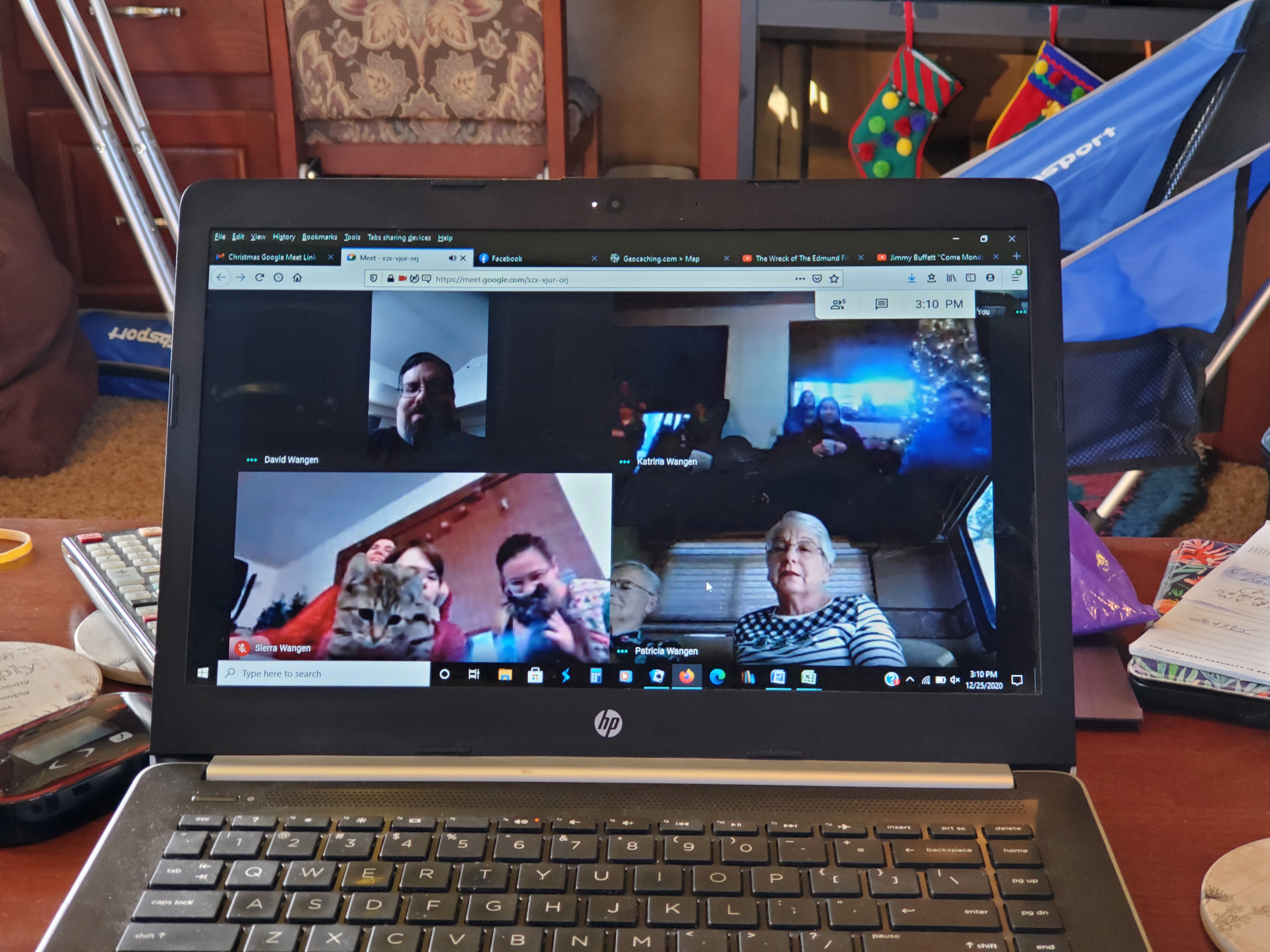
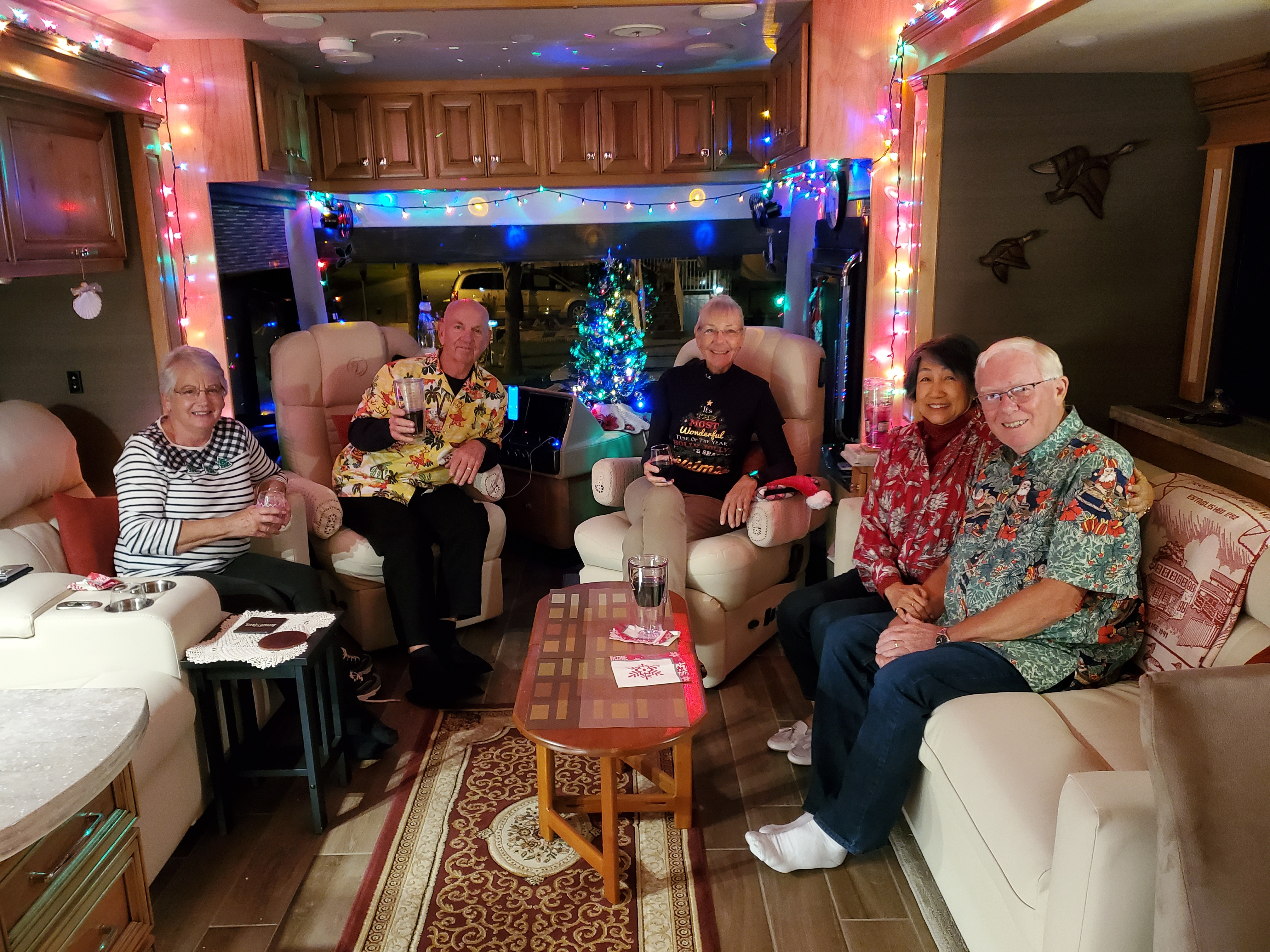
We celebrated Christmas Day with some Key West friends, Roger and Bonnie Ford, and Rusty and Charito Schlagheck. Roger and Bonnie hosted us at their motor home. A great meal with great friends – a true Merry Christmas!
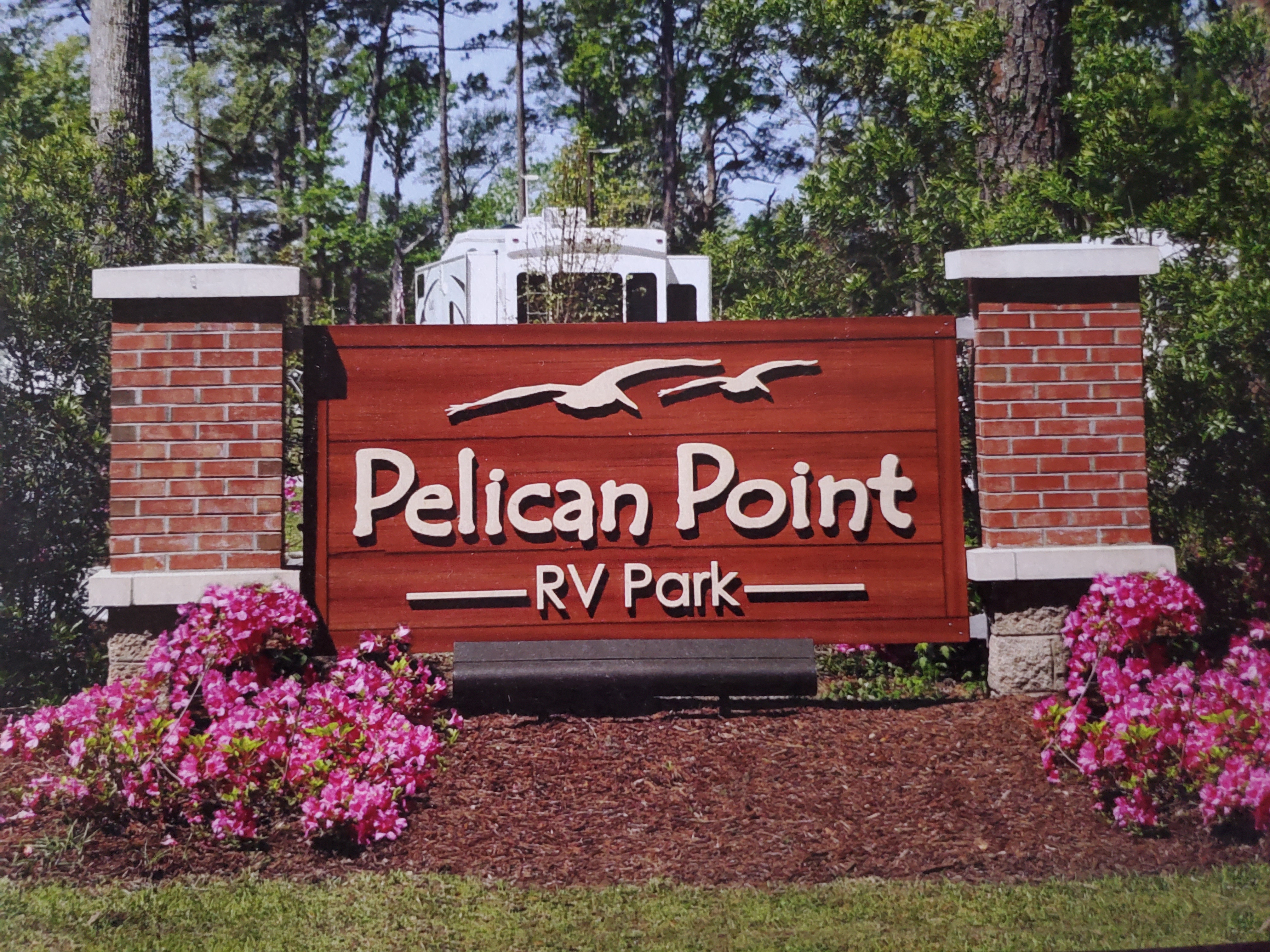
Our decision to stay at the Marine Corps Air Station Cherry Point was not just a whim. It was the right distance along our route to Florida, we had never stayed there before, and we had friends in the area. The last factor was the most important one. Pelican Point RV Park at Cherry Point is a nice, little park. It offers spacious, full hook up sites with concrete pads. It’s away from the main portion of the base, so it quiet, but it’s a short bike ride to get to the Base Exchange and Commissary. There is a kayak launch on to Slocum Creek right next to the RV park.
We met Jim and Cindy Rose at Patrick AFB last year. They started their fulltime RV journey from the Havelok area. I noticed on Facebook that they would be at Cherry Point when we were scheduled through the area. Lynn Hector and Dave and Clara Inscoe are old friends from Key West and live in the area.
It didn’t take long to link up with Jim and Cindy and we met for lunch at their rig. Jim started playing the ukulele while we were at Patrick last year and we spent the afternoon jamming and sharing songs with each other. Unfortunately we were having so much fun I forgot to take any pictures!
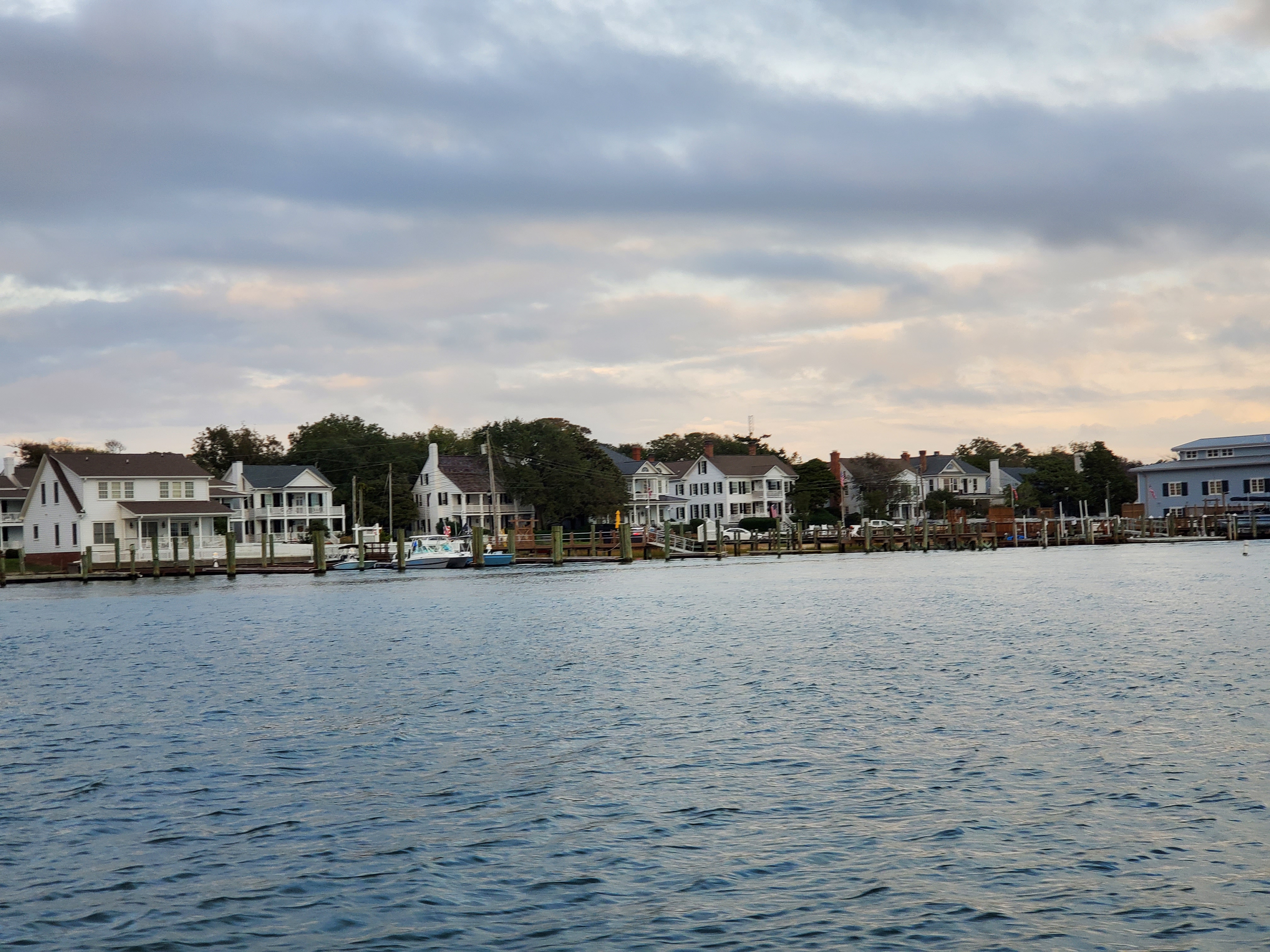
One day we picked up Lynn at her house and drove to meet Dave and Clara at their place in Beaufort, NC. Beaufort is a picturesque community, right on the Atlantic coast near Cape Lookout.
The weather wasn’t very good and we hung out and talked until it cleared a bit. Dave and Clara took us on a boat ride around the Beaufort waterfront and regaled us with stories of fishing the area. They live in the house Clara grew up in and the history was entertaining. Clara’s ancestors had been lighthouse keepers at Cape Lookout and Cape Hatteras, and her dad had been a boat builder.
Dinner that night was fish fresh caught by Dave and Clara the previous day. Wow! There was plenty to eat and it was delicious.
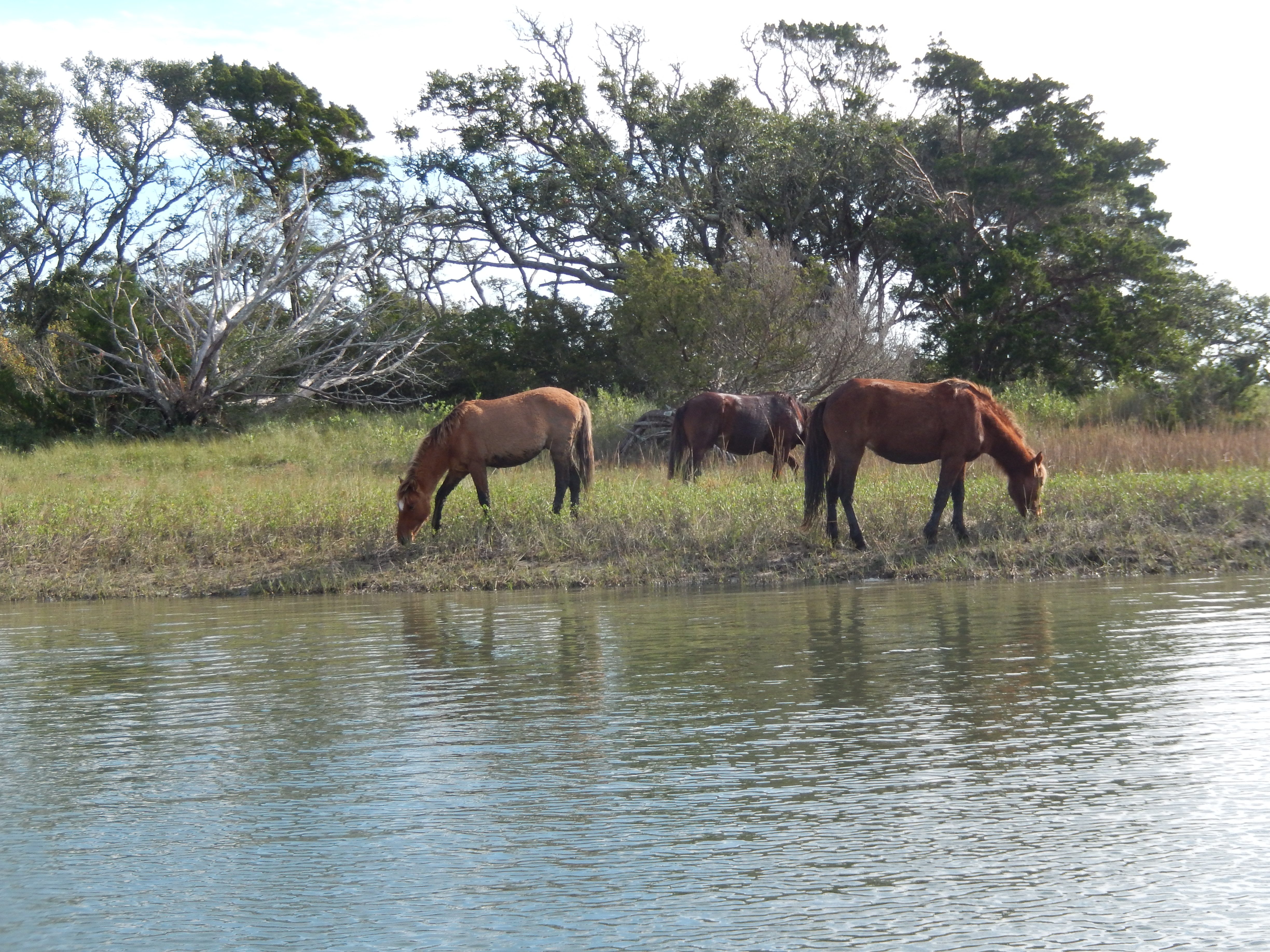
Dave and I tried to get out sailing a couple of times but the winds were either too strong or too light and we couldn’t make it happen. However, we were able to get back out on their boat when Dave took Pat and I out to Shackleford Banks. This is part of the National Park Service and is only accessible by boat. We walked the beach and picked up shells and had a lot of fun. Dave is a great tour guide with a host of historical knowledge about the area.
We hung out for the remainder of the time we were there and left on November 4th en-route to Recreation Plantation in Lady Lake, FL.
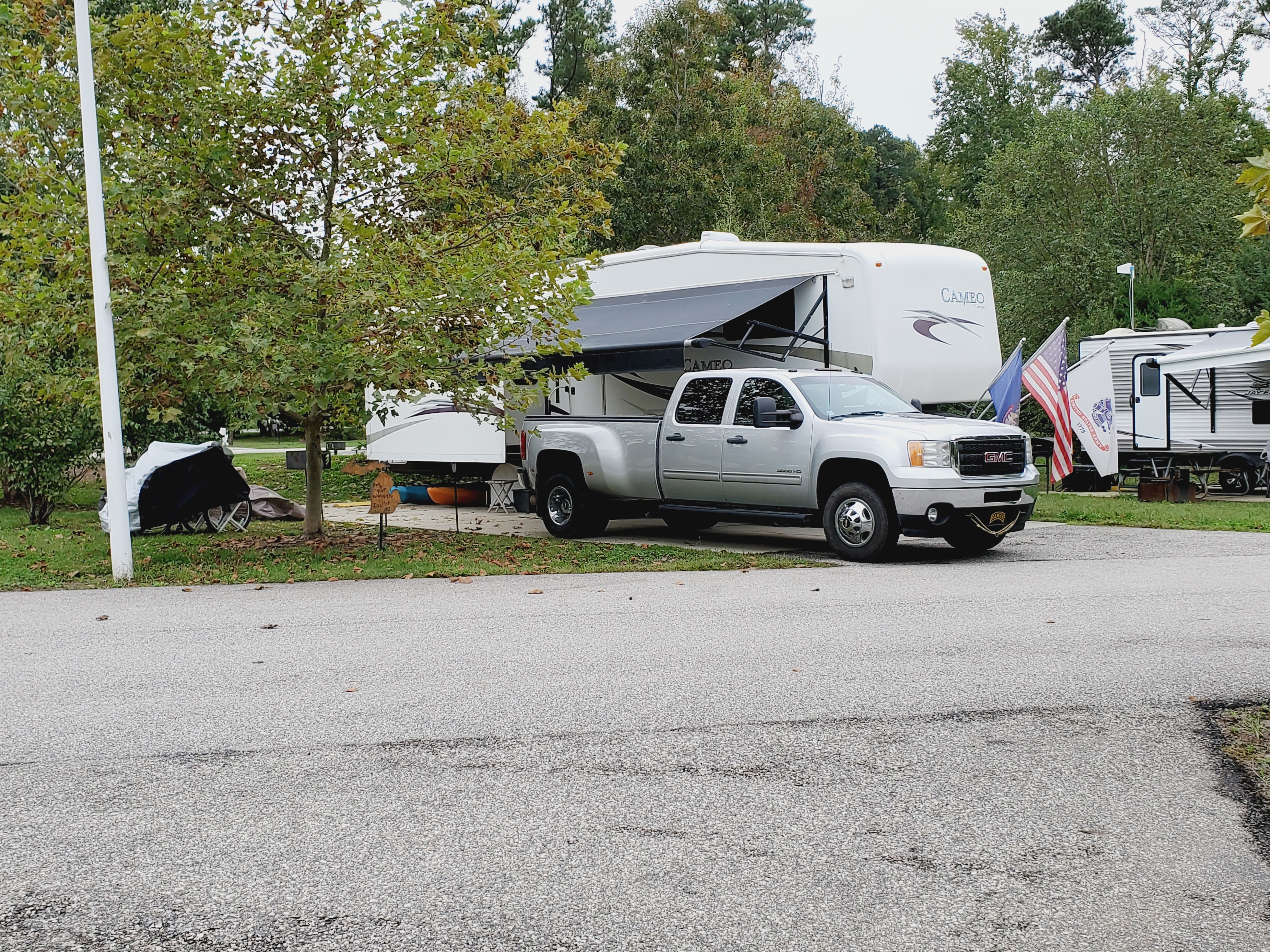
We traveled from Maryland to Virginia and camped at the Kings Creek RV Park at the Yorktown Naval Weapons Station. This is a very nice park with concrete pads and full hookups. It is well off the beaten path which is a mixture of good and bad. It’s good because it is nice and quiet. It’s not so good because it is not close to much of anything. Fortunately it is in the middle of the Historic Triangle. The Historic Triangle includes the three historic colonial communities of Jamestown, Colonial Williamsburg, and Yorktown. What a great base to explore Colonial America!
We started our exploration by visiting the Yorktown Battlefield. The COVID-19 pandemic is causing many modifications to local attractions. Many of the local museums and exhibits are either closed or limited in scope. For example, the Yorktown Battlefield Visitor Center is closed, but the battlefield can still be toured. There was a Ranger on duty outside the Visitor Center to give advice, maps, and guides, but no Ranger-led tours. On his advice, we downloaded the Yorktown Tour App (available for iPhone and Android). This provided us with a narration for every stop on the Battlefield. The app also includes a tour for Historic Yorktown.
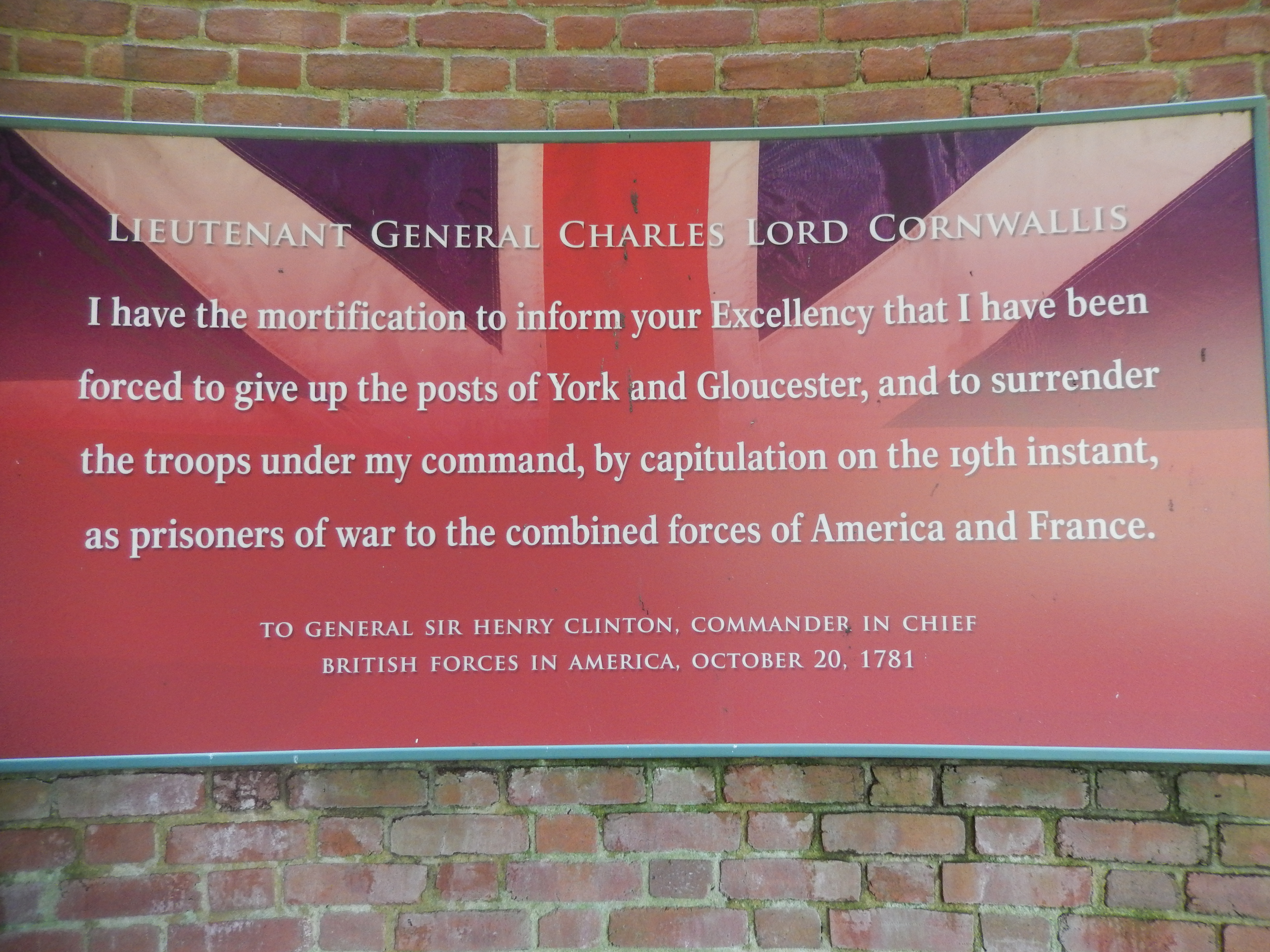
The Battle of Yorktown was a decisive victory by a combined force of American Continental Army troops led by General George Washington, and French Army troops led by the Comte de Rochambeau. They defeated the British army commanded by General Charles Cornwallis. The siege proved to be the last major land battle of the American Revolutionary War. The surrender by Cornwallis prompted the British government to negotiate an end to the conflict.
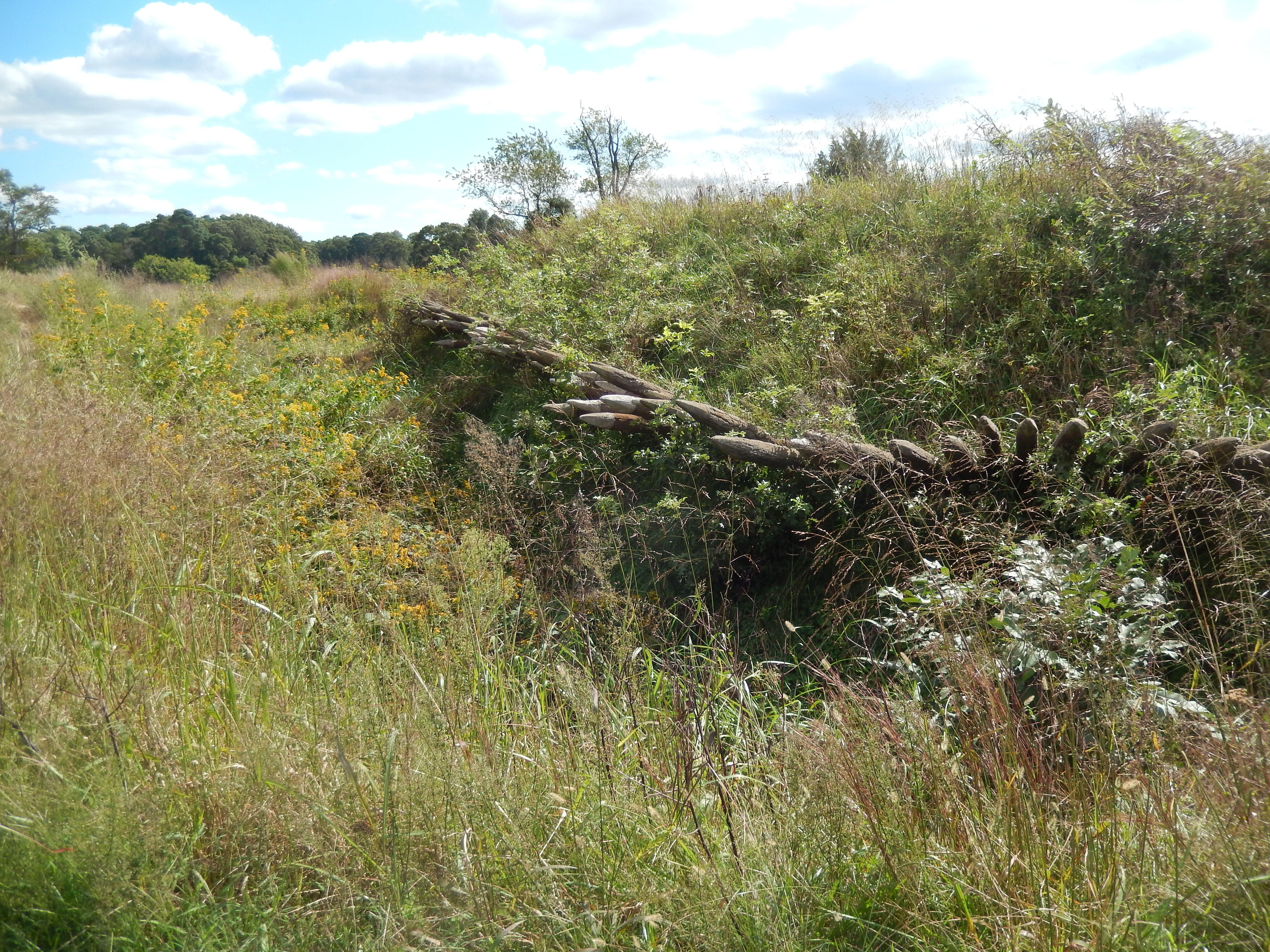
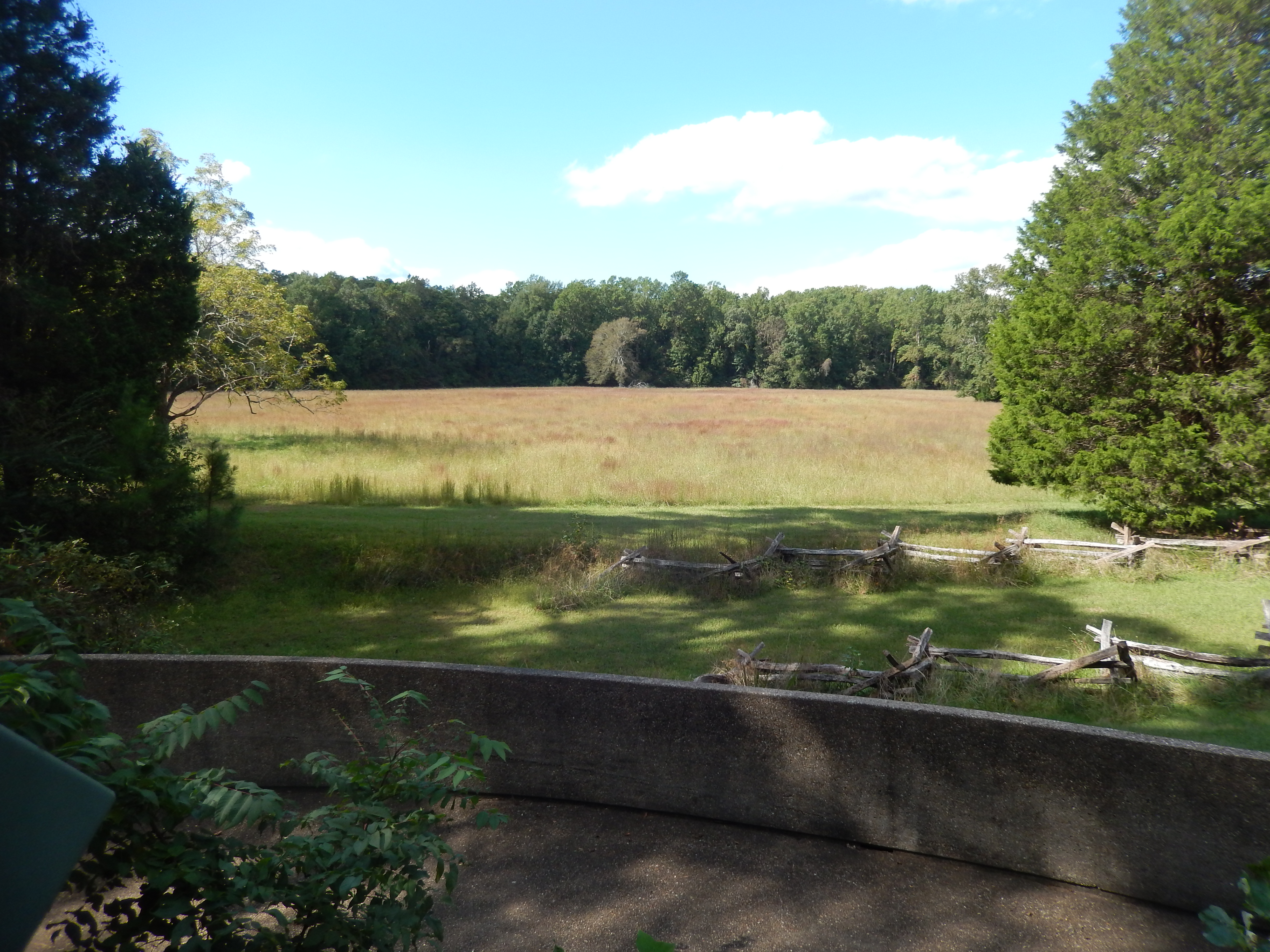
The guide led us to the critical places on the battlefield. The two places that impressed me the most were Redoubts 9 and 10 and the Surrender Field. Redoubts 9 and 10 were part of the outer fortifications of the British Army. The Americans and French could not defeat Cornwallis until these positions were taken. On the night of October 14, 1781, the French attacked Redoubt 9 and the Americans attacked Redoubt 10. The allies approached with unloaded muskets and fixed bayonets. Sappers (Engineer soldiers) led the way with axes to chop through the log abatis (log obstacles) that protected the redoubt. Looking inside the redoubts I was amazed that the defenders and attackers would even fit inside. The attacks were successful and the defeat of Cornwallis’ Army was close at hand. The assault on Redoubt 10 is even highlighted in the National Infantry Museum at Fort Benning, GA.
The Surrender Field was where the British Army formally surrendered to the French and the Americans. General Cornwallis claimed illness so he wouldn’t have to personally surrender to what he felt was an inferior enemy. When Cornwallis’ deputy General O’Hara, leading the British troops, tried to surrender to the French, General Rochambeau calmly pointed to General Washington. Washington was so enraged by Cornwallis’s snub that he directed his Deputy Commander, General Benjamin Lincoln to accept the surrender.
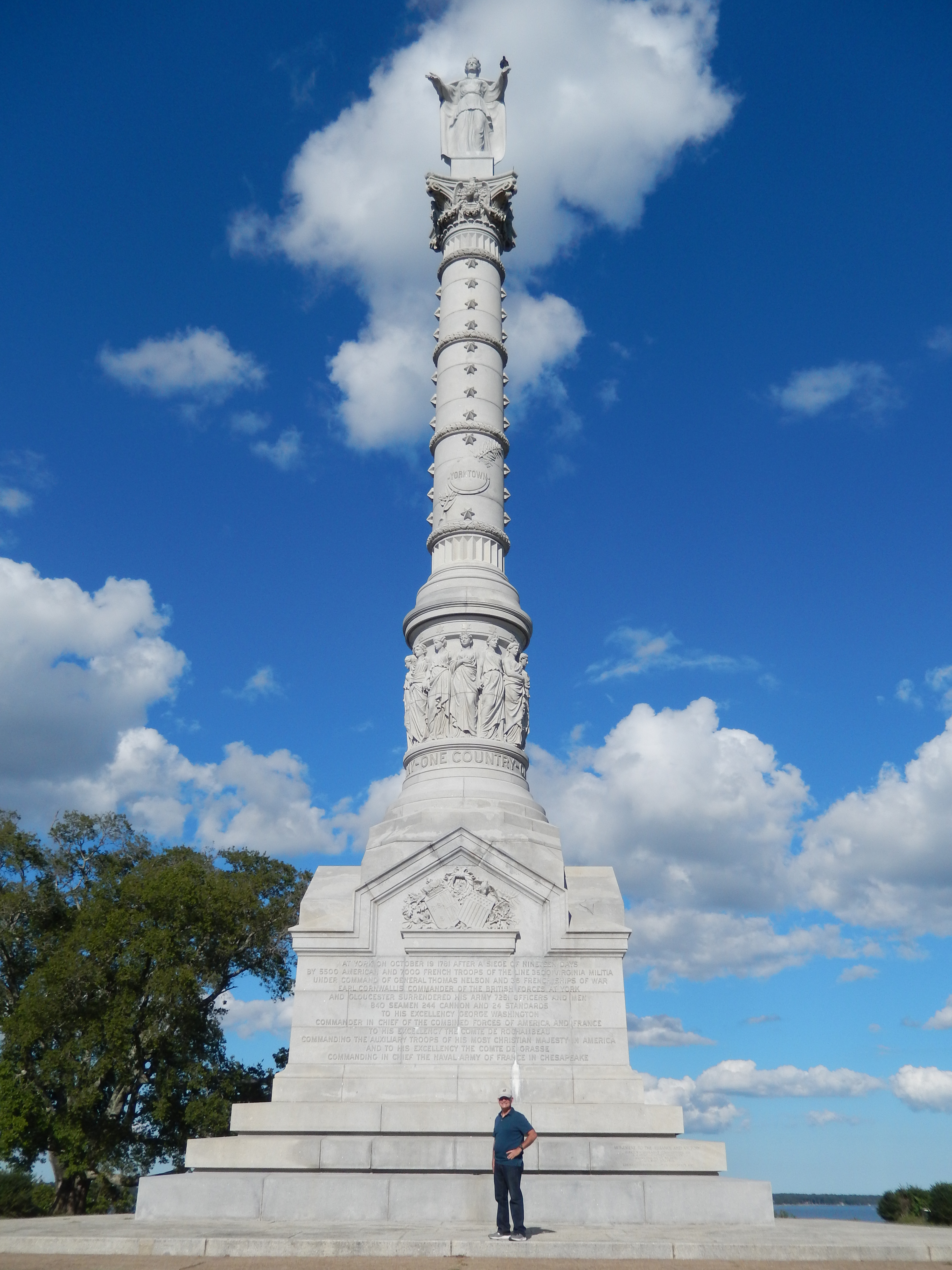
After the Battlefield Tour we parked and walked around Yorktown. It’s a small, quiet community and it made me wonder what it must be like to live in a “living museum.” We visited the Yorktown Victory Monument. On October 24, 1781, LTC Tilghman, Washington’s Aide de Camp, reached Philadelphia and advised the Continental Congress of Washington’s victory at Yorktown. Five days later the Congress authorized the construction of the Victory Monument. It was to be, “a marble column, adorned with emblems of the alliance between the United States and his Most Christian Majesty.” However, the monument was not constructed until 100 years later. This should have been an early warning to anyone who expected the government to act quickly on anything.
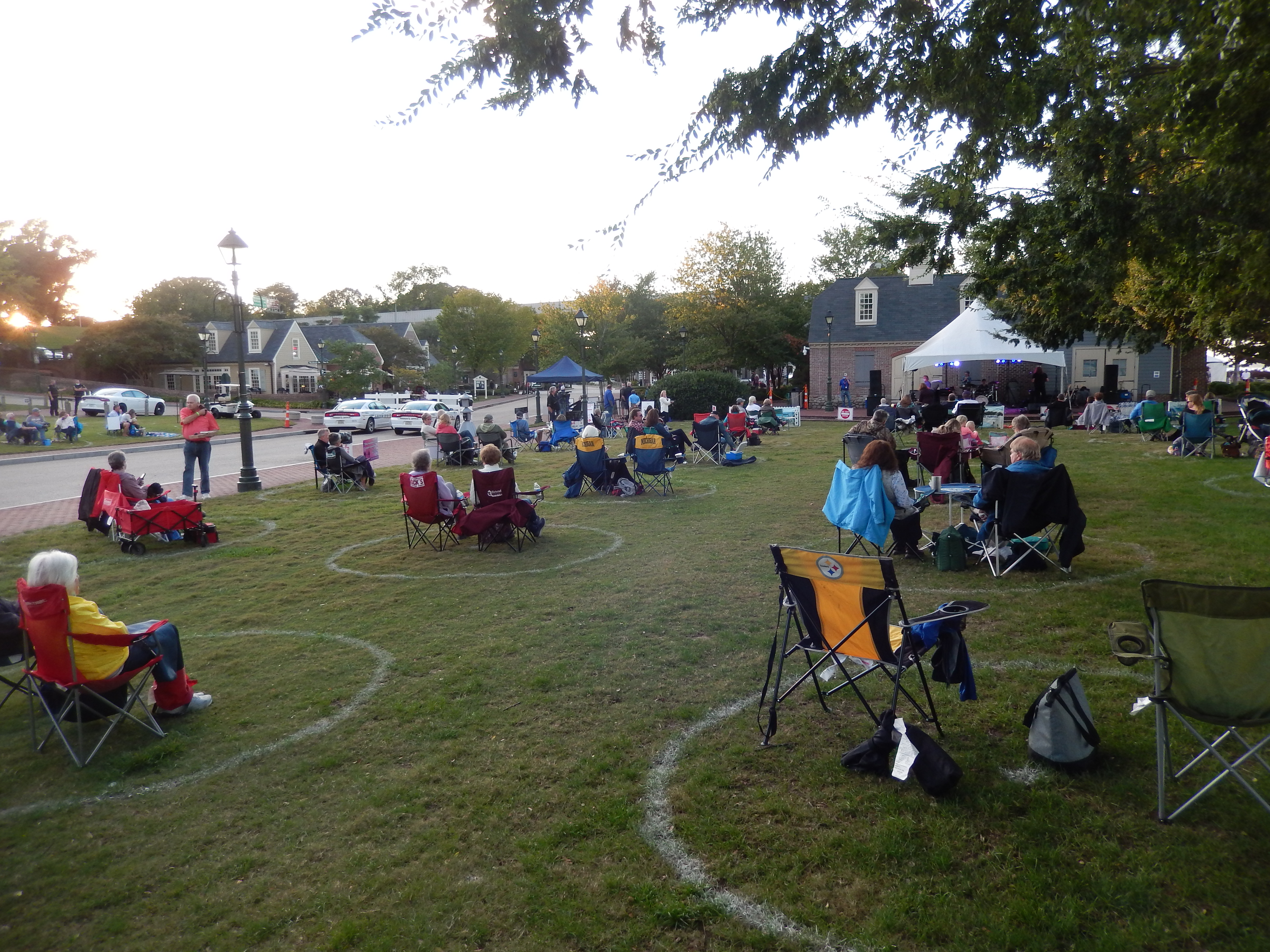
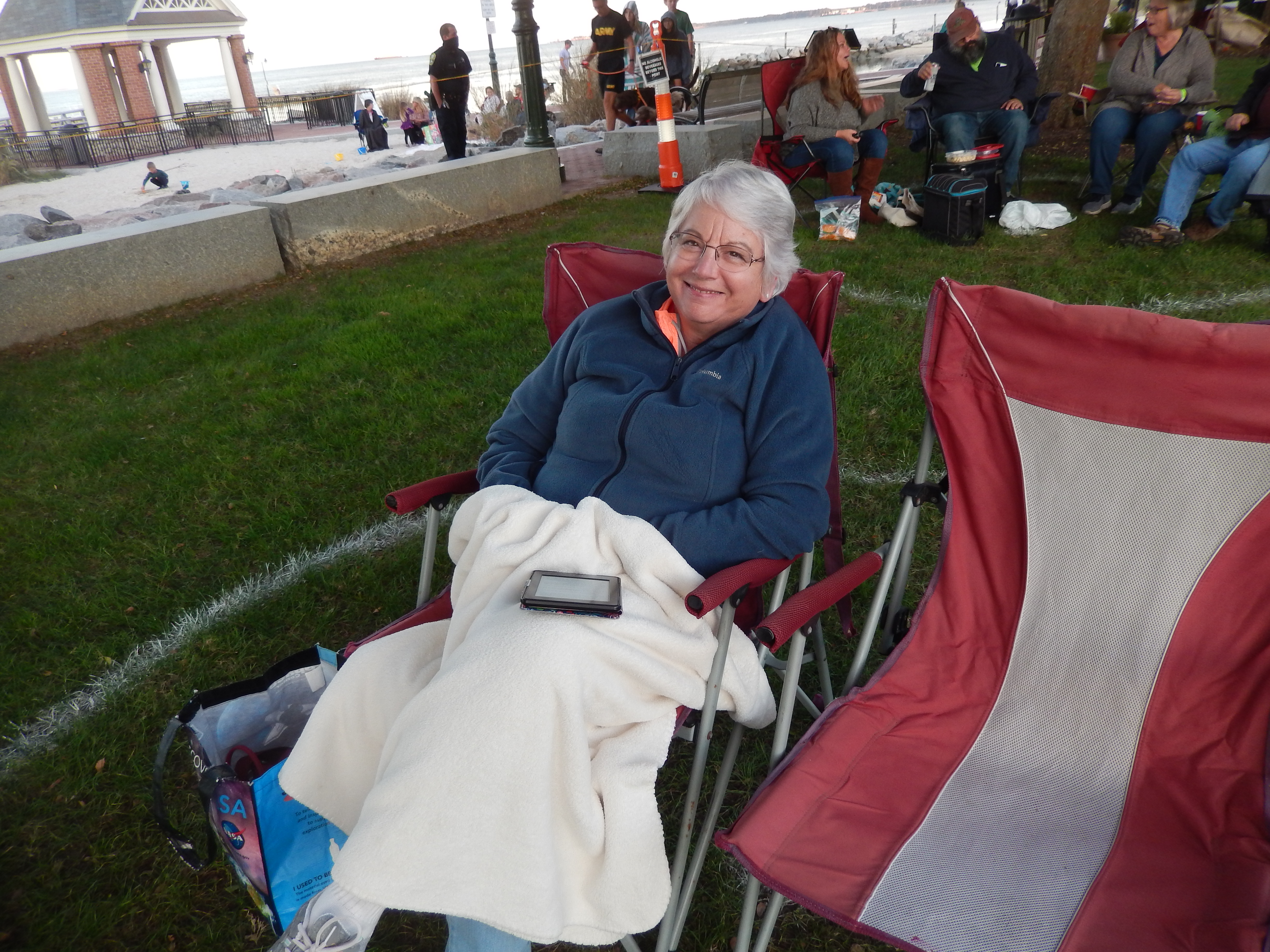
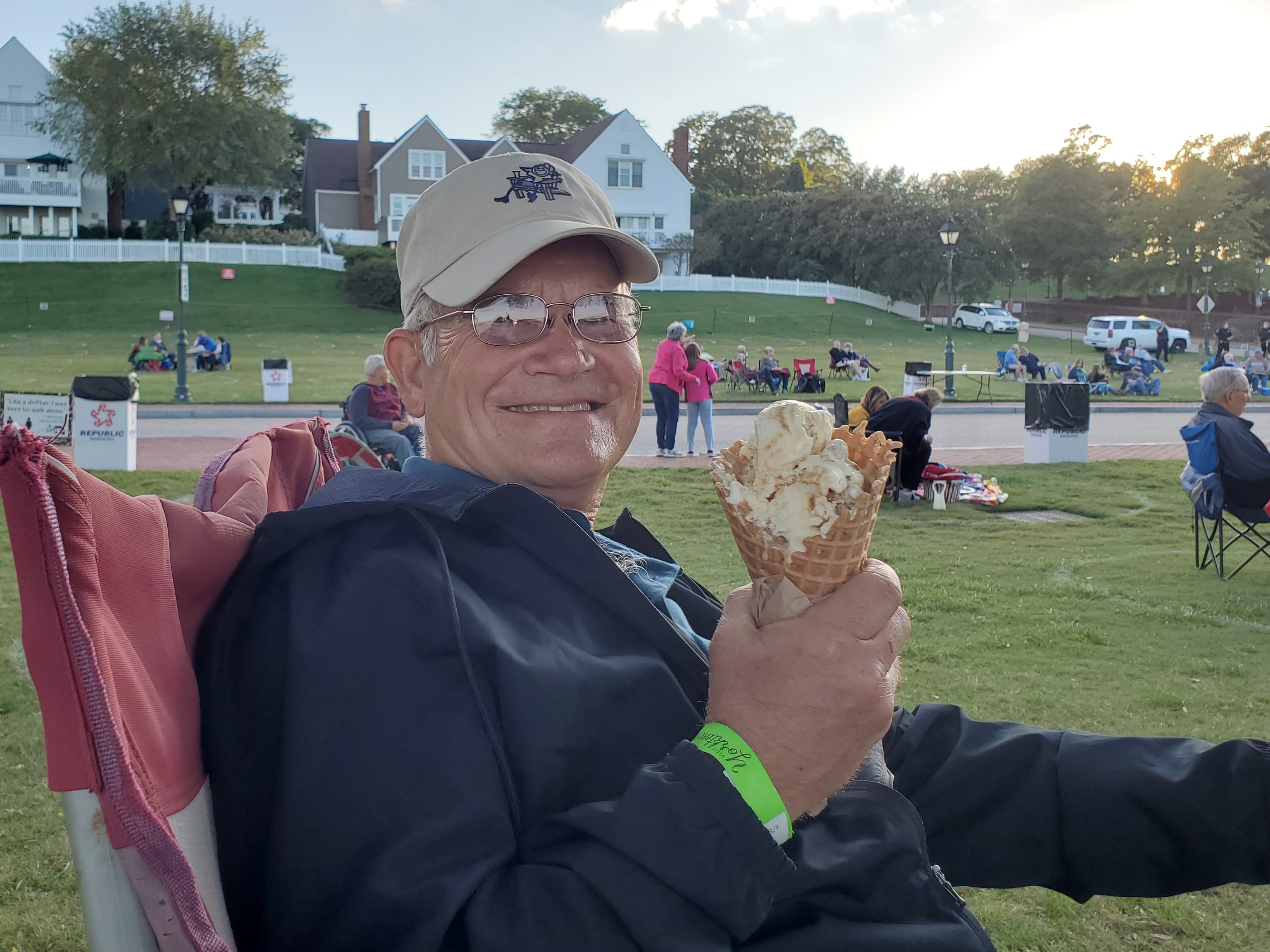
After dinner at the Yorktown Pub, we walked to the Yorktown Riverwalk Landing and attended an outdoor concert. This was part of a series of free concerts presented by York County and we enjoyed both the setting and the music. Ice cream cones from Ben & Jerry’s was a special treat!
On Sunday we explored the Jamestown Settlement. We drove to the Chickahominy Riverfront Park and rode our bikes along the Virginia Capital Trail to the Jamestown Settlement, a seven-mile ride, one-way. The Jamestown Settlement is operated by the State of Virginia and the nearby Jamestown Island is operated by the National Park Service.
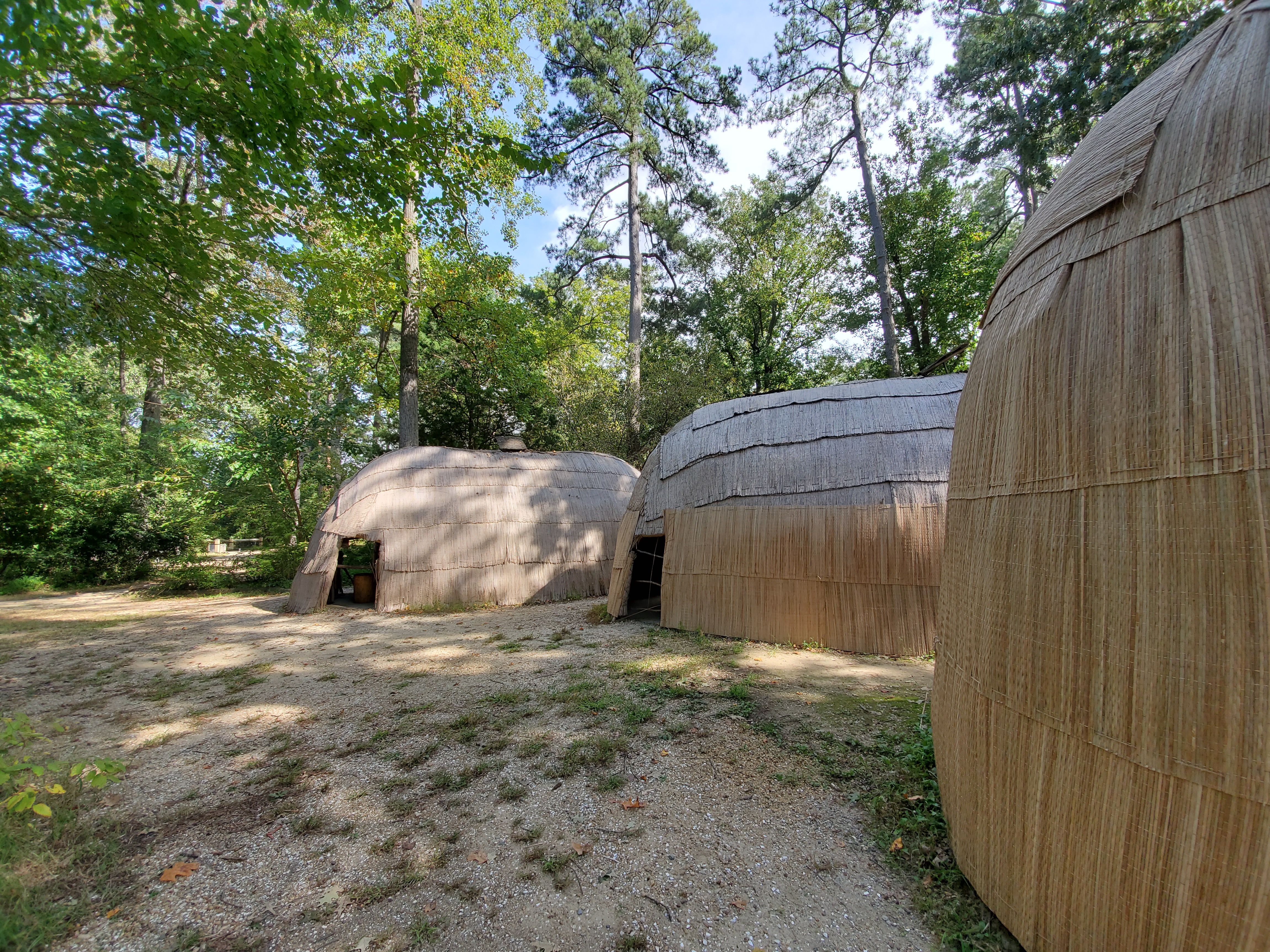
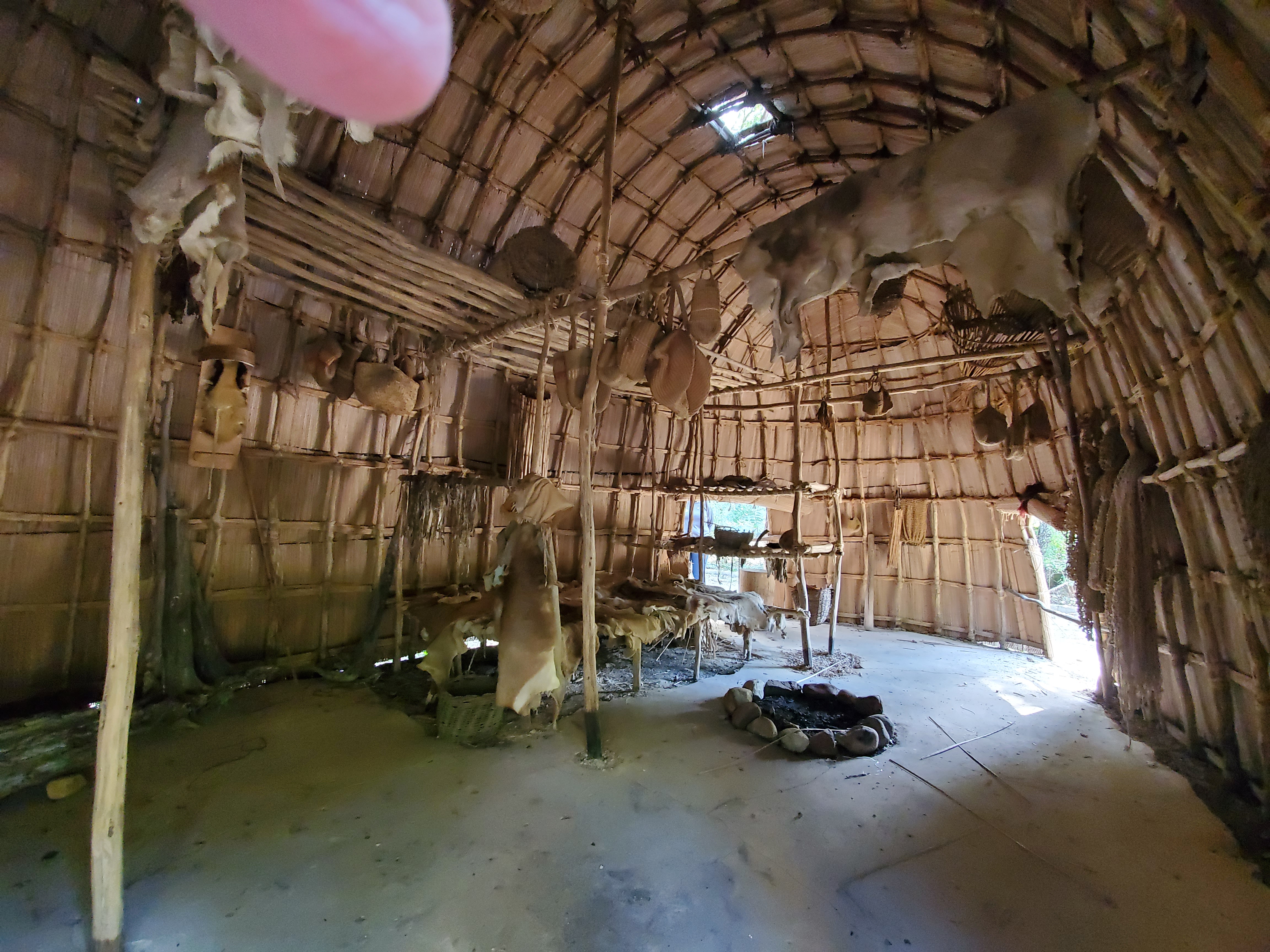
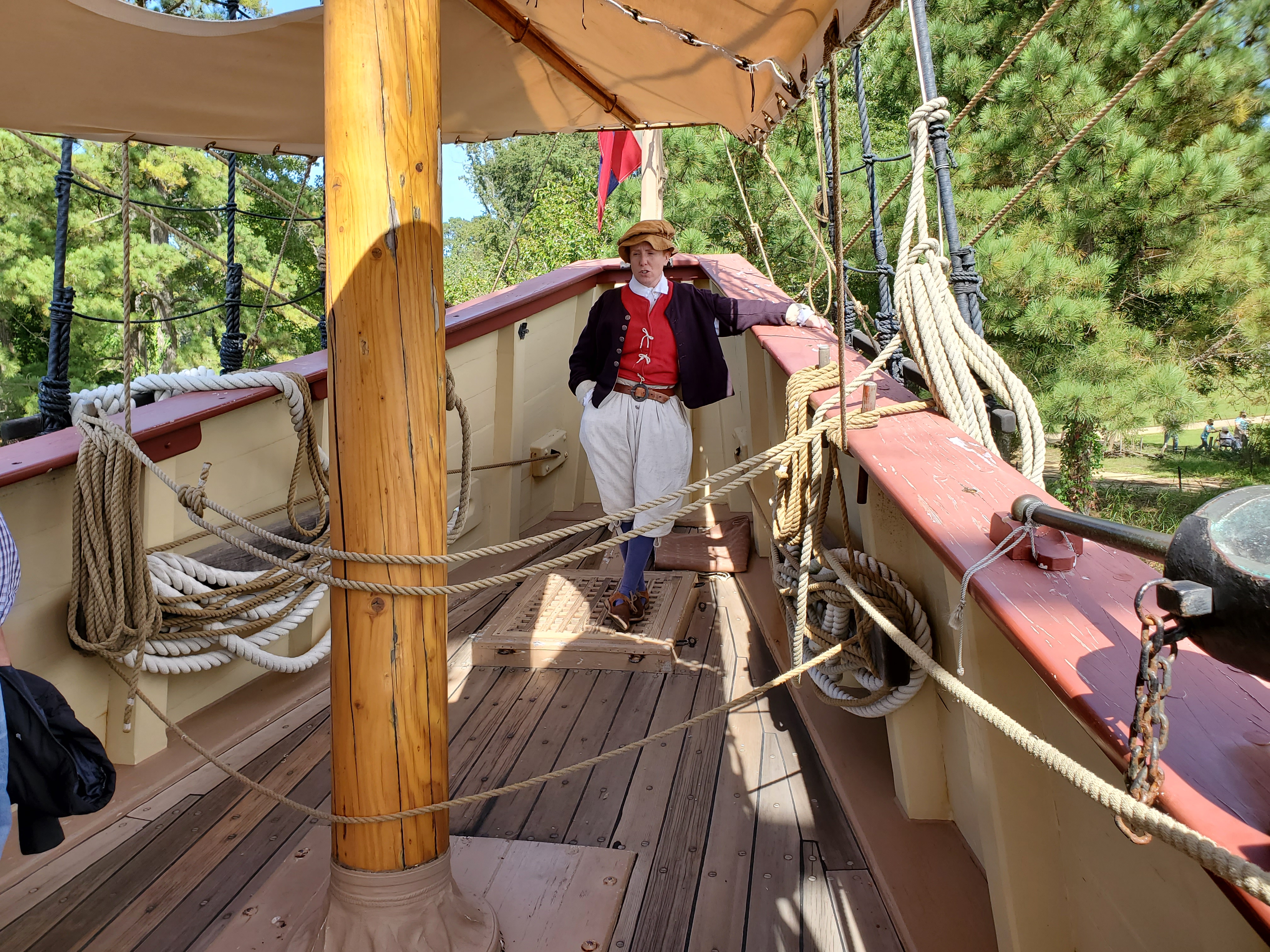
The Jamestown Settlement is a good mix of indoor and outdoor exhibits. All of the outdoor exhibits have living history docents to explain and demonstrate how the early settlers lived. Our first stop was the Powhatan Village.
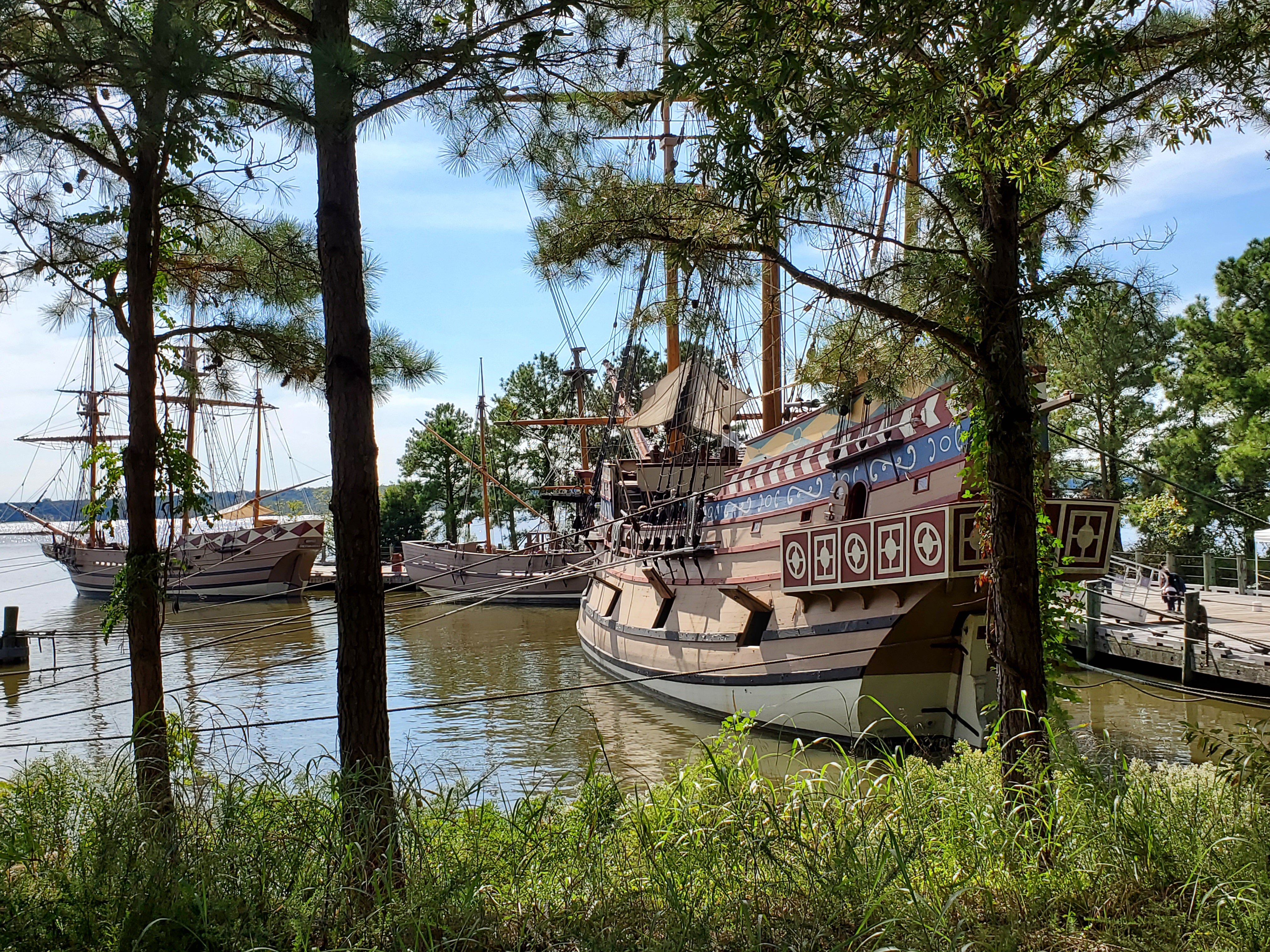
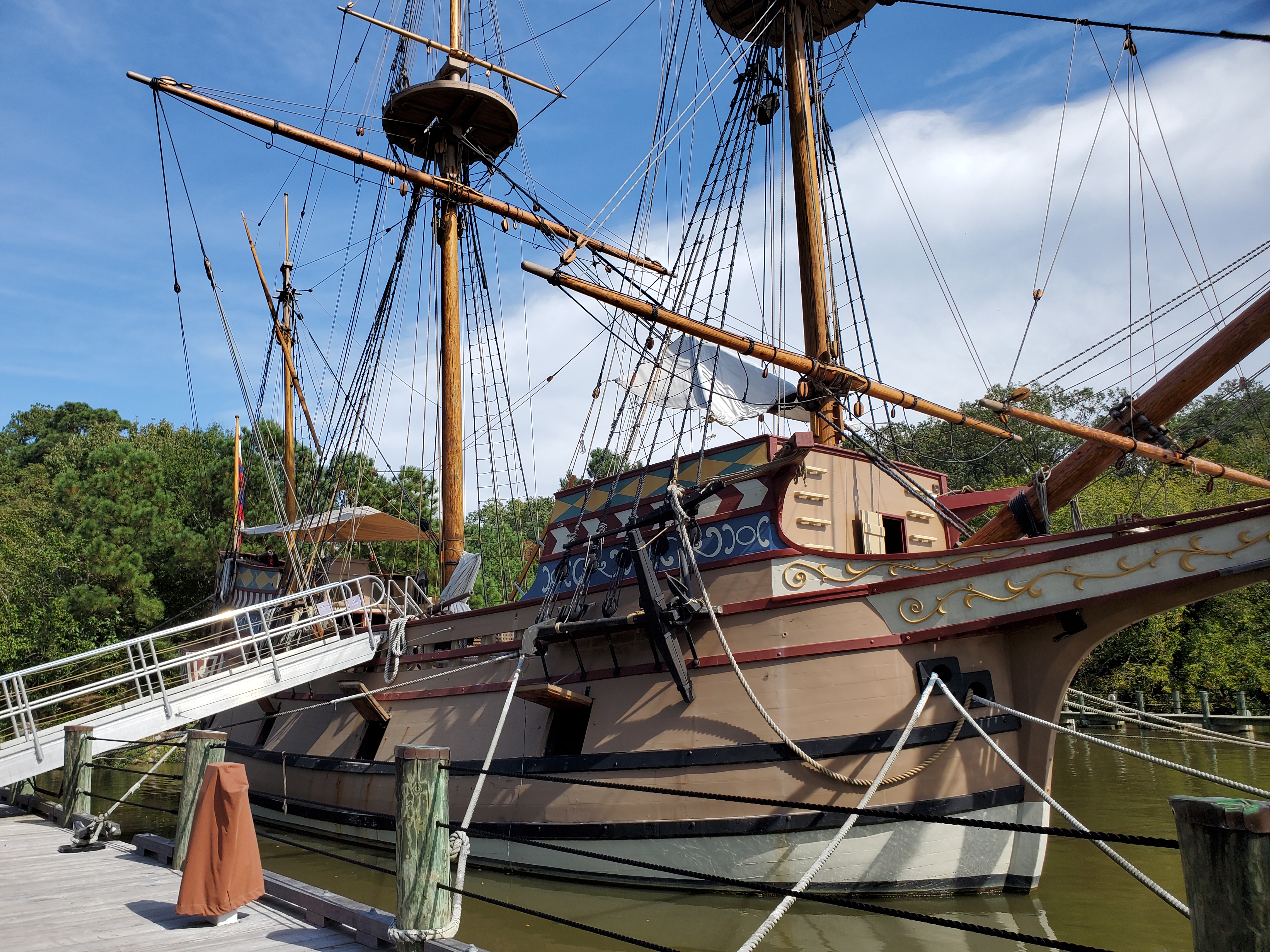
Next stop was the Jamestown Wharf. Here we were able to board and explore a replica of the Susan Constant, one of the three ships the original Jamestown settlers traveled aboard from England. A new fact I learned was that the passengers were considered cargo and had no living quarters. They would eat and sleep on the exposed deck or wedged in among the casks and bundles of the non-human cargo. I can’t imagine how much fun a cross-Atlantic voyage would have been in those conditions!
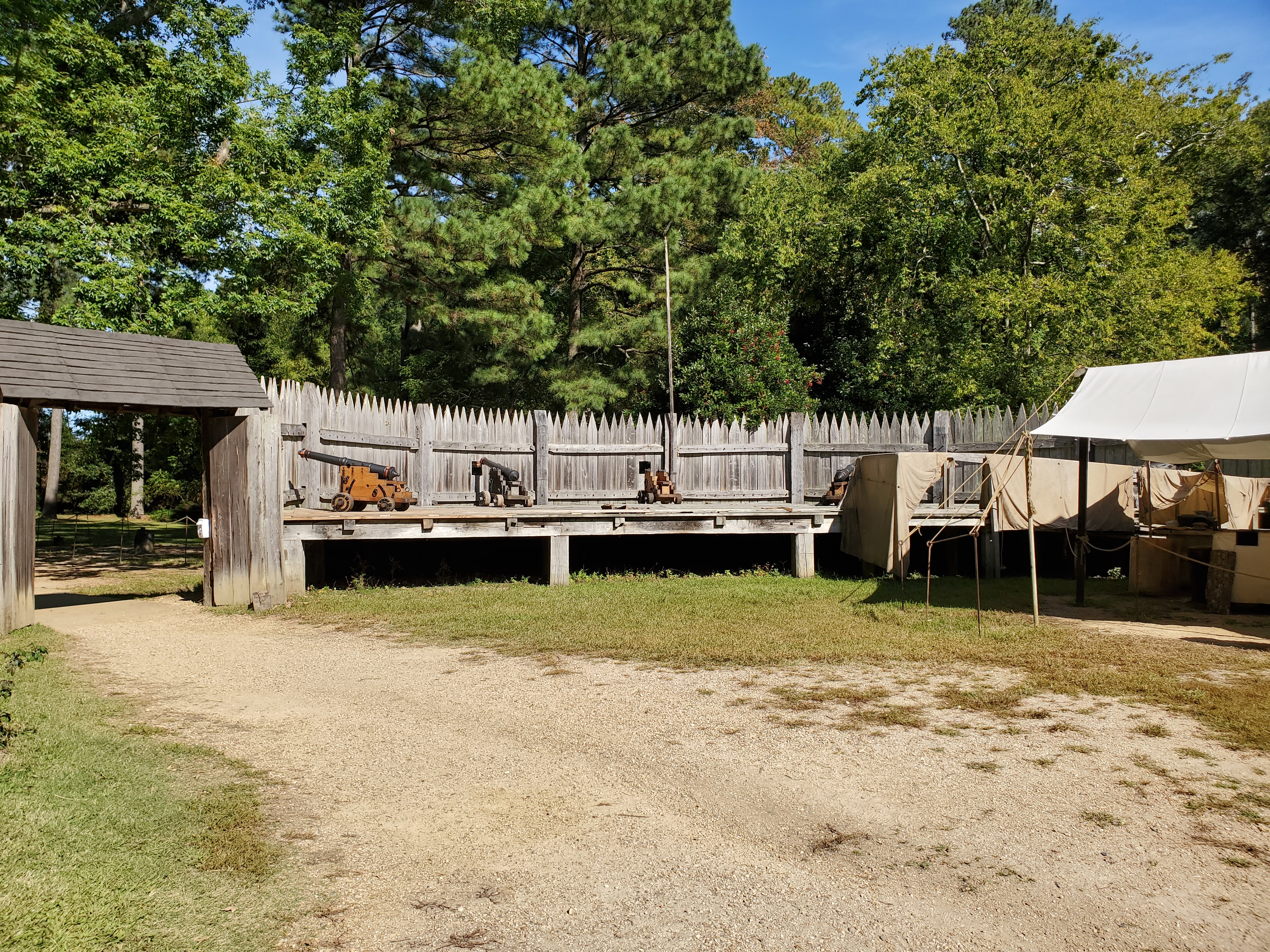
James Fort was constructed to protect the settlers from foreign attackers and the local Indian tribes. Throughout the days of the settlement, relations with the Indian tribes were tenuous. The spread of the settlers into traditional Indian hunting grounds was a constant irritant and the poor communications between the two groups only acerbated the situation. For example; in 1609, Chief Powhatan ordered a siege of James Fort that led to the “Starving Time” that killed all but 60 of the settlers. The folk tale of Pocahontas marrying John Smith is mere fiction. In fact she was kidnapped in a raid by the settlers. However, she did marry John Rolfe in 1614, a marriage that resulted in a seven-year peace.
The inside exhibits are impressive. They describe, in detail, the challenges faced by the settlers and the Indians as they strove to coexist in the area.
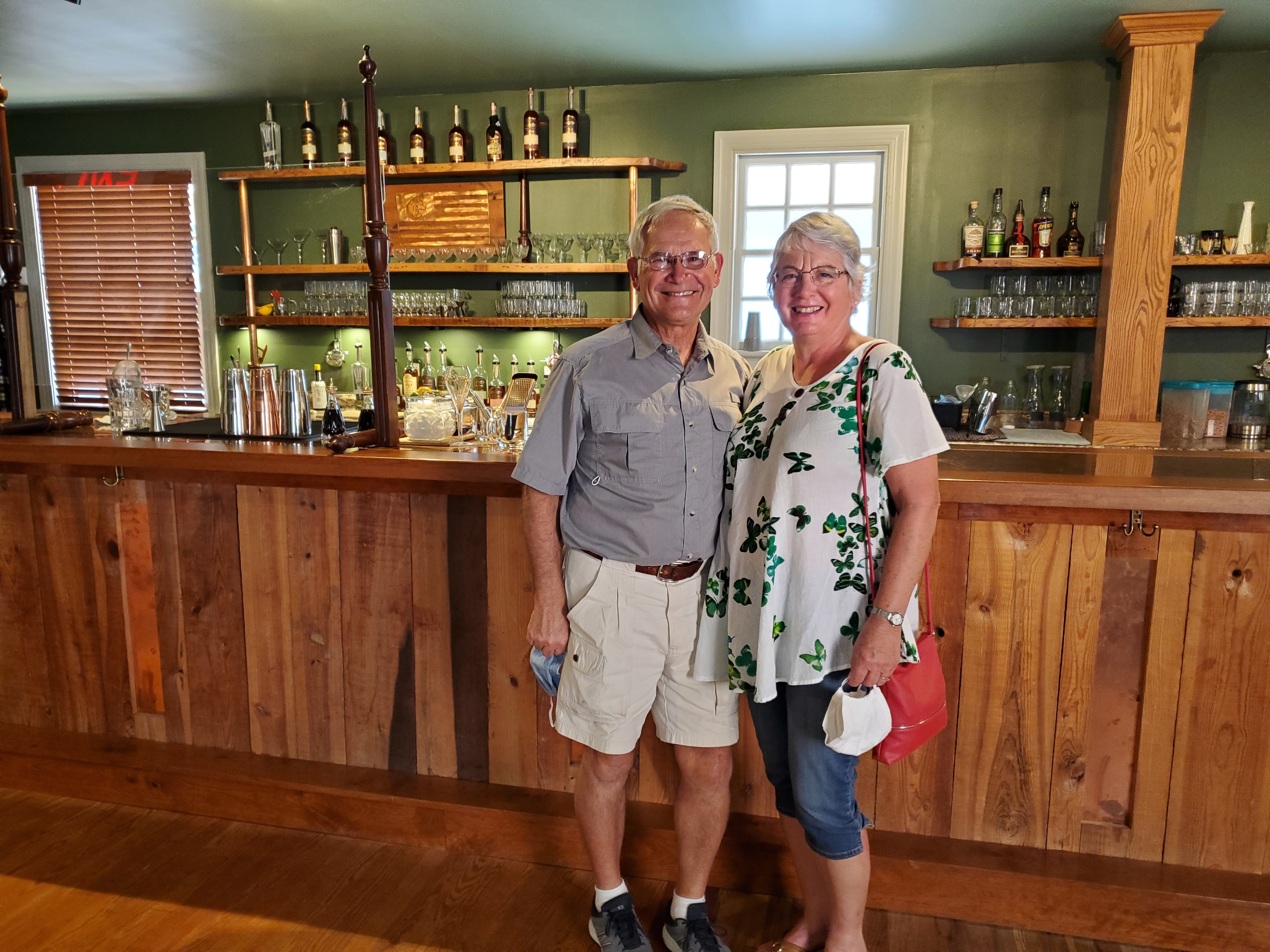
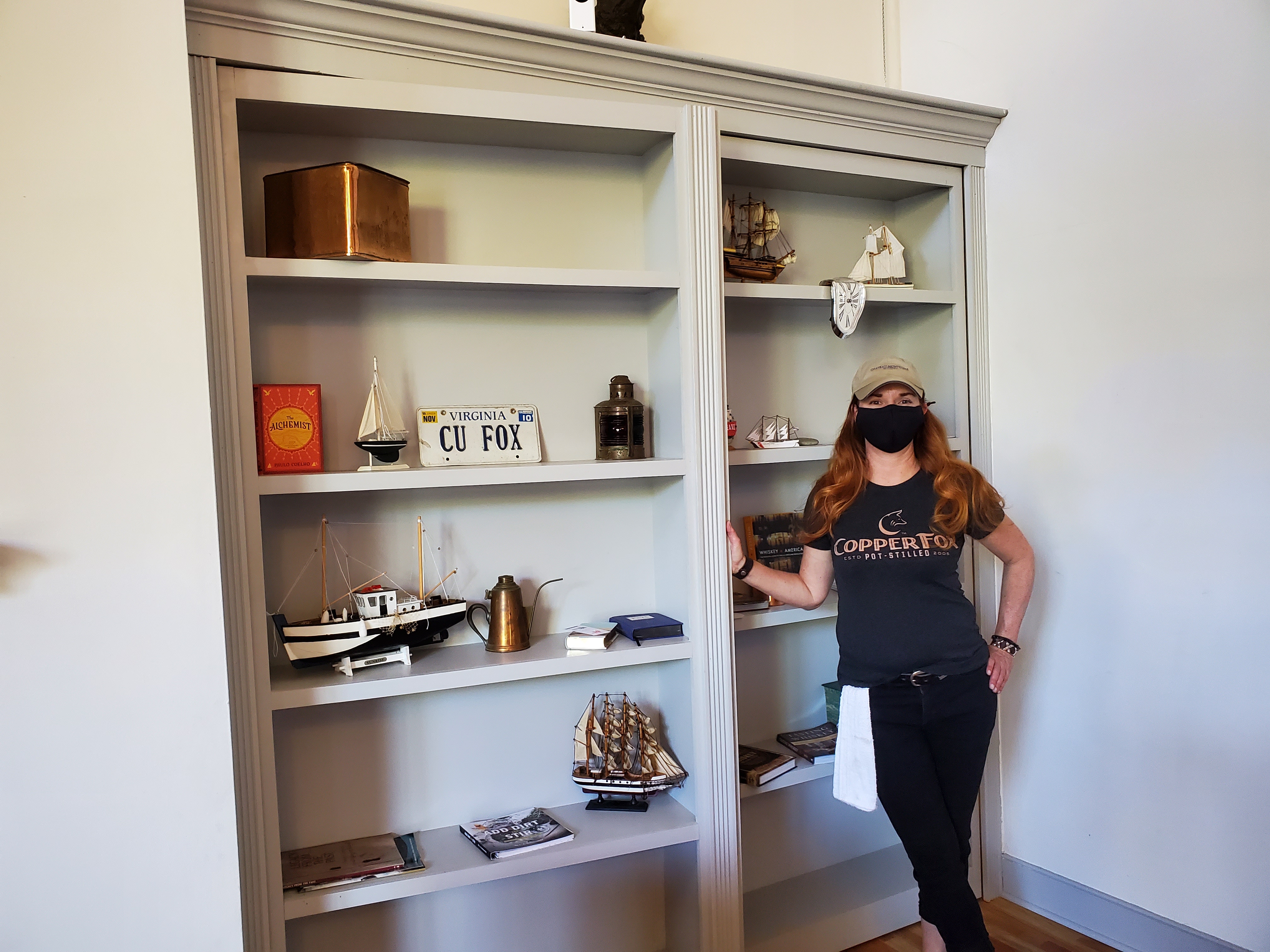
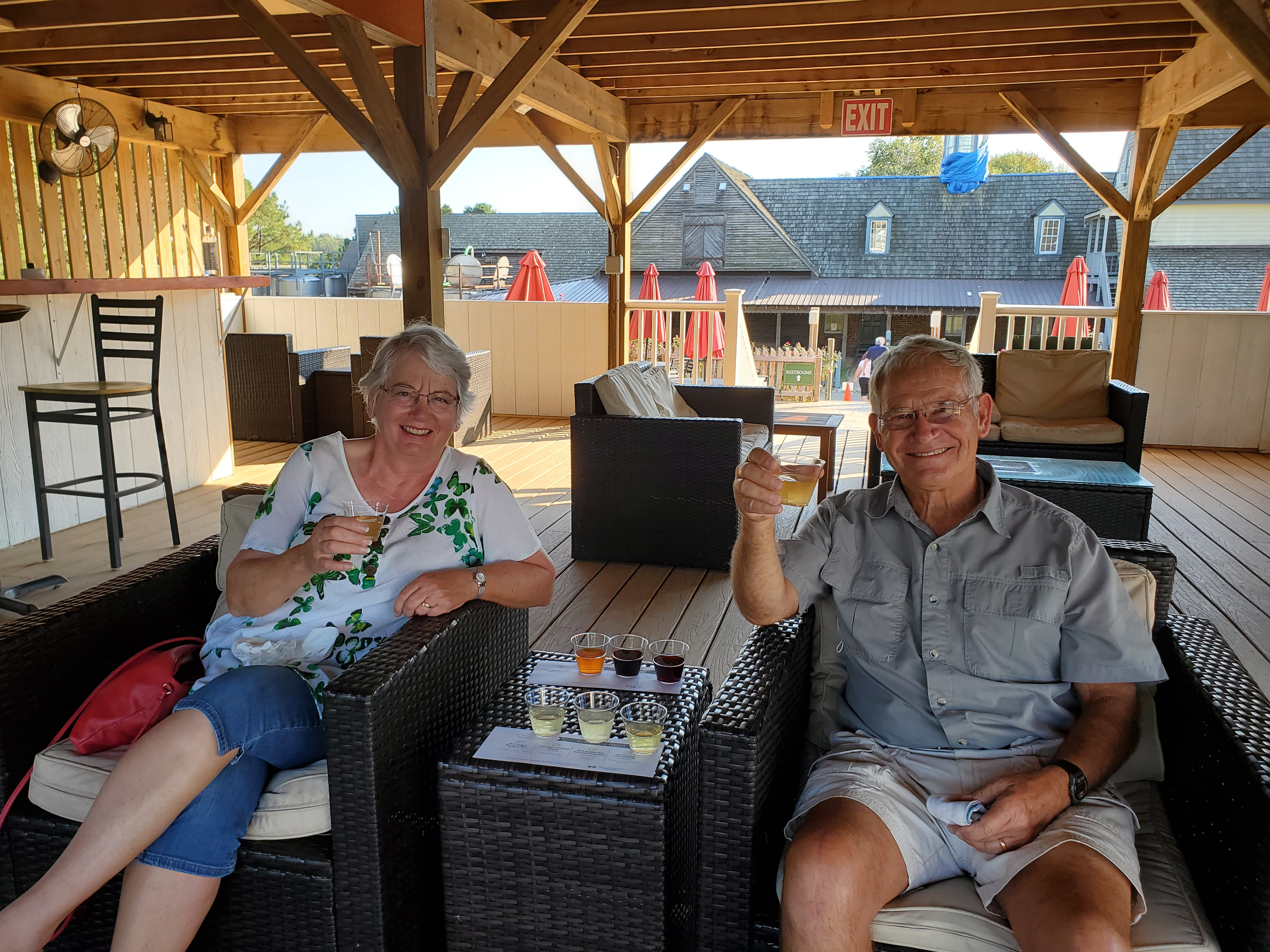
On Wednesday, October 7th, we checked out a local distillery and a winery. It was an interesting exploration of different tastes. One of the unique aspects of the Copper Fox Distillery was that it had been a “speakeasy” with a doorway hidden by a bookcase. The Williamsburg Winery offered a great view in addition to some fine wines.
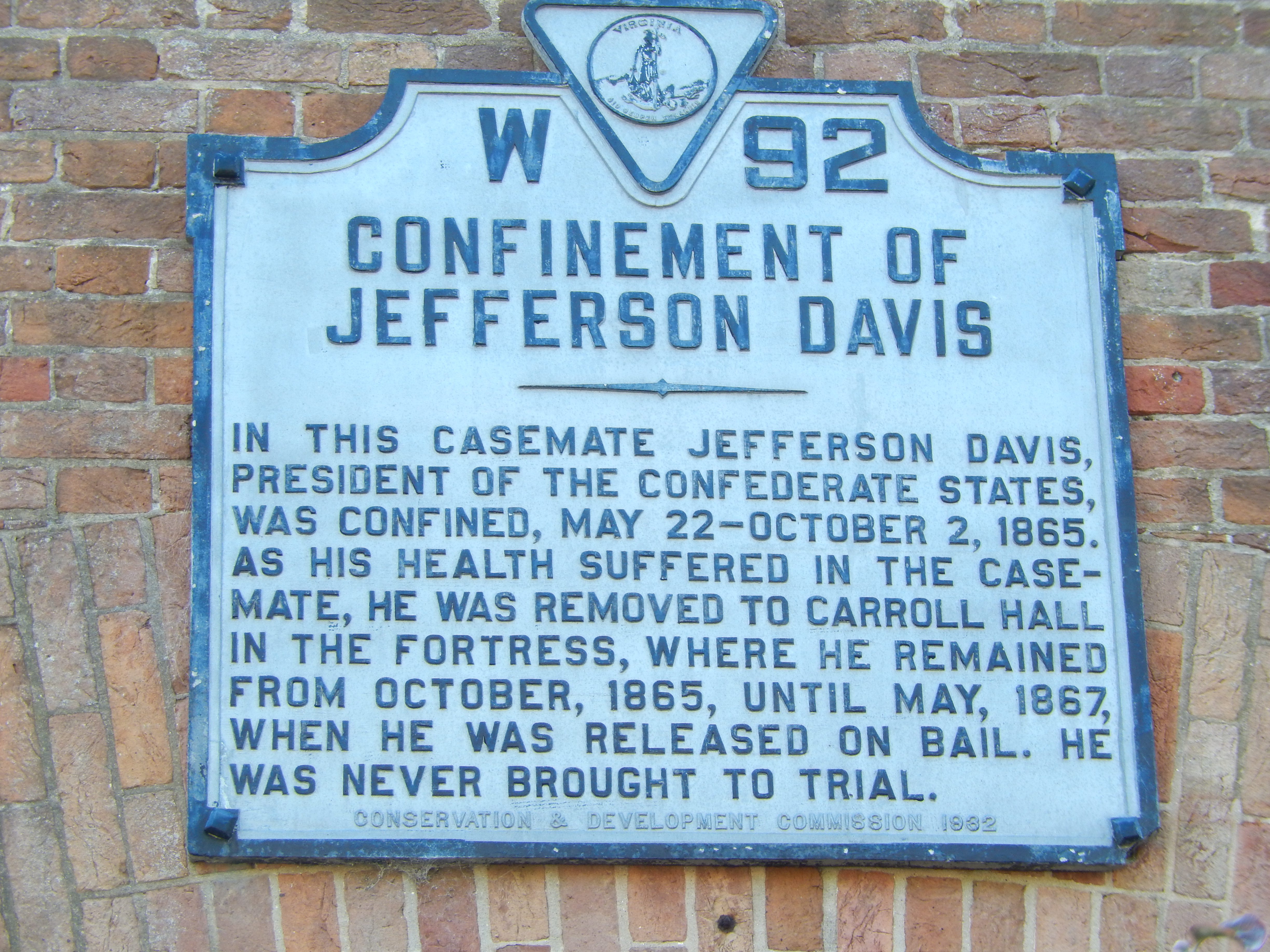
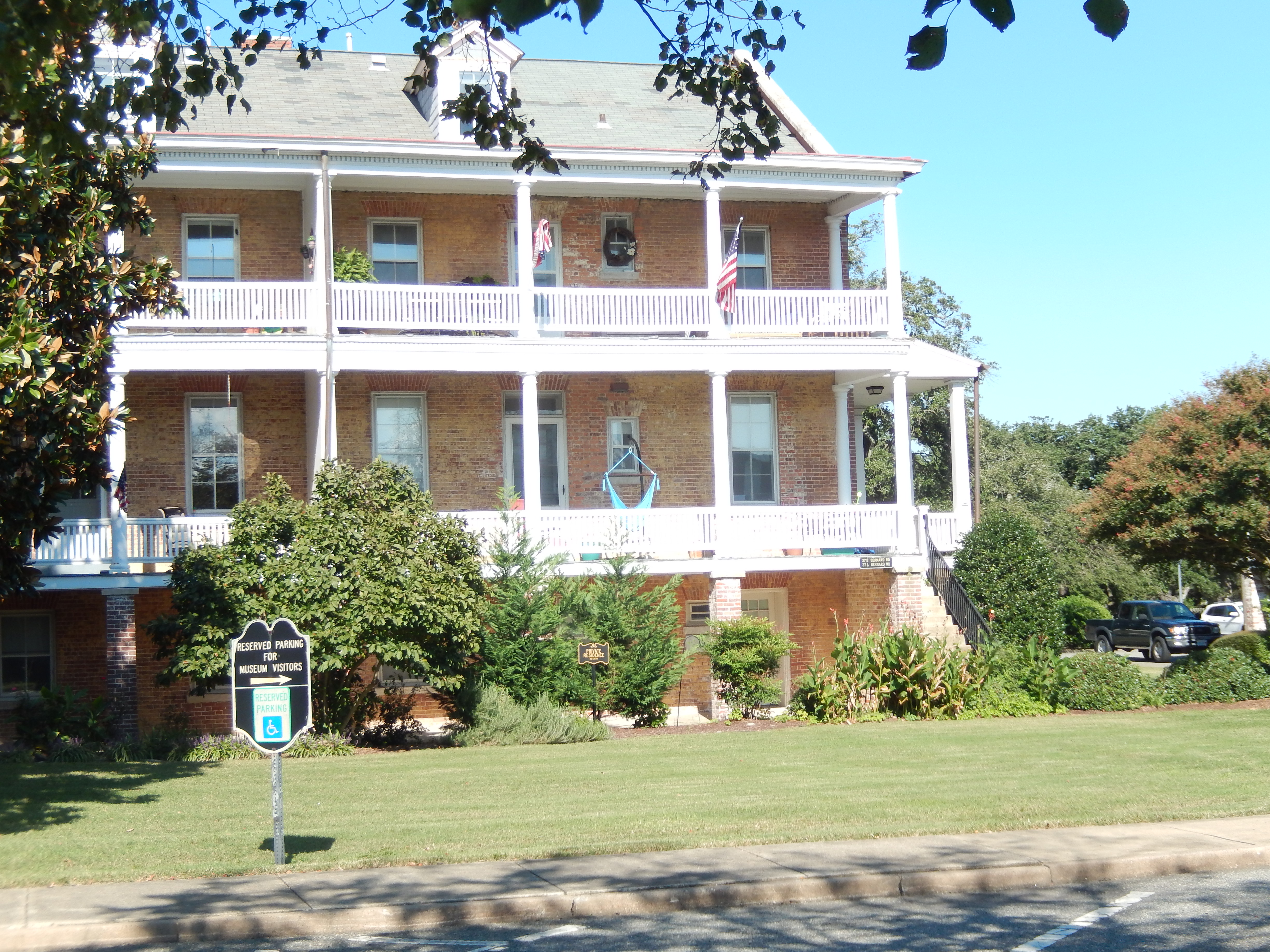
Thursday, we drove to Fort Monroe. This fort was built in 1834 and is the largest stone fort built in the United States. It was vital to the coastal defense of the U.S for hundreds of years. This was the headquarters for the Army Training and Doctrine Command until 2011, when it was designated as a National Monument. What I found most interesting is that the quarters in the fort can now be rented through the Fort Monroe Authority. Some lucky family is now living in the former quarters of 2LT Robert E. Lee and his wife! The fort also houses the Casemate Museum that chronicles the history of Fort Monroe and features a room where Confederate President Jefferson Davis was held prisoner following the Civil War. There is also a guide for a walking tour of the fort available.
Friday, we went back to Yorktown to tour the American Revolution Museum. This, like the Jamestown Settlement, is operated by the State of Virginia. If you’re in the area I suggest that you visit both of these museums, be sure to buy the pass for entrance to both museums and get a 15% discount. The displays and movies were just outstanding! I particularly liked the personal stories contained in many of the exhibits. There were outdoor displays of a Continental Army encampment and a tobacco farm. The encampment’s field kitchen was a circular trench with alcoves for the cooking fires. I found it interesting the Captain’s tents have not gotten any bigger over the last 200+ years!
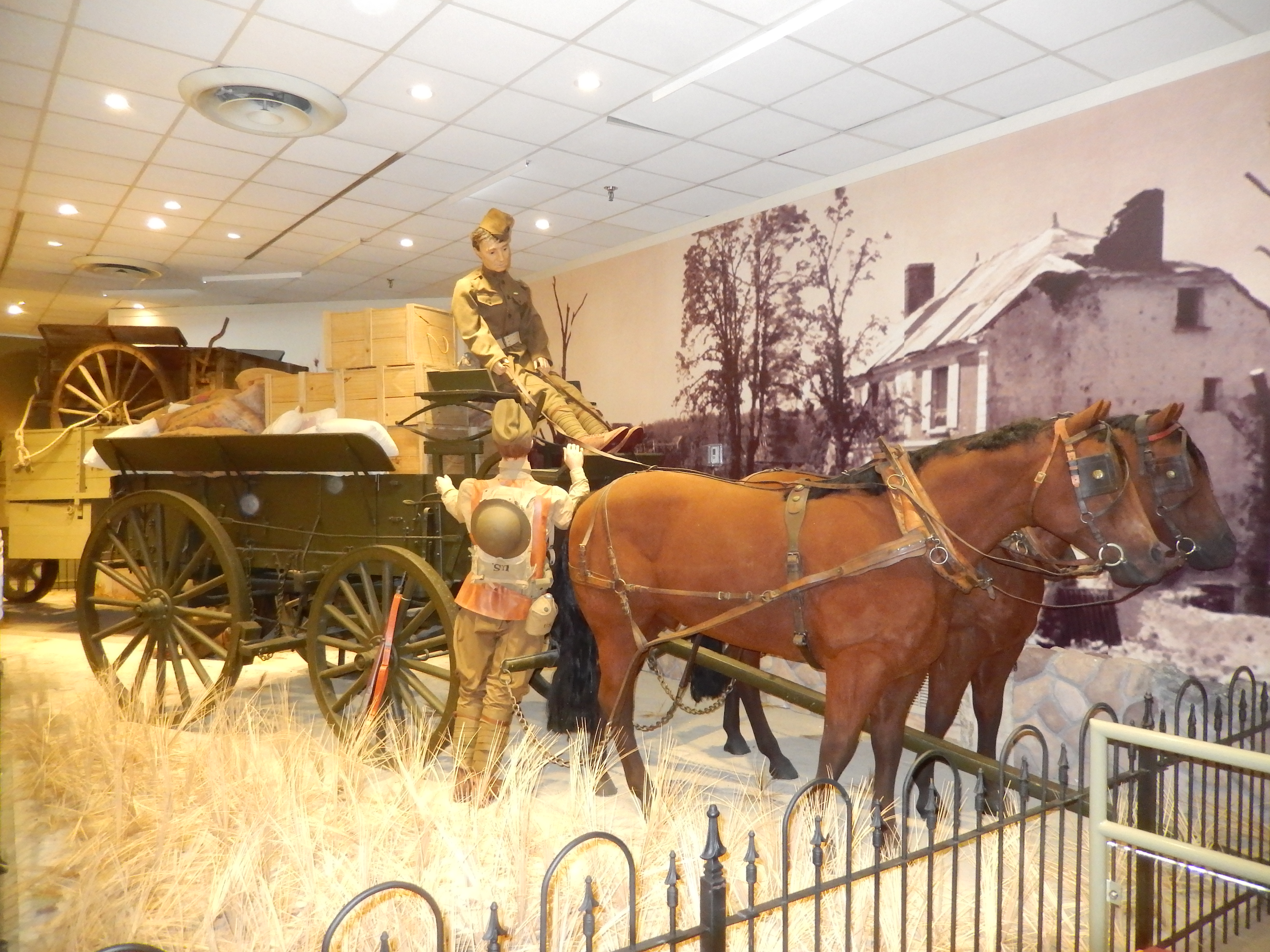
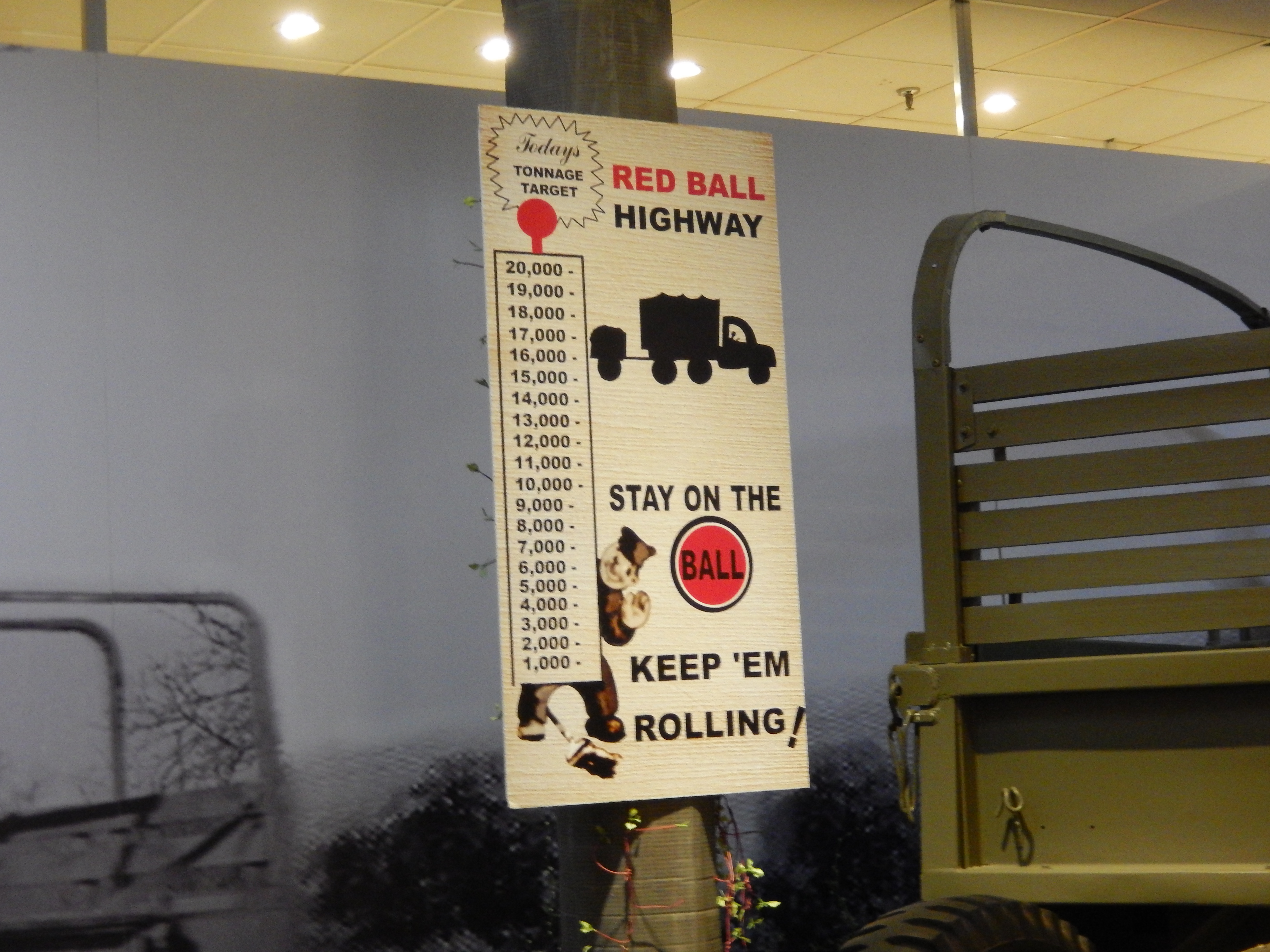
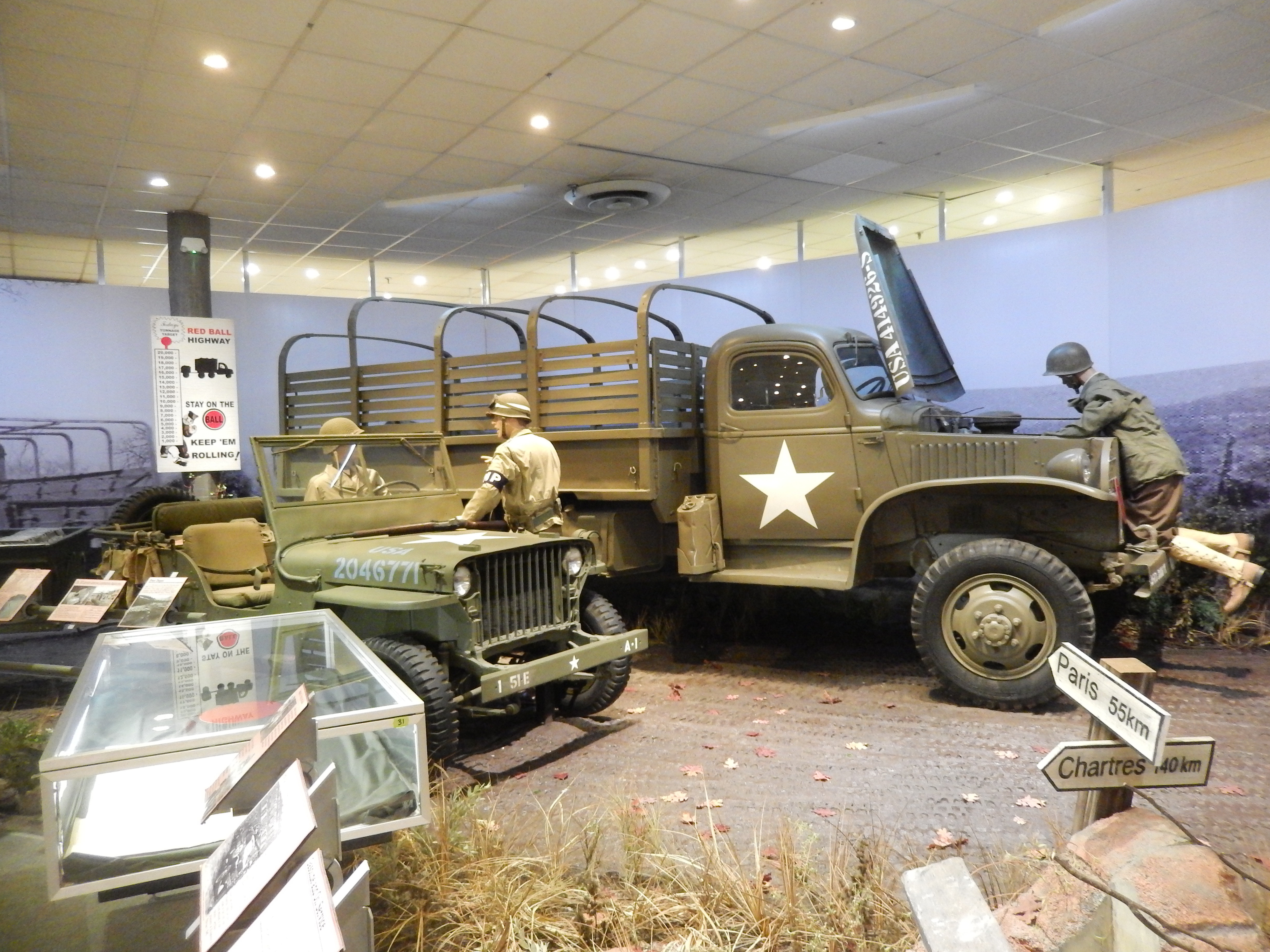
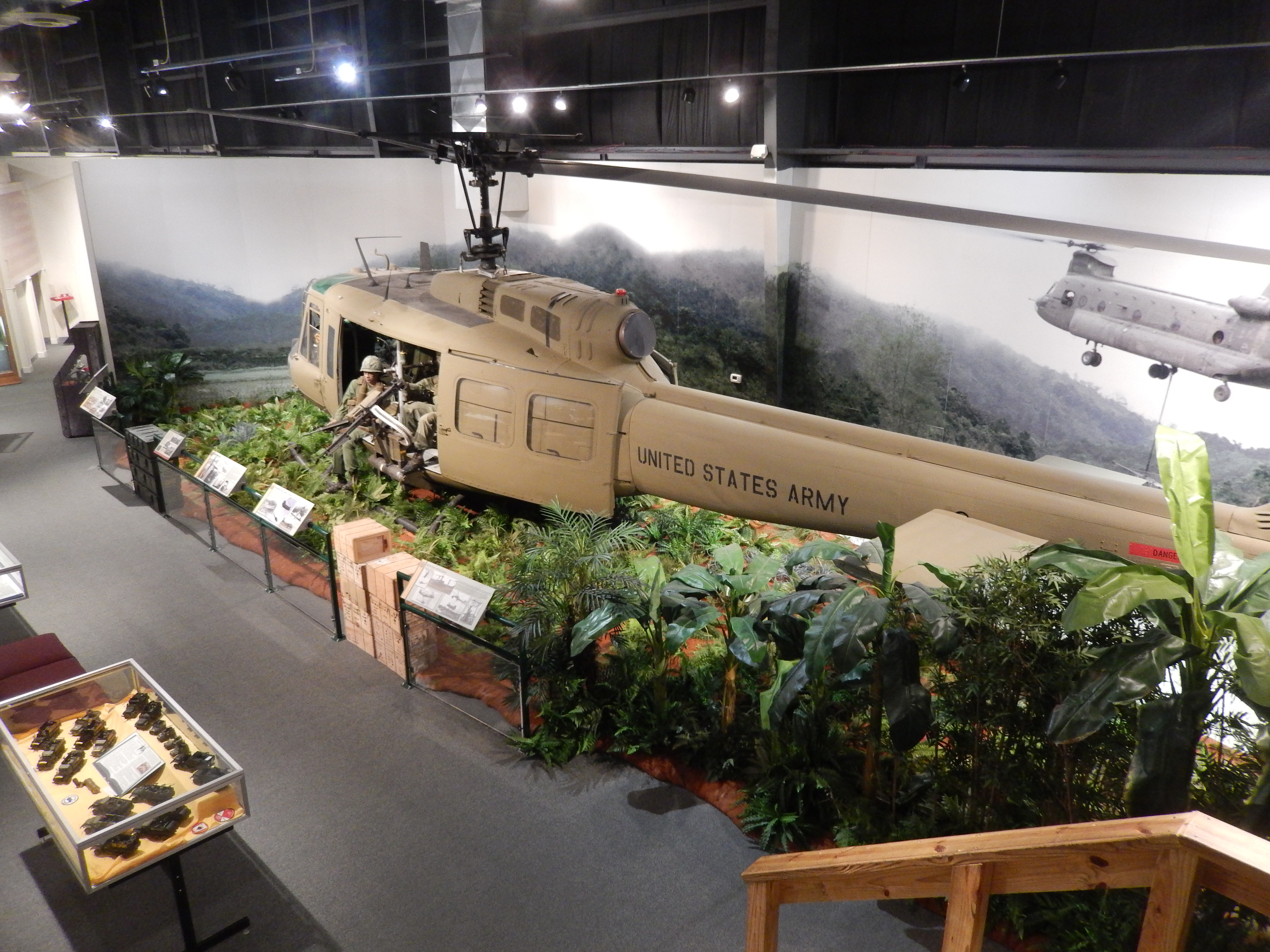
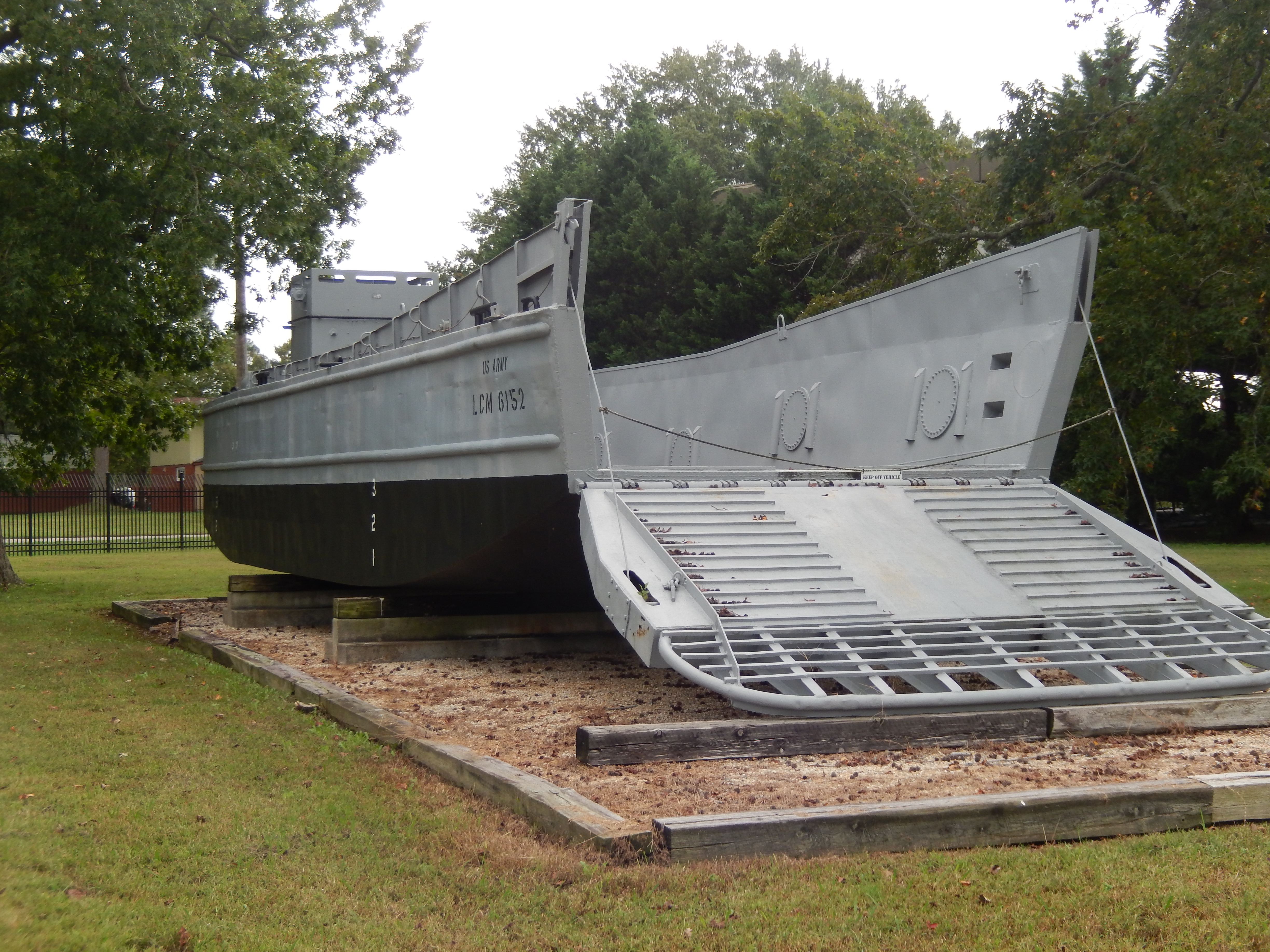
On Monday, October 12th, we drove to Fort Eustis to shop at the commissary and tour the Army Transportation Museum. The last time I was at Fort Eustis, was decades ago when I was a student in the Surface Deployment Planning Course. The Museum has certainly improved since then. The exhibits traced the history of military transportation from the horse-drawn wagons and pack mules of the Revolution to the HUMVEEs and helicopters of today. Interestingly, the Army actually used pack mules again in parts of Afghanistan, some things never change! The Transportation Corps is the “Spearhead of Logistics.” You can have all the stuff you ever wanted, but if you can’t get it to where it needs to be, then it is worthless. While I spent the bulk of my career as an Infantry officer, I am both proud and have fond memories of the short time I was assigned to the Transportation Corps.
Some of the special events that are highlighted are
1. The motor convoy that traveled from coast to coast in 1919 to test the Army’s ability to move equipment over extended distances, led by Lieutenant Colonel Eisenhower.
2. The “Red Ball Express” in WW II to rush supplies to fast moving Allied forces in Europe.
3. Rebuilding and operating a railroad system in Europe after it was destroyed by pre-invasion bombing.
4. The deployment of forces to Saudi Arabia for Operations Desert Shield and Desert Storm. My own Transportation Detachment, the 1009th Movement Control Team, was awarded the Meritorious Unit Commendation for supporting this effort.
The Transportation Corps operates trucks, but also operates trains, surface ships, and aircraft. These numbers may be out of date, but at one time, the Army had the fourth largest Navy and the tenth largest Air Force in the world.
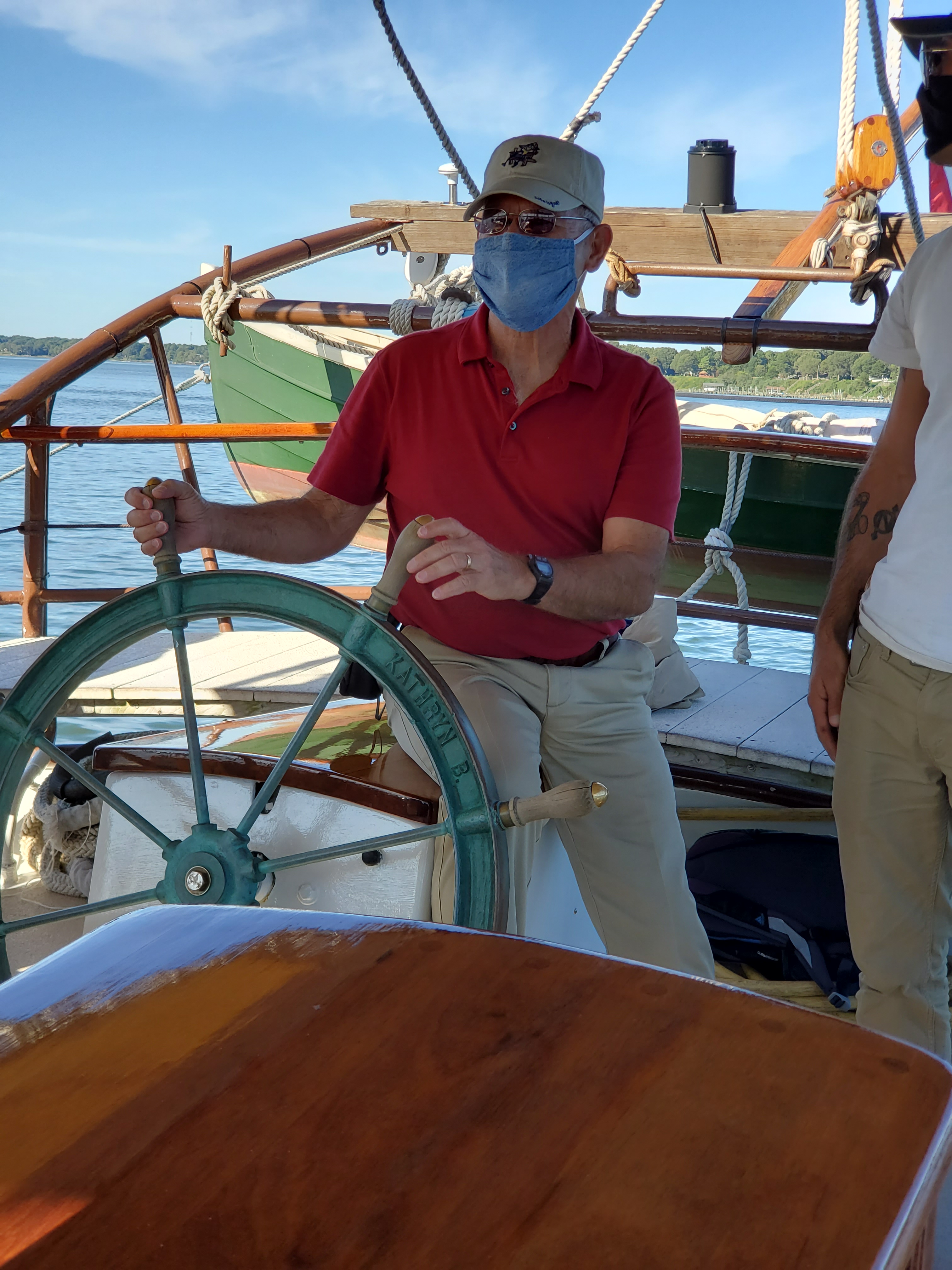
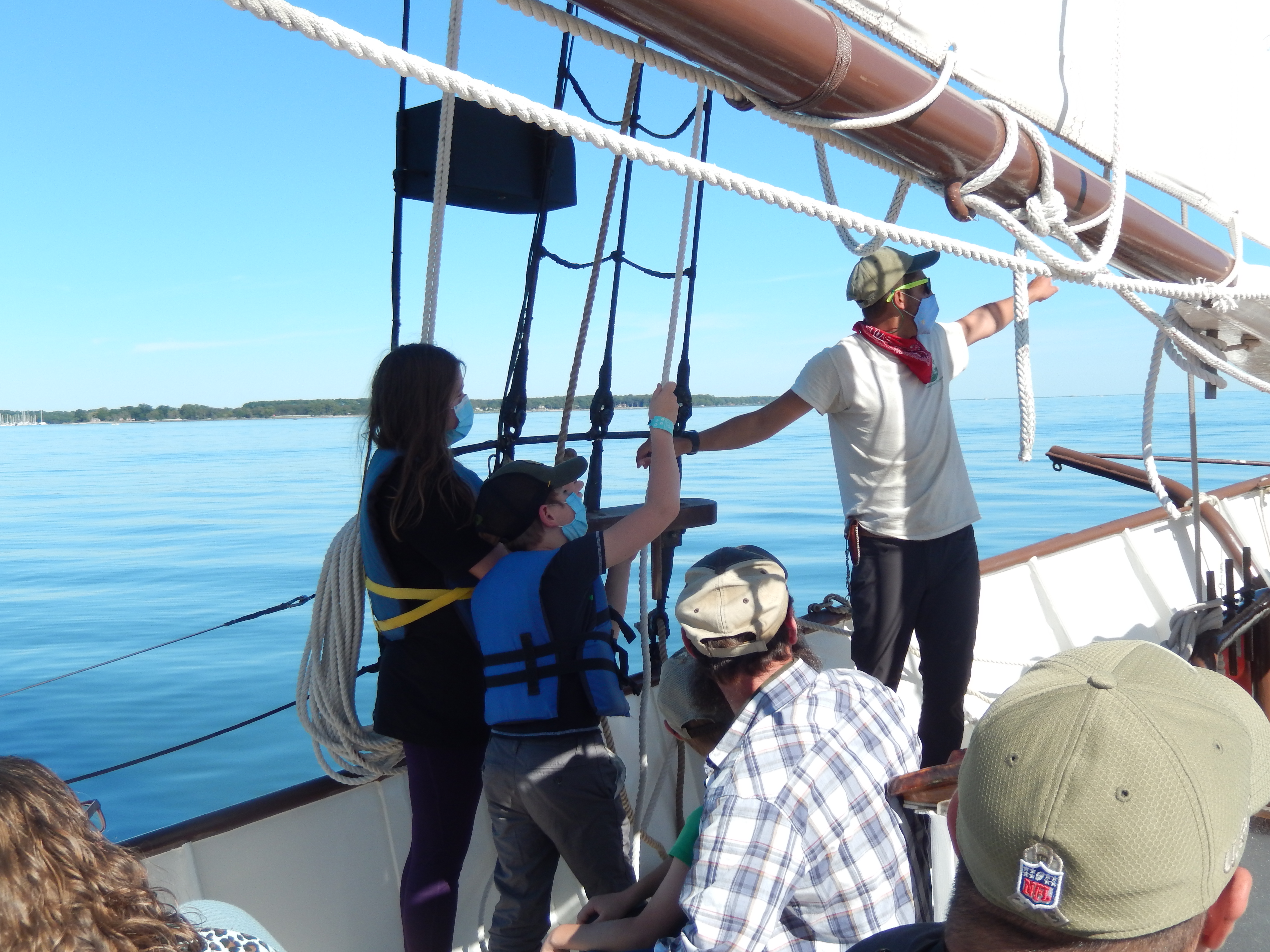
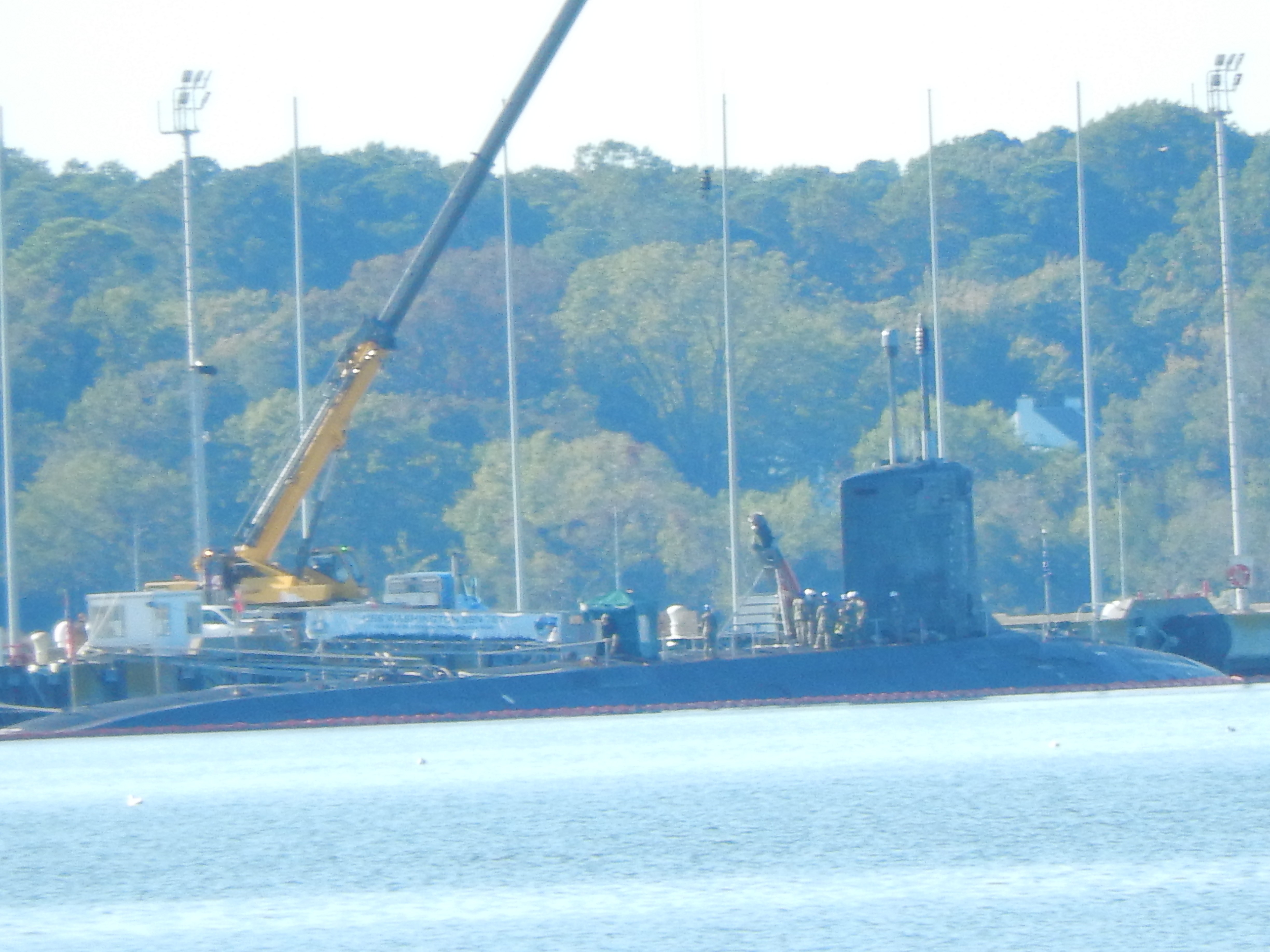
We made one more trip to Yorktown to sail on the Schooner Alliance for a tour of the York River. It was a pleasant cruise, but we were disappointed by the lack of wind and we motored around the area most of the time. The crew did a great job narrating about the sites in the area. As we approached the Yorktown Naval Weapons Station we could see a submarine that was unloading its ammunition before going to the Norfolk Naval Station for maintenance and refitting. However, the highlight of the cruise was discovering a pod of dolphins. They entertained all of us with a great show as they played around our schooner.
After doing so much sightseeing in the area, we spent our last week taking it easy and enjoying the quiet of the campground. On October 21st, we departed for Havelock, NC and Marine Corps Air Station – Cherry Point.
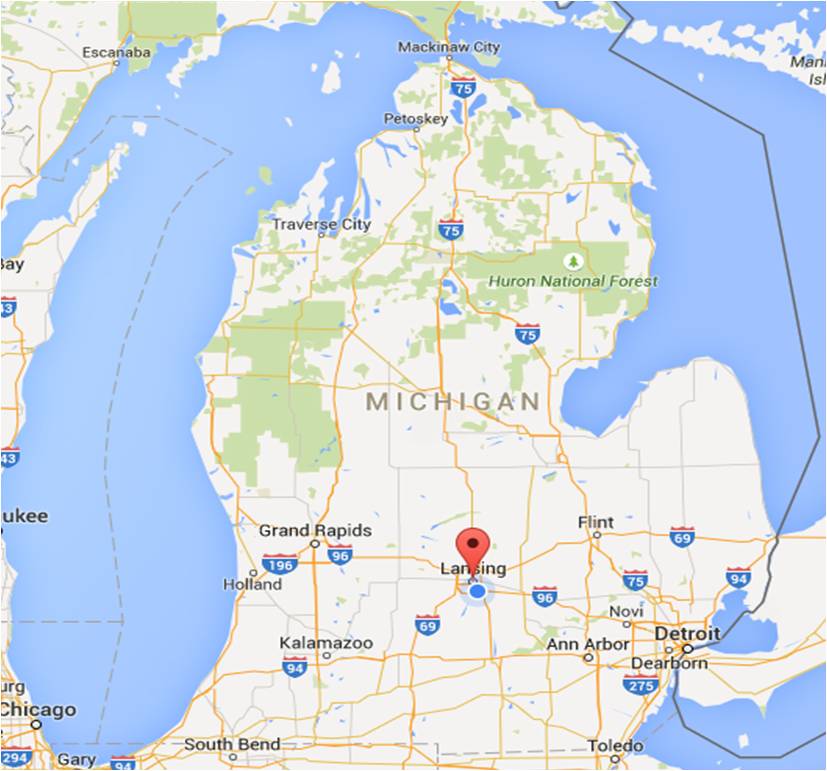
We are now in the process of moving from Washington to Michigan. We left Washington in September of 2025 and traveled in our Winnebago Vista RV to Michigan. While in Michigan we started looking for a house. To make a long story short, we decided on a condominium in a complex that is being developed, and bought one of their units.
We’re currently living in our RV and traveling through the south for the winter and will be back in the spring, hopefully moving into our new home as early June or as late as August.
























































































 Michigan Traveler