Paddling the Mississippi River in LaCrosse, WI – September 2016

Years ago I presented a workshop in Winona, MN and stayed at a hotel in LaCrosse.  As I was driving to the hotel I watched the Mississippi River and thought it would be interesting to camp along it and to kayak in it.  As we plotted our route from Washington to Michigan, LaCrosse was right on the way and I thought it would be fun to act on my thoughts from long ago.
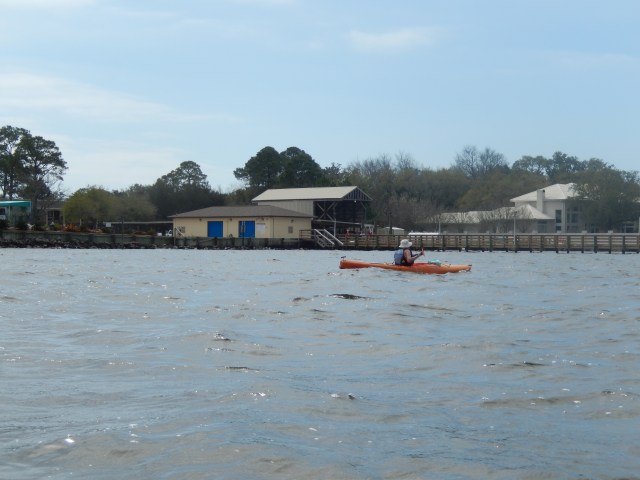
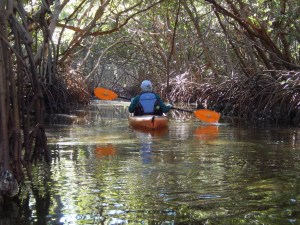
We stayed at the Pettibone Resort on Barren Island in the Mississippi River.  This is a nice RV park with many sites that are right on the water.  We originally made a plan to paddle up through the backwaters and portage out to the main channel of the Mississippi River then ride the current back to the campground.  However, Wednesday morning we found a good spot to launch directly into the west branch of the Mississippi.  We discovered that the current wasn’t flowing too fast and we tried paddling into the current in the main channel.  It wasn’t hard so we ended up paddling all the way around the island. dscn1181

pettibone-map

We saw barges being pushed by a tow boat downstream.  On the far shore we watched  a stern-wheeler river boat leaving its dock to head upriver, both a reminder of the major forms of river traffic on the Mississippi.  On the shore of the island we saw a row of houseboats, some of them more house than boat.  All of this gave us a sense of what life on the Mississippi might be like.

Past the houseboats we saw several turtles sunning themselves on logs along the shore. No matter how quietly we paddled, as we approached they slid off the logs like a row of dominoes.  Further upriver we played tag with a large blue heron that would launch itself off its perch as we approached and fly upriver until we caught up with it and the process started all over again.  Finally it took off for the far shore and the game was over.

It wasn’t especially hard paddling upriver, but we breathed a sigh of relief when we reached the head of the island and turned downriver.  We paddled past more houseboats, including one that I particularly liked.  dscn1213

As we passed the campground we saw some campsites that were occupied by long-term campers that had gazebos, decks, and potted plants. While it’s nice to have a place to go on a regular basis, I prefer our style of staying long enough in an area to see everything we want to see and then moving on to another location.  After more than five years on the road there is still more to see.dscn1216

The next morning we were on our way to the Porcupine Mountains Wilderness State Park in Michigan.

Posted in Fulltime RV, Michigan Traveler, Wisconsin | Tagged , , , , , , | 1 Comment

Why is it called Sioux Falls? September 2016

sioux-falls-mapWhy is it called Sioux Falls?  Because it has a significant water fall!  We were driving across South Dakota, headed for Michigan and planned this as a short stop – only two nights.  Sometimes when we make such stops we just hang out and rest for the next leg of the trip.  South Dakota is not known for its lakes and rivers and I thought, “If it’s called Sioux Falls, there must be a water fall ” so we did some research.

dscn1168Centuries ago the Sioux River flowed straight south.  During the Ice Age a glacier blocked the normal flow and diverted the river to swing west and then east creating the S-curve that we see in the river today.  The new riverbed flowed over quartzite, a hard rock that resists erosion.  The soft surface soils were eroded away, leaving the quartzite riverbed, creating a series of waterfalls.

You won’t see a tall, majestic waterfall, but a series of small falls, each feeding into the next.  We really enjoyed wandering around the falls.  The park is laid out in a way that allows you to walk over the quartzite rock without being herded by fences and rails, making it a unique experience.  You can see the remains of the Queen Bee Mill and have a light meal in the old Power Plant building, which now houses the Falls Overlook Cafe.

At the Visitor Center you can climb a tower that offers an awesome view of the falls.dscn1160

Sioux Falls has a loop bicycle trail that starts at Falls Park.  We rode the trail that led us along the river and past a series of parks.  Even though this was a Monday, there were many other people biking, walking, or running on the trail.  We also shared the trail with some deer that were very comfortable being around people.  Part of the trail ran along the top of a levee that is part of the Army Corps of Engineers flood control program.  As we rode along I spotted several flood gates that would release water into low laying areas if the water threatened to top the levee, as well as dams that would hold water back during times of high water.  If you want to avoid some steep uphill climbs, ride the trail in a clockwise direction.dscn1173

We enjoyed our day at Falls Park and I recommend Falls Park and the Sioux Falls Bike Trail.

Tuesday, September 13th, we were on our way to LaCrosse, WI.

Posted in Fulltime RV, Michigan Traveler, South Dakota | Tagged , , , , , , | Leave a comment

Teddy Roosevelt and “Strenuous Living” – September 2016

tr-1I have always been interested in Theodore “Teddy” Roosevelt.  In his youth he suffered from a range on illnesses that left him almost incapacitated.  He was also very nearsighted which caused him to wear glasses most of his life.  Yet he overcame these obstacles.  He developed physically as well as mentally and later would credit much of his success to “strenuous living.”  In his early twenties he took a trip to the West and loved the experience.  This left a fondness in his heart for the wildness of the frontier and the strenuous living that went with it.  He made many more trips to the West to hunt and fish. dscn1079

Things were going well for Roosevelt, he was succeeding in business and politics and was married, with their first child on the way.  Then disaster struck.  His wife died in childbirth and his mother also died on the same day, February 14, 1884.  Theodore was in shock.  He had just lost the two women that mattered most in his life.  He sank into a depression and his family and friends encouraged him to go somewhere to grieve.  That somewhere was the area of the Little Missouri River near the town of Medora in western North Dakota (then the Dakota Territory).  Roosevelt had built a small cabin and had invested in a small cattle ranch, the Maltese Cross.  He stayed here from 1884 to 1886.  During this time he spent hours herding cattle, hunting for food, letting nature help him to cope with his loss.  This area is now the Theodore Roosevelt National Park. dscn1138

We set up camp in the Cottonwood Campground.  It is a nice campground with mostly pull off sites so you don’t have to back your trailer into the site.  It is also dry camping.  We filled our fresh water tank at a water point near the entrance and there are several water faucets throughout the campground.  There are no electrical hookups so we used our two Honda generators to power our trailer.dscn1092

It rained during much of the second we were there, but we hiked a portion of the Lower Paddock Creek Trail.  Unfortunately the rain had turned the trail into a greasy mud that hung on our boots like magnets to iron.  Consequently we decided to turn back and try hiking later in the week.  One of the advantages of being fulltime RVers is that we can stay in an area long enough to sit out a few days of bad weather.

After getting cleaned up we toured the Visitor Center and were able to tour Roosevelt’s Maltese Cross Cabin that he and his crew built in 1883.  It was here that he returned to in 1884.  The Maltese Cross Cabin wasn’t remote enough and it was during this time that he built his Elkhorn Ranch.  At the Elkhorn Ranch his closest neighbor was ten miles away.  While the Maltese Cross Cabin has been maintained, the Elkhorn Ranch has all but disappeared and only the foundations remain.

Near the Cottonwood Campground is the Peaceful Valley Ranch.  The history of this ranch is older than the history of the park.  It was cattle ranch in the 1800s, a dude ranch in the 1920s, the headquarters of the Civilian Conservation Corps (CCC) and Work Progress Administration (WPA) in the 1930s, park headquarters in the 1950s and 60s, and a facility for guided horseback rides until 2014.  The buildings looked like they were built in the 1800s, but are in good shape.  The ranch gave you a real picture of life on the range during Roosevelt’s time here.20160905_112407

On our last full day in the park the weather cleared up and we drove along the 36 mile Scenic Loop Drive.  This drive gave us a great view of the terrain and we stopped at several points to take pictures of wild horses and bison grazing on the open range.  At one point we had to stop to let a herd of bison cross the road so we could continue.  We have been in many parks that had prairie dog towns, but we rarely saw any prairie dogs, yet here we saw prairie dogs climbing in and out of their holes and running from hole to hole all over the place.  dscn1121

There are several short hikes along the road and we took a couple of them to get some great views.  At Buck Hill we were able to have a panoramic view that took in almost all of the South Unit of the park.dscn1113

After the drive we planned to hike a trail that started at the Peaceful Valley Ranch and crossed the Little Missouri River, but we soon discovered there was no bridge so we just hiked around the nearby area.

If you are interested in reading more about Theodore Roosevelt, I recommend a trilogy by Edmund Morris.

This is one of my favorite Roosevelt quotes –

tr-3

The next morning we were glad we were heading on to our next stop as it was just pouring rain with thunder and lightning.  It was like nature was telling us we had overstayed our welcome.  Next stop – Box Elder, SD.

Posted in Fulltime RV, Michigan Traveler, National Parks, North Dakota | Tagged , , , , , , , | 1 Comment

Custer’s Last Stand – September 2016

As we planned our route to Michigan I noticed that we would be driving near the Little Bighorn Battlefield National Monument.  I didn’t want to bypass this site of American history so we planned it as a stop.  After a long drive from Missoula, we spent the night at Grandview Campground and RV Park.  The next morning we got an early start to avoid the hottest part of the day.custer_last_stand1

The Ranger staff at the Monument have a full schedule of Ranger-led activities available.  We started the day with the Battlefield Talk that described the history of the western expansion and how it drove the Native American tribes out of their ancestral lands and onto reservations.  He described the various treaties that had been made with the tribes and how officials in Washington were willing to break them when they were no longer convenient.  Eventually Washington decided to move all tribes on to reservations and sent the U.S. Army to enforce this decision.

He then described how Custer, with a force of about 600 cavalry troopers attacked a Lakota and Cheyenne encampment on the Little Bighorn River.  He sent one force under the command of Major Reno to attack the camp. Meanwhile he led the remainder of his regiment around the flank to cut off the fleeing wives and children so he could hold them hostage and force the warriors to surrender.  Reno’s force of 225 troopers was counterattacked by close to a thousand warriors and was forced to retreat to nearby high ground.  When Custer attacked from the flank the Indians turned their attention on him.  Custer found himself facing between 1,500 and 2,000 warriors and was forced to retreat to Last Stand Hill where his entire force was destroyed.  By the end of the battle the 7th Cavalry had lost the five companies under Custer, about 210 men and another 106 killed or wounded in the force led by Major Reno.  The Indians lost no more than 100 killed.  I, for one, could see the battle played out on the hills we could see in front of us.  I could envision the Cavalry and the Indians as they maneuvered against each other.george-custer-1

battlefield-1

After this talk we purchased a DVD for a driving tour of the area.  I found this to be a great way to experience the battlefield.  As we drove we were treated to a narration that described the battle and how archeologists reconstructed the events from artifacts found on the battlefield.

Initially no memorial was created to honor the Native Americans who struggled to preserve and defend their homeland and traditional way of life. Their struggle was never formally recognized until 1991 when the President George Bush changed the name of the battlefield and ordered the construction of an Indian Memorial. The memorial expresses the theme – “Peace Through Unity.”  It provides a place where American Indians can celebrate and honor the memory of their relatives – and the women, children, and men who took part in the battle.

dscn1053Much has been written about the Battle of the Little Bighorn, and a lot of it is not very accurate.  However, it is obvious that Custer led his Seventh Cavalry into a battle where they were totally outnumbered and out fought by the combined Lakota and Cheyenne force.  For the Indians this was a case of winning the battle and losing the war.  The Lakota and Cheyenne won the battle, but it was the last battle they ever won.  They fled north into Canada, but ended up returning to the United States and onto various Indian reservations.

For a good book that seems to be more accurate than most, I suggest you read “The Last Stand: Custer, Sitting Bull, and the Battle of the Little Bighorn” by Nathaniel Philbrick.

Posted in Fulltime RV, Michigan Traveler, Military RV Parks, Montana | Tagged , , , , , , , | 2 Comments

River Rafting with Wine, Smoke Jumpers, and Montana History – August 2016

We left the Tacoma area on August 28th and headed east over the Snoqualmie Pass.  As we drove east I was struck by the difference in terrain.  We had just left the deep forest of the Cascade Mountain range and now we were driving through desert.  The mountains force the clouds to give up their rain on the western side, so there is nothing left to fall on the east, hence the desert conditions.

We were on our way to Superior, MT.  My wife, Pat, had arranged for us to raft the scenic portion of the Clark Fork River and do a wine tasting at the same time – what a great way to celebrate our 43rd wedding anniversary!  We camped at nearby Quartz Flat National Forest Campground.  This was an unique place to spend the night.  The entrance is through a rest area and there is a tunnel under the highway to connect to the rest area (and another loop of the campground) on the westbound side.  Someone in state government was thinking outside the box when they designed this setup.  We arrived around lunch time and drove to Pangaea River Rafting later in the afternoon.DSCN0989

DSCN0990Pangaea River Rafting has a unique program where they take you down the river on a raft and treat you to wine, snacks, and a light dinner in the raft!  Our guide, Meagan, was terrific!  She told us about the river, pointed out osprey and turkeys, and kept our wine glasses full as we drifted with the current.  We rafted the scenic portion, downstream from a series of Class II and III rapids, so the river was gentle and relaxing.  We chatted and enjoyed the late afternoon sun shining through the trees on the western bank as we floated downstream.  There were a few spots where the water formed rapids and Meagan took us through them to provide a few thrills.  It was a great time and a lot of fun!DSCN0996

The next morning we drove to Jim & Mary’s RV Park in Missoula, MT.  Our primary reason for stopping here was to visit the Forest Service Smoke Jumpers CenterDSCN1003As a former Army paratrooper, I was interested in seeing how the Forest Service paratroopers worked and were trained.  I have been fascinated by the Smoke Jumpers ever since I saw a Walt Disney program about them when I was a kid.  We were led on a tour of the Smoke Jumpers Center by a veteran Smoke Jumper who began his service in 1961 at the age of 21.  The first thing that struck me was that the Smoke Jumpers make much of their own equipment.  While they purchase the parachutes, all of the packs, harnesses, and other equipment are sewn by the Smoke Jumpers themselves.  A big difference between Smoke Jumpers and military paratroopers is that Smoke Jumpers often land in trees on purpose because they can get closer to the fire.  We saw the rough terrain suits Smoke Jumpers wear.  I thought they were made of heavy canvas and discovered they are now made of Kevlar! DSCN1006 I never knew that Kevlar could be sewn like any other cloth.  Like most fire fighters, the Smoke Jumpers are paid to wait (for a fire).  Once the alarm is sounded they drop whatever they are doing and suit up.  They have two minutes from the alarm to boarding the jump aircraft, no time to make mistakes.  That kind of response is the result of training and repeated practice.  Just like Airborne Infantry, the parachute is only a means of transportation to get to where they have to fight.  They are fire fighters first, and parachutists second.  All-in-all, this is a great tour that takes you into the actual work spaces of the Smoke Jumpers and gives you a very clear idea of what these brave men and women are called on to do.

The next day we drove into Missoula and rode our bikes on the Riverfront Trail System.  As we rode the trail we stopped at the Carousal for Missoula.  In 1991 local cabinet maker Chuck Kaparich told the city, “If you give it a home, and promise never to take it apart, I will build a carousal for Missoula.”  The city fathers agreed and Chuck, with a crew of hundreds of volunteers, assembled an antique frame and constructed more than 40 ponies, two chariots, 14 gargoyles, mirror frames, and the largest band organ in continuous use in the United States.  It is a popular attraction and there were several kids on the carousel while we were there.  Pat was able to take a ride for under a dollar.DSCN1026

Another unique stop on the Riverfront Trail was the Boone and Crockett Club.  It was founded in 1887 by Theodore Roosevelt and housed in the old Missoula Train Depot.  Its mission is to promote the conservation and management of wildlife, especially big game, and its habitat, to preserve and encourage hunting and to maintain the highest ethical standards of fair chase and sportsmanship in North America.  For over a century the Boone and Crockett Club has championed the passage of laws, the establishment of institutions, and the designation of wild lands which today make up our nation’s conservation system. The National Forest, the National Park, and the National Wildlife Refuge Systems exist today in large part because of the extensive efforts of the Club and its dedicated membership.DSCN1033

Our last stop of the day was Fort Missoula.  The fort was established in 1877 in response to local requests for protection in the event of conflict with the western Montana Indian tribes.  Fort Missoula was never a stereotypical walled fort, but an open fort that required the troops to perform offensive, active patrolling in the area.  The history of the fort included its use as a CCC camp during the depression, and an Alien Detention Center for German, Italian, and some Japanese internees during WWII. There is a great display of Missoula history in the Museum and several original buildings scattered throughout the facility, including an actual Forest Service Lookout Tower.  DSCN1046Today the fort is home to the Historical Museum at Fort Missoula.  Other government agencies such as the Forest Service, and non-profit organizations occupy many of the buildings on the property.

The icing on the cake was a performance at the RV park called “Montana Melodies.”  Two men who were Forest Service firefighters and still live in the area serenaded us with songs of the area, including some they had written themselves.  This was followed by a serving of huckleberry ice cream from the park staff.  What a great way to end our visit!

Posted in Fulltime RV, Michigan Traveler, Montana | Tagged , , , , , , , , | 2 Comments

Junior Rangers at Mount Rainer, August 2016

Mount Rainer dominates the eastern skyline of the Seattle/Tacoma area.  A volcano that made its last major eruption too long ago to remember, it is still an active volcano.  We were able to have our three granddaughters stay with us for another week and we thought a trip to Mount Rainer would be a great activity.DSCN0961

The girls have been able to visit several of our National Parks and have participated in the Junior Ranger Program at each one.  Our visit to Mount Rainer was made with the goal of the girls adding another Junior Ranger badge to their collection.  If you have visited a National Park with a child who went through the Junior Ranger workbook, you probably learned more about the park than other visitors.  This program causes you to look at some things in the park that you would take for granted or would normally escape your notice.

As we went through the entrance station we picked up the newsletter that lists all of the Ranger-led programs.  There was one scheduled to start about as soon as we arrived, so I dropped off Pat and the girls so they could attend the program while I parked the truck.

We hiked the Skyline Trail to see the park up close.  The first half was almost all uphill, but offered awesome views of Mount Rainer and the Nisqually Glacier.  Along the way we stopped to see marmots and chipmunks.  The girls thought it was really unique to see snow on the ground in August and had to play on it.DSCN0963

There is a big emphasis to keep all hikers on the designated trails.  There are volunteers hiking the trail to assist hikers and encourage them to stay on the trails.  One gave the girls buttons saying, “Don’t be a meadow stomper.”  It’s a shame, but even with all of the warnings we often saw hikers straying off the trail.  Mount Rainer and other National Parks are wilderness areas.  The parks allow millions of visitors to experience this wilderness by containing the destruction caused by all of these visitors to a confined area.

We stopped for the lunch we had packed at Panorama Point.  The view was amazing.  There was a large snowfield where we watched a group of hikers learning how to hike on ice and snow.  The chipmunks in the area obviously know where everyone stops to eat, they were all around us hoping we would drop something.DSCN0952

The last half of the hike was on the reverse slope and the view changed from rocky slopes to grassy alpine meadow.  There were several streams with waterfalls running through the meadow, fed from the melting glaciers.  The girls splashed water on themselves to cool off.  We saw one group soaking their feet in a stream, but it was getting late, so we didn’t join them.

When we arrived at the Paradise Visitor Center they girls finished up their workbooks.  After they were reviewed by a Ranger, they were sworn in as Junior Rangers for Mount Rainer National Park.DSCN0975

Posted in Fulltime RV, Michigan Traveler, National Parks, Washington | Tagged , , , , , | 1 Comment

Exploring the Olympic Peninsula, July 2016

Olympic National Park is a million acres in the Olympic Peninsula between the Pacific Ocean and Puget Sound.  The park is unique in that it is actually three parks in one.  First, there is the temperate rain forest in the Hoh and Quinault regions.  Second, the Pacific Coast at Kalaloch, Mora, and Ozette.  Finally the mountains, highlighted by Hurricane Ridge.  These three regions are tied together by the lakes, lowlands, and rivers of Elwa, Lake Crescent, Sol Duc, and Ozette.Olympic NP Map

We took our daughter, Elisabeth, and our three granddaughters, Katrina, Sierra, and Clarissa on a road trip to explore all three of these regions.

We drove about 110 miles to our first stop, the Quinault River Inn on the shore of Lake Quinault.  Elisabeth had done some preliminary research and we had a rough plan.  After setting up, we drove to the Quinault Ranger Station to get some detailed advice.  We got Junior Ranger workbooks for the girls and headed out from the Ranger Station on a short hike into the rain forest.  20160725_160030

The rain forest was a different environment than I have hiked in before.  The amount of fallen trees and the moss that covered nearly everything was impressive.  The girls were checking off things in their workbooks and drawing sketches as we followed the trail.  We passed by a waterfall that they felt had to be explored in detail.  The trees were HUGE!  The amount of rainfall in this region causes trees to grow like they were on steroids.  The heavy rainfall also accelerates the decay and growth of moss and various fungi.DSCN0771After this hike we took a short drive to see the world’s largest spruce tree.  This tree is 191 feet tall and almost 59 feet in circumference.  From there we drove to a nearby waterfall and climbed around the rocks at the base of the falls.  It was great fun that brought out the kid in all of us.

Many RV parks don’t allow ground fires, but the Quinault River Inn had a community fire pit with a rack of split wood.  For dinner on our first night, we gathered around the fire for pizza made in our cast iron pie-irons and S’mores, the girls’ favorite campground dessert.  The evening was cool, but comfortable in sweatshirts and it was a great end to our first day.DSCN0805

The next day we hiked a nature trail that gave the girls many opportunities to complete portions of their Junior Ranger workbooks.  We saw huge trees that had fallen due to wind or disease, one was so big we could walk the length of it.  After lunch we hiked another trail to a homestead.  Two families had occupied this homestead for over forty years.  We could see where and how they lived as we read the trail guide.  There was a big contrast between the old forest and the second growth trees that were taking over a portion of the land that had been cleared for the homestead.20160726_110330

The next day we drove to the Quilette Oceanside Resort, an operation of the Quilette Indian Tribe.  This RV park is right on the shore of the Pacific Ocean and is part of the coast area covered by the National Park.  The girls loved the beach and wanted to go swimming right away.  We walked the length of the beach and through the campground, and then they were off for the water.  I’m not sure they were prepared for water that cold, but that didn’t stop them.

The next morning we woke to a thick fog, so we took time to make pancakes for breakfast.  The girls always enjoy helping Pat in the kitchen.  DSCN0836

The fog cleared a bit and we walked out on the breakwater, and then back to the beach.  The weather was strange.  While the girls were playing in the water and sand, the adults relaxed in the sun, although the beach was surrounded by fog.  After a break for lunch we were back on the beach again.  The girls enjoyed playing in the sand and climbing on the large trees that had washed up on the beach.  They always seem to enjoy burying themselves in the sand, but this time they took it to new heights, or should I say depths?DSCN0852We had a fire pit at our campsite and treated everyone to apple pie, made in our pie-irons.  Another special treat!

Friday morning we drove to Port Angeles to visit the mountains of the Olympic National Forest.  Along the way we drove along the shore of Lake Crescent and stopped to enjoy a view of the lake.

After setting up camp at the KOA campground, we drove to the National Park Wilderness Information Center to get more information on hiking and Ranger-led activities so the girls could finish their last requirement in their Junior Ranger workbooks.  We got some great advice, checked out the displays, then headed to the Port Angeles Visitor Center.  There we picked up some maps, bought a few postcards and went up in the Observation Tower that gave us a great view of the harbor area.20160729_152751

That night, at the campground, the girls were able to take a short wagon ride and see a movie with the rest of the campground.  You can generally count on KOA campgrounds to have activities on the weekends.

We got an early start the next morning and drove into the park for a Ranger-led hike in the Heart of the Hills campground.  The Ranger, Kyle, was a kindergarten teacher during the school year and did a great job relating to the kids.  Even though the hike was geared to young kids, the adults learned a lot about the woods and its creatures.

From there we drove to Hurricane Ridge to hike to Hurricane Hill.  The trail was only 1.3 miles one way, but we climbed 650 feet in elevation over that distance.  I didn’t think the girls would be excited about the hike, but they moved out quickly.  DSCN0901

As we started out we spotted a black tail deer right next to the trail, so close you could almost reach out and touch it.  The deer are obviously very comfortable with people here!  In a little over an hour we reached the summit of Hurricane Hill.  Talk about an amazing view – awesome!  20160730_122239(0)If we thought the deer were friendly, the chipmunks were more so.  As we were eating there were chipmunks scampering all around us, hoping for a handout.20160730_133903

The hike back to the truck was  a lot faster.  We stopped at the Hurricane Ridge Visitor Center to get the girls’ Junior Ranger Badges and we found Kyle, the Ranger from the morning, there to complete the process.  20160730_153213He complimented them on doing such a thorough job and swore them in as Junior Rangers for Olympic National Park.  Whoever dreamed up the Junior Ranger Program should get a raise.  It’s a wonderful way to encourage kids to learn about the National Parks.  After a full day of hiking we relaxed at the swimming pool and the hot tub – a great way to end the day.

Sunday morning we headed back to the Tacoma area and Camp Murray.  It was 410 miles all the way around the peninsula, but a wonderful trip.  We saw a lot, learned a lot more, and did it all with our daughter and our granddaughters, what a great time!

Posted in Fulltime RV, Michigan Traveler, National Parks, Washington | Tagged , , , , , , , | Leave a comment

Whidbey Island, WA – July 2016

Whidbey Island is located in Puget Sound, north of Seattle.  Our reason for traveling to Whidbey Island may seem a bit strange.  Many, many years ago I saw one of those disaster movies where the President and First Family were flown to Whidbey Island to escape some kind of virus.  Ever since I have wanted to see Whidbey Island.Whidbey Island Map

We traveled from the Tacoma area on July 10th and enjoyed an easy drive on a beautiful day.  We stayed at the Cliffside RV Park that is part of Naval Air Station Whidbey Island.  We have stayed at many military campgrounds across the country and Cliffside RV Park is THE BEST park we have seen.  The park is on the shore of Puget Sound and the sites are terraced so almost every site has a view of the water.  The park was rebuilt in 2012 and Ken, the camp host, gathered flowers from multiple sources and landscaped the entire park with flowers.  There are cut flowers in the restrooms and laundry room, and even available to put in your RV.DSCN0582

Whidbey Island is known for its kayaking and we spent an afternoon kayaking in Deception Pass. Deception Pass is a strait separating Whidbey Island from Fidalgo Island. A group of sailors led by Joseph Whidbey, part of the Vancouver Expedition, found and mapped Deception Pass in 1792.  George Vancouver gave it the name “Deception” because it had misled him into thinking Whidbey Island was a peninsula.DSCN0592

You have to plan your kayaking around the tide as it is a major change in water level between high and low tide.  It was exciting to paddle in the open water along the high cliffs and watch a harbor dolphin playing nearby.  As we tried to paddle through Deception Pass we discovered just how strong the tide was.  As we entered the Pass it was a slack tide (high tide turning into a  low tide) we were paddling like mad and merely holding our position against the current.  After a few minutes of this we turned around and let the current push us back toward Puget Sound.

DSCN0586DSCN0604The period of time we were on Whidbey Island is known as “Race Week,” a series of sailing races in Penn Cove and the Saratoga Passage.  We did some sightseeing in the little village of Coupeville and we able to see the racers in Penn Cove.  Coupeville is a bit touristy, but not over the top.  It still looks like the small fishing village it was in the 1800s.

Deception Pass State Park has some great hiking trails.  One day, instead of our normal exercise walk at NAS Whidbey Island, we hiked the Summit Trail at Deception Pass.  The weather was perfect, cool, but clear most of the time.  There were excellent views of Deception Pass Bridge and you could see for miles from Goose Peak, the highest point on the hike.DSCN0646

I took a side trip to see Fort Casey and Admiralty Head Lighthouse on the Puget Sound shore.  Fort Casey was one of three forts constructed defend the naval base at Bremerton and the industrial base of Seattle/Tacoma.  This is the best maintained coastal artillery installation I have ever seen.  At most historical sites the fortifications have deteriorated to the degree that they are unsafe to walk on.  Not these, they were solid, with fresh paint.  The ladders and walkways were intact, safe, and available to visitors.  The most impressive part of the fort are two “disappearing cannons,” so named because they would be retracted out of sight after firing. In the early 1940s the U.S. military determined that naval and long-range aircraft had made the forts obsolete and the cannon were removed to be used as scrap metal.  The State of Washington was able to procure two “disappearing cannon” that were in the Philippines under Japanese control and not scrapped to install at Fort Casey.DSCN0621

We met some friends that we had made in Tampa, FL that live north of Deception Pass in Anacortes.  Larry and Tina gave us a tour of the area and we had dinner in town.  Larry and Tina are pretty unique in that they were fulltime cruisers, sailing the oceans before they settled in Anacortes.  While we were eating they told us about San Juan Island, the ferry system, and the best way to visit San Juan Island.

The next morning we were up early to take the ferry to Friday Harbor on San Juan Island.  The fare is very reasonable if you are not taking a car, bikes, or kayak, and there is plenty of room for passengers.  There are even some jigsaw puzzles scattered around on the tables to use to pass the time.  Friday Harbor is quite touristy, but not oppressively so.  You feel like you are in a normal community as you walk through the shopping district.

Larry and Tina told us to make sure we visited the Whale Museum and that was great advice. In 1979 the Whale Museum became the first museum dedicated to whales living in the wild.  The museum promotes stewardship of whales and the Salish Sea ecosystem through education and research. There were the usual displays of whale skeletons and charts of where they travel in the Puget Sound.  However, the surprise was that they have been able to identify specific whales and their family trees.  Notations are made as the families change with new births, deaths, and sometimes, just disappearance.   This identification is not done with beacons or GPS devices, but by physical attributes that are different from whale to whale. DSCN0682

DSCN0684

We wanted to put the kayaks in the water one more time before we left, so we drove over to the former seaplane base of the Naval Air Station.  This time the tide was rising.  We could feel the current but it wasn’t as strong here as it was in Deception Pass.  We paddled up a small estuary and around the small harbor.  We saw a small harbor seal, but it was being shy with us and we couldn’t get very close to it.  We also paddled past several large sailboats and yachts in the harbor, they were all quite impressive, but more than I could or wanted to afford!

DSCN0723Sunday afternoon, we visited the Blooms Winery, that had live entertainment.  It’s a small winery in a small group of shops.  It was supposed to be a blue grass band, but one of the band members was sick so their violinist teamed up with a friend who played guitar and they improvised a great performance.  Sometimes the violinist would start a song, the guitarist would listen for awhile and then join in with a harmony.  I wish I could play a fraction as good as this guy!  We wandered through the shops for a while, and listened to the group while sharing a bottle of Riesling.  All in all, a nice afternoon.

DSCN0730

Tuesday morning we got an early start to avoid some of the I-5 traffic near Seattle and headed back to Fort Lewis.

Posted in Fulltime RV, Michigan Traveler, Military RV Parks, Washington | Tagged , , , , , , , , , , | 1 Comment

We Finally Made It To Washington

Seattle MapWe began our journey to Washington in March and, eleven states later, we arrived at Camp Murray Beach Campground near Lakewood, WA on May 25th.  At the risk of revealing a great secret, Camp Murray Beach is a hidden jewel.  This military campground is operated by the National Guard Association of Washington at the Washington National Guard’s Camp Murray, adjacent to Fort Lewis.  It’s a small campground, right on the shore of American Lake.  Even if you don’t have a lakefront site, you can count on a view of the water.

Our oldest son, Scott, and his family live in the area.  We planned to spend most of the summer here, spending time with them and having our three granddaughters stay with us on occasion.  The girls’ end of the year school activities were in full swing.  Within a week we were able to attend Clarissa and Sierra’s violin concert and watch Katrina’s school choir performance.DSCN0403DSCN0437Scott and Sandra bought kayaks for the girls and we brought the kayaks out to the campground for them.  This is perfect spot for kayaking.  They can paddle in a channel that is between the camp lakeshore and a small island, without worrying about power boat traffic.  The girls have been using our kayaks off and on for a couple of years and have become pretty good paddlers.  We paddled to Shoreline Park, the swimming beach at nearby Fort Lewis, and to the public boat launch next door.DSCN0418The weather was getting better with every day and we took advantage of it to paddle our kayaks around American Lake.  The south end of the lake borders, Camp Murray, Fort Lewis, and the American Lake VA Medical Campus.  The north end is all civilian with a couple of parks, boat launches, and some really nice (expensive) private homes.  It’s fun to imagine owning some of these properties even though it will never happen.

The next weekend we were all on the lake.  Scott and Sandra bought a canoe to compliment the kayaks and the Wangen armada paddled to Shoreline Park.  While the girls played in the sand and swam in the very cold water, Scott, Sandra, and I paddled our respective boats around the south end of the lake.  We look forward to this as being the first of many such outings.DSCN0444

After our long journey from Florida, it’s nice to be in one spot for an extended period of time.  We walk almost every morning on a route that travels on some wooded trails along the lake, through the buildings of Camp Murray, and the Army Travel Camp of Fort Lewis.  It’s just a short drive to Fort Lewis for trips to the Post Exchange and the Commissary for shopping.

As a veteran, Memorial Day has always been an important day on the calendar.  This year we were able to attend the Memorial Day ceremony at Joint Base Lewis-McChord.  It was held at the old Camp Lewis Cemetery.  There are very few recent burials here as this cemetery was established in 1917.  We were able to see headstones of soldiers who had fought in the Civil War as well as those who protected settlers in the western expansion along the Oregon Trail.  The ceremony, including personnel from the Army at Lewis Main and Air Force from McChord Field was moving as we rendered a salute to our fallen warriors to the sound of Taps.DSCN0423

All three girls have been involved in swim clubs since they were old enough to swim.  We attended a dual meet at their home pool one evening.  They have definitely improved since we last saw them.  That weekend we traveled to Port Orchard, near Bremerton, to watch them in a league meet that lasted the entire weekend.  Scott and Sandra were busy in the role of volunteer officials.  We were able to see them in action as well was cheer the girls in their events.  The pool area was not set up for such a large meet and people were sitting everywhere, even bringing in lawn chairs.  The last event was Katrina swimming the 400-yard freestyle.  What an endurance event!  She swam well and kept up a good form all through the event.  When she climbed out of the water she was totally exhausted – what a champ!DSCN0492

We celebrated Father’s Day by watching Scott serve as the day’s Worship Leader at his church.  Later we gathered at our trailer for more paddling on American Lake and having the whole family together for dinner.

We are looking forward to spending more time together over the next two months.

Posted in Fulltime RV, Michigan Traveler, Military RV Parks, Washington | Tagged , , , , , , , , , | 2 Comments

The End of the Oregon Trail, Portland, OR – May 2016

Portland MapWhen the pioneers of the 1800s started their westward journey many were focused on what is now Portland, Oregon as their final destination.  Our journey west brought us to the Jantzen Beach RV Park on Hayden Island in the Columbia River, at the north end of Portland.  It wasn’t your typical campground in the woods, but very convenient for sightseeing in the area.

The weather was forecast to turn to cloudy with rain showers later in the week.  Consequently, on our first day,  we decided to backtrack to the Columbia River Gorge National Scenic Area to hike in the area of Multnomah Falls.  We originally planned to hike to the top of the falls.  However, we ran into a group that suggested we hike a loop that went beyond Multnomah Falls and followed another stream to the base of the mountain.  It was quite a climb as we hiked up a series of eleven switchbacks.  The view of the falls was incredible.  As we hiked higher we passed two other falls and then followed the trail to see the Fairy Falls.  From there we descended a series of switchbacks on the trail to the bottom.DSCN0249

After leaving the falls we drove to the town of Cascade Locks.  At one point the Cascade Locks were critical to the movement of commercial shipping on the Columbia River.  These locks have now been replaced by newer locks at the Bonneville Dam.  The town has created a park around the old lock chambers with a museum, picnic areas, and event center.DSCN0293The next morning the awoke to weather that is typical of the Pacific Northwest, cloudy with what the locals call “sun breaks,” and occasional showers. However, we have never let the weather drive our agenda so we packed our rain jackets in my backpack and drove to the light rail train station across the river to head downtown.

Our first stop was to visit the International Rose Garden in Washington Park.  Pat is the flower and plant lover in the family, but even I was impressed with the size and the beauty of the roses.  There were so many varieties of roses.  I have never seen so many different flowers.DSCN0317We rode a combination of buses and light rail trains to the other side of Portland to visit the Creo Chocolate Factory & Cafe.  This was an interesting and educational experience.  Creo Chocolate is a small, family-owned business that makes chocolate from cacao beans grown in Ecuador.  They have a relationship with a farm in Ecuador and purchase their beans directly from that farm.  Janet, one of the owners, led a tour of their process.  During the tour we saw processes that I had never heard of.  Some of their equipment has been built especially for their small scale operation.  Janet and her husband are passionate about their business, keeping things as natural as possible, giving tours to educate the public, and working with local providers.  I encourage anyone visiting Portland to check it out.  Take time for a hot chocolate and brownie.DSCN0336Our next stop was a walking tour of the old town area of Portland.  We looked at the bus schedules and decided it would take us as much time to travel by bus as it would to walk, so walk we did!  It was interesting to walk through this part of Portland.  We never felt uncomfortable and it was interesting to be that up close and personal in a strange city.  The tour was interesting in that we heard about the “seedy side” of Portland – the bars, strip joints, and houses of ill repute.  However, we were disappointed in that we had been promised a tour of “Underground Portland,” the tunnels below street level.  Instead of walking through tunnels we were taken into the basement of the tour’s office and shown a tunnel barricaded with rubble.  We were told that the tunnels were used for drainage and to move cargo from the docks to the stores, not for Shanghied sailors to serve on the ships that came to Portland.DSCN0345Our final sightseeing stop of the day was Powell’s Bookstore.  Powell’s occupies an entire city block and has three stories of books.  I could have spent all day here, but we made it a short stop and then had dinner at Deschutes Brewery and Public House  This craft brewery has good food, good beer, good atmosphere, and great service.  If you are visiting Portland, it should be on your list.DSCN0348The next day started out dreary and overcast, but weather doesn’t stop us from having a good time.  We took the train to China Town for Portland Saturday Market.  It was lots of fun to wander through the booths of vendors.  No matter how many fairs and shows we have been to, each one is different.  There were street performers as well.  The food booths were particularly inviting, but we were able to resist the temptation.DSCN0357Voodoo Donuts is a Portland legend and is only a short walk from the Saturday Market.  We considered indulging ourselves but the line was a block long so we passed on the opportunity as well.DSCN0343This trip has been a good one for seeing relatives.  My cousin, Barb, and her husband, Karl, live in Oregon, but not close to Portland.  Fortunately they are really into rock collecting and wanted to check out a source near us, so they joined us for lunch.  It has been literally a decade or two since we have seen each other.  We had a great time exchanging stories about what we had been up to and talking about our parents.

While on our morning fitness walks we saw something unique to the Pacific Northwest – floating houses!  Floating homes started as lodging for harbor workers and logging crews.  Now they have evolved into a unique (and not inexpensive) lifestyle.  They definitely got my attention –   what a great way to live if you love the water!20160524_091916Our last sightseeing stop in Portland was actually across the river in Washington.  Fort Vancouver was originally established as a trading post of the British Hudson’s Bay Company.  Fort Vancouver was the heart of the company’s fur trading empire in the Pacific Northwest.  In 1846 the British and Americans agreed to set the northern border of the United States along the 49th Parallel and Fort Vancouver became an American fort.

We were able to tour the reconstructed Hudson’s Bay Company fort.  The fortifications were constructed more as a means to protect the furs and trades goods from theft than to protect the fort from an attack.  We were able to see the bakery that produced hardtack to supply the ships that carried goods to and from England, the blacksmith shop, the fur warehouse, the counting house, and others.  As impressive as the buildings were, the garden where the personnel of the fort raised food for themselves and the local community was equally impressive.DSCN0378Over the years the Army expanded the fort to include barracks, warehouses, parade field, and rifle ranges.  The most historic part of the expansion was quarters on Officer’s Row.  Officers who lived on Officer’s Row include Ulysses S. Grant and George C. Marshall.  General Marshall served here as the commander for two years and his house is available to tour.  General Marshall was the Army Chief of Staff during WWII and the chief strategist of the Allied victory.  He was the author of the Marshall Plan for the reconstruction of Europe at the end of the war.  He also served as a former U.S. Secretary of State and President of the American Red Cross.  The Marshall House is a grand structure, has displays of General Marshall’s life, and is still used for meetings.DSCN0365In 1911, local aeronauts began using the polo field of Fort Vancouver as their base of operations.  In 1912 the field was a stop for the first airmail service in the Pacific Northwest.  In 1914 America entered WWI and America needed spruce from the Pacific Northwest to build airplanes.  Due to labor uncertainty in the area, the Army created the Spruce Production Division, drafted many of the local loggers to log the lumber, and in 48 days built the world’s largest spruce cut-up mill.  Within days of the armistice in 1918, production was halted, the mill dismantled, and the Army discharged the workforce.  After WWII the Army declared Pearson Field to be surplus and transferred the title to the City of Vancouver.

DSCN0389

HO Scale Model of the Spruce Production Division

It took most of the day to tour the Fort Vancouver National Historic Site and I can’t remember when I have walked through so much history in such a small area.

On Wednesday, May 25th we took the last step of the journey we started in March in Tampa, FL and headed to Camp Murray in Tacoma, WA.

Posted in Fulltime RV, Michigan Traveler, National Parks, Oregon | Tagged , , , , , , , , | 2 Comments